Weekend links 199

cordal.jpg

Follow the Leader (London, 2011) by Isaac Cordal.

• “Brutalism is the decor of dystopian films, literature and comics, just as gothic is for horror.” Jonathan Meades‘ A-Z of brutalism.

Vitaly Shevchenko on the urban explorers of the ex-USSR. Related: Photos by Vitaliy Raskalov from the top of the Shanghai Tower.

Joe Banks reviews the throbbing, hissing, minatory pulses of the Black Mill Tapes 1–4 by Pye Corner Audio.

Walter Benjamin is the only one among the commentators who attempts to pin down the anonymous, evanescent quality of Walser’s characters. They come, he says, “from insanity and nowhere else. They are figures who have left madness behind them, and this is why they are marked by such a consistently heartrending, inhuman superficiality. If we were to attempt to sum up in a single phrase the delightful yet also uncanny element in them, we would have to say: they have all been healed.” Nabokov surely had something similar in mind when he said of the fickle souls who roam Nikolai Gogol’s books that here we have to do with a tribe of harmless madmen, who will not be prevented by anything in the world from plowing their own eccentric furrow.

Le Promeneur Solitaire: WG Sebald on Robert Walser

Drink The New Wine, an album by Kris Force, Anni Hogan, Jarboe, Zoe Keating and Meredith Yayanos.

• At 50 Watts: Illustrations by Fortuné Méaulle for Alphabet des Insectes by Leon Becker.

Lawrence Gordon Clark, Master of Ghostly Horror. An interview by John D’Amico.

• Chapel Perilous: Notes From The New York Occult Revival by Don Jolly.

• Mix of the week: Secret Thirteen Mix 107 by Ernestas Sadau.

• An Occult History of the Television Set by Geoff Manaugh.

• Was Ist Das? The Krautrock Album Database.

• First dérive of the year by Christina Scholz.

John Waters’ Youth Manifesto.

Gardens of Earthly Delights

Psychedelic Folkloristic

Water Music I / Here Comes The Flood / Water Music II (1979) by Robert Fripp & Peter Gabriel | After The Flood (1991) by Talk Talk | Flood (1997) by Jocelyn Pook
Love gods

ganymede.jpg

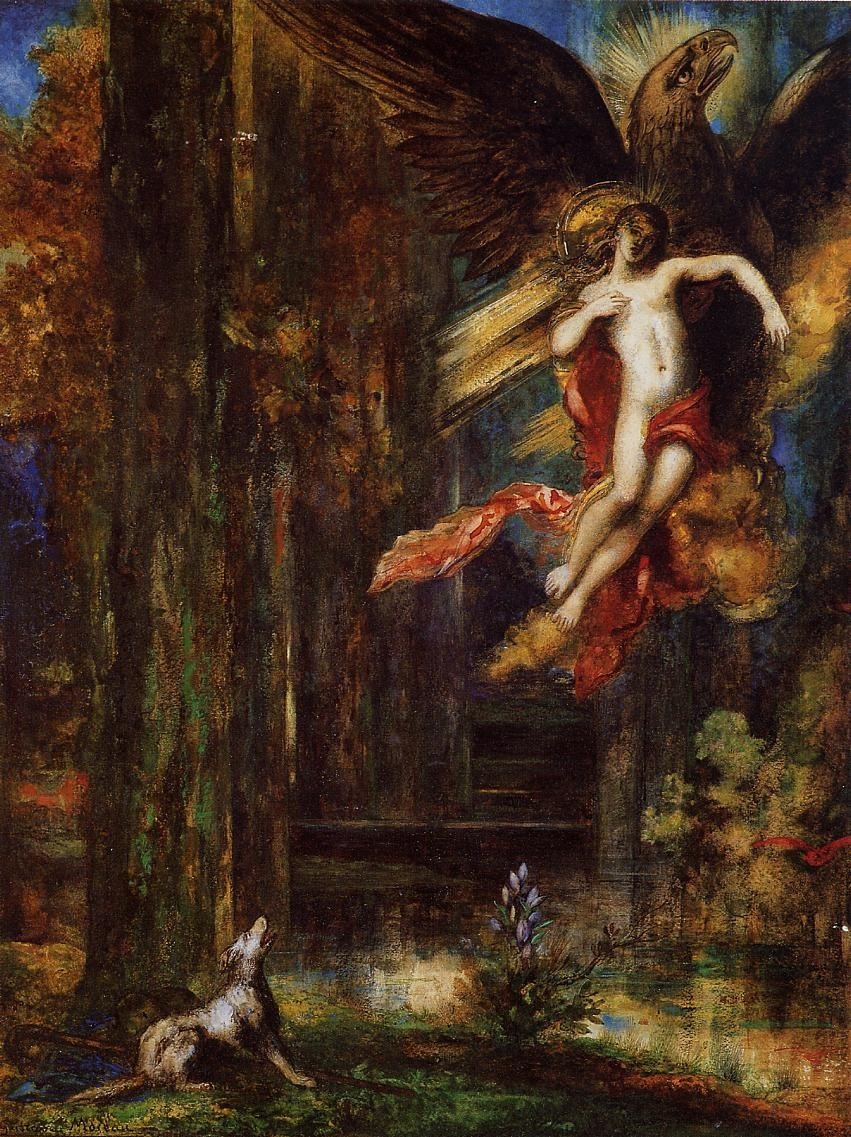
The Raising of Ganymede (1886) by Gustave Moreau.

The story of the love between Zeus, king of the gods, and Ganymede, the handsome son of the Trojan king, goes back at least three thousand years and its roots disappear into the prehistoric neolithic. (more)

hylas.jpg

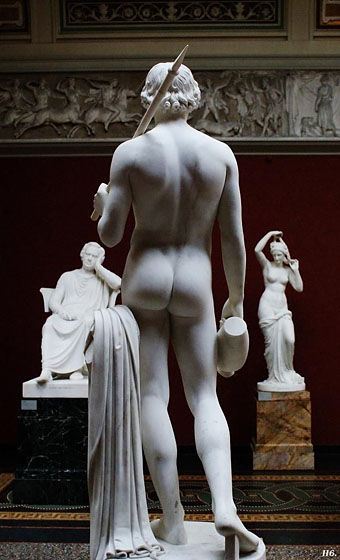
Hylas (1846) by HW Bissen.

Not for us only, Nicias, (vain the dream,)
Sprung from what god soe’er, was Eros born:
Not to us only grace doth graceful seem,
Frail things who wot not of the coming morn.
No—for Amphitryon’s iron-hearted son [Heracles],
Who braved the lion, was the slave of one:—

A fair curled creature, Hylas was his name.
He taught him, as a father might his child,
All songs whereby himself had risen to fame;
Nor ever from his side would be beguiled
When noon was high, nor when white steeds convey
Back to heaven’s gates the chariot of the day,

Nor when the hen’s shrill brood becomes aware
Of bed-time, as the mother’s flapping wings
Shadow the dust-browned beam. ‘Twas all his care
To shape unto his own imaginings
And to the harness train his favourite youth,
Till he became a man in very truth.

Theocritus, Idyll XIII: Hylas.

pan_daphnis.jpg

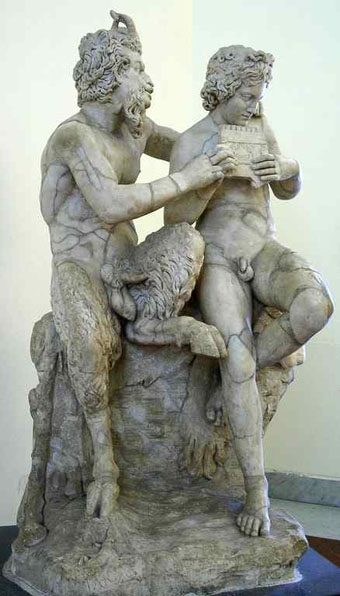
Pan teaching Daphnis to play the panpipes; Roman copy of a Greek original from the 3rd-2nd centuries BCE by Heliodoros.

hyacinth.jpg

The Death of Hyacinthos (1801) by Jean Broc.

‘You too, Hyacinthus, of Amyclae, Phoebus would have placed in heaven, if sad fate had given him time to do so. Still, as it is, you are immortal, and whenever spring drives winter away, and Aries follows watery Pisces, you also rise, and flower in the green turf. My father, Phoebus, loved you above all others: and Delphi, at the centre of the world, lost its presiding deity, while the god frequented Eurotas, and Sparta without its walls, doing no honour to the zither or the bow. Forgetting his usual pursuits, he did not object to carrying the nets, handling the dogs, or travelling as a companion, over the rough mountain ridges, and by constant partnership feeding the flames.

‘Now, the sun was midway between the vanished and the future night, equally far from either extreme: they stripped off their clothes, and gleaming with the rich olive oil, they had rubbed themselves with, they began a contest with the broad discus. Phoebus went first, balancing it, and hurling it high into the air, scattering the clouds with its weight. Its mass took a long time to fall back to the hard ground, showing strength and skill combined. Immediately the Taenarian boy, without thinking, ran forward to pick up the disc, prompted by his eagerness to throw, but the solid earth threw it back, hitting you in the face, with the rebound, Hyacinthus.

‘The god is as white as the boy, and cradles the fallen body. Now he tries to revive you, now to staunch your dreadful wound, and now applies herbs to hold back your departing spirit. His arts are useless: the wound is incurable. Just as if, when someone, in a garden, breaks violets, stiff poppies, or the lilies, with their bristling yellow stamens, and, suddenly, they droop, bowing their weakened heads, unable to support themselves, and their tops gaze at the soil: so his dying head drops, and, with failing strength, the neck is overburdened, and sinks onto the shoulder.

Ovid’s Metamorphoses, Bk X:143-219 Orpheus sings: Ganymede; Hyacinthus

Previously on { feuilleton }
Three stages of Icarus
The end of Orpheus

Gilles Rimbault redux

rimbault1.jpg

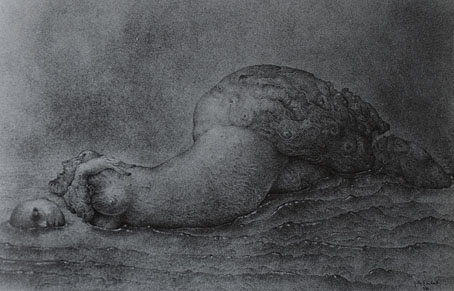
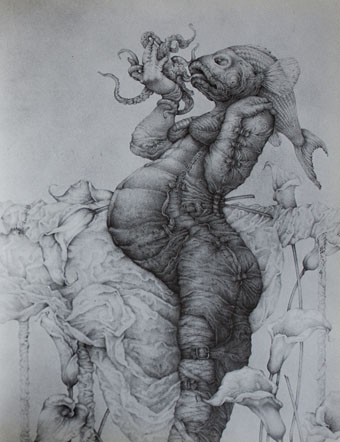
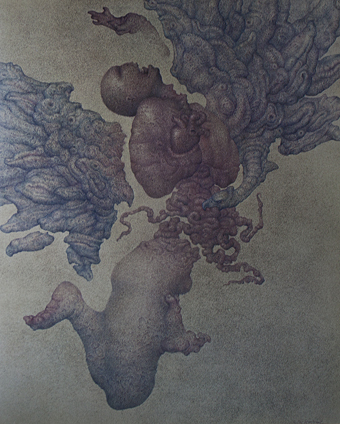
My thanks once again to DR Tenge for notifying me of a new post of drawings by French artist Gilles Rimbault. More marvellous work that this time tends to the metamorphic rather than the erotic. No details as to date or provenance but considering how little there is of Rimbault’s work online it’s good to see anything new at all.

rimbault2.jpg

rimbault3.jpg

Continue reading “Gilles Rimbault redux”

Weekend links 198

boty.jpg

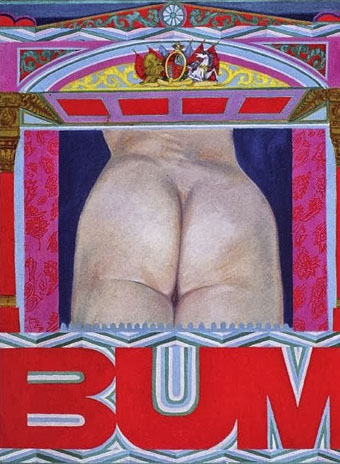
Bum (1966) by Pauline Boty.

Eleanor Birne on Pauline Boty, “the only prominent female Pop artist among a generation of famous men”. Ken Russell’s Pop Art documentary, Pop Goes the Easel (1962), which features Boty, may be seen here. Two years later Boty was back with Ken Russell playing the part of the prostitute from The Miraculous Mandarin in a film about Béla Bartók. That’s something I’d love to see. There’s more about her painting, and the work of other female Pop artists, here.

• Why Are We Sleeping? Mark Pilkington on the music world’s recurrent interest in the philosophy of GI Gurdjieff. Pilkington’s most recent Raagnagrok release with Zali Krishna, Man Woman Birth Death Infinity, was reviewed by Peter Bebergal.

• Cinematic details: Frames-within-frames in The Ipcress File (1966), and the typography of 2001: A Space Odyssey (1968).

highrise.jpg

A Jay Shaw poster for Ben Wheatley’s forthcoming film of High-Rise.

• “…a large cavity must be dug in the bird’s shoulder and filled with ball bearings.” Christine Baumgarthuber on the dubious delights of The Futurist Cookbook.

• Why Tatlin Can Never Go Home Again: Rick Poynor on the difficulties of finding a definitive representation of an artwork online.

Jay Parini reviews Inside a Pearl: My Years in Paris by Edmund White. At AnOther Donatien Grau talks to White about fashion.

• At Bajo el Signo de Libra (in Spanish): the homoerotic and occasionally Surrealist art of Pavel Tchelitchew.

• At 50 Watts: Kling Klang Gloria: Vintage Children’s Books from Austria.

• The motorbike girl gangs of Morocco photographed by Hassan Hajjaj.

Geoff Manaugh on how LED streetlights will change cinema.

Stylus “is an experiment in sound, music and listening”.

• Mix of the week: Secret Thirteen mix 106 by Senking.

• At Pinterest: JG Ballard

This Is Pop? (1978) by XTC | Pop Muzik (1979) by M | Pop Quiz (1995) by Stereolab

Weekend links 197

field.jpg

Posters by Jay Shaw for Ben Wheatley’s A Field in England which receives a US release this month.

Alvin Baltrop’s Gay New York: “the clandestine activities taking place under New York piers between 1975 and 1986”. AnOther samples some of the work on display at the Open Eye Gallery, Liverpool. Meanwhile, BUTT has some shots from Texas Porno Road Trip, a photo series by Mike McLeod. Related: HBO will show you anything but a male erection, says Justin Moyer.

• “[Robert] Desnos quickly proved himself to be one of the most gifted in these experiments – eventually known as ‘the period of sleeping fits’. He was capable of writing, speaking, drawing and composing entire fantastical narratives.” Eugene Thacker on the Surrealist séances of the 1920s.

• “It’s history, not a viral feed,” says Sarah Werner. A complaint about the way the ongoing decontextualisation of images is both pernicious and potentially lucrative.

His prose is a palimpsest of echoes, ranging from Eliot’s Preludes and Rhapsody on a Windy Night (lines like “Midnight shakes the memory / As a madman shakes a dead geranium” are Burroughsian before the fact) to Raymond Chandler’s marmoreal wisecracks and Herbert Huncke’s jive. I suspect that few readers have made it all the way through the cut-up novels, but anyone dipping into them may come away humming phrases. His palpable influence on JG Ballard, William Gibson, and Kathy Acker is only the most obvious effect of the kind of inspiration that makes a young writer drop a book and grab a pen, wishing to emulate so sensational a sound. It’s a cold thrill.

Peter Schjeldahl reviews Call Me Burroughs by Barry Miles.

• “Dance music was born in LGBT communities, but has this been forgotten?” Luis-Manuel Garcia on an alternate history of sexuality in club culture.

• Avant-Grade Hallucinogens: the Poetics of Psychedelic Perception in Moving Image Art by Stuart Heaney.

No Condition Is Permanent: weekly radio shows from Count Reeshard at LuxuriaMusic and iTunes.

The Golem: where fact and fiction collide. David Barnett on 100 years of Gustav Meyrink’s novel.

• Don’t Let Harlan Ellison Hear This: Nick Mamatas on a great writer.

• Mix of the week: the Ela Orleans Mix at A Sound Awareness.

Amon Düül II playing live on French TV, 1971 & 1973.

• A soundmap of London canals and minor rivers.

The Peculiar Underworld of Rare-Book Thieves.

• At Pinterest: William Burroughs and Phalluses.

Architecture of Doom

Hallucinations (1967) by Tim Buckley | Phallus Dei (1969) by Amon Düül II | Hallucinations (In Memory of Reinaldo Arenas) (1994) by Paul Schütze