Weekend links 259

bennett.jpg

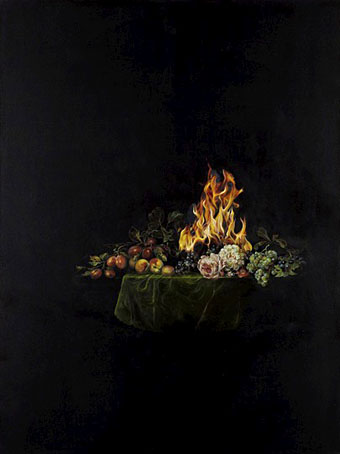
The Endlessness (2012) by Emma Bennett.

• “Clearly if you’re familiar with The Arcades Project by Walter Benjamin you’ve got a leg up on what Rivette and company are up to. […] Like all Rivette works, it’s obsessed with the interrelationship between theater and life—reality and fantasy.” David Ehrenstein makes Jacques Rivette’s Out 1 sound even more intriguing. The 729-minute film is being reissued later this year.

• “It’s all your artistic friends. They frighten me…they seem evil, somehow—somehow unhealthy. And when you’re with them, dear, you change…” Steven Cordova reviews To the Dark Tower (1946), the debut novel by gay writer Francis King.

• “Sex isn’t a subtext in The Bloody Chamber, but the text itself. (Carter would explain that she was only making explicit a ‘latent content’ that is ‘violently sexual.’)” Laura Miller on Angela Carter’s re-told fairy tales.

Yet, as a citizen, and especially as an artist, [Chimamanda Ngozi] Adichie refuses to censor herself. “There is already enough silencing in public discourse,” says Adichie, and this is certainly true when the topic is race, and especially when the conversation is in America. It is our addiction to comfort that demands our silence regarding certain truths. Too often in America, Adichie claimed, “the goal of public discourse is comfort, not truth.” Comfort, Adichie said, also demands “international digestibility,” a reduction of complicated stories to a simple narrative. In the lecture, Adichie also warned of the silencing that is sometimes a product of social media outrage.

Kay Iguh on Chimamanda Ngozi Adichie’s Arthur Miller Freedom to Write Lecture at the PEN World Voices Festival

• New books: The Strangers and Other Writings by Robert Aickman, and Murderous Passions: The Delirious Cinema of Jesús Franco by Stephen Thrower & Julian Grainger.

• The world is rediscovering Mad Max and George Miller’s prowess for action cinema so Anne Billson posted a transcript of her 1985 interview with the director.

• Mixes of the week: Dmytro Fedorenko presents artists from Ukrainian record label Kvitnu, and The Ivy-Strangled Path Vol. VII by David Colohan.

Assault on Precinct 13 goes disco: The End (John Anthony’s New Scratch Mix) (1983) by “John Carpenter” (The Splash Band).

John Coltrane talked to Frank Kofsky for an hour in November 1966.

• Sleazy Cinema: A guide to Peter Christopherson‘s music videos.

Six hours of women in electronic music.

The weird world of Alfred Kubin.

Giallo Magic Orchestra

Blood (1972) by Annette Peacock | Blood On The Moon (1981) by Chrome | Blood From The Air (1986) by Coil
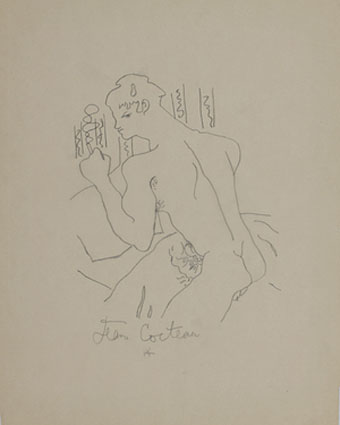
Cocteau drawings

cocteau1.jpg

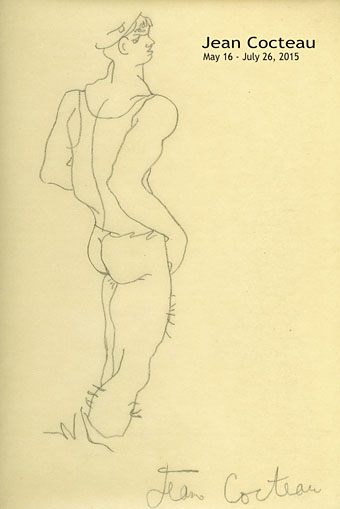
Some of the drawings by Jean Cocteau that comprise a new exhibition at Wessel + O’Connor Fine Art, Lambertville, New Jersey. A third of these are untitled pencil drawings from the 1950s that look like unused illustrations from the first edition of Genet’s Querelle de Brest (1947): matelots posing in various states of undress, masturbating or having sex. Among the other works there are several lithographs in the Cocteau-does-Picasso style. Everything is for sale but no prices are listed on the website.

cocteau2.jpg

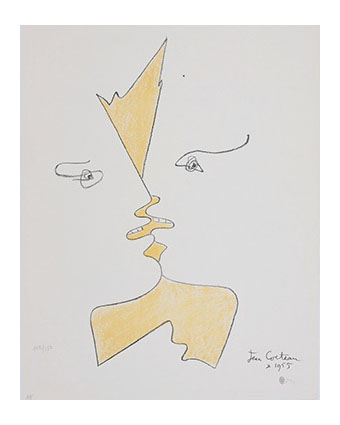
Les Amoureux (1956).

cocteau3.jpg

Previously on { feuilleton }
Querelle de Brest
Halsman and Cocteau
La Belle et la Bête posters
The writhing on the wall
Le livre blanc by Jean Cocteau
Cocteau’s sword
Cristalophonics: searching for the Cocteau sound
Cocteau at the Louvre des Antiquaires
La Villa Santo Sospir by Jean Cocteau

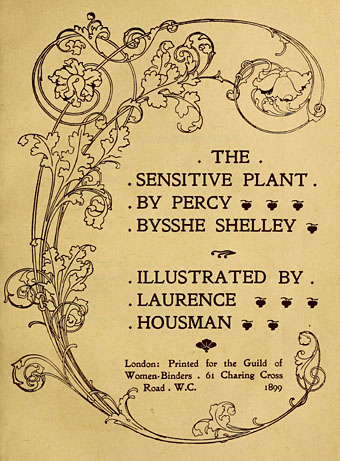
Laurence Housman’s The Sensitive Plant

sensitive02.jpg

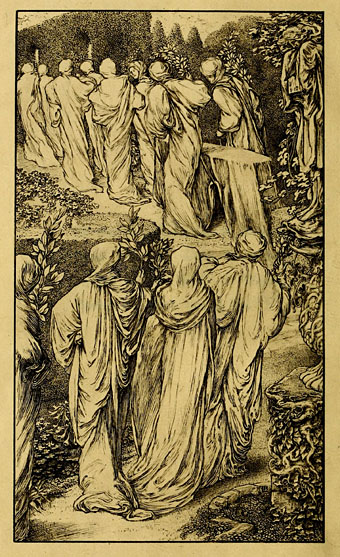
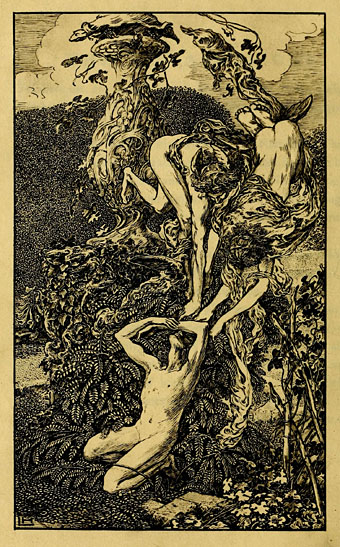
Shelley’s The Sensitive Plant is a lengthy poem written after the death of Percy and Mary Shelley’s first child. Laurence Housman illustrates the sombre garden scenes in a minutely detailed manner, and manages to incorporate some concerns of his own. Pan isn’t mentioned in the poem but Housman adds a Pan figure which he describes in a note as “the garden deity”, and a symbol of nature untamed.

sensitive01.jpg

sensitive03.jpg

Continue reading “Laurence Housman’s The Sensitive Plant”

Laurence Housman’s End of Elfintown

elfin01.jpg

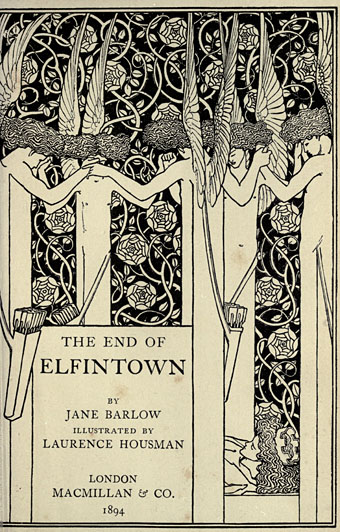
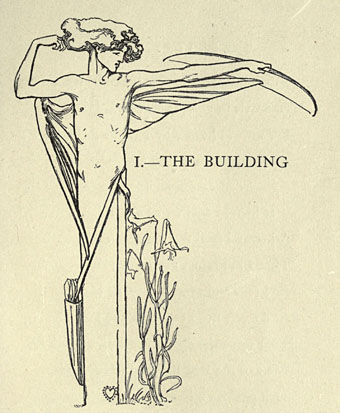
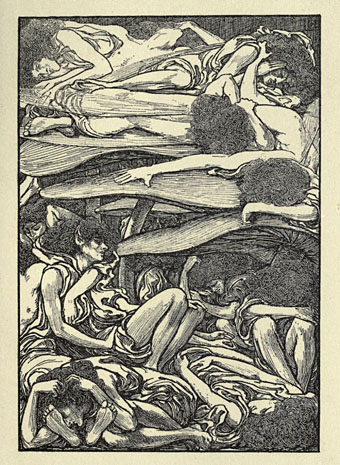
More Laurence Housman, and a book I’d not seen before. Jane Barlow’s The End of Elfintown (1894) is a typical piece of Victorian fairy poetry—her “elves” are also flower-dwelling “Fays”, and Oberon is mentioned—but Housman’s renderings give a very different impression. In place of the usual delicate creatures he shows a very sensual company, all satyr ears and enormous Pre-Raphaelite manes. The frontispiece is very Beardsley-like, especially those entwined roses.

elfin02.jpg

elfin03.jpg

Continue reading “Laurence Housman’s End of Elfintown”

The Reflected Faun

housman.jpg

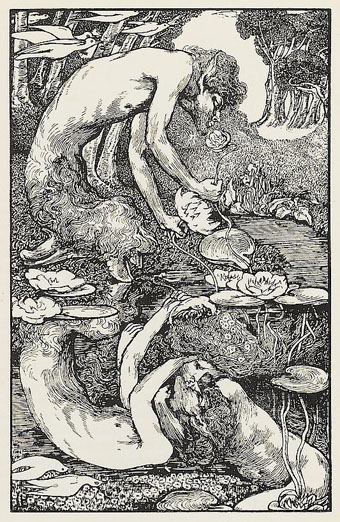
Another one to add to the stock of fauns, satyrs and Pan figures that proliferate from the 1890s to the 1920s, Laurence Housman’s The Reflected Faun appeared in The Yellow Book in 1894. The magazine’s publisher, John Lane, also published Arthur Machen’s The Great God Pan in the same year although an early version of Machen’s story had appeared a few years before. What’s notable about Housman’s drawing is the way he combines in a single image several distinct themes: Faunus/Pan, the reflected Narcissus, and all those tales of beguiling spirits lurking in water. The nature of the spirit in this picture is distinctly androgynous, a detail that wouldn’t have impressed those critics who considered The Yellow Book to be an unwholesome publication. The androgyny may be taken as deliberate: Housman was one of London’s “Uranian” artists, and a few years later joined George Cecil Ives’ Order of Chaeronea, a secret society for gay men and lesbians. In the light of this, the drawing might be interpreted as a symbol for a clandestine existence where true desires remain buried or submerged.

Elsewhere on { feuilleton }
The illustrators archive

Previously on { feuilleton }
Aubrey Beardsley’s Keynotes
In the Key of Yellow
Ads for The Yellow Book
The Piper at the Gates of Dawn
The Great God Pan
Peake’s Pan