Weekend links 249

ulrich.jpg

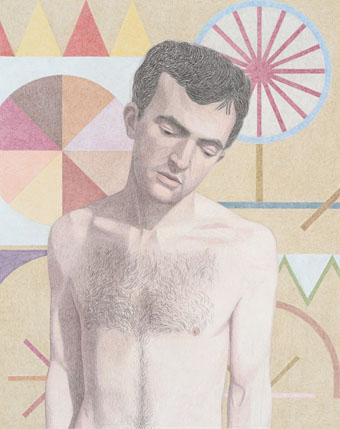
The Philosophers (Homage to Courbet) by Christopher Ulrich. Another great tip from Full Fathom Five.

• “Mushrooms are the only psychedelic drugs that I take, and I don’t take them very often. But I would trust them. Once you’ve done them a few times it’s very easy to feel a sense of entity. You can feel that there is a characteristic in this level of consciousness which almost seems…playful? Or aware, or sometimes a bit spooky.” Alan Moore discussing art and psychedelics in Mustard magazine. Related: “Psychedelics not linked to mental health problems or suicidal behavior: A population study.”

• “Leonora Carrington transcended her stolid background to become an avant-garde star,” says Boyd Tonkin. At the BBC Chris Long looks at Leonora Carrington’s journey from Lancashire to Mexico. The Carrington exhibition at Tate Liverpool opened on Friday.

A Savoyard’s First Brush with Censorship, Clara Casian’s proposed documentary film about Savoy Books, is looking for Kickstarter funding.

Warner suggests that there are four characteristics that define a veritable fairy tale: first, it should be short; second, it should be (or seem) familiar; third, it should suggest ‘the necessary presence of the past’ through well-known plots and characters; fourth, since fairy tales are told in what Warner aptly calls ‘a symbolic Esperanto’, it should allow horrid deeds and truculent events to be read as matter-of-fact. If, as Warner says, ‘the scope of a fairy tale is made by language’, it is through language that our unconscious world, with its dreams and half-grasped intuitions, comes into being and its phantoms are transformed into comprehensible figures like cannibal giants, wicked parents or friendly beasts.

Alberto Manguel reviewing Once Upon a Time: A Short History of Fairy Tale by Marina Warner

De Natura Sonorum (1976) by Bernard Parmegiani: a free download at AGP of the original vinyl recording, something I overlooked several years ago.

• At Dangerous Minds: Real Horrorshow!: Malcolm McDowell and Anthony Burgess discuss Kubrick and A Clockwork Orange.

Meeting Bernard Szajner, a short film about the French electronic musician by Tom Colvile, Nathan Gibson & Abdullah Al-wali.

• Dismembrance of the Thing’s Past: Dave Tompkins on John Carpenter’s The Thing.

That Battle Is Over, a new song by Jenny Hval.

Mushroom (1971) by Can | The Mushroom Family (2010) by The Time And Space Machine | Growing Mushrooms Of Potency (2012) by Expo ’70

Saga de Xam revisited

saga01.jpg

Back in December I was thrilled to discover that Nicolas Devil’s large-format psychedelic/erotic comic book, Saga de Xam, had been scanned and uploaded to Scribd. The book was published by Éric Losfeld in 1967 in an edition of 5000 which quickly sold out, and has remained out of print ever since. Losfeld died in 1979 but it was always his intention that the book would remain scarce (although a second edition did appear after his death) with the result that copies today command high prices.

saga01.jpg

Six of the seven chapters had been uploaded to Scribd in December but the seventh and final episode of the time-travelling Saga’s adventures was frustratingly absent. So I’m pleased to report that the final chapter is now available for reading or downloading, prompted in part by the interest my earlier post generated. The seventh chapter sees Saga arrive in the present day (ie: 1967) where she encounters more human conflict in the form of the US military and marauding Hells Angels. The chapter ends with several Exquisite Corpse pages which had Philippe Druillet among their contributors; it was the appearance of three of these pages in the Musée d’Orsay’s Art Nouveau Revival catalogue in 2010 that first brought the book to my attention. The very end of the book has a key to the alphabets used on some of the pages. I’d love to see Fantagraphics reprint this volume in a translated edition but those alphabets would create some difficulties. For the moment the PDFs at Scribd are the only place you can read this unique publication.

saga02.jpg

saga03.jpg

Continue reading “Saga de Xam revisited”

Walter Crane’s Picture Books

crane01.jpg

Beauty and the Beast.

British artist and designer Walter Crane never illustrated a Perrault collection but he did illustrate individual editions of Perrault’s more well-known tales. These illustrations are from collections published in 1911 of the small books of nursery rhymes, alphabets and stories for children that Crane produced in the 1870s. The clear-line drawings are unusual for their avoidance of the decor one usually sees with these stories; Crane admired the work of the Pre-Raphaelites but the settings are a lot less medieval than some of his other books, the architecture and costumes owing more to the Empire style.

crane02.jpg

The Frog Prince.

Crane wrote several design books, including a very good one about the history of book design. His drawings for children may be simple but they’re all very precise and often contain significant details; many of the larger compositions draw the eye into the background with views through doors or windows, or into remote vistas. Crane also adapted each story into verse, and even manages to represent an act of metamorphosis in a single picture for the moment when the Frog Prince turns human. Elsewhere some of the pages are almost comic-like in their arrangement of multiple panels and text.

The samples here are taken from three different collections:

Beauty and the Beast / The Frog Prince / The Hind in the Wood
Cinderella / Puss in Boots / Valentine and Orson
The Sleeping Beauty / The Baby’s Own Alphabet / Bluebeard

crane03.jpg

The Hind in the Wood.

Continue reading “Walter Crane’s Picture Books”

Gustave Doré’s Fairy Tales of Charles Perrault

dore01.jpg

La Belle au bois dormant (The Sleeping Beauty in the Wood).

More illustrated Perrault. Gustave Doré’s intention to produce definitive illustrations for his editions certainly paid off when he turned his attention to the French fairy tales. Doré’s work may lack the light touch required for some of these stories but a couple of the engravings—Red Riding Hood in bed with the wolf, Puss-in-Boots—are reproduced endlessly whenever picture editors need a suitable illustration. Doré’s characters can be rather wooden at times but the expressions on the face of the wolf and the girl are perfect.

dore02.jpg

Le Petit Chaperon rouge (Little Red Riding Hood).

Elsewhere Doré contributes some original details: the court in Sleeping Beauty is usually shown besieged by thorns or bracken but Doré has giant fungi growing all over the floor; in Little Tom Thumb the children are described as knocking on the door of the ogre’s house then being let inside but Doré shows the ogre’s wife greeting them with a shaft of lamplight. These illustrations were published in several editions throughout the 1860s which makes that lamplight beam a very advanced pictorial effect. Incidentally, for those who read the Amon Düül II cover art post a couple of days ago, the figure of Tom Thumb stealing the ogre’s seven-league boots may be glimpsed outside the spacecraft window in the centrespread of Dance of the Lemmings.

Wikimedia Commons has more of the Doré illustrations; there’s also a set at Gallica although the quality of their scans isn’t always so good.

dore03.jpg

La Barbe bleue (Blue Beard).

Continue reading “Gustave Doré’s Fairy Tales of Charles Perrault”