Weekend links 515

huysmans.jpg

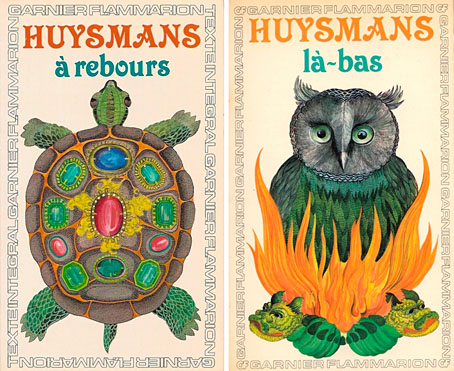
A pair of Huysmans covers from 1978 designed by Gérard Deshayes.

• Friends of the great composer/musician Jon Hassell set up a GoFundMe account a few days ago to help raise money for Jon’s medical costs. It’s always dispiriting having to link to these fund-generators when they shouldn’t be required at all but until America sorts out its health situation this is how things are. For those who’d prefer to help Jon by buying his music, there’s a Bandcamp page with a handful of releases, and more available at Bleep, the online distributor of Warp Records who helped produce his last release, Listening To Pictures (Pentimento Volume One). Related: Words With The Shaman: Jon Hassell interviewed by Chris May.

• Every time I think I must have heard all the best of the early Kraftwerk concerts another one turns up. This new posting at YouTube is taken from a recent file upload at the concert-swapping site Dimedozen, and is believed to be a radio recording of the group playing in Vancouver, Canada, in 1975. It’s very good quality (some slight bleed from other stations) and features excellent versions of their concert repertoire at that time. The version of Autobahn is especially good.

• in 2009 Dana Mattocks built a machine he called Steampunk Frankenstein, a construction which was attended by a frame containing my first piece of steampunk art. Dana’s latest creation is TILT, the Robot with Rocket Jet-Pack.

• RIP Tony Allen, the drummer about whom Fela Kuti said “without Tony Allen, there would be no Afrobeat”. Allen was interviewed by John Doran in 2012. Related: Tony Allen: the Afrobeat pioneer’s 10 finest recordings.

• “Robert Fripp’s ‘Music for Quiet Moments’ series. We will be releasing an ambient instrumental soundscape online every week for 50 weeks. Something to nourish us, and help us through these Uncertain Times.”

• How to avoid Amazon: the definitive guide to online shopping – without the retail titan; Hilary Osborne & Poppy Noor have some suggestions. I favour eBay for many of my purchases, large or small.

Adam Scovell on A Cinematic Lockdown: Confinement in the films of Alfred Hitchcock.

Liberty Realm, a book of art by Cathy Ward, is coming soon from Strange Attractor.

• One Great Reader: Luc Sante talks to Wes del Val about his favourite books.

• Oscar Wilde and the mystery of the scarab ring by Eleanor Fitzsimons.

Unica Zürn at Musée D’art Et D’histoire De L’hôpital Sainte-Anne.

• Mix of the week: Secret Thirteen Mix 302 by Avizohar.

• Another concert: Tuxedomoon live in Rome in 1988.

Rarefilmm | The Cave of Forgotten Films.

• At Dennis Cooper’s: Ghosts.

Ghost Song (1978) by Jim Morrison & The Doors | Ghost Song (2000) by Air | Ghost Song (2005) by Patrick Wolf
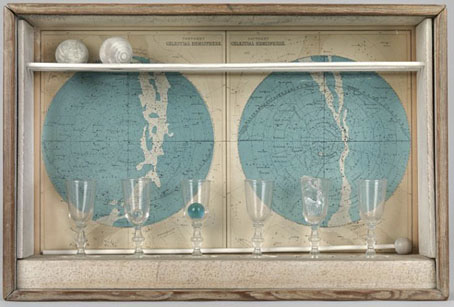
Cornell’s Constellations

cornell05.jpg

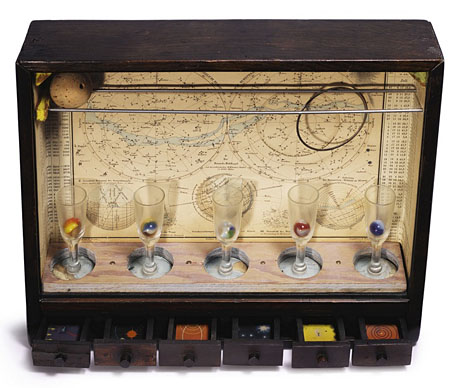
Untitled (Die Sternen-Welt), c.1950.

Among my current reading is Utopia Parkway (1997), Deborah Solomon’s biography of American artist Joseph Cornell (1903–1972). The book is very good for the factual data but I’ve been less enamoured by Solomon’s attempts to dredge biographical significance from Cornell’s hermetic and allusive work, or by her dismissive comments about other artists. Her account is most valuable when showing the evolution of Cornell’s art, the way he developed his often erratic and hesitant working methods. Most of Cornell’s works that I’ve seen in the past have been solitary examples, usually in books about Surrealism, so I wasn’t aware that so many of his celebrated and influential box assemblages were produced as themed series: Aviaries, Dovecotes, Hotels, and so on.

cornell01.jpg

Planet Set, Tête Etoilée, Giuditta Pasta (dédicace), 1950.

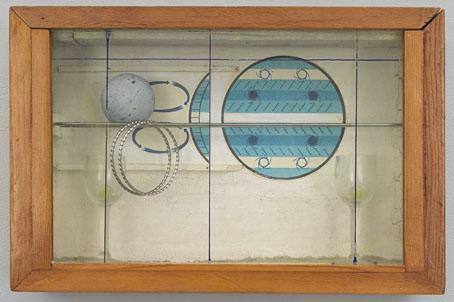
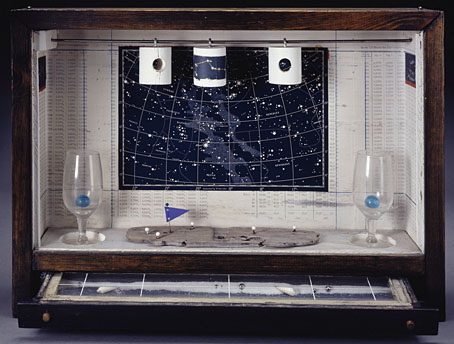
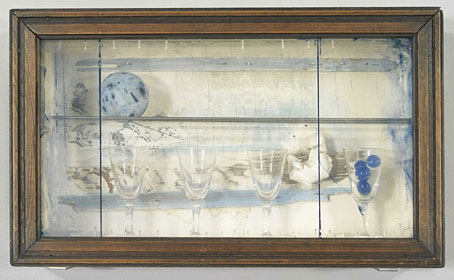
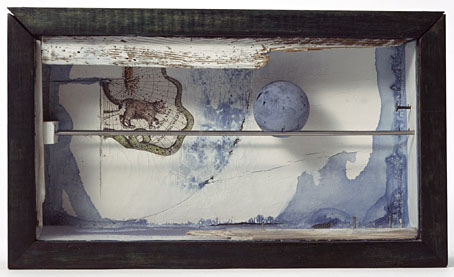
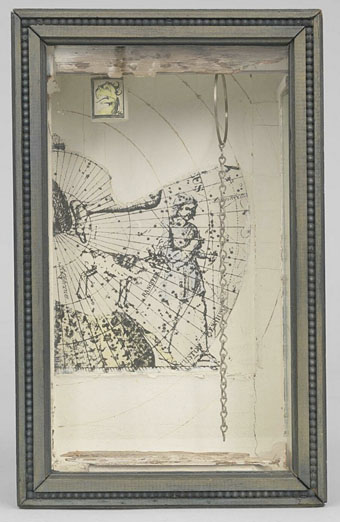
Astronomy was a Cornell passion which also provided the subject for another themed series, Observatories, a collection of boxes begun later in his career for which star maps and heavenly bodies were the dominant concern. By the 1950s his creations were much more refined than some of his earlier constructions, although the box contents include many familiar Cornell ingredients: antique maps and diagrams, glassware, spherical objects, etc. The examples here are a small selection of those to be found scattered around various websites. Another consequence of reading Solomon’s book is realising that I could do with a companion volume filled with Cornell’s artwork. There doesn’t seem to be a decent monograph as yet; if anyone has any suggestions (preferably with colour plates) then please leave a comment.

cornell02.jpg

Sun Box (1950). [Not a constellation, obviously, but from the same astronomical series.]

cornell07.jpg

Untitled (Celestial Navigation), 1956–58.

cornell03.jpg

Celestial Navigation (c.1958).

cornell06.jpg

Untitled (Canis Major Constellation), c.1960.

cornell04.jpg

Custodian—M.M. (1962).

Previously on { feuilleton }
Joseph Cornell: Worlds in a Box
Joseph Cornell, 1967
Rose Hobart by Joseph Cornell
View: The Modern Magazine

Weekend links 514

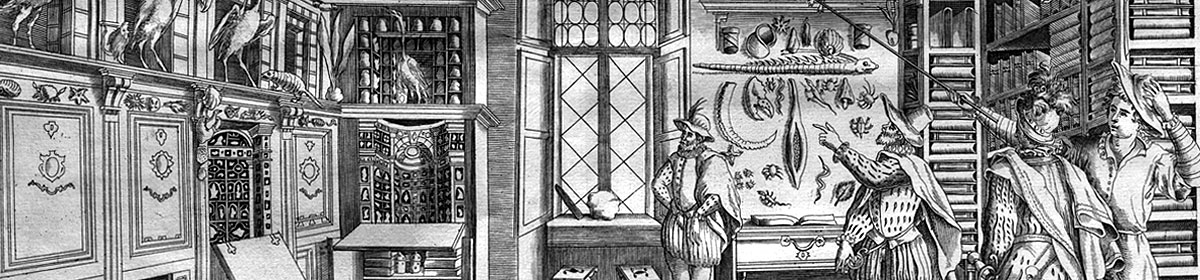
kircher.jpg

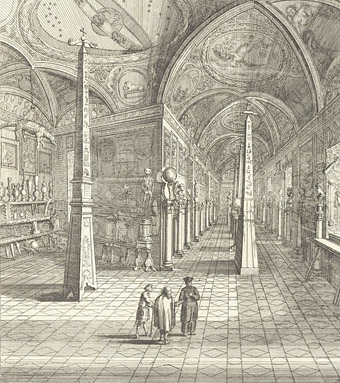
Athanasius Kircher welcoming two guests to the Collegio Romano, a detail from the frontispiece to his Romani Collegii Societatis Jesu Musaeum celeberrimum (1678).

Opium (1919) by Robert Reinert: “A Chinese opium dealer takes revenge on Westerners who have corrupted his wife.” With Werner Krauss and Conrad Veidt a year before their pairing in The Cabinet of Doctor Caligari.

Aubrey Beardsley at Tate Britain: in which the gallery thinks that 7 minutes is enough to give us a taste of a major exhibition that we can’t otherwise see.

Joe Pulver (RIP): His Highness in Yellow. A memorial piece that includes artist Michael Hutter talking about his paintings of Carcosa.

Court Mann on the strange history of Robert Smithson’s Spiral Jetty, 50 years old this month.

• “Invisible Little Worms”: Athanasius Kircher’s Study of the Plague by John Glassie.

Sophie Monks Kaufman on why literary lesbians are having a moment on screen.

• Photographer Ryan McGinley: “I was taught to believe in Satan. It scared me.”

• At Dennis Cooper’s: Ellen Burstyn Day, and the ghostly novels of WG Sebald.

Dorian Lynskey on where to start with Nina Simone’s back catalogue.

• Wie funktioniert ein Synthesizer? (1972). Bruno Spoerri explains.

• Banham avec Ballard: On style and violence by Mark Dorrian.

John Boardley on the most dangerous book in the world.

Improvisation for Sonic Cure by Ryuichi Sakamoto.

• The Strange World of…JG Thirlwell.

Diet Of Worms (1979) by This Heat | Stomach Worm (1992) by Stereolab | Heartworms (1998) by Coil

Weekend links 513

tower.jpg

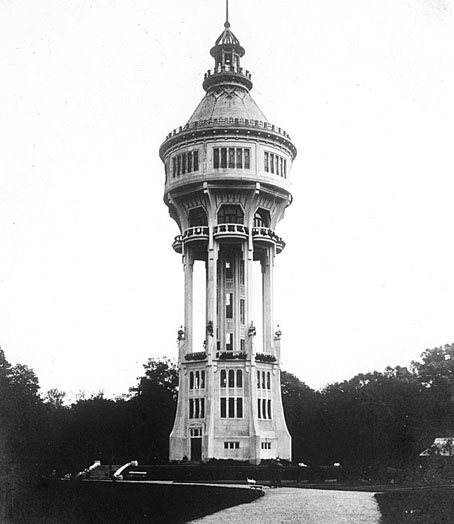
Water Tower (1914), Margaret Island, Budapest, Hungary.

George Bass on five ways The Year of the Sex Olympics (1968) predicted the way we live now. Nigel Kneale’s TV play will be reissued on DVD next week.

Ballardism (Corona Mix): three new drone pieces by Robert Hampson available as free downloads.

• Grace Jones: where to start in her back catalogue; John Doran has some suggestions.

Hal was the wry and soulful and mysterious historical rememberer. He specialized in staging strange musical bedfellows like Betty Carter and the Replacements or The Residents backing up Conway Twitty. Oh, the wild seeds of Impresario Hal. He was drawn equally to the danger of a fiasco and the magical power of illumination that his legendary productions held. Many years ago he bought Jimmy Durante’s piano along with Bela Lugosi’s wristwatch and a headscarf worn by Karen Carpenter. Some say he also owned Sarah Bernhardt’s wooden leg. He had a variety of hand and string puppets, dummies, busts of Laurel and Hardy, duck whistles and scary Jerry Mahoney dolls and a free ranging collection of vinyl and rare books. These were his talismans and his vestments because his heart was a reliquary.

Tom Waits pens a letter to remember Hal Willner

• The food expiration dates you should actually follow according to J. Kenji López-Alt.

• Blown-up buildings and suffocating fish: the Sony world photography awards, 2020.

• Rumbling under the mountains: a report on Czech Dungeon Synth by Milos Hroch.

Sophie Pinkham on The Collective Body: Russian experiments in life after death.

• Mix of the week: Spring 2020: A Mixtape by Christopher Budd.

Olivia Laing on why art matters in an emergency.

• At Dennis Cooper’s: Bloody.

Blood (1972) by Annette Peacock | Blood (1994) by Paul Schütze | Blood (1994) by Voodoo Warriors Of Love

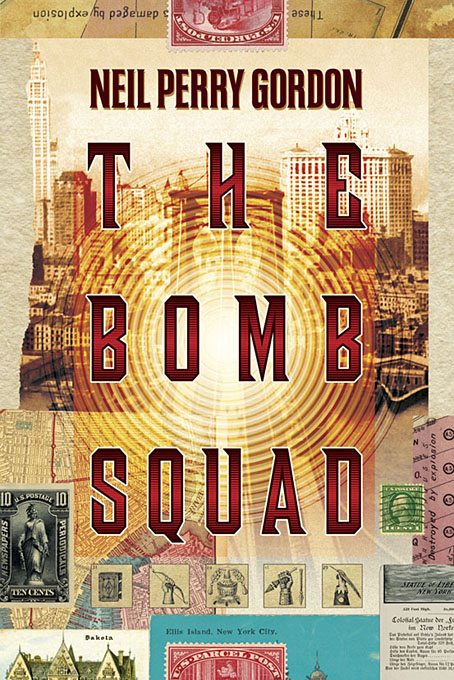
The Bomb Squad

bombsquad.jpg

This is the second book cover I’ve designed for Neil Perry Gordon, the first being for The Righteous One which was published in August last year. Both novels have New York City as a location but The Bomb Squad differs substantially from the metaphysical drama of The Righteous One by opening with a real event, the bomb attack in 1916 by German agents on US munitions being stored on Black Tom Island in New York harbour; the bomb squad of the title is the group of men who lead an investigation to prevent further outrages.

Rather than take a figurative approach with this design I opted for a collage of historical details. This seemed a good way of immediately establishing the period and location as well as reflecting the piecemeal nature of police investigations, the accumulation of evidence and so on. Collage also made it possible to include references to some of the locations in the story such as Black Tom Island (from a map at the Library of Congress showing the extent of the bomb damage), the Dakota Building, Ellis Island, etc. The five symbols below the title are from a book of heraldic designs, and relate to the Jungian archetypes which one of the detectives assigns to each member of the squad. The symbols aren’t labelled so the reader can decide which symbol relates to which character.

The Bomb Squad is available now from the usual outlets.

Previously on { feuilleton }
The Righteous One