The poster art of Frank McCarthy

mccarthy06.jpg

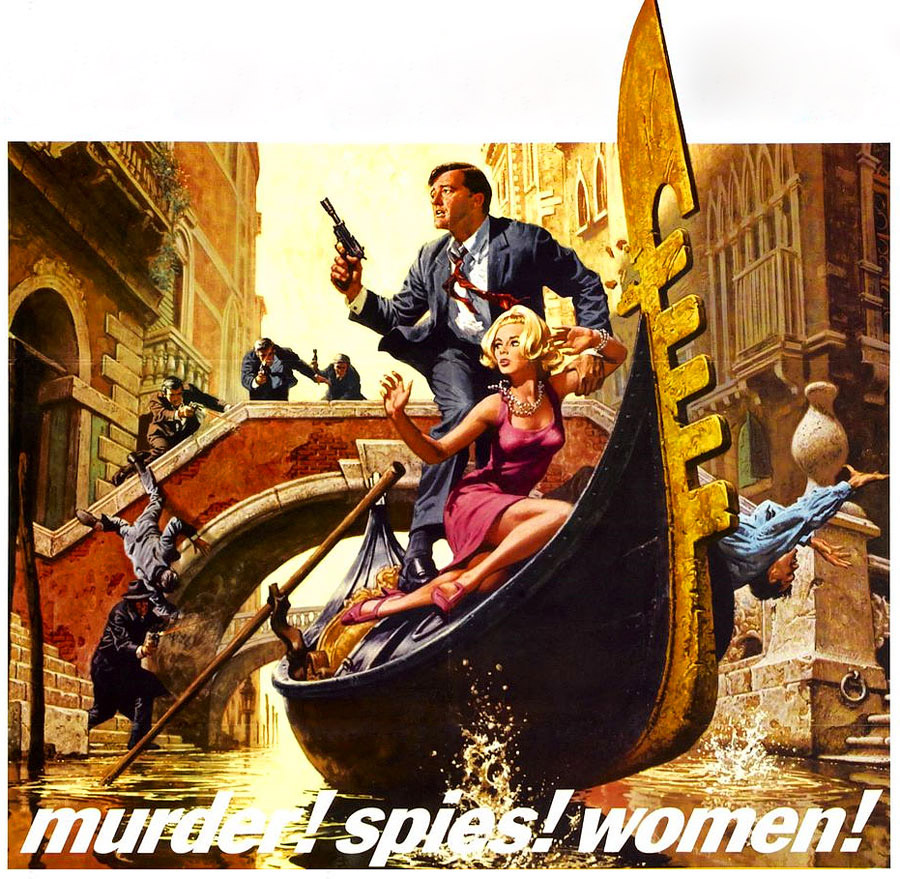
The Venetian Affair (1967).

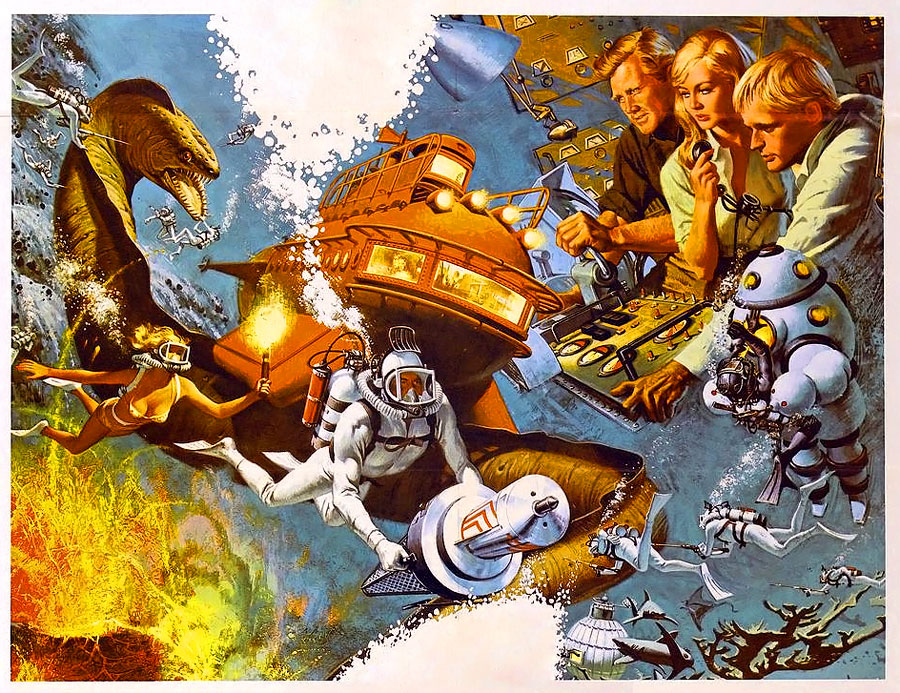
“Murder! Spies! Women!” If you added “guns” and “explosions” to that list you’d have the ingredients of the wild poster art of Frank McCarthy (1924–2002). I used to love posters like this when I was a boy, especially those from the everything-happening-at-once school which, by the look of these examples, was McCarthy’s specialty. Where action films are concerned the posters are often more exciting than the scenes they depict, in part because artists such as McCarthy were often working from their own imaginations as much as from any stills they’d been given.
mccarthy04.jpg

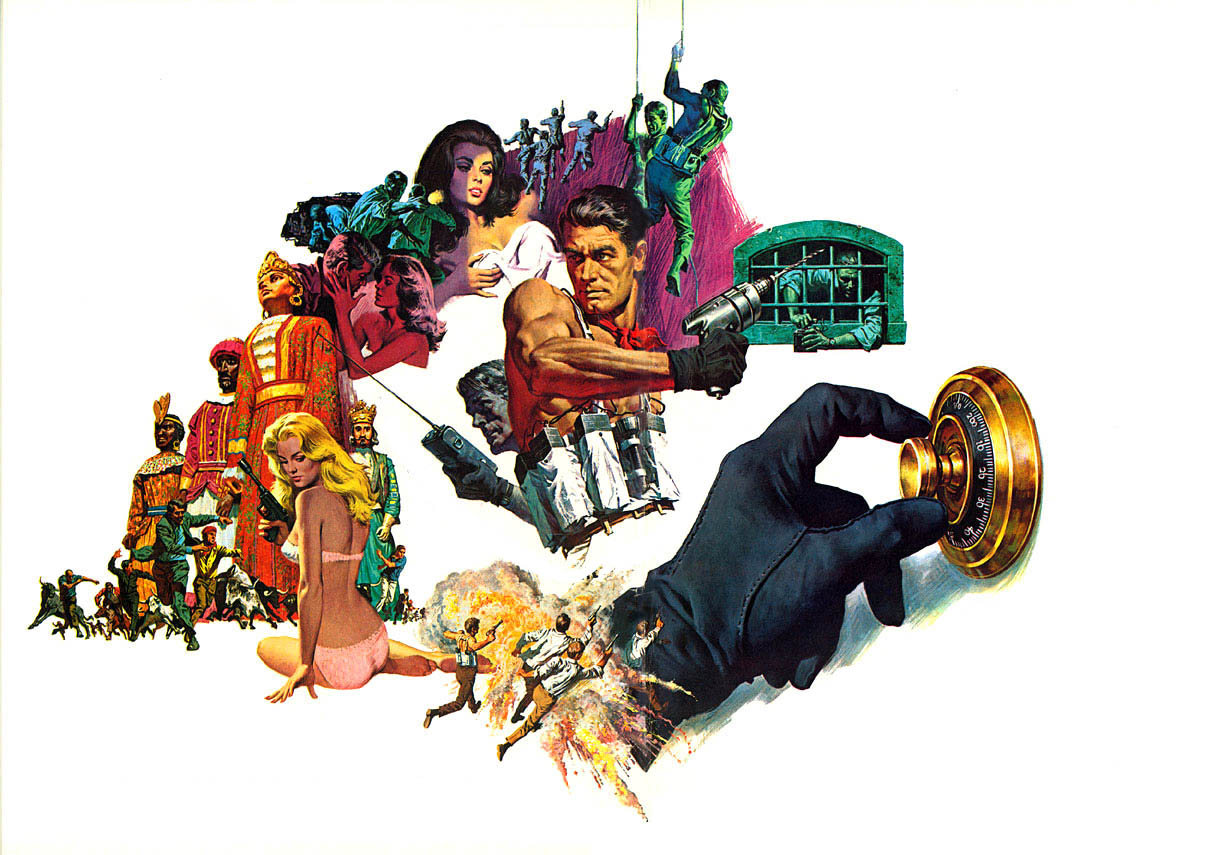
The Caper of the Golden Bulls (1967).

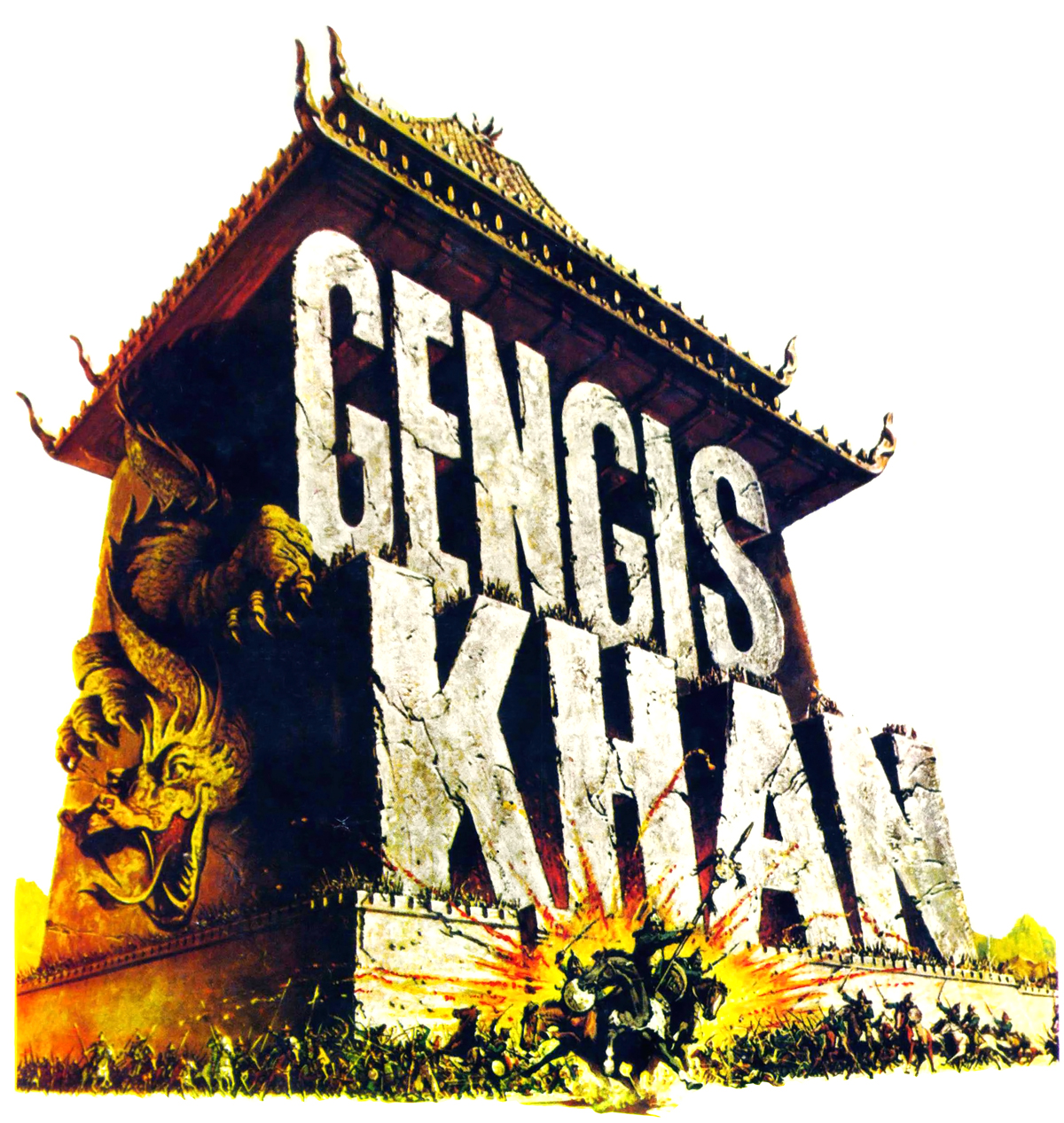
McCarthy had a career painting Western scenes which explains why his horses are so good. Some of his posters are for very well-known films, including a couple of Bond pictures, but I prefer those where he evidently had more of a free reign. The painting for The Caper of the Golden Bulls is a great composition with a use of colour you wouldn’t see today. Below there’s an example of the colossal title lettering that Terry Gilliam used to enjoy parodying. I still wonder which film did this first. Was it Ben-Hur? See more of Frank McCarthy’s poster art here.
mccarthy01.jpg

Genghis Khan (1965).

mccarthy02.jpg

Around the World Under the Sea (1966).
Continue reading “The poster art of Frank McCarthy”

Weekend links 167

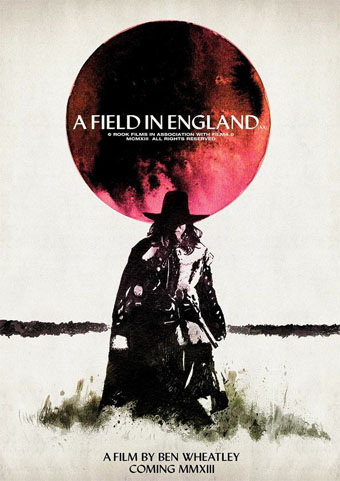
field.jpg

Poster by Luke Insect & Kenn Goodall.

In recent years I’ve had little patience for British cinema: too much dour “realism” with little of Alan Clarke’s vitality, too many comedies that aren’t funny, too many Hollywood calling cards, too much Colin Firth… So it’s been a pleasure to see Peter Strickland’s Berberian Sound Studio followed this month by Ben Wheatley’s A Field In England, a pair of films that stand out by daring to be different in a medium which seems to grow more creatively conservative with each passing year. A Field In England adds to the micro-genre of weird British films set around the time of the English Civil War. In place of witchfinders and devil worshippers we have magic, murder, madness, and a field of hallucinogenic mushrooms. Wheatley, like Strickland, takes risks that wouldn’t be allowed with a bigger budget which makes me excited to see what they’ll be doing next. A Field In England is already out on DVD & Blu-ray. The trailer is here. The director talked to Mat Colegate about the genesis of the film (spoiler alert). There’s more big hats and cloaks in this list of ten 17th century films.

• “I like to look at men…the way they look at women,” photographer Ingrid Berthon-Moine says about her pictures of sculpted testicles.

Roger Dean has finally sued James Cameron over the designs for Avatar. Will be interesting to see how this one turns out.

• Google has taken its Street View cameras to Battleship Island, “the most desolate city on earth“.

• The strange fantasy novels of Edward Whittemore are available again in digital editions.

Julia Holter talks about her forthcoming Gigi-inspired album Loud City Song.

• At Pinterest: Maneki-neko, the beckoning cat of good fortune.

Beautiful Books: Decorative Publishers’ Cloth Bindings.

• The abstract paintings of Hilma af Klint (1862–1944).

Lee Brown Coye illustrates August Derleth in 1945.

Bill Laswell’s discography intimidates the collector.

• Mix of the week: Kit Mix #23 by Joseph Burnett.

• The Soundcarriers: Last Broadcast (2010) | Signals (2010) | This Is Normal (2012)

Weekend links 166

foxxbelbury.jpg

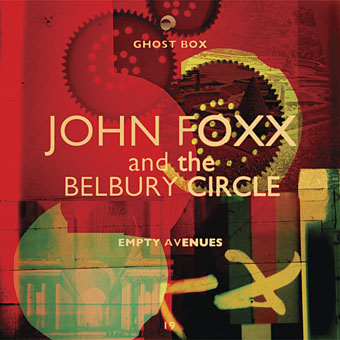
The Julian House cover art for the forthcoming collaboration between John Foxx and Belbury Poly (here renamed) has been revealed. Single no. 9 in the Ghost Box Listening Centre Study Series is now available.

• In addition to new Ghost Box records there’s more Hauntological (for want of a better term) cinema on the way this summer with the DVD/BR release of Ben Wheatley’s A Field in England. The potted description at Movie Mail is “a monochrome psychedelic trip into magic and madness set during the English Civil War”. Julian House has made a trailer. Meanwhile at Fangoria, there’s a PIF mixtape from The Advisory Circle. This accompanies an interview with John Krish, director of the most bizarre of the UK’s many strange and alarming public information films from the 1970s.

• More mixes: The hour-long OH/EX/OH show for The Geography Trip on Chorlton FM. “Expect slumber / tension / euphoria in almost equal measures.” It’s marvellous. At Self-Titled mag there’s DJ Food with O Is For Orange: Boards of Canada, Broadcast, The Books, etc.

Tangiers is a computer game based on the fiction of William Burroughs. Jim Rossignol talked to Alex Harvey about the development of the project.

walpurgisnacht.jpg

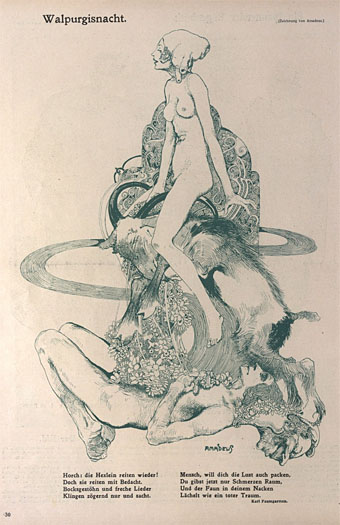
Walpurgisnacht (1917) by Amadeus. A drawing that could easily be from the late 1960s. If anyone knows the full name of the artist, please leave a comment. Via Beautiful Century.

Rebecca J. Rosen asks “What would the night sky look like if the other planets were as close as the moon?”

• The mystery of Charles Dellschau and the Sonora Aero Club.

The Surreal Cave Paintings Of Stockholm’s Metro Stations.

• At 50 Watts: More strange art from Marcus Behmer.

Ry Cooder in 1970. Directed by Van Dyke Parks!

The Post Office Tower: now you see it…

• At Little Augury: 99 Meninas.

Sartori In Tangier (1982) by King Crimson | City Of Mirage (2010) by John Foxx

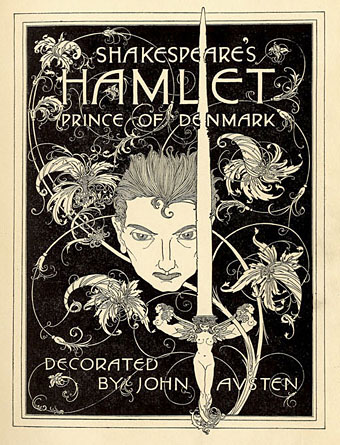
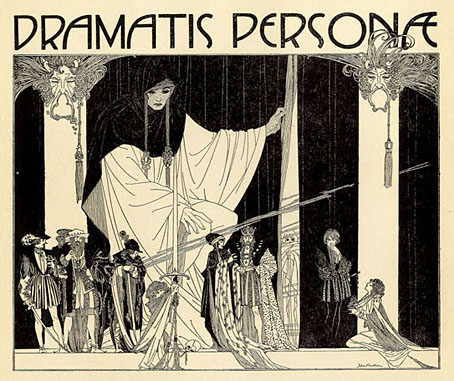
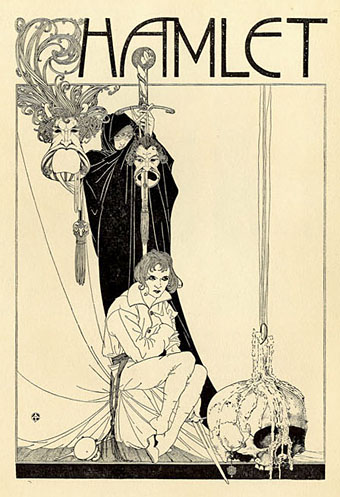
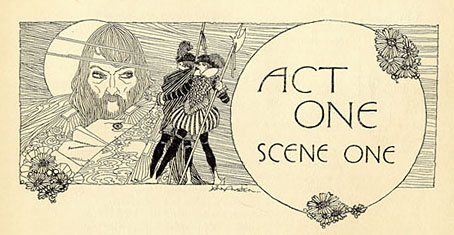
John Austen’s Hamlet

austen01.jpg

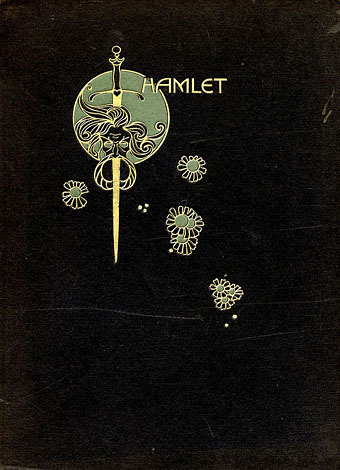
The 1922 edition of Hamlet “decorated” by British artist John Austen (1886–1948) is a lot more visible today than it was a few years ago, thanks to a reprint by Dover Publications in their Calla Editions series. The scans here are from an original printing at VTS. Austen’s Hamlet is often rated as his chef d’oeuvre, and with good reason, he manages to lend some visual splendour to a play whose concerns are a lot more introspective than the usual illustration standards of The Tempest and A Midsummer Night’s Dream. Masks, swords and skulls are recurrent symbols. Yes, the drawings owe a great deal to Harry Clarke’s example—all those manga faces, spiny fingers and swathes of black—but that’s no bad thing if you can pull it off. If you’re going to borrow a style then you may as well take from the best.

austen02.jpg

austen03.jpg

austen04.jpg

austen04-1.jpg

Continue reading “John Austen’s Hamlet”

Weekend links 164

panikanova.jpg

Ekaterina Panikanova paints on books.

Back in 2009 I bought a book of Art Nouveau illustration and design which contained an intriguing drawing by an Austrian artist, Franz Wacik (1883–1938). At the time there was little of Wacik’s other work online so I was delighted by the latest post at 50 Watts which showcases a selection of his illustrations. Wacik was a contemporary of British illustrator Sidney Sime, and both artists share a predilection for the comic and the grotesque.

• “The outlawing of drugs such as cannabis, MDMA and LSD amounts to the ‘the worst case of scientific censorship since the Catholic Church banned the works of Copernicus and Galileo’, the former Government drugs advisor Professor David Nutt has claimed.” Related: “At last, the edifice of drugs prohibition is starting to crumble,” says Amanda Feilding.

Alan Johnston on “A gay island community created by Italy’s Fascists”, and at Another Nickel In The Machine a report on The Gateways Club, one of the few meeting places for London’s lesbians in the 1960s. Alex Park wonders “Why Is Gay Porn So Popular In Pakistan?”

• If it’s June 16th then it must be Bloomsday: The Irish Times has a page of Joyce-related links to mark the anniversary. This year there’s a global reading of Ulysses taking place.

• “Now we can concentrate on album number nine,” says Kraftwerk’s Ralf Hutter. The rest of us will impatiently count the passing seconds.

• After a week in which George Orwell’s Nineteen Eighty-Four has seen an increase in sales, a look at its cover designs old and new.

Aleister Crowley: Wandering the Waste is a 144-page graphic biography of the Great Beast by Martin Hayes and RH Stewart.

Barnbrook Design‘s presentation of Taxidermy, a book by Alexis Turner, is rather splendid.

• FACT Mix 386 is a great collection of dubby grooves compiled by Young Echo.

• From 2001: Michael Wood in the LRB reviewing Apocalypse Now Redux.

• The first recording of Allen Ginsberg reading Howl.

Rejoyce (1967) by Jefferson Airplane | The Sensual World (1989) by Kate Bush | Molly Bloom (2013) by Alan Munde