The weekend artists, 2017

images.jpg

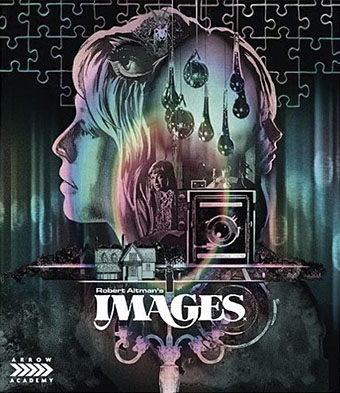
Art by Twins of Evil for the forthcoming blu-ray from Arrow Academy.

The laziest post of the year is invariably a review of the artists/designers/photographers featured on the weekend posts, so here’s another end-of-year list for you. Scroll down to see what caught my attention over the past twelve months.

mueck.jpg

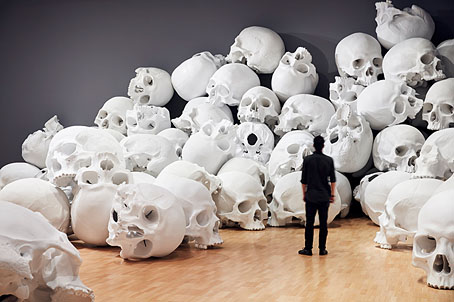
Mass by Ron Mueck at the National Gallery of Victoria Triennial. Photo by Tom Ross.

possession.jpg

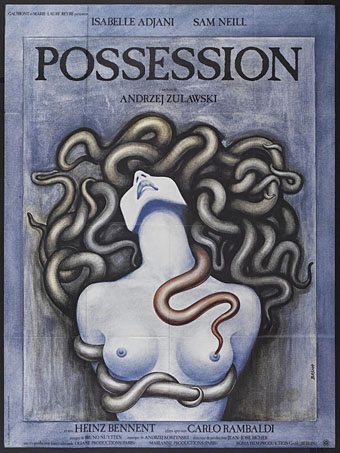
French poster by Basha (Barbara Baranowska) for Andrzej Żuławski’s extraordinary Possession (1981).

adam.jpg

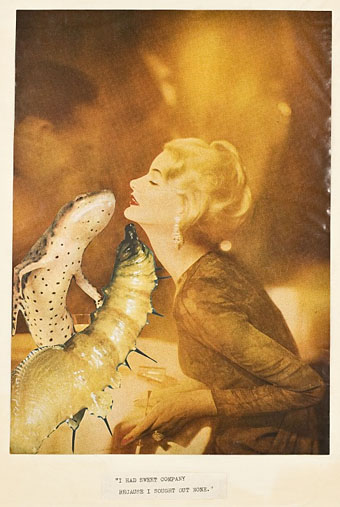
I Had Sweet Company Because I Sought Out None. Collage by Helen Adam.

nakayama.jpg

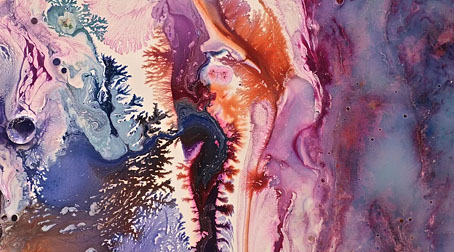
Still of an Alive Painting by Akiko Nakayama.

Continue reading “The weekend artists, 2017”

Gustave Doré’s Contes Drolatiques

dore01.jpg

I mentioned Gustave Doré in the Émile Bayard post last week so here’s something from the man himself. I’ve known a couple of the pictures in this 614-page volume for a long time but it’s taken me until this week to look through them all. Doré began his career as a creator of humorous illustrations, and his early illustrated books were at the lighter end of the scale. His flair for the comic and the grotesque are combined in this 1855 edition of Balzac’s stories with a total of 425 drawings, some of which feature the artist’s taste for violent death. As always with Doré, his drawings were filled and embellished by a team of engravers but this is still a remarkable amount of work. What you see here is a necessarily small selection of the full-page pictures; the entire book may be browsed at the Internet Archive.

dore02.jpg

dore03.jpg

dore04.jpg

Continue reading “Gustave Doré’s Contes Drolatiques”

Émile Bayard’s Histoire de la Magie

bayard11.jpg

Regular readers may have noticed my persistent urge to trace the provenance of certain images or designs. The latest candidate is the above illustration of a witches sabbat, a picture familiar to readers of occult histories in addition to appearing on at least two album covers. It’s the use in occult books which no doubt drew it to the attention of composer John Zorn who used it as a cover image in 2004 for his Magick album, one of a series of occult-themed recordings. The album credits the artwork to Gustave Doré, a plausible candidate given the engraving style but I’m familiar enough with Doré’s work to doubt that it was one of his.

bayard01.jpg

Earlier this week I was looking for more occult-related imagery so finally conducted a proper search for the sabbat picture. The origin is a French volume by Paul Christian, Histoire de la Magie, Du Monde Surnaturel Et de la Fatalite a Travers Les Temps (1870), and the full-page illustrations are by Émile Bayard (1837–1891). The Doré identification was partially correct since Bayard was a contemporary of Doré’s, and the drawings were engraved by François Pannemaker, an engraver who worked on many of Doré’s books as well as the Hertzel editions of Jules Verne. Émile Bayard is one of those artists whose name is unknown today even though people throughout the world would recognise one of his drawings; his illustration of Cosette from Victor Hugo’s Les Miserables provided the face seen on all those posters and hoardings promoting the popular musical.

bayard02.jpg

“Paul Christian” was the nom de plume of Jean-Baptiste Pitois (1811–1877), and his study of occult history was a popular book when it first appeared. I can’t say much about its contents but the illustrations (of which these are a selection via this page) show a range that encompasses various myths and religions as well as the expected variants of Western occultism. I’d seen several of Bayard’s other illustrations in a more recent French history of the occult, where the pictures are uncredited. I’ve suspected for years that they might be by the same artist responsible for the sabbat picture so this discovery has laid another nagging question to rest.

bayard03.jpg

Histoire de la Magie isn’t among the scanned books at the Internet Archive, unfortunately, but a copy may be viewed at Gallica. It’s a shame this is one of Gallica’s older scans which spoils the artwork but you can at least seen the book in full. An English translation was published in the US in 1969, containing notes and additions by living occult experts, but I’ve yet to discover whether this edition retained Bayard’s pictures.

bayard04.jpg

bayard05.jpg

Continue reading “Émile Bayard’s Histoire de la Magie”

Weekend links 385

picasso.jpg

• It won’t be out until late January—and then in the UK only—but the blu-ray premiere of The Mystery of Picasso (1956) by Henri-Georges Clouzot was announced this week. The initial run of the discs (there’s also a DVD) will include a booklet containing my essay about the film, something I was very pleased and honoured to be asked to write. Clouzot’s remarkable study of Picasso drawing and painting for the camera was made immediately after his masterwork, The Wages of Fear (also newly available on UK blu-ray), and this new edition will include two short extras, one of which, A Visit to Picasso (1949) by Paul Haesaerts, is an excellent precursor/companion to the main feature. More on this subject later.

• At the Internet Archive: an almost complete run of The Twilight Zone Magazine (1981–1989). While masquerading as a TV-series spin-off, TZ under the editorship of TED Klein was an excellent periodical devoted to horror and dark fantasy. In addition to running original fiction by major authors (Stephen King was a regular), the magazine contained features about older writers such as Lovecraft and Machen along with book reviews by Thomas Disch, film reviews by Gahan Wilson, interviews and more.

• “Bram Stoker was gay,” says Tom Cardamone in a review of Something in the Blood: The Untold Story of Bram Stoker, the Man Who Wrote Dracula by David J. Skal. I’ve not read Skal’s book so can’t comment on its claims but his earlier Hollywood Gothic (about Dracula on page and screen) includes some discussion of “sexual ambiguity” in Stoker’s work.

• Mixes of the week: FACT mix 625 by Elena Colombi, Secret Thirteen Mix 235 by Rhys Fulber, and XLR8R Podcast 514 by Tommaso Cappellato.

Help, Help, The Globolinks! is a previously unreleased electronic soundtrack by Suzanne Ciani, out next week.

La Région Centrale (1971), Michael Snow’s epic of landscape gyrations in two parts, here and here.

Alexander Calder and the Optimism of Modernism: Jed Perl in Conversation with Morgan Meis.

• Illustrations by Lynd Ward for The Haunted Omnibus (1935) edited by Alexander Laing.

Daniel Dylan Wray on the gay-porn music of disco pioneer Patrick Cowley.

• It’s that man again (and his drawings): Ernst Haeckel: the art of evolution.

• At Dennis Cooper’s: Steve Erickson presents A Black Psychedelia Primer.

Bootsy Collins‘ favourite albums.

Picasso (1948) by Coleman Hawkins | Pablo Picasso (1976) by The Modern Lovers | Picasso Suite pt. 1 (1993) by David Murray Octet

The art of Rafael Romero Calvet, 1885–1925

calvet01.jpg

Recent picture research turned up another illustrator whose work I hadn’t seen before. Rafael Romero Calvet was Spanish, and the dates above aren’t necessarily accurate (he may have been born in 1884). He did die young, however, and probably too soon to make more of an impact outside the magazines he was working for. The covers here are all from Los Contemporáneos, a Spanish publication that ran from 1909 to 1926. Many of Calvet’s covers—dating from 1909–1910—are grotesque and macabre enough to suit Der Orchideengarten, although that magazine wouldn’t be launched for another ten years.

calvet02.jpg

There’s more of Calvet’s work at Wikimedia Commons, while this feature at Collectors Weekly has a glimpse of his cover for Baudelaire’s Les Fleurs du Mal.

calvet03.jpg

calvet04.jpg

Continue reading “The art of Rafael Romero Calvet, 1885–1925”