Virgil Finlay’s magazine illustrations

finlay1.jpg

The Time Machine by HG Wells; Famous Fantastic Mysteries, August 1950.

This one will be popular, I’m sure. One of the recent uploads at the Internet Archive is a massive collection of Virgil Finlay’s interior illustrations from the magazines that published most of his work—Weird Tales, Famous Fantastic Mysteries, Amazing Stories, etc, etc—together with the astrological illustrations he created later in his career, plus other material, including a few pieces that never appeared in print. Pencil drawings, lithographs and hundreds of meticulous renderings in ink on paper or scratchboard; 1888 illustrations in all. Whoever put the haul together has been much more thorough than I’d have expected. Rather than a stash of random drawings you get 10 separate folders (best appreciated in the cbz format; see the note below) with each illustration tagged with the name of the story it was illustrating, and the date of publication. The contents are a mix of reproductions from later reprints, together with cropped pages from magazine scans. Taken together, this must comprise almost all of Finlay’s published work excluding his magazine covers and other paintings.
finlay3.jpg

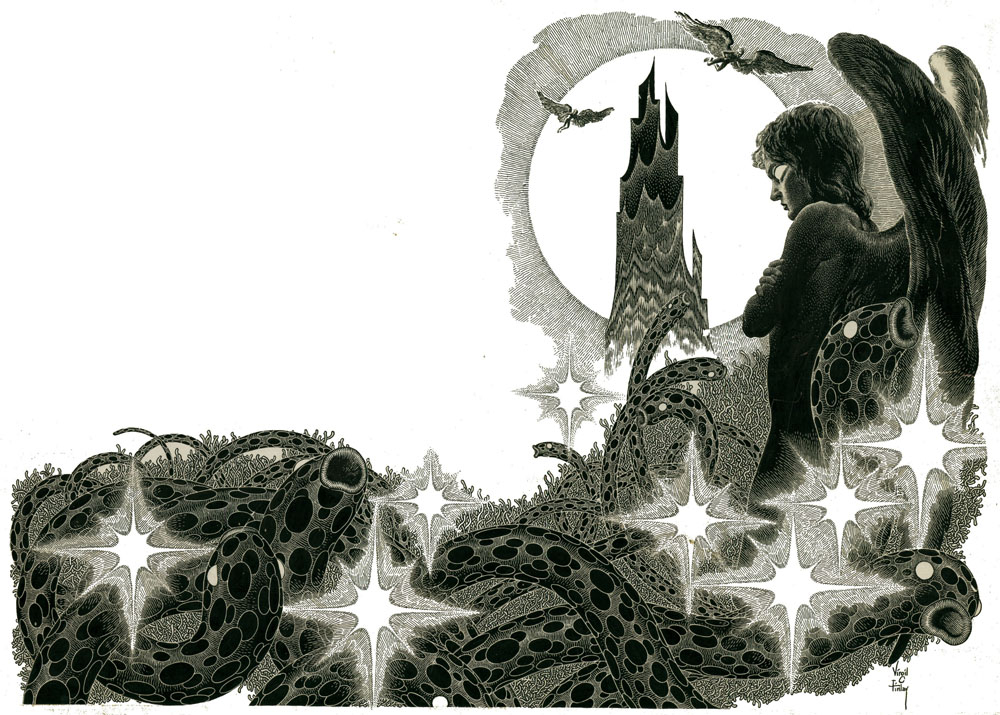
Earth’s Last Citadel by Henry Kuttner and CL Moore; Fantastic Novels Magazine, July 1950.

Virgil Finlay (1914–1971) can be a frustrating artist for anyone who admires his work. He was massively prolific, and maintained a high level of quality for almost 40 years; but his interior illustrations were often printed on pulp stock, the kind of paper that offers the worst kind of print reproduction, and which darkens and eventually crumbles into dust unless it’s carefully stored. Descriptions of his illustrations often note that his drawing style evolved to compensate for the deficiencies of the printing but much of his artwork was very finely rendered, and I’m not sure his minute stipple effects would have printed any better (or worse) than the traditional cross-hatching which he used from time to time. His drawings have at least been well-served by reprint collections, where the white art paper makes his striking compositions leap off the page. Inevitably, the best of these—Gerry de la Ree’s seven-volume collection from the 1970s, and a four-volume set from the 1990s—are all out of print. The sheer quantity of illustrations also presents a problem for any reprint collection: what to include…or leave out? All of which is a roundabout way of saying that this accumulation of his interior art may be unauthorised, and even frowned upon by some, but it benefits Finlay by keeping his work in circulation and showing the full range of his career.
finlay5.jpg

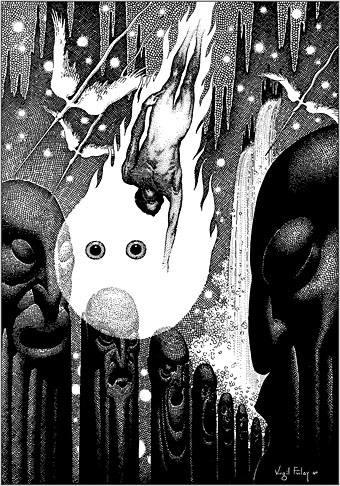
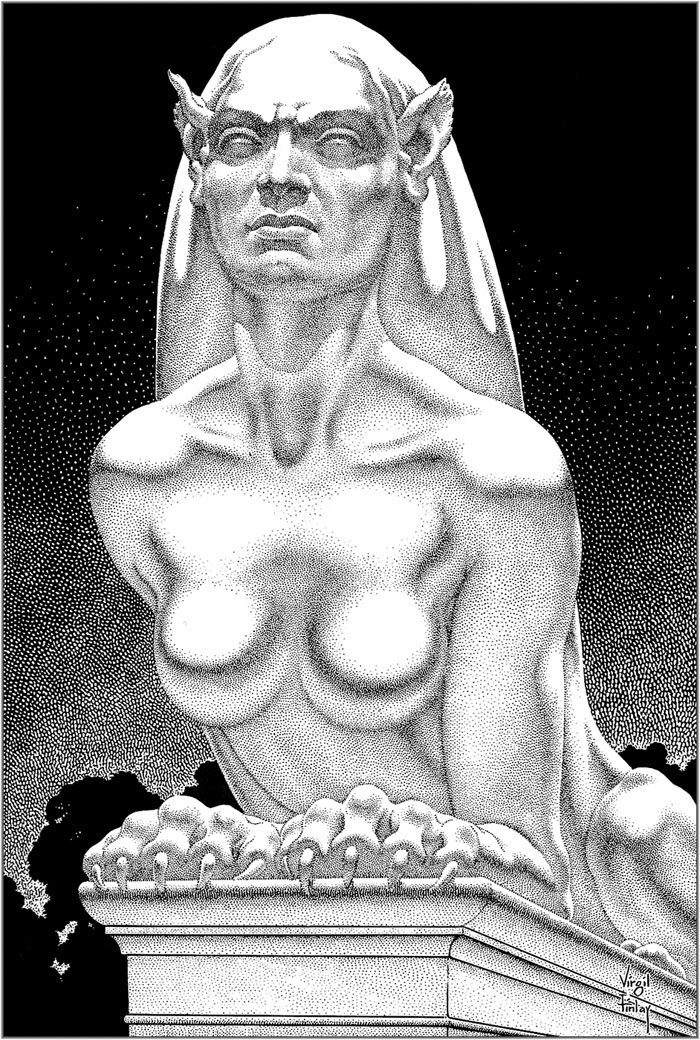
The Faceless God by Robert Bloch; Weird Tales, May 1936.

With 1888 illustrations to choose from, picking out a representative selection is a hopeless task, so what you see here are a few favourites. I said that Finlay maintained a high level of quality but there are unsuccessful Finlays, especially in the early years when his style was still evolving. (It should be noted that he was in his early twenties when he was creating pieces such as these. His errors are a lot less grievous than mine were at the same age.) One of the hallmarks of the Finlay style is a frequent use of photo-reference, especially for faces, and it’s the disjunction between faces and bodies which occasionally jars. Disparities between the size or angle of a head and a body are common in photo-collage but you don’t expect to see them in a drawing. Occasionally the disparities worked for him, as in his illustration for The Faceless God by Robert Bloch, a drawing that so impressed HP Lovecraft that he responded with a short poem praising both picture and artist. The reference images used for his later work are much more seamlessly integrated, and in the 1940s and 50s he seemed to be using posed models as frequently as the illustrators for the big American magazines.
finlay4.jpg

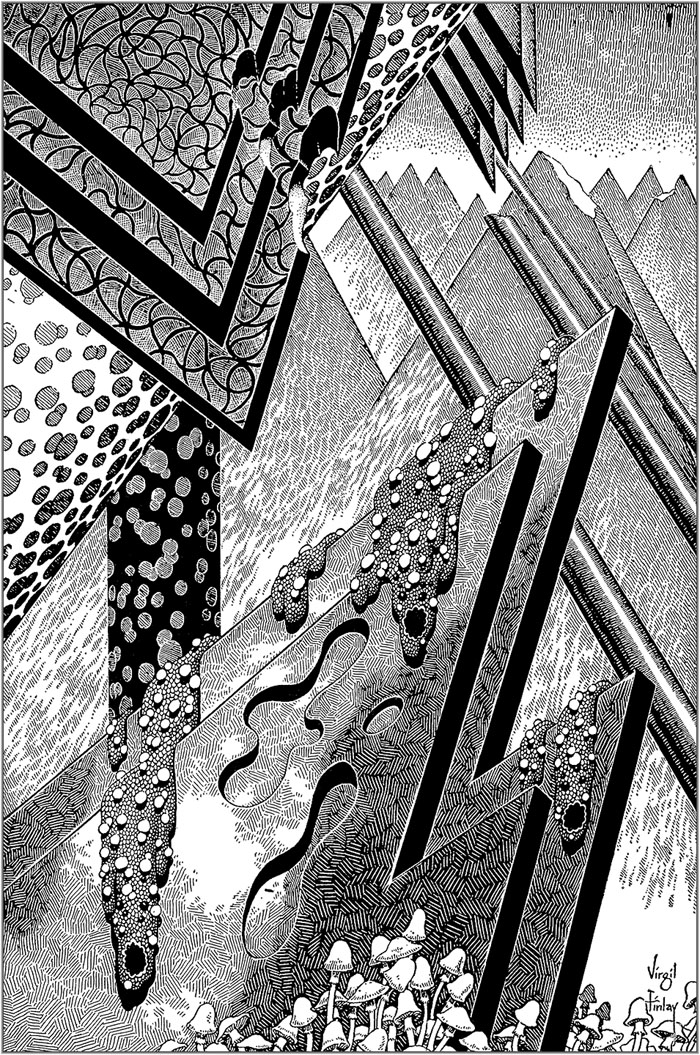
The Man Who Mastered Time by Ray Cummings; Fantastic Novels Magazine, March 1950. Remove the fungi from this illustration and you’d have an almost abstract image.

Regarding cbz or cbr files: these are simply folders filled with jpegs or pngs which have been zipped then given a new suffix. They can be browsed using a suitable comics-reader application; I use Simple Comic for the iMac and ComiCat for the tablet. The files can also be opened with any unzipping software to give you access to the images inside. I find these files so much easier to use than pdfs, especially for image-heavy publications, that I’ve taken to exporting pdf pages as jpegs then zipping a folder of the images into a cbr. One of the advantages of the cbr format is that the readers allow you to extract an image without unzipping the whole file. The only drawback with the Finlay files is that ComiCat doesn’t let you see the file name the way that Simple Comic does.
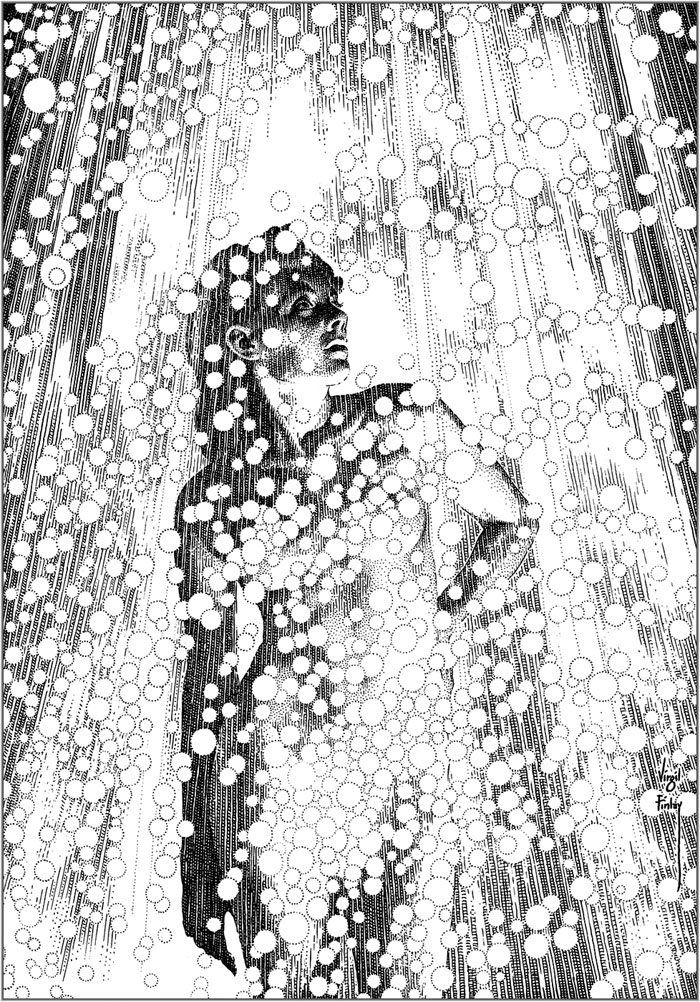
finlay6.jpg

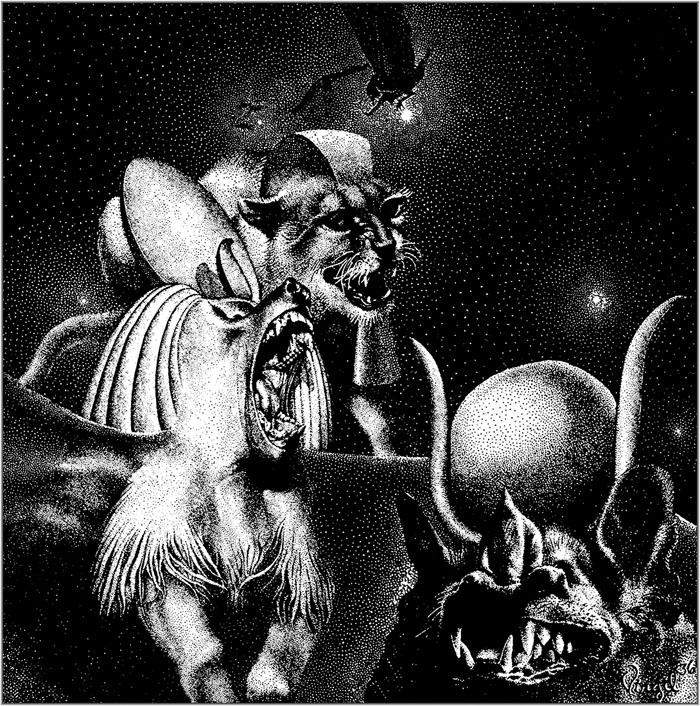
Full Moon by Talbot Mundy; Famous Fantastic Mysteries, February 1953.

Elsewhere on { feuilleton }
The illustrators archive
The Lovecraft archive

Previously on { feuilleton }
Virgil Finlay’s Tarzan
Virgil Finlay’s Salomé
The monstrous tome

Weekend links 616

finlay.jpg

Illustration by Virgil Finlay for The Face in the Abyss by A. Merritt; Famous Fantastic Mysteries, October 1940.

• “The pier was completely outside of the gallery system, which David loved of course. People were just working on the walls, nothing was for sale, nothing could really be bought, although people were coming in and trying to chip things off the walls.” Cynthia Carr on the love letters and legacy of David Wojnarowicz.

• “In pursuit of Pure Form, the Polish artist known as “Witkacy” would consume peyote, cocaine, and other intoxicants before creating pastel portraits.” Juliette Bretan on the artful intoxications of Stanisław Ignacy Witkiewicz.

• Kino Kyiv: Christopher Silvester compiles a list of notable Ukrainian films. I’ve not seen all of these but Shadows of Our Forgotten Ancestors is a great favourite.

Onscreen for nearly the entire runtime, [Laura Dern] pulls off the remarkable feat of being in total control of a scenario organized by undermining her identity, obliterating her characterization, and so scrambling the distinction between Nikki and Susan that one eventually comes to view Inland Empire not as a maze to exit, a puzzle to solve, an ouroboros to gawk at, but rather as both a generalized treatise on the enigma of acting and a very specific, exquisitely perverse mash note to one of Lynch’s most formidable collaborators.

Nathan Lee on Laura Dern, David Lynch and Inland Empire. I’ve always thought Dern’s exceptional performance might have been recognised more widely if Lynch hadn’t filmed most of it on low-grade video.

• New music: Golden Air by Sun’s Signature, a new project from Elizabeth Fraser and Damon Reece.

• Miranda Remington explores The Strange World of…Stomu Yamash’ta.

• Steven Heller’s font of the month is Boucan.

• At Dennis Cooper’s: Labyrinthine.

Labyrinth (2010) by Chrome Hoof | Labyrinths (2018) by Jonathan Fitoussi / Clemens Hourrière | The Seventh Labyrinth (2019) by Pye Corner Audio

Weekend links 610

durer.jpg

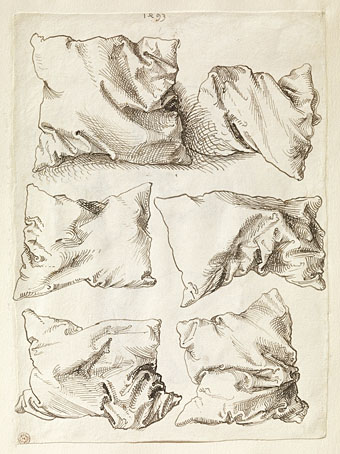
Pillow Studies (1493) by Albrecht Dürer.

• “Without ever writing a song, without ever fronting a group, Khan changed the face of British music.” Michael Hann talks to Morgan Khan about bringing New York Electro to the UK with his Streets Sounds label.

James Balmont offers “an introduction to Japan’s visceral cyberpunk cinema in five cult films”. This reminds me that I’ve not seen Shinya Tsukamoto’s Tetsuo films for years. Time to reacquaint myself.

• At Aquarium Drunkard: 15-minutes of Alice Coltrane from 1970, talking about her music and performing with Pharoah Sanders et al. Amazing.

Clive Hicks-Jenkins presents Beauty & Beast, an animated fairy tale made to showcase his toy theatre design.

• Carl Dreyer’s horror masterpiece, Vampyr (1932), is released on blu-ray by Eureka in May.

• At Wormwoodiana: Mark Valentine explores the mysteries of the Egg Language.

• DJ Food unearths paintings by Syd Mead for a Celcon Steel brochure, 1965.

• Jamie Sutcliffe enters The Strange World of Junji Ito.

• Mix of the week: Isolatedmix 117 by Refracted.

Keeley Forsyth‘s favourite music.

Electrocharge (1980) by Blackbeard | Electrodub1 (1980) by Chris Carter | Ano Electro (Andante) (1993) by The Sabres Of Paradise

Weekend links 608

timlin.jpg

The Temple, an illustration from The Ship that Sailed to Mars (1923) by William Timlin.

• “With the grotteschi, Piranesi produced hybrid forms of ornament juxtaposed in an array without regard to single-point perspective. With his capricci, he brought disparate structures into a landscape that existed only within the borders of the plate. Perhaps because of his early fidelity to accuracy and the long tradition of printmaking as a medium for the measured representation of antique forms, Piranesi’s capricci take on a particularly fantastic aura.” Susan Stewart on the ruinous fantasias of Giovanni Battista Piranesi, one of whose etchings happens to be providing the page header this month.

• At Dangerous Minds: 23rd Century Giants, the incredible true story of Renaldo & The Loaf! Oliver Hall conducts a long and very informative interview with two of Britain’s strangest music makers.

• New music: Nightcrawler by Kevin Richard Martin, recommended to anyone who enjoys the nocturnal doom of Bohren & Der Club Of Gore; and Murmurations by Lea Bertucci & Ben Vida.

“Throughout the book, McCarthy writes as if he knows something that more conventional historians aren’t always keen to accept: that the past doesn’t always make sense, that it’s often cruel and irrational, and that some things aren’t so explainable. History is not a book waiting to be opened so much as a Pandora’s box that might curse us and leave us chastened by what we find inside.”

Bennett Parten on Cormac McCarthy’s baleful masterpiece, Blood Meridian

• “Inside me are two wolves and they are both paintings by Kazimierz Stabrowski.” S. Elizabeth‘s latest art discoveries.

• At Wormwoodiana: Mark Valentine on Arthur Machen and the mysteries of the Grail.

• RIP Betty Davis and Douglas Trumbull.

• At Dennis Cooper’s: Tobe Hooper Day.

Temple Bells (1959) by Frank Hunter And His Orchestra | Temple Of Gold (1960) by Les Baxter | Temple (2018) by Jóhann Jóhannsson

Another visit to The Other Side

kubin01.jpg

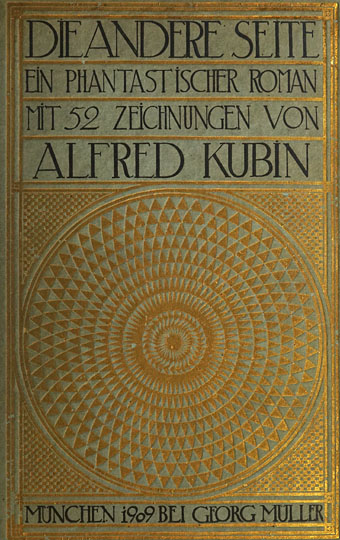
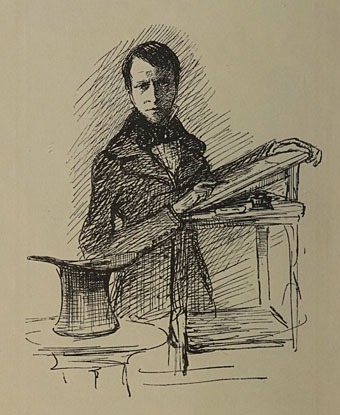
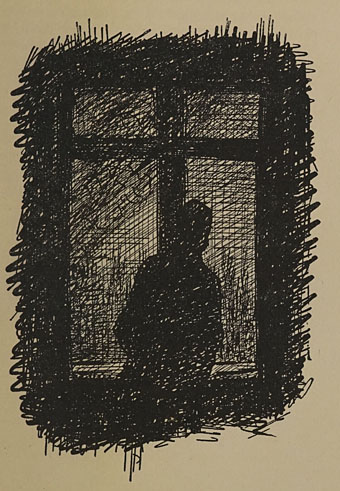
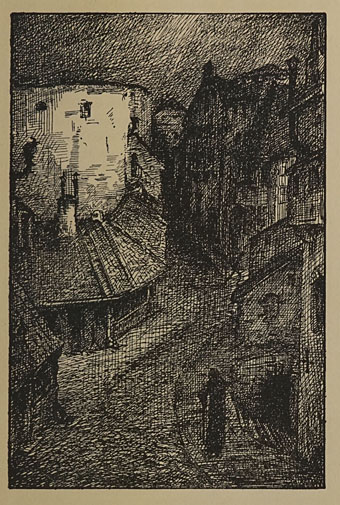
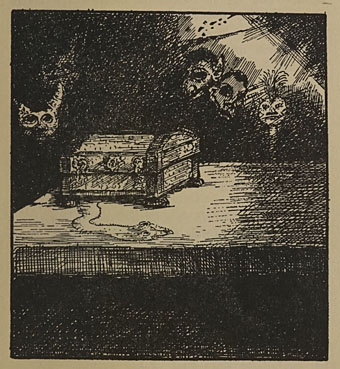
Readers of Alfred Kubin’s nightmarish fantasy novel, The Other Side, may like to know that a first edition was among the new uploads at the Internet Archive in December. The original printing is of note for the fine quality of its illustrations which—unlike subsequent editions—would have been taken from Kubin’s original drawings. Many of these are little more than vignettes but the book contains a number of full-page pieces that are densely cross-hatched, a technique that degrades the more the picture is copied, and which suffers even more if the picture is reduced in size, as these drawings have been in many paperback printings. I complained in an earlier post about the poor quality of the reproductions in my Dedalus reprint, and linked to a Flickr collection of scans from another first edition, but that set didn’t contain all 52 drawings. The pages of this new copy are rather discoloured but the sombre shade suits the increasingly dark tone of Kubin’s story. I imagine the author might approve.

kubin02.jpg

kubin03.jpg

kubin04.jpg

kubin05.jpg

Continue reading “Another visit to The Other Side”