Modern book illustrators, 1914

clarke1.jpg

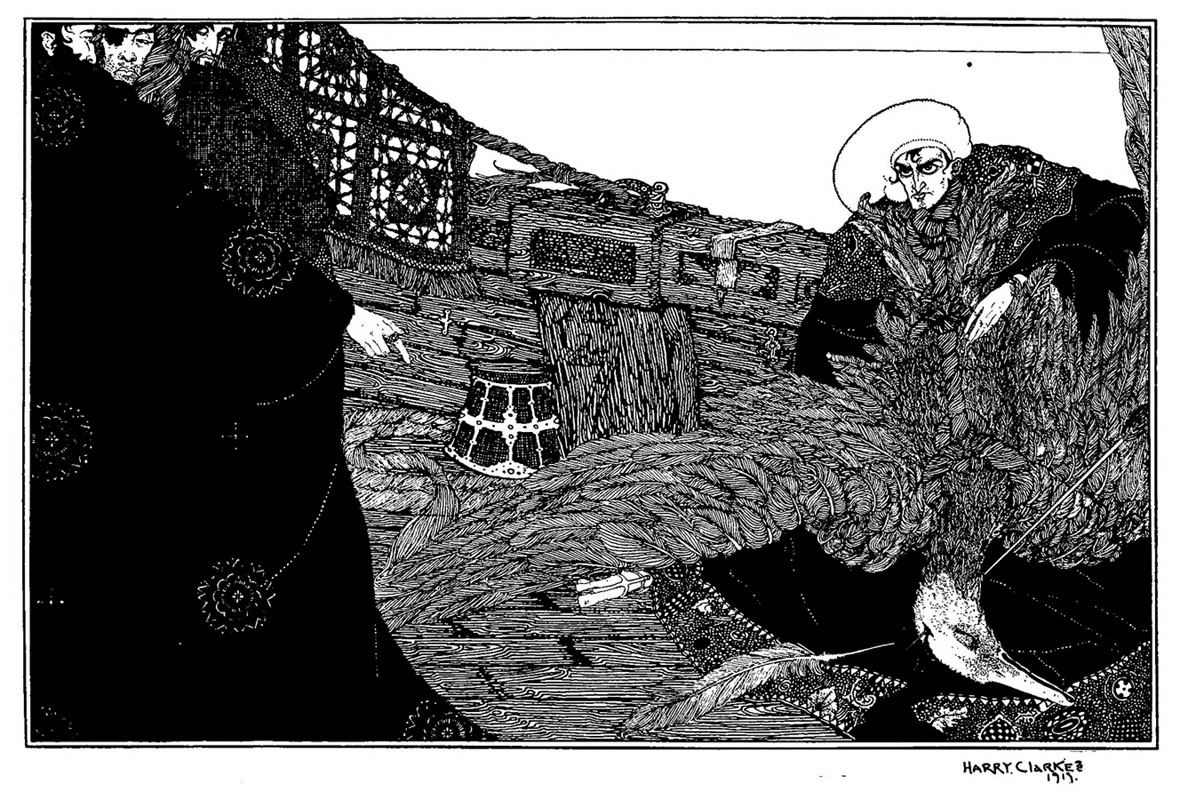
The Rime of the Ancient Mariner by Harry Clarke.

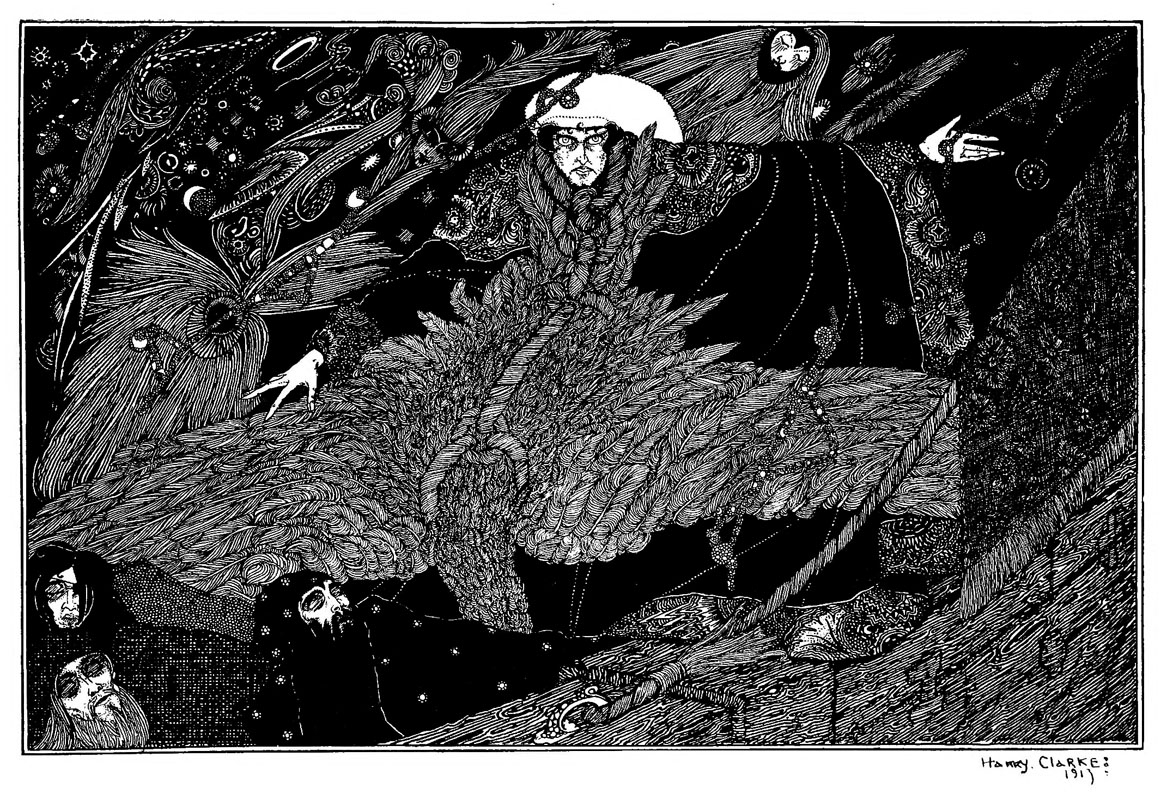
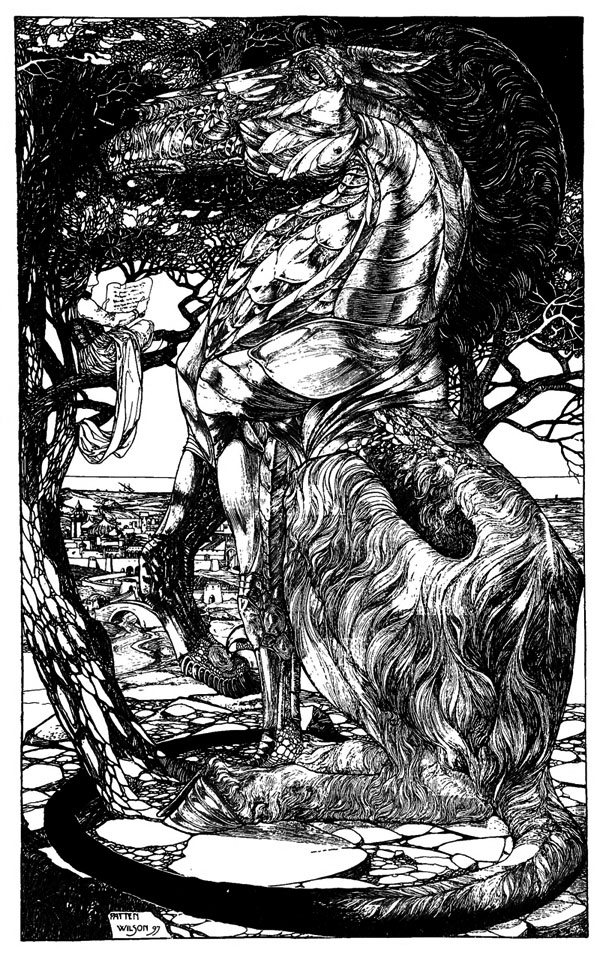
Some samples from a collection of mostly black-and-white drawing at the Internet Archive, Modern Book Illustrators and Their Work (1914), edited by C. Geoffrey Holme & Ernest G. Halton. This was an illustration review produced by The Studio magazine and in this edition happens to feature two pieces of work from Harry Clarke’s The Rime of the Ancient Mariner (1913). Also at the Internet Archive is an earlier Studio publication, Modern Pen Drawings: European and American from 1901 from which I’ve selected Patten Wilson’s hyper-detailed rendering of Rustum and the Simoorg, a fantastic piece of work in every sense.

clarke2.jpg

The Rime of the Ancient Mariner by Harry Clarke.

metcalfe.jpg

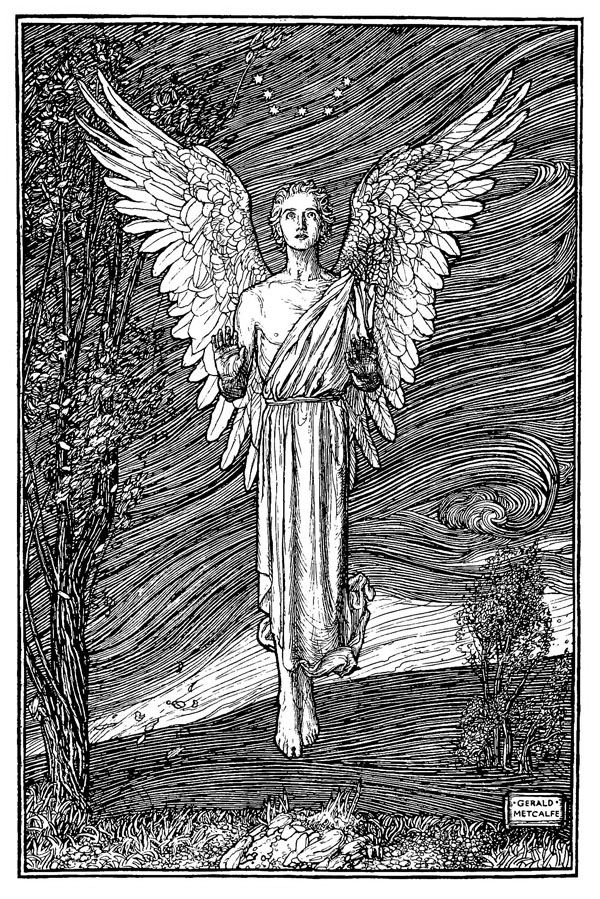
From The Poems of Coleridge by Gerald Metcalfe.

payne.jpg

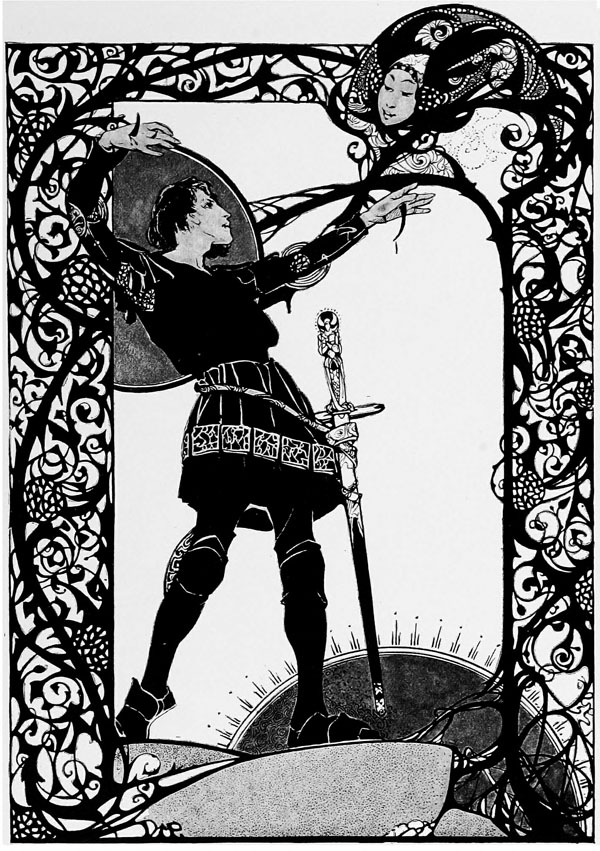
La Belle Dame sans Merci by Dorothy M. Payne.

wilson.jpg

Rustum and the Simoorg by Patten Wilson.

Elsewhere on { feuilleton }
The illustrators archive

Previously on { feuilleton }
Illustrating Poe #3: Harry Clarke
Strangest Genius: The Stained Glass of Harry Clarke
Harry Clarke’s stained glass
Harry Clarke’s The Year’s at the Spring
The art of Patten Wilson, 1868–1928
The art of Harry Clarke, 1889–1931

Philippe Jullian, connoisseur of the exotic

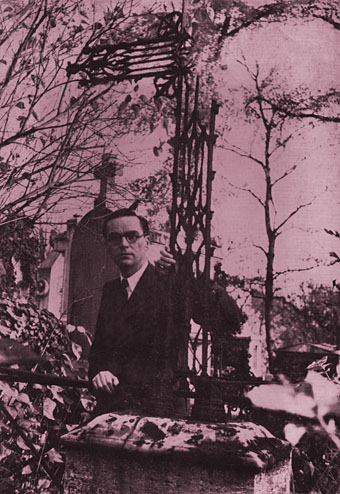
jullian01

Monsieur Jullian as seen on the back cover of Dreamers of Decadence (1971).

Here at last is the long-promised (and long!) piece about the life and work of Philippe Jullian (1919–1977), a French writer and illustrator who’s become something of a cult figure of mine in recent years. Why the fascination? First and foremost because at the end of the 1960s he wrote Esthètes et Magiciens, or Dreamers of Decadence as it’s known to English readers, a book which effectively launched the Symbolist art revival and which remains the best introduction to Symbolist art and the aesthetic hothouse that was the 1890s. If I had to choose five favourite books Dreamers of Decadence would always be on the list. This point of obsession, and Philip Core’s account of the writer, made me curious about the rest of Jullian’s career.
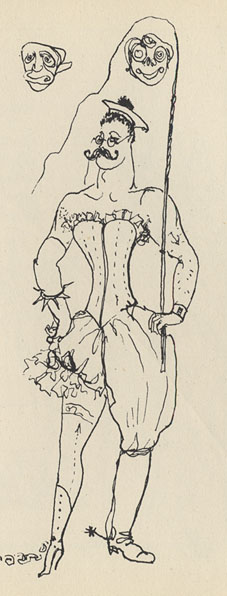
jullian13

An illustration from Wilson & Jullian’s For Whom the Cloche Tolls (1953). “Tata has called these his Krafft-Ebbing (sic) pictures of his friend Kuno, whatever that means.”

Philip Core was friends with Philippe Jullian, and Core’s essential Camp: The Lie that Tells the Truth (1984) has Jullian as one of its dedicatees. It’s to Core’s appraisal that we have to turn for details of the man’s life. There is an autobiography, La Brocante (1975), but, like a number of other Jullian works, this doesn’t seem to have been translated and my French is dismally pauvre. Core’s piece begins:

Philippe Jullian, born to the intellectual family of Bordeaux Protestants which produced the well-known French historian, Camille Jullian, was a last and lasting example of pre-war camp. His career began as an artist in Paris with a reputation for drag-acts parodying English spinsters. Snobbery, a talent for sensitive daydreaming, and a consuming passion for antiques, obscure art and social history, made a very different figure out of the thin and dreamy young man. Jullian suffered terribly during the Second World War; he managed to survive by visiting some disapproving cousins dressed as a maiden aunt, whom they were happy to feed. However, he made a mark in the world of Violet Trefusis, Natalie Barney and Vita Sackville-West by illustrating their books with his wiry and delicate doodles; this led to a social connection in England, where he produced many book jackets and covers for Vogue throughout the 1950s.

Having only seen Jullian in his besuited and bespectacled guise it’s difficult to imagine him dragged up, but the cross-dressing interest is apparent in his humorous collaboration with Angus Wilson and in a later novel, Flight into Egypt. As for the wiry and delicate doodles, they’re very much of their time, in style often resembling a less-assured Ronald Searle. One early commission in 1945 was for the first of what would become a celebrated series of artist labels for Château Mouton Rothschild. Later cover illustrations included a run for Penguin Books some of which can be found at Flickr.

Philip Core continues the story:

Elegant in the austerely tweedy way the French imagine to be English, Jullian exploited his very considerable talents as a writer, producing a series of camp novels throughout the 1950s (Scraps, Milord) which deal frankly but amusingly with the vicissitudes of handsome young men and face-lifted ladies, grey-haired antique dealers and criminals. One of the first to reconsider Symbolist painting, Jullian reached an enormous public in the 1960s with his gorgeous book, Dreamers of Decadence – where an encyclopaedic knowledge of the genre and its accompanying literature helped to create the boom in fin de siècle revivalism among dealers and museums.

An acerbic wit accompanied this vast worldly success; always docile to duchesses, Jullian could easily remark to a hostess who offered him a chocolate and cream pudding called Nègre en chemise, “I prefer them without.” Less kindly, to a gay friend who objected to Jullian’s poodles accompanying them into a country food shop by saying “Think where their noses have been”, he could also retort “Yes, that’s what I think whenever I see you kiss your mother.”

Continue reading “Philippe Jullian, connoisseur of the exotic”

Gilded volumes

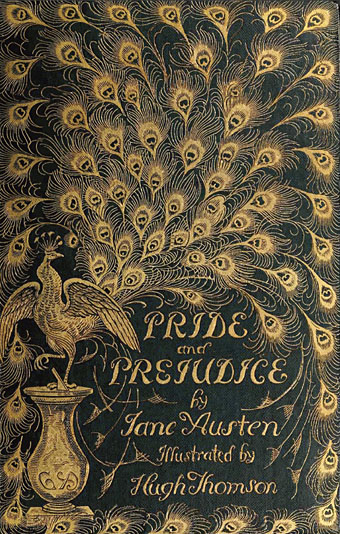
thomson.jpg

The cover of an 1894 edition of Jane Austen’s novel designed by Hugh Thomson (1860–1920). The so-called “Peacock Edition” is illustrated throughout and a copy can be yours for £845 should you be so inclined. Or you can go to the Internet Archive and download the same edition for free. Thomson’s lavish cover design is absolutely right for the 1890s and as such would have suited Oscar Wilde far more than Jane Austen. AbeBooks drew my attention to this with a feature on rare books with gilded covers where, needless to say, all the titles are very expensive. A lot more reasonable but just as lavish is I Wonder by Marian Bantjes, the perfect gift for anyone who enjoys the art of book design.

Elsewhere on { feuilleton }
The book covers archive

Previously on { feuilleton }
I Wonder by Marian Bantjes

Weekend links 38

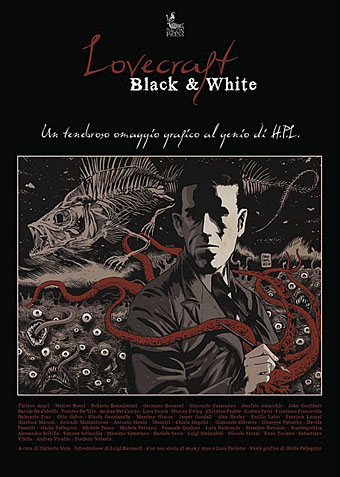
lovecraftbaw.jpg

Arriving in the post this week was Lovecraft Black & White, an Italian book whose contents are spelled out in the title, black-and-white illustrations based on the work of the Providence master. Among the featured works is my 1999 rendering of Azathoth. There’s more about the book here and here.

Also on the work front, one of the books I designed interiors for a couple of months back was The Search for Philip K. Dick, a sombre biography and memoir by Anne R. Dick, the author’s third wife. Ms Dick discussed the book with the NYT a few days ago. The design was mostly straightforward layout but I did make a quick ASCII portrait of PKD from one of Anne Dick’s photos.

Farewell, the documentary film about Lady Grace Drummond-Hay’s flight around the world in the Graf Zeppelin, can be viewed here.

• “I personally think that the pages look better on the iPad than they do in real life.” Artist Tom Phillips again on the Humument iPad app.

The Birds Are Flying Elsewhere: singer/songwriter Linda Perhacs. Related: Parallelograms – A Short Film About Linda Perhacs.

St Eia, guitar improvisations by Zali Krishna, “Keywords: jazzgazing; entropy circus; st ives; cornwall; psychogeography”.

Moon Wiring Club and DD Denham: music for children, by children. Related: Moon Wiring Club’s Jayston Mix.

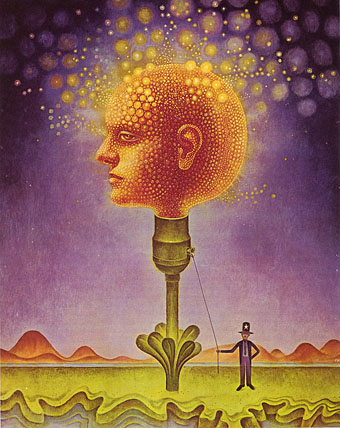
kirkland.jpg

The 1970s was another country, they did things differently there. One of a number of illustrations for science textbooks by Phil Kirkland at A Journey Round My Skull.

• “Fellatio has become a recurrent theme in your work hasn’t it, I say.” Alan Bennett sheds some inhibitions.

Talking To The Sci-Fi Lord: Regenerations & Ruminations With Michael Moorcock.

Time and the Gods (1906) by Lord Dunsany, illustrated by Sidney Sime.

City of Silence, a calendar for 2011 by Thom Ayres.

Scientists glimpse universe before the Big Bang.

• Photography by Josef Sudek (1896–1976).

Aurora photo gallery, November 2010.

The Last Tuesday Society.

Parallelograms (1970) by Linda Perhacs | Six AM (1979) by Thomas Leer & Robert Rental | Rockin’ Back Inside My Heart (1989) by Julee Cruise.

Scenes from a carriage

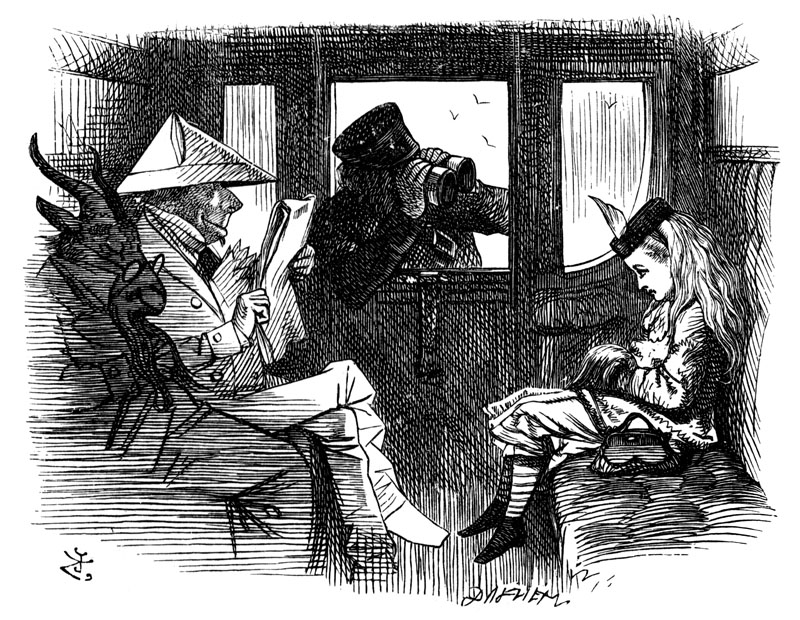
tenniel.jpg

One of John Tenniel’s illustrations for Through the Looking-Glass (1871).

The collaboration with Carroll, and the production of this clairvoyant illustration gave Tenniel the chance to accuse the killer, whose identity he knew – because he had, at some level, shared in the crime. His capped (or crowned) Guard wears the Diamond and stares, eyeless, at the girl: because he is, or stands for, the Red King. He is checkmated. The Goat accuses him, a Tarot Devil, representing ‘ravishment, force, fatality’. So Tenniel is able to put into his depiction of Alice the details of the murders that the police have never made public. The hands of the victims were always tied in front of them – as Alice’s are, within her muff. They were all strangled with a knotted scarf, such as the one that Alice wears. And a single feather was knotted into their hair. I rest my case.

There’s further divination by Iain Sinclair of Tenniel’s carriage scene in his 1991 novel Downriver but you’ll have to search out the book if you want the rest. The picture above is scanned from my 1908 edition of the two Alice novels which has the sharpest reproductions of Tenniel’s illustrations I’ve seen, not least because they’re printed on quality paper. Later editions often print second- or third-generation copies with the cross-hatched areas reduced to black smudges.

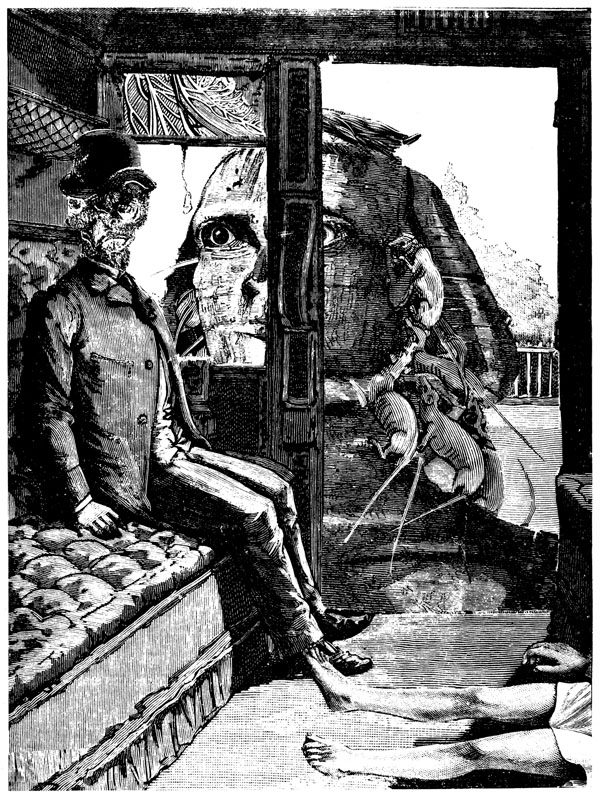
ernst.jpg

Oedipus by Max Ernst from Une semaine de bonté (1934).

Tenniel’s carriage scene has always been linked for me with this collage by Max Ernst from his Surrealist masterwork, Une semaine de bonté. Sinclair’s proposed murder scenario gives the two pictures an additional resonance when you notice the body on the floor of Ernst’s carriage. Is this Oedipus’s father, recently slain by his son, or some other victim?

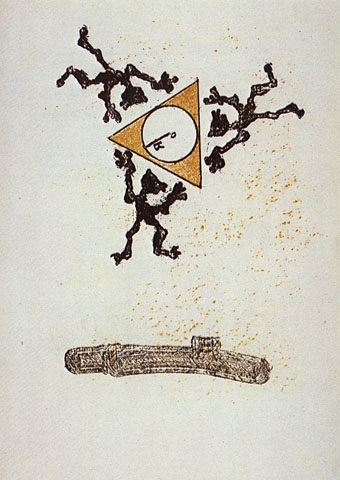
ernst2.jpg

Lithograph by Max Ernst from Lewis Carroll’s Wunderhorn (1970).

Salvador Dalí illustrated Alice’s Adventures in Wonderland in 1969 which perhaps prompted Ernst’s own set of mysterious Alice-inspired lithographs a year later. I’ve yet to see a complete set of the Ernst prints, if anyone has a link then please leave a comment. The artist’s collage novel is a lot easier to find since it’s one of the many great books that Dover Publications keep in print.

Previously on { feuilleton }
Through the Psychedelic Looking-Glass: the 2011 calendar
Jabberwocky
Alice in Acidland
Return to Wonderland
Dalí in Wonderland
Virtual Alice
Psychedelic Wonderland: the 2010 calendar
Charles Robinson’s Alice’s Adventures in Wonderland
Humpty Dumpty variations
Alice in Wonderland by Jonathan Miller
The Illustrators of Alice