Weekend links 284

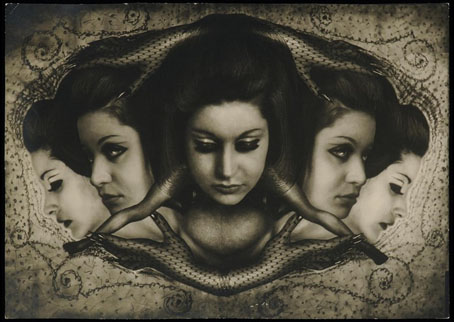
molinier.jpg

Les Hanel I by Pierre Molinier. There’s more at The Forbidden Photo-Collages of Pierre Molinier.

• Western anti-hero Josiah Hedges, better known as Edge, was the creation of prolific British author Terry Harknett. The famously violent Edge novels, credited to “George G. Gilman”, were ubiquitous on bookstalls in the 1970s. They were Harknett’s most successful works, and are still collectible today; if you’re interested there are 61 of them to search for. Amazon Originals have just launched Edge as a new TV series although anything for a mass audience is unlikely to retain the exploitative qualities of novels that often sound like pulp precursors of Blood Meridian.

Related: Terry Harknett discusses the creation of the Edge series at Drifter’s Wind; Ben Bridges on Harknett’s career, including a look at the writer’s many other Western and thriller novels; Bill Crider on Edge, Harknett and the British group of Western novelists known as “The Piccadilly Cowboys”.

• Boyd McDonald’s queer-eye film guide, Cruising the Movies: A Sexual Guide to Oldies on TV (1985), has been republished by Semiotext(e) in an expanded edition. Related: True Homosexual Experiences: Boyd McDonald and Straight to Hell by William E. Jones.

• “…a film that plumbs the dark recesses of all our imaginations: dangerous, glorious, absurd, vivid and terrifying by turns.” Charlotte Higgins on her favourite film, The Red Shoes (1948).

Art Forms from the Abyss, a new collection of illustrations by Ernst Haeckel for the report of the HMS Challenger expedition (1872–76). Related: Silentplankton.com

• “The biggest kick I ever get is to find myself pursuing some group of images without knowing why,” says M. John Harrison in conversation with Tim Franklin.

• “Plots didn’t interest him much. They were just pegs on which to hang characters and language.” Barry Day on Raymond Chandler.

• “Zdeněk Liška’s music thrived in unrealities,” says David Herter in a lengthy appraisal of the great Czech film composer.

• At Dirge Magazine: S. Elizabeth delights in the dark decor of Dellamorte & Co.

• Nabokov scholar Brian Boyd selects his ten favourite Nabokov books.

• Mix of the week: The Ivy-Strangled Path Vol. XIII by David Colohan.

Take me to the cosmic vagina: inside Tibet’s secret tantric temple.

• Pour Un Pianiste (1974) by Michèle Bokanowski | 13’05” (1976) by Michèle Bokanowski | Tabou (1992) by Michèle Bokanowski

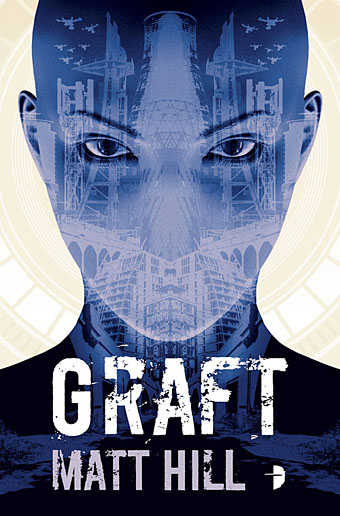
Graft by Matt Hill

graft1.jpg

UK edition.

This latest cover design has been made public much sooner than some of the other things I’ve been working on this year. Graft is another cover for Angry Robot, a novel set in near-future Manchester by local author Matt Hill. The title plays on the multiple meanings of the word “graft”, not only the colloquial term for work (honest or otherwise) but also the sense of a medical graft. Once again, Barnes & Noble have provided a convenient précis:

Manchester, 2025. Local mechanic Sol steals old vehicles to meet the demand for spares. But when Sol’s partner impulsively jacks a luxury model, Sol finds himself caught up in a nightmarish trans-dimensional human trafficking conspiracy.

Hidden in the stolen car is a voiceless, three-armed woman called Y. She’s had her memory removed and undertaken a harrowing journey into a world she only vaguely recognises. And someone waiting in the UK expects her delivery at all costs.

Now Sol and Y are on the run from both Y’s traffickers and the organization’s faithful products. With the help of a dangerous triggerman and Sol’s ex, they must uncover the true, terrifying extent of the trafficking operation, or it’s all over.

Not that there was much hope to start with.

A novel about the horror of exploitation and the weight of love, Graft imagines a country in which too many people are only worth what’s on their price tag.

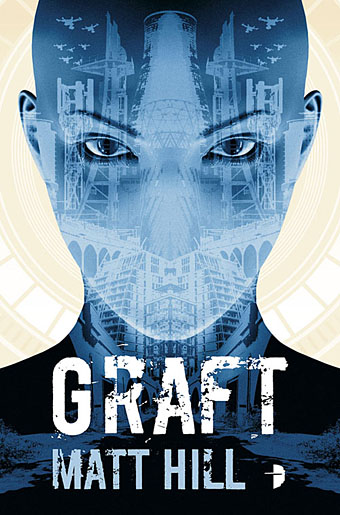
graft2.jpg

US edition.

The challenge with this one was to create something that might be read as futuristic yet also included elements of the real Manchester. All the buildings are worked up from photos of my own, many of them taken during a long day out spent wandering around the Cornbrook area and Salford Quays. The latter has been extensively redeveloped in recent years so there’s a lot of new architecture out there, including the new BBC headquarters. The elegant pylons are the supports of the Lowry Bridge which can be raised to allow ships into the docks.

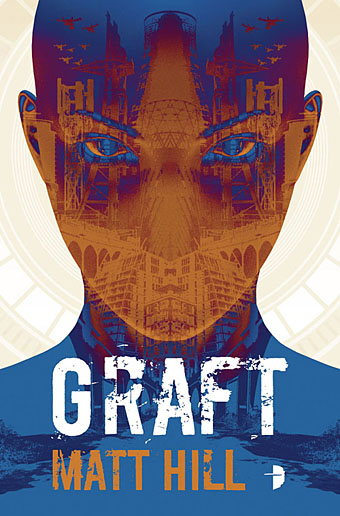
I couldn’t settle on a final colour scheme for this one so I made a number of variations then let author and publisher decide. This resulted in three covers: the UK edition, US edition and e-book. It took a while but I think I’m happiest now with the blue-and-purple version. Matt Hill talks about Graft here.

graft3.jpg

E-book.

Urbatecture

urbicande1.jpg

Spotted at Neatorama this week, Cédric Dequidt‘s Urbicande lamp, a cubic design which appears to be sinking into the table. The Neatorama people don’t seem aware that the name of the lamp refers to Fever in Urbicande (1985), a comic book by François Schuiten and Benoît Peeters, and the second volume in the masterful Cités Obscures series.

urbicande1.jpg

Fever in Urbicand: Urbatect Eugen Robick ponders the properties of the strange cube which is invulnerable yet able to grow through solid materials.

The mysterious para-dimensional cube and its effects on the divided city of Urbicande have been described here already. Fever in Urbicande is my favourite of the core stories by Schuiten and Peeters, and it seems to be one of the more popular of Schuiten’s creations to judge by the lamp and some of the spin-off works that follow.

urbicande4.jpg

Fever in Urbicand: Several months later, and the cube has burgeoned into a city-spanning “Network”.

Continue reading “Urbatecture”

Cabaret des Truands

truands1.jpg

Up until 1950 Montmartre retained an aura of evil for provincials and foreign visitors, and did its best to satisfy them with a tawdry kind of satanism. The most famous of these places, in the Boulevard de Clichy, was called L’Enfer.

Philippe Jullian, Montmartre (1977)

L’Enfer is still the most famous of these vanished Parisian establishments thanks to photos by Eugène Atget and others of its hell-mouth entrance. Among the other novelty cabarets on the Boulevard de Clichy there was Le Ciel (Heaven) next door to L’Enfer, and the death-themed Cabaret du Néant (Cabaret of Nothingness, or Limbo as Jullian has it). The exterior of the latter was suitably funereal but otherwise mundane, although once inside you were in crypt-like surroundings.

truands2.jpg

Another cabaret with a striking exterior that I hadn’t come across before was at no. 100 Boulevard de Clichy. The Cabaret des Truands (Cabaret of Truants) had a generally medieval interior with staff dressed like serving wenches and troubadours, but the exterior could almost be that of a fairground haunted house, replete with spider webs and plaster grotesques. Descriptions in English are unclear but the spiders seem to relate to a shared establishment, L’Araignée. It’s surprising to think of all these extravagant façades standing in a single (long) street in the heart of Paris, but then Montmartre in the late 19th century was the wild nighttown. Searching for photos of the Cabaret des Truands reveals an exterior changing by degrees with the passing years.

truands3.jpg

Previously on { feuilleton }
Infernal entrances

Weekend links 281

fini.jpg

Chimère du soir (1961) by Leonor Fini. Réalisme irréel is an exhibition of Fini’s work currently running at the Weinstein Gallery, San Francisco.

• ” ‘Paris invented the flâneur,’ he notes, ‘and continues to press all leisurely and attentive walkers into exercising that pursuit, which is an active and engaged form of interaction with the city, one that sharpens concentration and enlarges imaginative empathy and overrides mere tourism.’ ” David L. Ulin reviewing The Other Paris by Luc Sante.

• “A lot of posters promise so much that how can they ever deliver?” Nicolas Winding Refn talking to Mat Colegate about his book, The Act Of Seeing, a collection of posters for exploitation films.

• “Sexuality is present throughout and often subverts a narrative we might read entirely differently from a straight poet.” Callum James reviews Physical by Andrew McMillan.

This movie will lose a lot of people along the way, but then again, as far back as 1962, Ballard wrote a manifesto for a new form of science fiction, Which Way to Inner Space?, in which he insisted that “from now on, most of the hard work will fall, not on the writer, but on the readers. The onus is on them to accept a more oblique narrative style, understated themes, private symbols and vocabularies.” This is exactly what Wheatley wants from his audience.

Mike Holliday comparing Ben Wheatley’s forthcoming film of High-Rise with JG Ballard’s novel. Ballard’s suggestion for a new SF now seems increasingly like a road not taken. But that’s another discussion entirely…

The Lost Library of John Dee, an exhibition of books owned by the Elizabethan magus, opens at the Royal College of Physicians museum, London, in January.

Clive Hicks-Jenkins has been writing about his illustration heroes including Alexander Alexeieff.

Cameron: Cinderella of the Wastelands. The exhibition has just finished but the art is still online.

• Mixes of the week: FACT Mix 518 by Fis, and Secret Thirteen Mix 165 by Damien Dubrovnik.

• At Dirge Magazine: Tenebrous Kate on Fantômas, the French King of Crime.

• Suitably seasonal: Polish Night Music by David Lynch & Marek Zebrowski.

Kickin’ In, a previously unreleased EP of music by Patrick Cowley.

Jean-Michel Jarre‘s favourite albums.

Seeing It As You Really Are (1970) by Hawkwind | Seeing Out The Angel (1981) by Simple Minds | Seeing Red (1998) by Red Snapper