Weekend links 548

aurora.jpg

The Aurora Borealis by Charles H. Whymper.

• “In 1829, when the celebrated Japanese artist Katsushika Hokusai was almost 70 years old, he created more than 100 drawings of a dazzling array of subjects: playful cats, serene landscapes, even severed heads. Hokusai’s fame continued to grow after his death in 1849, and the suite of small, elaborate drawings was last purchased a century later, at a Paris auction in 1948. Then it disappeared from the public eye.” The British Museum now has the drawings which may be seen here.

• The week in cover design: Emily Temple compares US and UK covers for the same books, while Vyki Hendy collects recent titles with objects as the main feature of the cover designs. One of my recent covers (which will appear here soon) is less minimal than these but also features an arrangement of objects.

• The compilation experts at Light In The Attic Records have put together another collection of obscure Japanese music. Somewhere Between: Mutant Pop, Electronic Minimalism & Shadow Sounds Of Japan 1980–1988 will be released in January.

“A Jamesian world is one of cursed artefacts, endlessly subsuming landscapes, forgotten manuscripts and tactile beings that punish the curious and intellectually arrogant.” Adam Scovell visits the grave of MR James.

• Dragons and Unicorns: John Boardley on the lost art of the Hieroglyphic Bible.

• I almost missed John Waters’ favourite films of the year.

• At Dennis Cooper’s: Sade’s Castle, Cardin’s House.

Northern lights photographer of the year.

Aurora Hominis (1970) by Beaver & Krause | Aurora (1971) by Tonto’s Expanding Head Band | Soft Aurora (1979) by Tod Dockstader

Weekend links 546

cosmorama.jpg

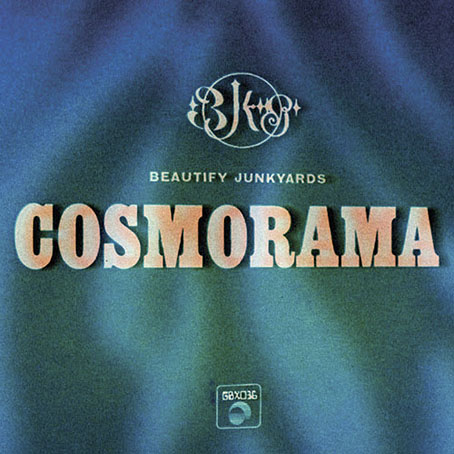
The next release on the Ghost Box label, Cosmorama is “tropicalia tinged psychedelic dream pop” by Beautify Junkyards. The album will be available in January. Design, as always, is by Julian House.

• Reading a review of John Gray’s Straw Dogs several years ago I remember thinking facetiously that Gray should write a follow-up about cats. (Straw Dogs isn’t a book about dogs.) The joke is on me with the publication of Gray’s latest, Feline Philosophy: Cats and the Meaning of Life. I should set up as a literary agent.

• All you need is doom: Plague Notes, Unnamed, Unknown, A Finger Dragged Through Dust, the debut album from My Heart, an Inverted Flame, is released on the 11th of this month. “Absolutely NO guitars were used in the casting of these drone metal voidscapes.” Excellent work.

• What a difference a week makes: “A Utah monolith enchanted millions and then it was gone, leaving mysteries behind.”

• En Pleine Mer: The underwater landscapes of Eugen von Ransonnet-Villez, 1867.

• Imaginative drawings of travel during a pandemic lockdown by Oscar Oiwa.

• The beauty of starling murmurations as photographed by Søren Solkær.

• Cosmic Dancer: Alice Finney on the strange world of Michael Clark.

• Mix of the week: Invaders by The Ephemeral Man.

Cosmos (1972) by Bruno Menny | Gliding Thru The Cosmophonic Dome (1981) by Bernard Xolotl | Radio Cosmos (1981) by Ippu-Do

Weekend links 539

earle.jpg

Fire, Red and Gold (1990) by Eyvind Earle.

Roger Penrose won a Nobel Prize recently for his work in physics. I read one of his books a few years ago, and was intimidated by the “simple” equations, but I always like to hear his ideas. This 2017 article by Philip Ball is an illuminating overview of Penrose’s life and work.

• At Dangerous Minds: Joe Banks on the incidents that led to Lemmy’s dismissal from Hawkwind in 1975, an extract from Hawkwind: Days of the Underground. The book is available from Strange Attractor in Europe and via MIT Press in the USA.

• “Not married but willing to be!”: men in love (with each other) from the 1850s on. It’s always advisable to take photos like these with a pinch of salt but several of the examples are unavoidably what they appear to be.

Most of all, this resolutely collaborative production stood against the vanity and careerism of individual authorship; Breton called it the first attempt to “adapt a moral attitude, and the only one possible, to a writing process.” The text itself is peppered with readymade phrases, advertising slogans, twisted proverbs, and pastiches of such admired predecessors as Rimbaud, Apollinaire, and Lautréamont, whose pluralistic credo, “Poetry must be made by all. Not by one,” anticipates the sampling aesthetic by a century. But the intensity was draining, and as the book moves toward its final pages and the writing becomes increasingly frenetic, you can almost feel the burnout taking hold. After eight days, fearing for his and Soupault’s sanity, Breton terminated the experiment.

Mark Polizzotti reviews a new translation by Charlotte Mandell of The Magnetic Fields by André Breton and Philippe Soupault

• The hide that binds: Mike Jay reviews Dark Archives: A Librarian’s Investigation into the Science and History of Books Bound in Human Skin by Megan Rosenbloom.

• “A photographer ventures deeper into Chernobyl than any before him.” Pictures from Chernobyl: A Stalker’s Guide by Darmon Richter.

John Van Stan’s reading of Frankenstein by Mary Shelley uses my illustrations (with my permission) for each of its chapters.

Susan Jamison, one of the artists in The Art of the Occult by S. Elizabeth, talks to the latter about her work.

William Hope Hodgson: The Secret Index. A collection of Hodgson-related posts at Greydogtales.

Gee Vaucher talks to Savage Pencil about her cover art for anarchist punk band, Crass.

Weird, wacky and utterly wonderful: the world’s greatest unsung museums.

Tom Cardamone chooses the best books about Oscar Wilde.

• At Dennis Cooper’s: Jean-Pierre Melville Day.

You by The Bug ft. Dis Fig.

Magnetic Dwarf Reptile (1978) by Chrome | Magnetic Fields, Part 1 (1981) by Jean-Michel Jarre | Magnetic North (1998) by Skyray

Rooms with a paranormal view

room1.jpg

The Room: the cosmic tabletop.

A few words of praise for the Room series from Fireproof Games. I don’t play many computer games, and I think this may be my first post dedicated to such a thing, but I maintain an interest in the medium. The Room and its sequels only came to my attention a couple of weeks ago when I was wondering if there was anything Myst-like available for the tablet. I never got to play the original Myst but enjoyed its follow up, Riven, although the enjoyment was mostly for the graphics, the music and the island environments. The game itself was less satisfying, requiring pen and paper to keep track of its complexities, and involving a great deal of fruitless journeying from one location to another in the search for new clues.

room2.jpg

The Room 2: the camera.

The Room follows the template established by Myst in presenting you with a number of mechanical artefacts, all of which have to be examined and opened or operated before you can proceed to the next stage. The dominant aesthetic is 19th-century-mechanical—there’s a lot of wood and brass to these devices—but to call it steampunk would be a mistake; there’s little steam involved, and most of the cogs are kept inside their cases. There is a hint of Jules Verne, however, in the notes from an absent inventor whose initials, “A.S.”, may be a nod to Journey to the Centre of the Earth. As the title suggests, the location is a single room, while in the sequels, The Room 2 and The Room 3, you’re presented with a series of connected spaces. The third installment is the closest to the original Myst with a central hub that leads to other areas of a rambling complex of buildings, not all of which are revealed at the outset. The main structure is based on William Beckford’s Fonthill Abbey which pushes things into Gothic territory even without the developments outlined below.

room3.jpg

The Room 3: the oscilloscope is one of several which need to be powered up and manipulated in order to open the Null portals.

The MacGuffin for all the games is a new element, the Null, whose discovery and potential obsesses the creators of the games’ devices, and whose manipulation of space creates many of the portals that lead to new rooms. As the series progresses, the Null becomes a growing menace that leads to full-on cosmic horror, with oil-slick Tentacles From Beyond writhing around the interdimensional portals you have to travel through. This development was surprising and, for this player, very welcome, turning the games from a series of eleborate puzzles into something much more sinister. The aesthetic evolves accordingly, with an increasing profusion of occult sigils and pentacles, and, in The Room 2, Tarot cards and séance devices. (Fireproof have a set of their Tarot designs available as a free download.) In the second game there’s a further requirement to piece together mundane machines—a camera or a typewriter, say—before they will function properly. This process reaches a peak in The Room 3 where you’re faced with a succession of increasingly complex tasks, from woodworking and metal forging to electro-mechanical engineering and astronomy. As with the Myst universe, there are no monsters here (although there is the occasional ghost), nothing needs to be fought with weapons, it’s just you, a room full of objects and a continual background murmur of unnerving whispers and distant sounds. The gameplay in The Room 3 is sufficiently non-linear to lead to a variety of different endings, not all of which may be survivable. I managed to escape the Tentacles From Beyond when they finally destroyed the house but I also missed finding an important artefact. I’ll be returning, wiser and, I hope, more attentive to the half-hidden details.

room4.jpg

The Room—Old Sins: the haunted doll’s house as seen at the beginning of the game.

I’m currently playing the fourth game in the series, Old Sins, which returns you to a single room but plays with scale via a large doll’s house. The exterior of the building is all detailed model work, while the interiors—accessed through Null physics—are scaled-down replicas of the rooms in a house where another Null investigator and his wife have gone missing. It’s not clear yet whether the attic where the toy house is stored is also the attic of the real house the model is based upon but having dealt with a similar model in The Room 3 this seems likely.

While I enjoyed the surface details of Riven I was never very interested in the fantasy background of the Myst universe. The Room series is much closer to my own core preoccupations, a beguiling blend of antique technology with borderline occultism and those Tentacles From Beyond, a scenario that wouldn’t be out of place in an issue of Weird Tales. Just the thing for the darkening days of October.

Weekend links 538

greenaway.jpg

The Elf Ring by Kate Greenaway.

• “Is it possible that the Victorian fairy tradition, beneath its innocent exterior, operated as a conduit for a hidden tradition of psychedelic knowledge?” Just in time for the British mushroom season, Mike Jay explores the connections between psychedelic mushrooms, folklore and fairy tales.

• “This second coming of Prince’s greatest album is the immaculate execution of a flawed conception: the belief that you can never have too much of a good thing.” Simon Reynolds on Prince and the expanded, multi-disc reissue of Sign O’ The Times.

• “An extraordinary stash of more than 400 erotic drawings by Duncan Grant that was long thought to have been destroyed has come to light, secretly passed down over decades from friend to friend and lover to lover.” Mark Brown on a trove of gay erotica.

• New art exhibitions: Wessel + O’Connor celebrates 35 years of homoerotic exhibitionism with 35 works by different artists; “masks a must”. And New Framing at Museum More includes a great painting by Jan Ouwersloot of trams manoeuvring at night.

• There is no Prog, only Zeuhl: A guide to one of rock’s most imaginative subgenres by Jim Allen. I recommend the Weidorje album.

The Power (Of Their Knowledge), another preview of the forthcoming album by Cabaret Voltaire (or Richard Kirk solo).

• RIP Eddie Van Halen. Annie Zaleski selects 10 of his best songs (really 9 plus an instrumental…).

• At Dennis Cooper’s: Spotlight on…Leonora Carrington The Hearing Trumpet (1976).

• Mix of the week: Autumn and Wise (The Fall) by The Ephemeral Man.

Abandoned Isle of Wight

Dark Side Of The Mushroom (1967) by Chocolate Watch Band | Mushroom (1971) by Can | Growing Mushrooms Of Potency (2011) by Expo ’70