Weekend links 816

rossignol.jpg

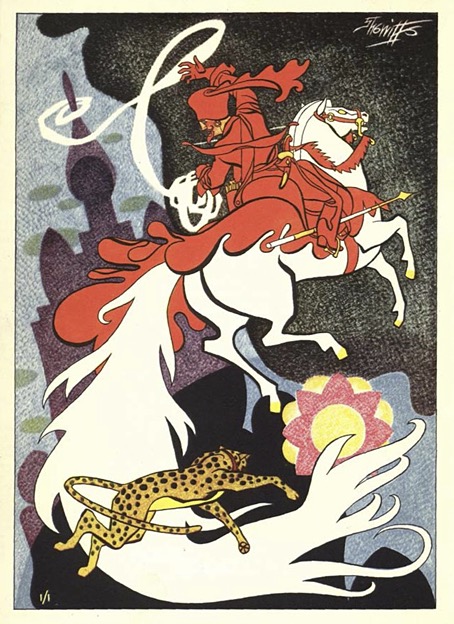
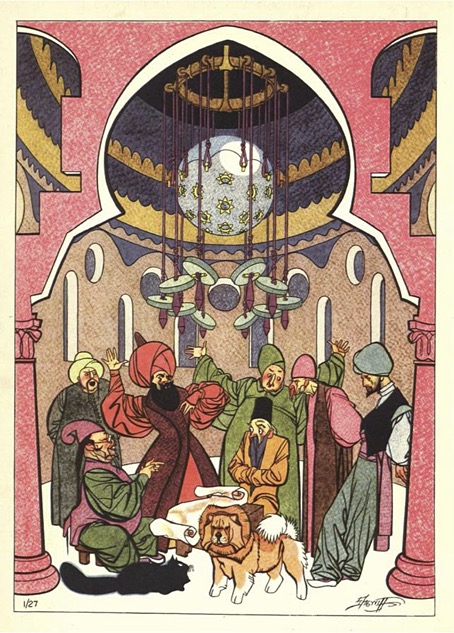
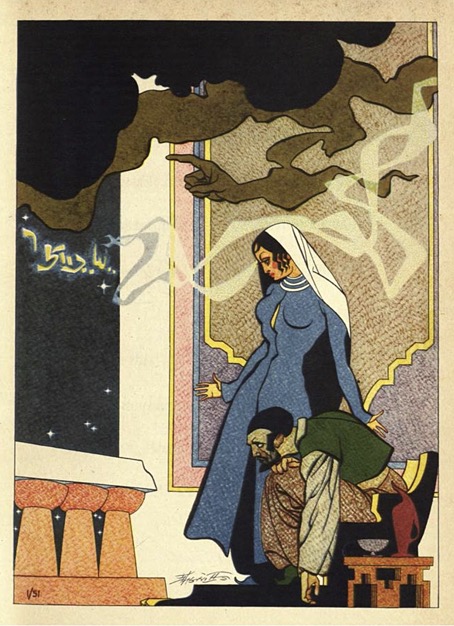
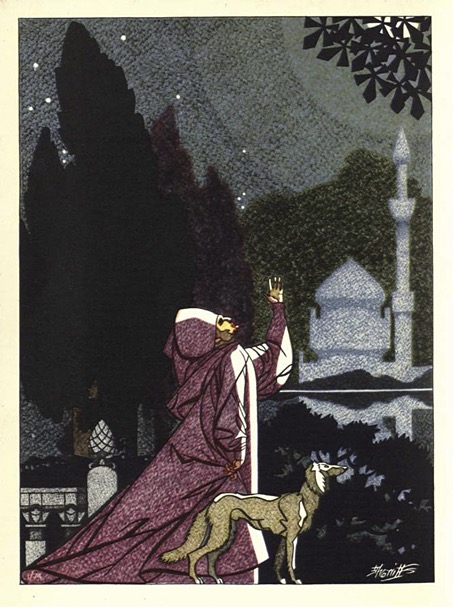
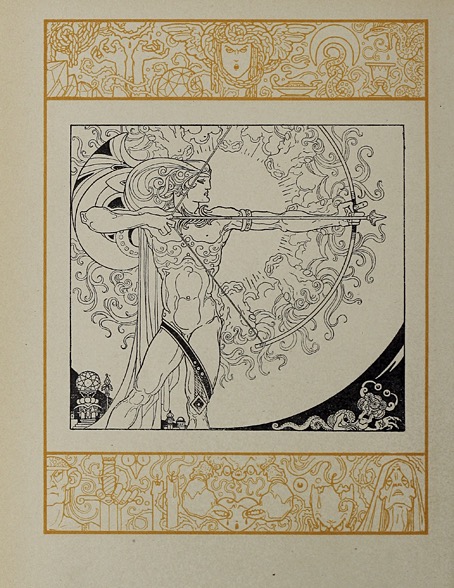
The Creative Power of the Spirit, No. 31 of A Goodly Company series, 1920–1933 by Ethel le Rossignol.

• “One moment it was a little blip. The next, our friends are dying”: the gay porn soundtrack composers lost to the Aids crisis. More gay porn: Pink Narcissus, James Bidgood’s micro-budget homoerotic fantasy, will receive a UK blu-ray release later this year.

• Old music: Thirst by Clock DVA gets a very welcome reissue later this year, having been unavailable in any form since 1992. I’m not so happy about the changes to Neville Brody’s original cover design but the album itself is a major post-punk statement.

• “Graphic design was thought to be a man’s discipline,” she says. “So I think it was quite a surprise for people to find me there.” A profile of Margaret Calvert, designer of (among other things) Britain’s road signs.

• At Colossal: A major survey in Paris chronicles Leonora Carrington’s esoteric Surrealism.

• At Public Domain Review: Sara Weiss’ Journeys to the Planet Mars (1903).

• At the BFI: The mystery music video for The Beatles’ Penny Lane.

Winners and entrants for Close-up Photographer of the Year 7.

• “Cats to blame for octopus deity enshrinement delay.”

• Steven Heller’s font of the month is Cattivo.

• At Dennis Cooper’s it’s Jack Arnold’s Day.

Pink Noir (1996) by David Toop | Pink Dust (2013) by Sqürl | The Pink Room 2 (2024) by Seigen Ono

The Performers: Goya

goya1.jpg

It’s good to find another arts documentary by Leslie Megahey turning up online. Not the best quality, unfortunately; the audio has been subjected to so much digital compression it sounds like it was run through a ring modulator but the visuals are decent enough. The Performers was originally made in 1972 for the BBC’s Omnibus arts strand. It was repeated in 1994 for the same series, with the name “Goya” appended to the title, the life and art of Francisco de Goya being the subject of the film. I remember watching the repeat screening but can’t remember why it was rebroadcast. Films like this usually remained stuck in the BBC’s vaults unless there was a good reason to show them again, as with Megahey’s portrait of György Ligeti which had the director revisiting the composer 15 years after their first meeting.

goya2.jpg

The Performers is less ambitious than Megahey’s later films, the majority of which had art or artists as their subject. The performers of the title are a pair of travelling players in modern Spain who adopt a series of roles in outdoor performances that parallel the stages of Goya’s career, from modestly successful muralist to very successful court portrait painter, and the later years when deafness left him isolated and depressed. The latter period resulted in the famous “Disasters of War” etchings and the so-called “Black Paintings” which were originally murals on the walls of the artist’s home.

The credits are missing from the end of the film but Leslie Megahey was the narrator as well as the director, with Colin Blakely reading from Goya’s diaries, and the performers played by Esperanza Malkin and Vallentin Conde. For a more personal take on the life and art of Francisco de Goya I recommend Robert Hughes’ 75-minute TV film from 2002.

Previously on { feuilleton }
All Clouds are Clocks: György Ligeti
Leslie Megahey, 1944–2022
Men and Wild Horses: Théodore Géricault
The Complete Citizen Kane
Schalcken the Painter revisited
Leslie Megahey’s Bluebeard

Zeuhl Ẁortz!

magma-single.jpg

Kobaïa / Müh (1970), a single by Magma.

1: Zeuhl definitions

Zeuhl is an adjective in Kobaïan, the language written by Christian Vander, drummer and founder of the French band Magma.

Pronunciation: zEU(h)l, while the EU are like a French E with a slight U, and the (h) is a semi-silent letter which is an integrated part of the EU, totalling in a “syllable and a half”. (Prog Archives)

Zeuhl (pronounced [zœl]; lit. ’celestial’) is a music genre that is a hybrid of jazz fusion, symphonic rock and neoclassical music, established in 1969 by the French band Magma. The term comes from Kobaïan, the fictional language created by Magma’s Christian Vander and Klaus Blasquiz for Magma, in which Zeuhl Ẁortz means approximately ‘celestial force’.
[…]
Zeuhl is determined by several characteristic elements. Especially important are dominant rhythm fractions, usually in the form of a pumping bass guitar and sometimes sluggish or flexibly playing drum kits. Slow repetitive structures that serve to build a hypnotic atmosphere are just as prominent as solo passages of high technical finesse. Vocals are often widely present and can consist of polyphonic choral movements, such as Carl Orff’s Carmina Burana, or soloistically performed passages with shrill intonation. Zeuhl bands also often have solo guitarists or pianists that usually have a more than accompanying function, especially to emphasize the repetitive patterns. (Wikipedia)


2: The Birth of the Zeuhl

“1967,” he says. “The year John Coltrane died. It seemed to me that afterwards, it was as though music had to try to start all over again. Someone had to pick up the pieces, go on searching in the way that he had. Nobody could match him, but people could pick up the flame. It was almost impossible for anyone to do anything new after Coltrane, but you had to try, try to find other new directions. So that’s what I tried to do with Magma. I was a bit young at the time, but…”

Christian Vander describing the birth of Magma to Paul Stump, The Wire, July 1995


3: Zeuhl lists

weidorje.jpg

Weidorje (1978) by Weidorje. Cover art by Klaus Blasquiz.

Shindig! Magazine: Magma in seven records, and Deeper Underground: the best albums by the Magma family by Warren Hatter.

• Prog Is Alive and Well in the 21st Century: My Favourite Zeuhl Albums of All-Time by Drew Fisher.

• Bandcamp: There is No Prog, Only Zeuhl: A Guide to One of Rock’s Most Imaginative Subgenres by Jim Allen.

• Discogs: Zeuhl lists by Neit and ultimathulerecords.

• Prog Archives: Top 100 Zeuhl.


4: Live Zeuhl

magma-poster.jpg

A poster by Jofre Conjota for a concert in Chile demonstrating that Zeuhl can exist without electricity.

Magma, Hippodrome du Pantin, Paris, 1977 (46 mins; a French TV film that captures one of the 70s lineups in peak form. Includes an almost complete performance of Mekanïk Destruktïẁ Kommandöh.)

Weidorje, French TV, 1979 (11 mins; Magma offshoot Weidorje were only active for a couple of years, this may be their only TV appearance.)

Magma, Théâtre Bobino, Paris, 1981 (A complete concert—1 hr 53 mins—from the group’s weird-funk period: Christian Vander leaves his drumkit to sing and rant at the audience, everyone is dressed in spacey glitter outfits, and some of the songs from the Merci album can’t be classed as Zeuhl at all. The musicians are all first rate, however.)

Magma play Köhntarkösz, 2005 (A fantastic 32-minute performance in a very cramped venue.)

Collectif PTÄH interprète Magma (12 mins; a Magma covers band playing in a village square.)


5: Cinematic Zeuhl

tristan.jpg

Tristan et Iseult (1972): a French feature film with a score by Christian Vander and three members of Magma. The soundtrack album was later incorporated into the Magma official discography as Ẁurdah Ïtah.

Moi y’en a vouloir des sous (1973): a French satire in which Magma make a brief appearance as a way-out rock group.


6: Lovecraftian Zeuhl

shub-niggurath.jpg

Les Morts Vont Vite (1986) by Shub Niggurath. Cover art: La Ballade de Lénore (1839) by Horace Vernet.

Liriïk Necronomicus Kanht (1978) by Magma.

Dagon (1980) by Eskaton.

La musique d’Erich Zann (1981) by Univers Zero (a Belgian group, originally named Necronomicon, which included former members of an earlier group named Arkham).

Yog-Sothoth (1986) by Shub Niggurath.


7: Comic Zeuhl

Magma’s Christian Vander and Klaus Blasquiz in a three-page comic strip from Pop & Rock & Colégram (1978), a collection of satirical music-themed pieces by Jean Solé, Alain Dister & Marcel Gotlib.

magma-comic1.jpg

magma-comic2.jpg

magma-comic3.jpg

Previously on { feuilleton }
Dune: some French connections
HR Giger album covers

Weekend links 815

hawksmoor.jpg

A photograph by FR Yerbury of St George’s-in-the-East, London. From Nicholas Hawksmoor (1924) by HS Goodhart-Rendel.

• “Sixty years later, the Spectacle saturates us in ways the Situationists never imagined. Online platforms structure our personal relationships; algorithms nudge us toward the platform owners’ preferred choices. ‘Intelligence’ is embedded into everything from our phones to our kitchen appliances. But back in the Sixties, the Situationists saw the physical environment of the city as an expression of the mass society created by consumerism and governed by the Spectacle, and they felt power closing in around them: ‘All space is occupied by the enemy. We are living under a permanent curfew. Not just the cops—the geometry.'” Hari Kunzru takes a psychogeographical dérive through the streets of London, encompassing the Hawksmoor churches, Iain Sinclair’s own peregrinations, Alan Moore’s Sinclair-influenced script for From Hell, Arthur Machen and more. (No mention of Alan’s ongoing Long London series, however, the first book of which is a deep dive into Machen territory.) Kunzru could be accused of being 30 years too late with his piece but for younger readers and many Americans these paths are worth retracing.

Enemies from Venus!: “The only surviving fragment of a Dutch science fiction series for children from the mid-sixties (that never was).” CGI animation by Ernst-Jan van Melle in the style of black-and-white puppet shows like Fireball XL5, Space Patrol, etc.

• “If this is a horror story, it’s a horror story about being desperate for love, and about the vulnerability, loneliness, and difficulty in understanding other people that might drive this state.” Olivia Laing on Jonathan Glazer’s second feature film, Birth.

• At the BFI: Rory Doherty selects 10 great British heist films.

• At The Daily Heller: Posting Posters about Fellini.

• RIP Sly Dunbar; James Sallis; Catherine O’Hara.

• At Dennis Cooper’s it’s Peter Whitehead’s Day.

• The Strange World of…Toumani Diabaté.

• New music: Errata by WF 98.

Birth (1971) by Keith Jarrett | Birth (1995) by Howie B | Birth (2013) by Roly Porter

Tadami Yamada’s illustrated Carnacki

carnacki10.jpg

It’s William Hope Hodgson’s occult detective again. Late last year I was looking for Hodgson illustrations after reading Timothy S. Murphy’s William Hope Hodgson and the Rise of the Weird: Possibilities of the Dark but couldn’t find much of interest apart from book covers I’d seen many times before. Tadami Yamada’s illustrations for a Japanese edition of Carnacki, The Ghost-Finder have yet to be catalogued at ISFDB, and don’t seem to have been disseminated much at all. Once again, I’m indebted to 70sscifiart for turning up art that I might not otherwise have seen.

carnacki01.jpg

The Thing Invisible.

Information about the Japanese collection was difficult to find in general, a common problem with older Japanese books when most of the online documentation hasn’t been translated. The book was published by Kokusho Kankōkai in 1977 as part of a series of weird fiction reprints along with collections by HP Lovecraft, Algernon Blackwood and others. The Hodgson volume contains the expanded collection of Carnacki stories, with the three posthumously published tales–The Haunted “Jarvee”, The Find and The Hog–appended to the original 1913 edition.

carnacki06.jpg

The Gateway of the Monster.

As to the illustrations, these were early works by Tamada, an artist with a lengthy career as an illustrator and painter. The copies of the illustrations don’t reveal much about their medium but they all appear to be paintings; the ones for The Find and The Hog (whose Japanese title translates as The Witch Pig) both show signs of the patterning you get with the decalcomania process, something you can’t easily create in other media. If this book was part of a series then I don’t imagine it was the sole illustrated edition, which raises the possibility that the Lovecraft, Blackwood and other titles were fully illustrated as well. Once again, further research is required.

carnacki08.jpg

The House Among the Laurels.

carnacki02.jpg

The Whistling Room.

Continue reading “Tadami Yamada’s illustrated Carnacki”