Snaps: The Studio tour, 1979

snaps3.jpg

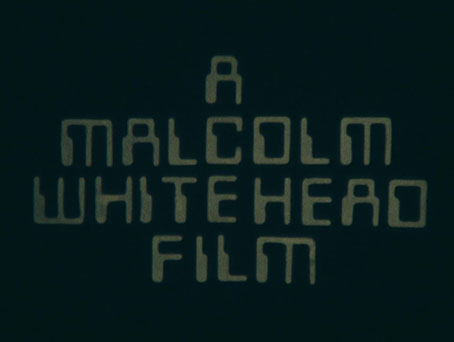
I’d been hoping that Malcolm Whitehead’s Snaps might be made public eventually, and here it is, a 25-minute film documenting the northern end of a British book-signing tour undertaken by three artists and their publisher in October 1979. Not only that, there’s also this shorter compilation of footage that didn’t make the final cut.
studio.jpg

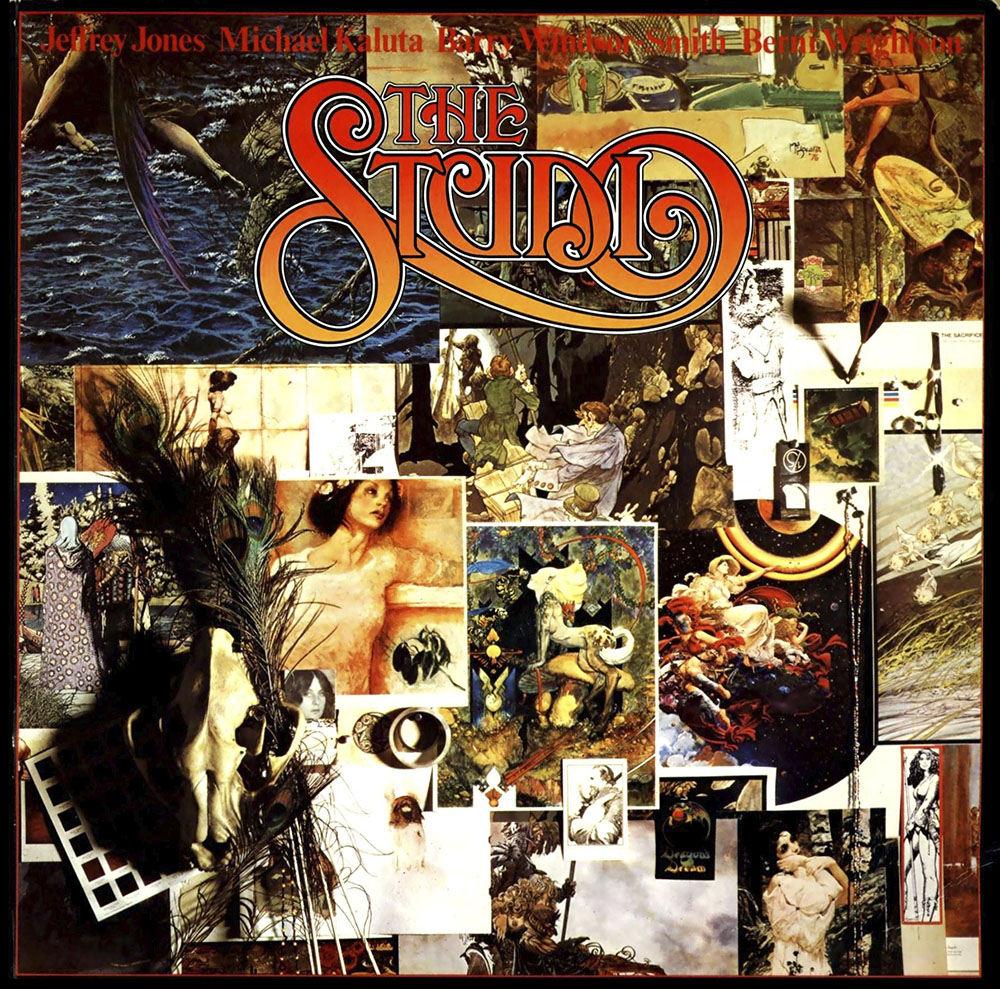
The artists were three of the four whose work is showcased in the book known as The Studio: Jeffrey Catherine Jones, Mike Kaluta and Bernie Wrightson. The other member of the quartet, Barry Windsor-Smith, either missed the jaunt to Leeds and Manchester or avoided the tour altogether. The publisher was fellow artist Roger Dean whose success in 1975 with his own art book, Views, prompted him to turn his self-publishing imprint, Dragon’s Dream, into a bona fide publishing company. Views was followed by a short run of art books by prominent fantasy and science-fiction illustrators including Chris Foss, Ian Miller, Bruce Pennington and Syd Mead. The Studio was one of these titles, a collection of the art produced by the quartet working in the communal loft (“The Studio”) they established in Manhattan in the mid-1970s, a space intended for the production of more personal work than the comic art for which they were all known. Malcolm Whitehead’s film is unusual for documenting an event in sound and vision that usually wouldn’t be documented at all beyond a handful of photographs.
mb-db-1979.jpg

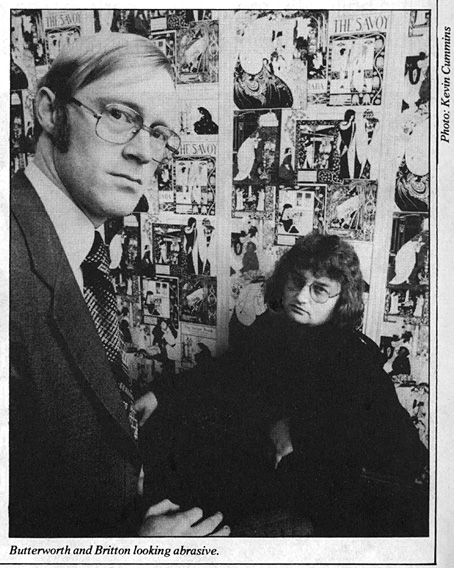
New Manchester Review, 1979: Michael Butterworth and David Britton in the Beardsley-papered Savoy office. Photo by Kevin Cummins.

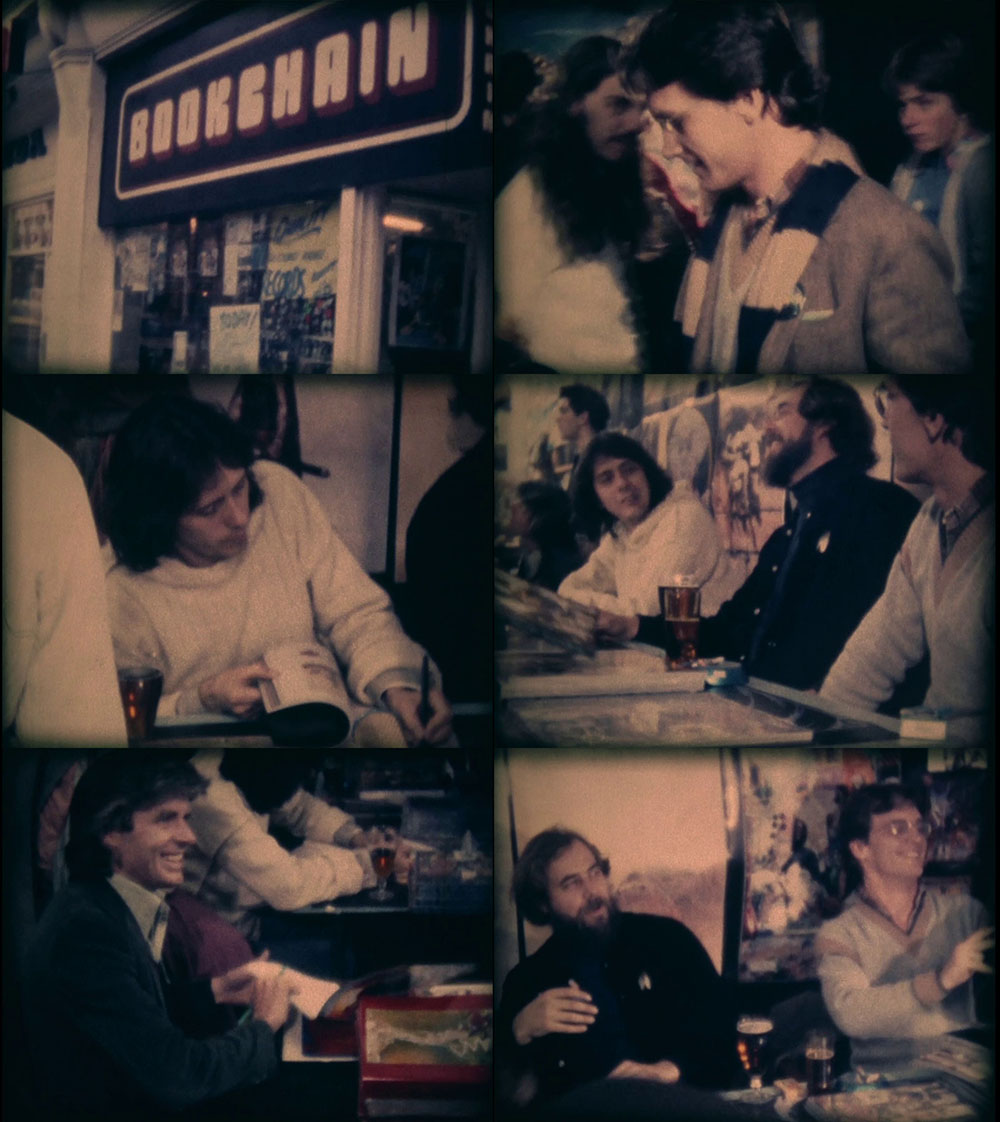
The trail of circumstance that led to the creation of Snaps goes something like this: David Britton and Michael Butterworth were setting up Savoy Books in Manchester at around the same time that Roger Dean was expanding Dragon’s Dream. Both publishers had established co-production deals with Big O, a poster company, distributor and publisher of many pop-culture art books, notably the British edition of HR Giger’s Necronomicon. One of the first Savoy books in 1978 was James Cawthorn’s The Jewel in the Skull, an 80-page comic-strip adaptation of the novel by Michael Moorcock, which was a one-off co-production between Savoy and Big O. In addition to being a fledgling publisher, Savoy at this time also had a chain of bookshops in Manchester, Leeds and Liverpool, selling the usual 70s blend of genre and “cult” paperbacks, posters, comics (mainstream and underground), magazines, and so on. The main outlet was Bookchain on Peter Street, Manchester, which is where much of Snaps was filmed. Given the connection between Dragon’s Dream and Savoy I’d guess that Big O suggested the Savoy shops as venues for the Studio signing tour. Dave Britton would have been keen on this even without the extra business the signings generated for the shops. He’d bought some of the posters produced by Barry Smith’s Gorblimey Press, and always spoke highly of Smith’s Studio-era work. As for the film, Mike Butterworth was good friends with local film-maker Malcolm Whitehead, and it was he that commissioned “Malc” to document the signing. Whitehead is best known today for his subsequent involvement with Ikon, the video division of Factory Records. In addition to making Snaps, in 1979 he was also filming some of the live footage of Joy Division that’s been circulating ever since. He later directed a couple of the early New Order videos, and helped with the direction and editing of many video productions by other Factory artists and affiliated groups like The Fall and Cabaret Voltaire.
snaps1.jpg

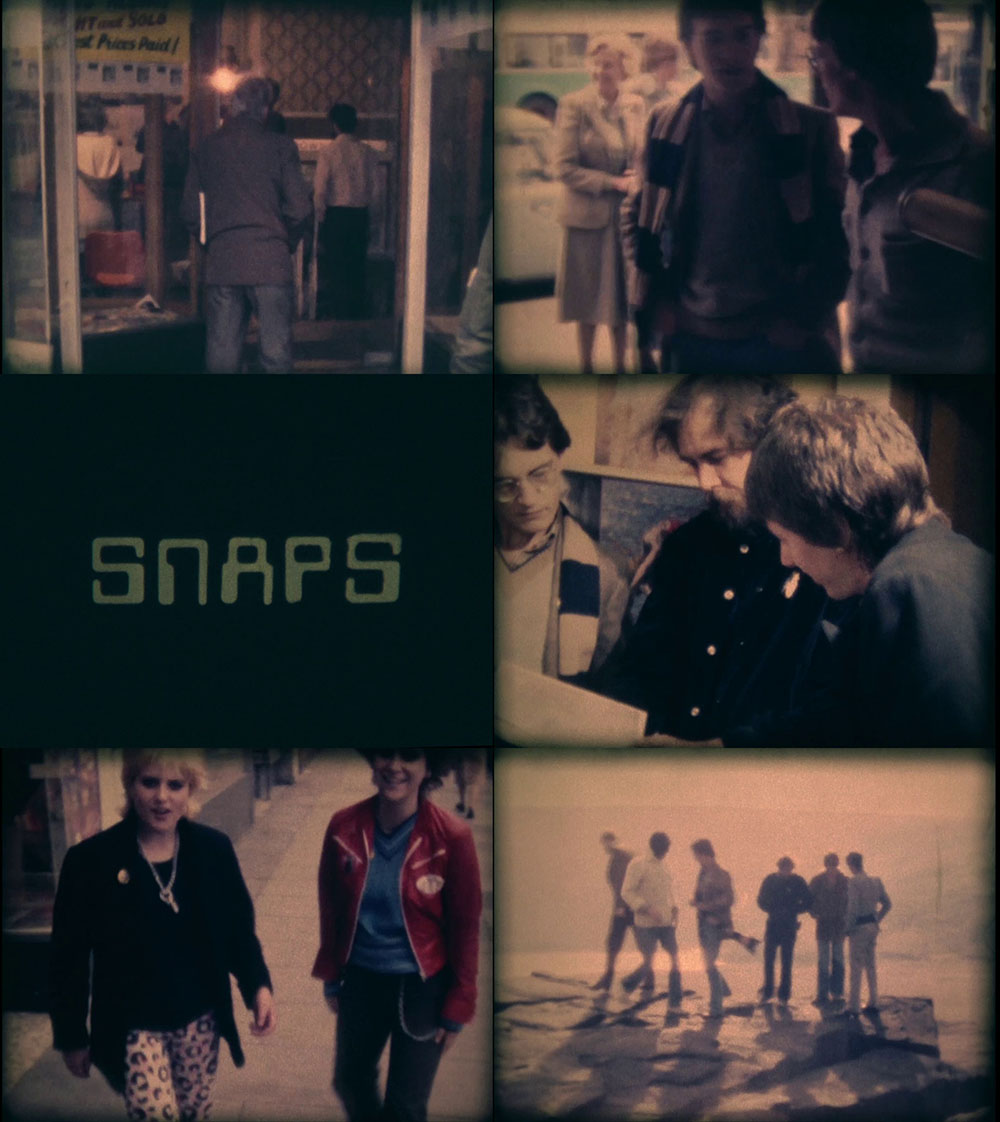
Snaps is a short and somewhat amateurish film but it’s a valuable record all the same. Anyone today can pull out their phone and record an event like this in high-definition and stereo sound; in the 1980s and 1990s you would have needed video equipment, but in the 1970s you had to have film, and 16mm film was an expensive professional product. Whitehead was using the cheaper option of Super-8 but he did at least manage to organise synchronised sound, something you don’t get on Pirate Tape, Derek Jarman’s Super-8 record of a William Burroughs signing. Mike Butterworth provides the stentorian voiceover for Snaps which he says he now regrets. Equally regrettable is his mispronunciation of the names “Paolo and Francesca” when he’s talking about Barry Smith’s art.
snaps2.jpg

The film opens in Leeds for the first of the day’s two signings, a sequence I can’t say much about since I never visited the Leeds shop. The participants then pile into cars and drive across the Pennines where they pause for a brief Kraftwerk-soundtracked inspection of the landscape. The three Studio artists were Americans so all of this activity must have been very novel and interesting despite the drabness of the cities. The shots in Manchester are the ones I like to see since they capture Bookchain when the place was at its height of popularity. In 1979 I was still living in Blackpool and didn’t visit the shop until early in 1980 when I made a daytrip with friends to explore Manchester. By the time I moved to the city in 1982 Bookchain was set on its gradual decline although it managed to survive until the block of buildings it was part of was demolished in 1999. The basement area looks quite salubrious in the signing footage but I only knew it as a dank and unlit storage area with a toilet that belonged in a horror film. One thing that Whitehead didn’t capture was Dave Britton asking all the artists to sign the wall of the shop near the counter. I was in the place every Saturday when we were working on the Reverbstorm comics in the 1990s, and it was always a strange thing to see Roger Dean’s signature (plus dragon doodle) peeping out from behind rows of dusty shrinkwrapped books and magazines. You never see much discussion of this side of the city’s cultural history in writing about Manchester’s musical output. Yet without the Savoy shops, and other outlets like Percival’s and Grass Roots, Ian Curtis, Mark E. Smith, Howard Devoto and others would have had a harder time finding the fuel for their imaginations.

In addition to being a record of a lost place, Snaps is also a record of lost people: Jones, Wrightson, and Britton are all no longer with us, while Malcolm Whitehead died in 2019. Whitehead’s involvement with Factory Records is documented in a scattering of posts at Cerysmatic. This one seems like a good place to start.

Previously on { feuilleton }
David Britton, 1945–2020
Jeffrey Catherine Jones, 1944–2011
Roger Dean: artist and designer
Berni Wrightson’s Frankenstein
Weekend links 841

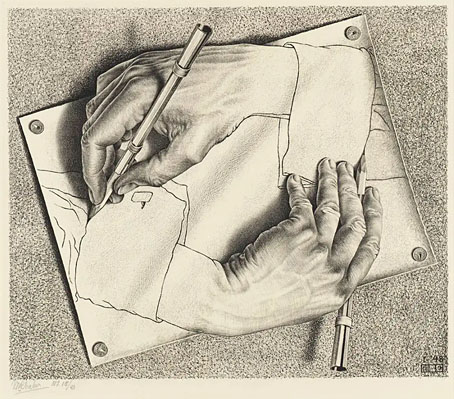
escher.jpg

Drawing Hands (1948) by MC Escher.

• New music: The World In Layers by mōshonsensu; The Rest Is My Ghost by Lawrence English; Rotostyles by Julien Ash & M.Nomized.

• At Public Domain Review: “The Persian Mâr-Nâmeh or, The Book for Taking Omens from Snakes” (1892).

• At Little White Lies: Sam Moore writes in praise of Hiroshi Teshigahara, “surveyor of the abyss”.

Paradoxically, art is useful only if it is allowed to remain entirely useless—that is, entirely free to go where it will. Wilde finds an ally here in Baudelaire, who followed his observation of the strangeness of the beautiful with a sharp rebuke to those who would subordinate artistic beauty to a utilitarian logic. Baudelaire asks:

“How could this necessary, irreducible, and infinitely varied strangeness…ever be controlled, amended, and corrected by Utopian rules conceived in some little scientific temple or other on this planet, without mortal danger to art itself?”

The privileging of utility over uselessness, of work over play, is the death of art—and the death of the given world in which our utilitarian spirit must be grounded if it is to have purpose and meaning.

JF Martel explores the ways in which art invented humanity

• Old music: Visions Of Sodal Ye by Mar-Vista.

• RIP Bill Oddie and Raoul Vaneigem.

Martyn Ware’s favourite albums.

The Last Museum

Snake Rag (1923) by King Oliver’s Creole Jazz Band | Ananta Snake Dance (1980) by Suns Of Arqa | Snakes Crawl (1980) by Bush Tetras

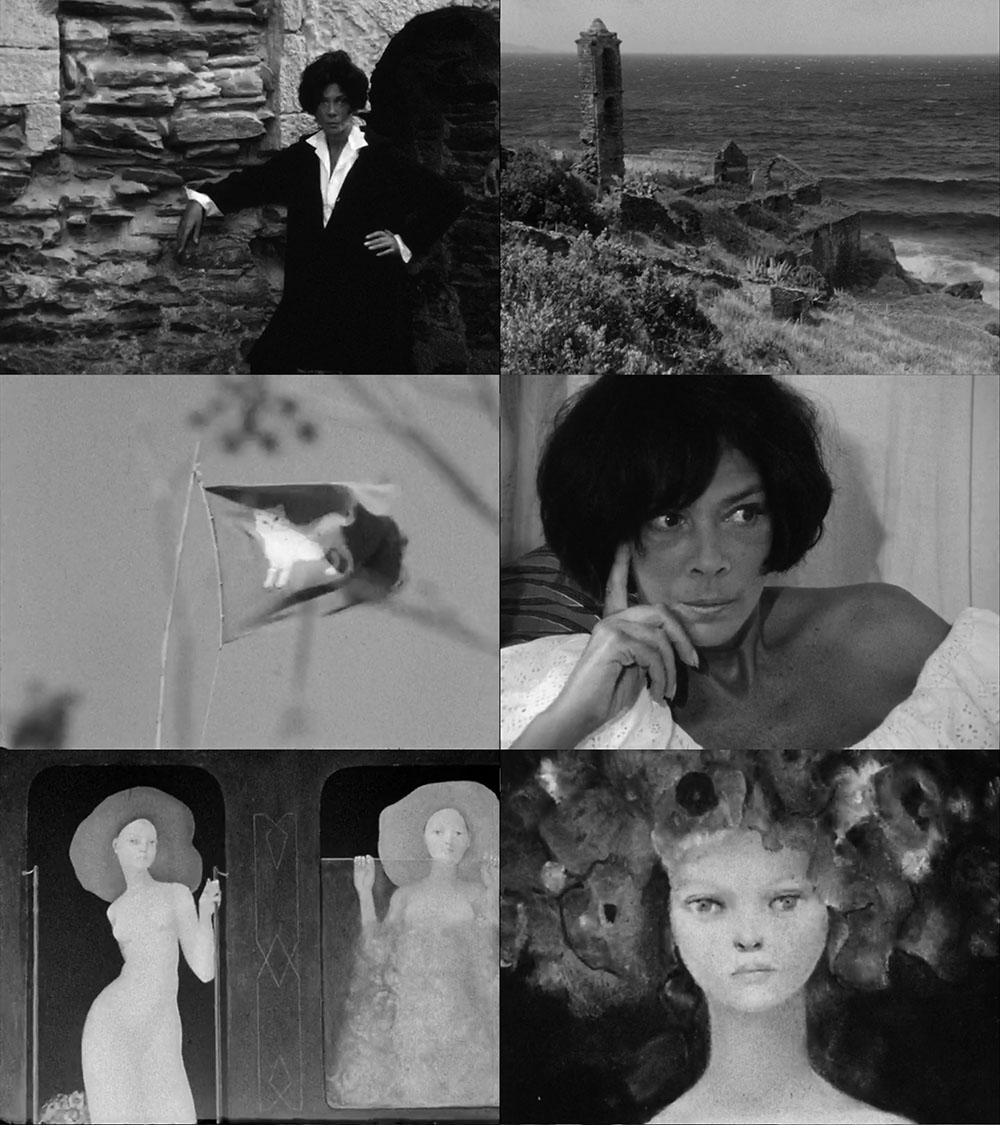
Leonor Fini, a film by Yvan Butler

fini1.jpg

As an artist, Leonor Fini has never received as much attention as her contemporary and near namesake Leonora Carrington but this didn’t stop film-makers calling at Fini’s door in later life. The best of the ones I’ve seen to date (and probably the best of all) is the feature-length documentary made by Chris Vermorcken in 1987 but there are many other short ones, several of which were made for television. Fini worked as a costume designer for the theatre and later for film which may have helped stimulate interest from directors. Most of the shorts have yet to turn up anywhere but I keep looking from time to time.

fini2.jpg

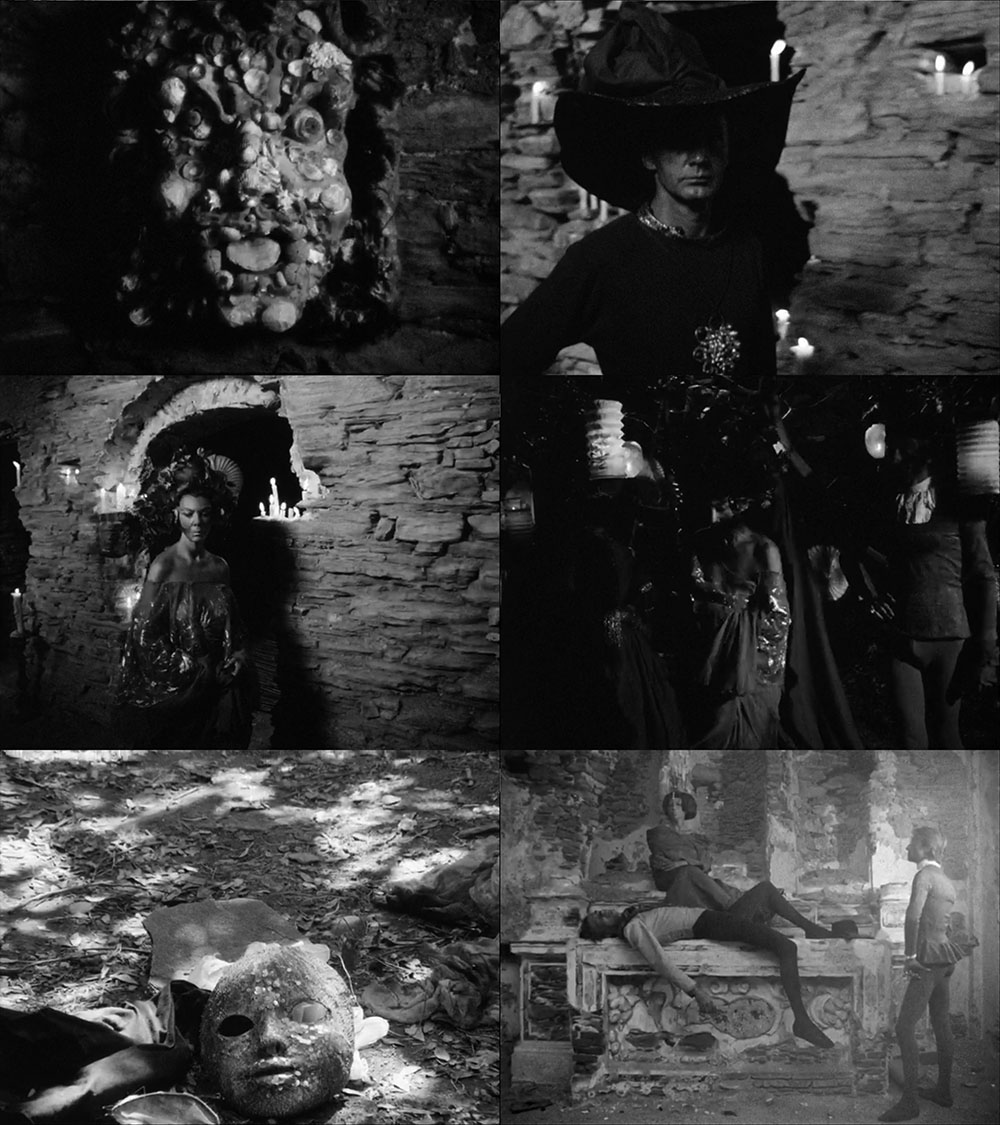
Leonor Fini is a black-and-white short made in 1966 by Yvan Butler for Swiss TV. There was a copy circulating years ago but I seem to recall it was lacking subtitles, a problem rectified by the version linked here. Butler’s film is a portrait of the artist and her friends staging a private masquerade in the ruined monastery which Fini used as her summer residence. Shots of her paintings, the decayed building and the costume parades staged within its walls are attended by Fini’s lofty pronouncements: “Cats are the lost paradise of grace, of innocence, of total ease”; “People who are too masculine or too feminine are very limited”. She also refutes again the suggestion that she was a Surrealist artist even though she’s continually labelled as one. She admits to being friends with Max Ernst and Paul Éluard in Paris but kept her distance from the movement because “there were too many laws, constraints”. Wise woman.

Previously on { feuilleton }
Leonor Fini
Leonor Fini: comment vivre sans chat
Angels of Anarchy: Women Artists and Surrealism
The art of Leonor Fini, 1907–1996

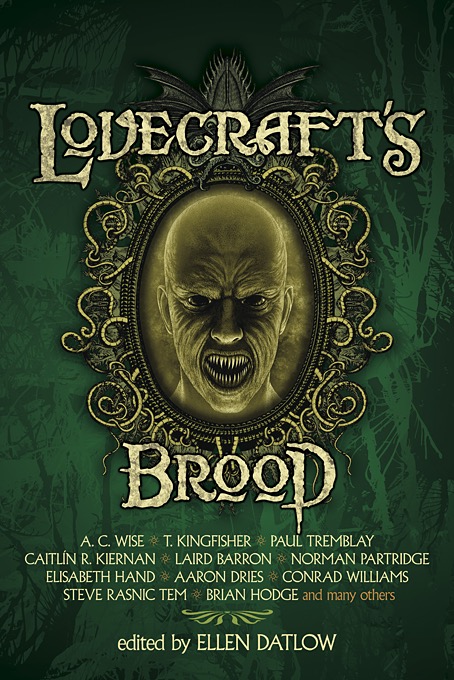
Lovecraft’s Brood

brood01.jpg

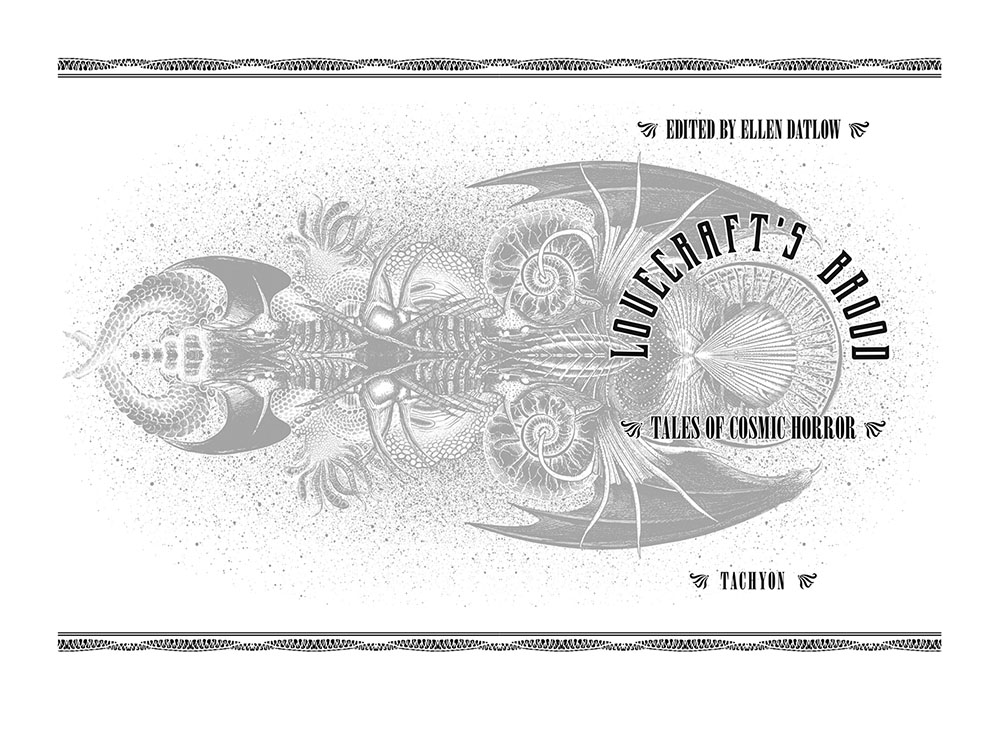
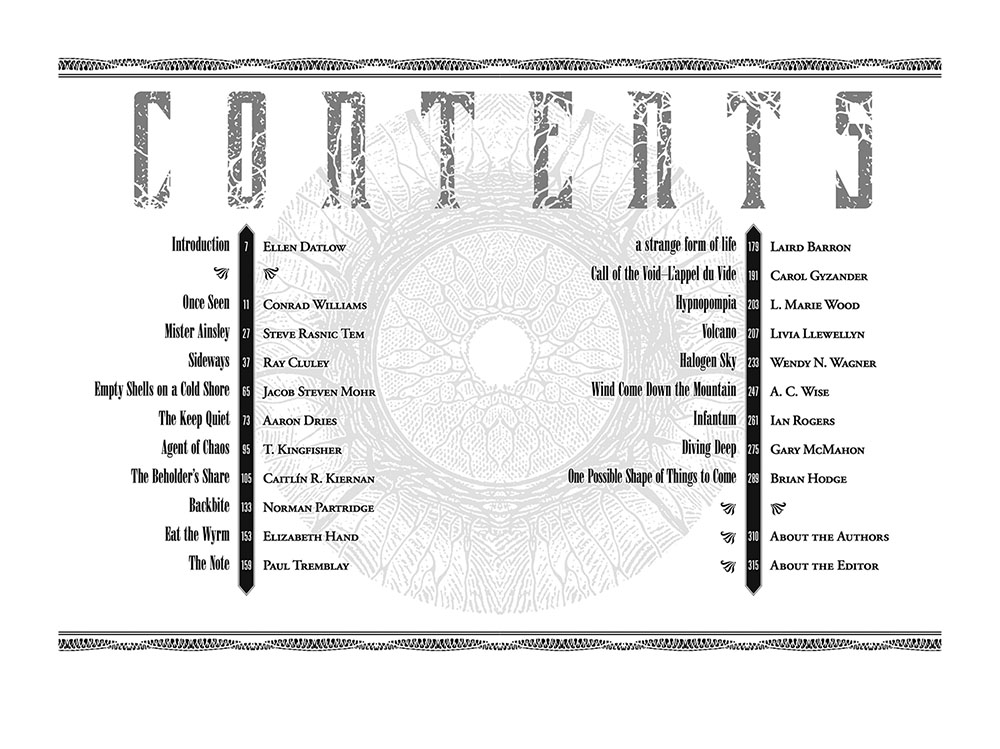
It’s that man again, or some of his progeny, infecting the world with their nightmares. Lovecraft’s Brood is a story collection edited by Ellen Datlow, a kind of follow-up to Lovecraft’s Monsters, although the new book is a more expansive take on the Lovecraftian weird tale. As with the earlier collection, I designed and illustrated this one throughout. The illustrations were more of a challenge this time since the stories weren’t always focused on explicitly physical threats; or if they were, the threats remained either unseen or inexplicable. That can be good sometimes—there’s a tendency in horror illustration to always go for monster portraits or spoilerish scenes from the end of the story—but it doesn’t make the artist’s task an easy one. For a few of the pictures I used a minor detail; in the case of Mister Ainsley, for example, there’s a mention of taxidermy experiments which is what I chose to focus on. What “Mister Ainsley” looks like (or actually is) is never described as such, the reader’s imagination is left to fill the gaps in the story.

brood21.jpg

Among the other pictures there’s my first ever drawing of the real church that gave Lovecraft his model for the home of The Starry Wisdom cult in The Haunter of the Dark. This church, or its fictional counterpart, has haunted my imagination for a long time, being the subject of my first Lovecraft illustration in 1979 and (of course) the subject of my first Lovecraft comic strip in 1986. In Lovecraft’s Brood the church appears in The Beholder’s Share, another fine riff on Lovecraft’s fiction by Caitlín R. Kiernan in which the Starry Wisdom cult actually existed, with the old Catholic church on Federal Hill being the centre of their operations. The real church was demolished in 1992 but the location is still easy to find since the grounds have been turned into a small recreational area which retains the walls that surrounded the building. When I was in Providence in 2015 I walked over to Federal Hill to see a concert performance in a converted cinema but I didn’t manage to visit the site of the church, something I now regret.

brood22.jpg

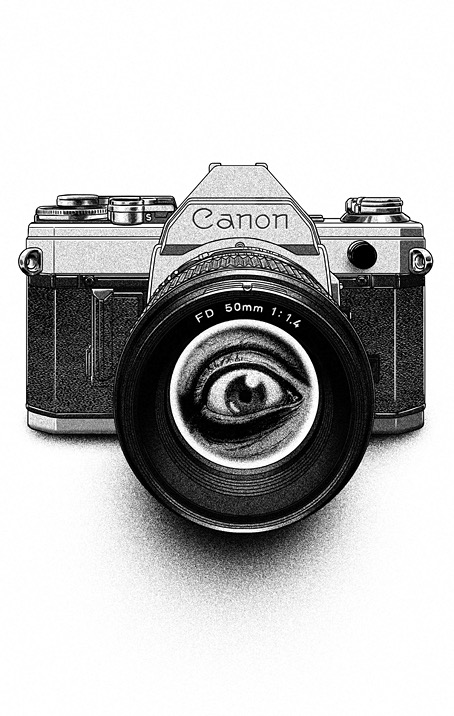
On the technical side, this set of illustrations is the first where I’ve used Glitch Lab in the creation of some of the artwork. Glitch Lab is one of several tablet-based image-processing apps made by Ilixa that function like Photoshop’s filters but with many more options. Photoshop hasn’t done much with its basic suite of filters since the 1990s, something that doesn’t bother me most of the time but every so often you find yourself wanting to imitate a technical effect that can’t easily be achieved without a lot of work. For two of these illustrations I wanted views seen through different kinds of monitors, the first a low-quality TV screen of a type you’d see in a supermarket, then a distorted image from a malfunctioning camera whose output is being viewed on a computer monitor. Glitch Lab specialises in this kind of technical distortion, and can imitate a wide range of visual glitches of a type generated by old TV sets. The Note is the story with the security camera for which I painted a relatively minimal greyscale scene. This wouldn’t have worked on its own but running it through the filters gave it the required appearance. Wind Come Down the Mountain is much more heavily processed, and could have been pushed a lot further but I’d already destroyed a lot of the detail I’d put into the picture.

Lovecraft’s Brood is out now in print and digital from Tachyon and all the usual outlets.

brood23.jpg

brood02.jpg

Once Seen by Conrad Williams.

brood03.jpg

Mister Ainsley by Steve Rasnic Tem.

Continue reading “Lovecraft’s Brood”

Weekend links 840

hugo.jpg

The Toad of Maldoror (1932) by Valentine Hugo.

• Old music: Thank You America (John Robie Dub Mix) by Cabaret Voltaire. Code, the group’s 1987 debut for the Parlophone label, receives an overdue reissue later this year with a substantial collection of remixes.

• At Lesser-Known Writers: Douglas A. Anderson examines the career of Hal Garrott, a writer whose novels for children feature fine illustrations by Dugald Stewart Walker and Mary-Ponton Gardner.

• The August catalogue of lots for the After Dark: Gay Art and Culture online auction. Homoerotic art, photos, historic porn, etc.

• Mixes of the week: The Invisible Collage Vol. 1, and Robert Aiki Aubrey Lowe’s Invisible Jukebox Mix at The Wire.

• New music: Modulisme Session 144. Lightning Field 01. Constraint by Philippe Petit, and Signal Loss by Paul Beaudoin.

• At Colossal: Los Angeles Public Library unveils the world’s largest pop-Up book.

• At the BFI: Craig Ian Mann selects 10 great East German films.

• At Dennis Cooper’s it’s Ed Emshwiller’s Day.

Signaux Codes Non Identifiés (1978) by Michel Magne | Code Rays (Codex Dub) (1995) by Main | Codes (Encryption And Decryption) (2025) by Andrew Heath