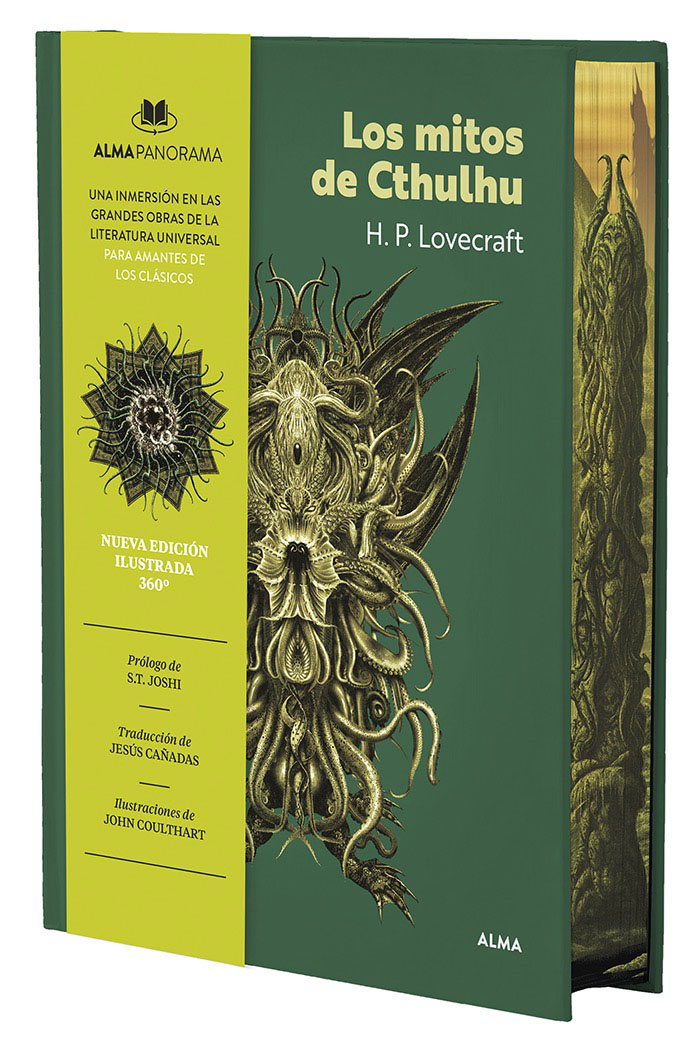
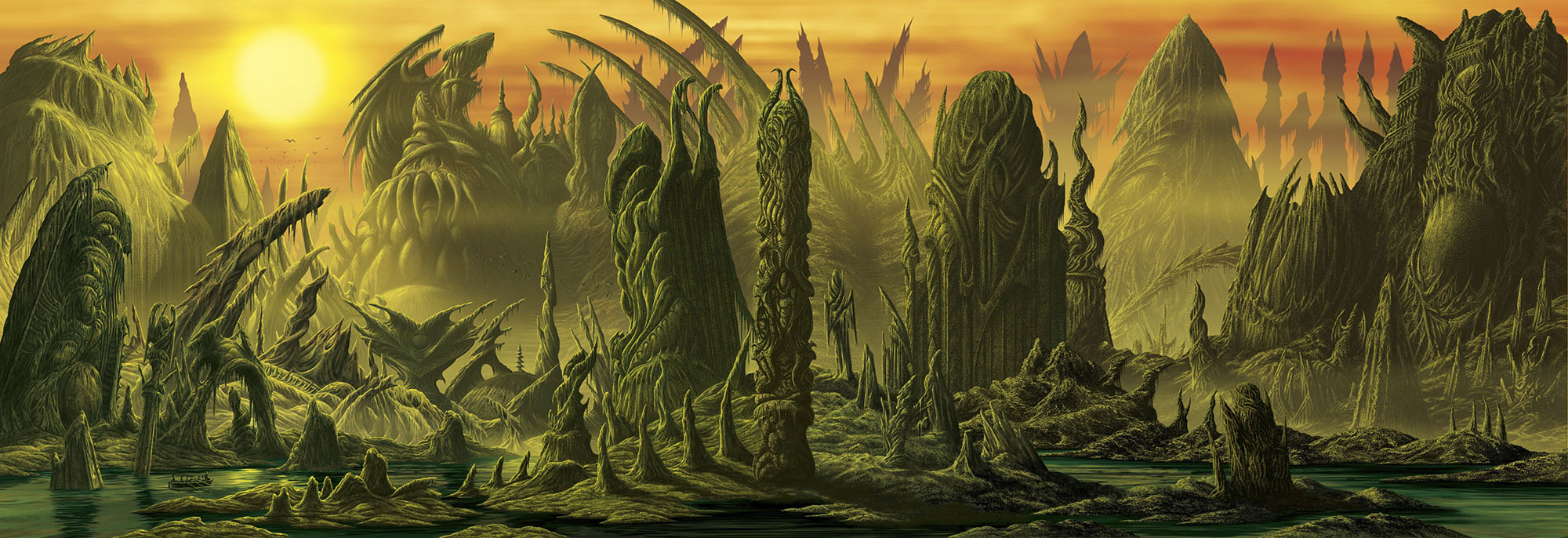
Appearing on Spanish bookshelves this month is Los mitos de Cthulhu, a 576-page story collection which I spent the first half of this year illustrating. This is my third illustrated Lovecraft for Editorial Alma, with an introduction by ST Joshi and translations by Jesús Cañadas, and is easily the biggest to date in both size and page count. The book is a hardback with an obi strip, and includes a feature which Alma have been applying to other titles in this series, with a single illustration (in this case a panorama of the risen R’lyeh) that covers the front and back endpapers while also wrapping across the sprayed page edges. You may have noticed that sprayed edges have become a minor trend in the publishing world especially with big collections like this one. The edition of Frankenstein that I illustrated for Alma was given sprayed edges when reprinted at a larger size in the USA and Poland but Los mitos de Cthulhu is the first book I’ve worked on where I’ve had to create something specifically for this effect. What I’ve yet to see is another publisher spraying the page edges with a single illustration that runs inside and outside the book.
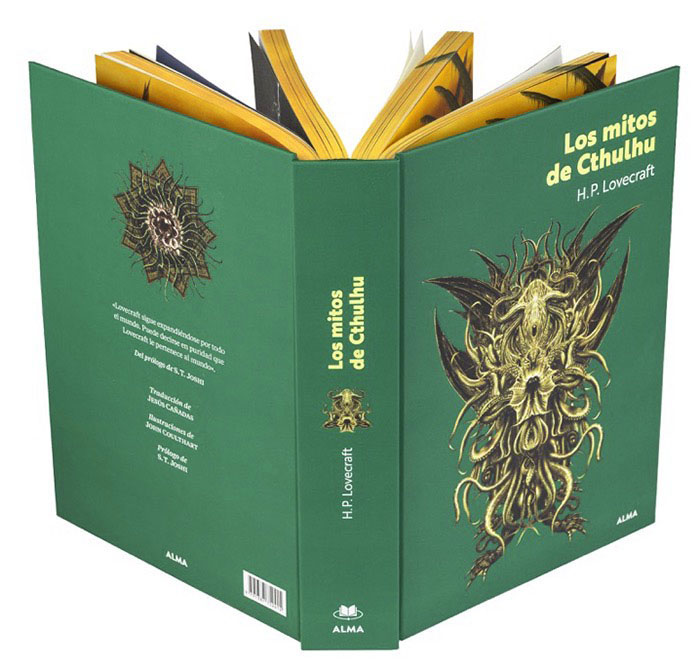
Where the interiors are concerned, the brief was to create ten full colour, double-page illustrations for a collection of twelve stories, with the choice of illustrations being left in my hands. This was obviously going to involve a lot of work but I was pleased to be given an opportunity to create a new series of digital paintings in full colour. In recent years I’ve done so much digital collage, monochrome drawing or vector illustration that the realistic painted side of my work feels unduly neglected. Some of the stories I ended up choosing were ones I’d illustrated before but a few of them I was tackling for the first time.
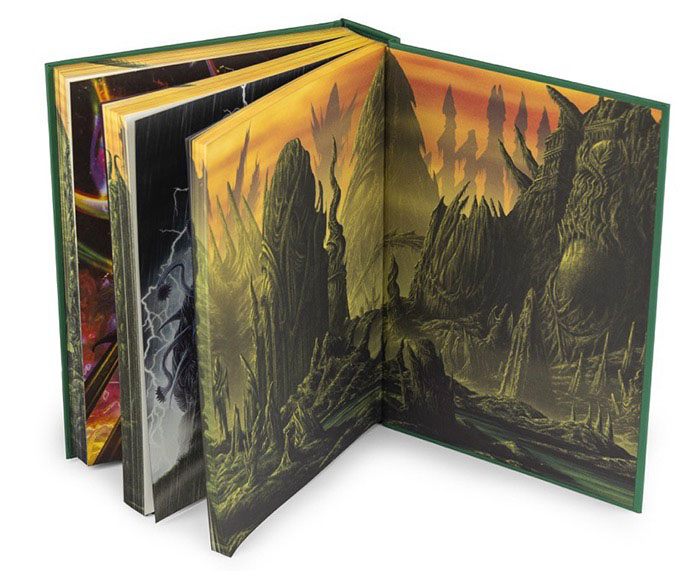
In rough order of completion, the story list is as follows:
The Call of Cthulhu
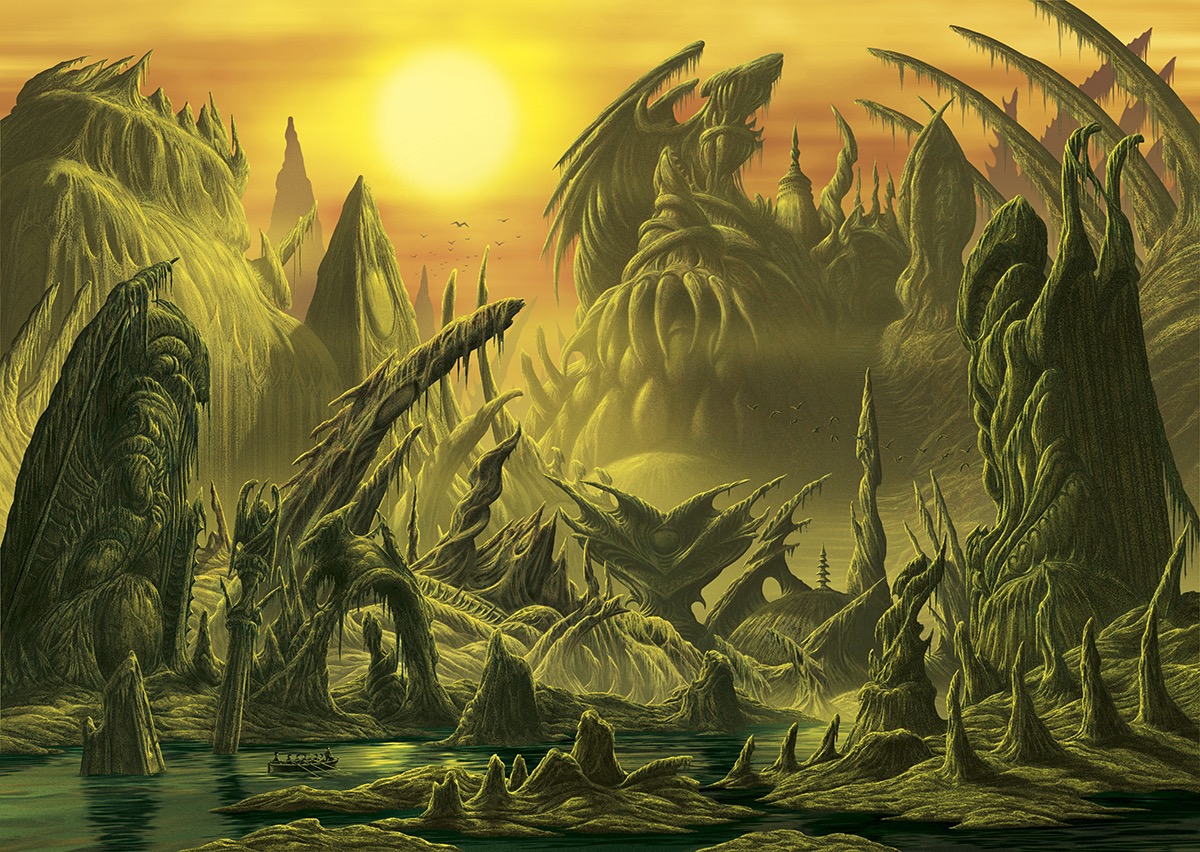
Not my first view of R’lyeh but this is the first one I’ve done where the ruins look like they’ve been underwater for a very long time. The book’s endpapers were created last, when all the illustrations had been completed. This required adding an extension to the piece above, a tricky business with a digital artwork but not as difficult as it would have been using physical media.
The Shadow Over Innsmouth
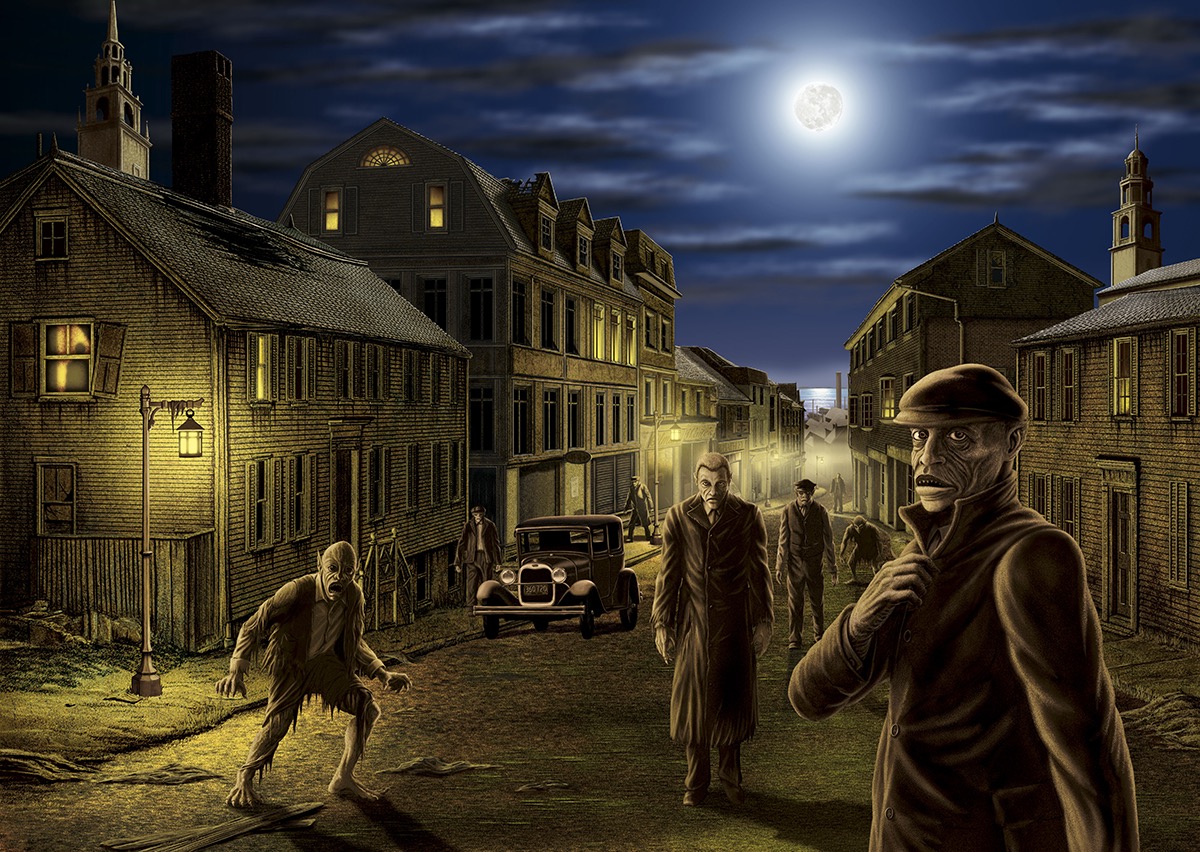
This, on the other hand, is my first visit to Innsmouth. Since all these illustrations run across two pages I’ve tried to give both halves of each picture a point of interest while avoiding the placement of anything important in the centre. Among other things this has avoided my usual propensity towards compositions based on a central vertical axis.