
Weekend links 8

adur.jpg

Another label design of mine for the Adur Brewery. Much as I like Otto Weisert’s Arnold Böcklin typeface it’s something I’ve been reluctant to use in the past due to its lazy deployment by UK shop sign makers. The ribbon motifs and the hops are adapted from one of my Art Nouveau reference books, however, so it seemed appropriate in this case.

Dead Fingers Talk: The Tape Experiments of William S. Burroughs, a forthcoming exhibition at IMT, London, “presenting two unreleased tape experiments by William Burroughs from the mid 1960s alongside responses by 23 artists, musicians, writers, composers and curators.” Related: get a Naked Lunch t-shirt (or another cover design) at Out of Print clothing.

Ronald Clyne: American folk modernist. Rediscovering the album and book cover designer.

Better Things: The Life and Choices of Jeffrey Jones. A documentary about the work of artist Jeffrey Jones. Related: Mike Kaluta appears in the trailer and Golden Age Comic Book Stories has pages from Kaluta’s illustrated Metropolis (1988), a novel by Thea von Harbou.

• “I imagined myself as a giant penis launching off from earth like a spaceship.” WFMU’s Beware of the Blog explores Cary Grant’s use of LSD. Related: Orange Sunshine – The Brotherhood of Eternal Love and Its Quest to Spread Peace, Love, and Acid to the World, a book by Nicholas Schou.

• Britain’s armed forces have a lesson for the US: “Only 10 years ago, the Army was expelling soldiers for homosexuality. Now gay weddings get the regimental blessing.” A very modern military partnership.

Cassette tapes and their growing curiosity/fetish value. Related: Michael Stipe and Maison Martin Margiela’s sterling silver microcassette charm.

• Another week, another theremin link: Detergent bottles become theremins.

• “Edinburgh is a city built on the production of books”.

The National Archives UK’s photostream at Flickr.

Typographic playing cards.

• A song for Cary Grant: The Trip by Park Avenue Playground, an obscurity from 1967. And These New Puritans have a new video for Attack Music.
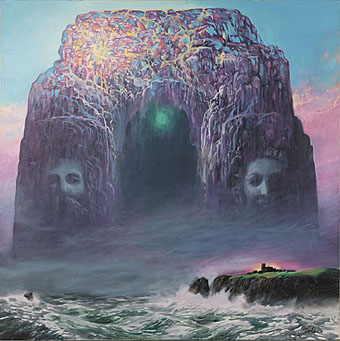
The art of Jim Leon, 1938–2002

leon1.jpg

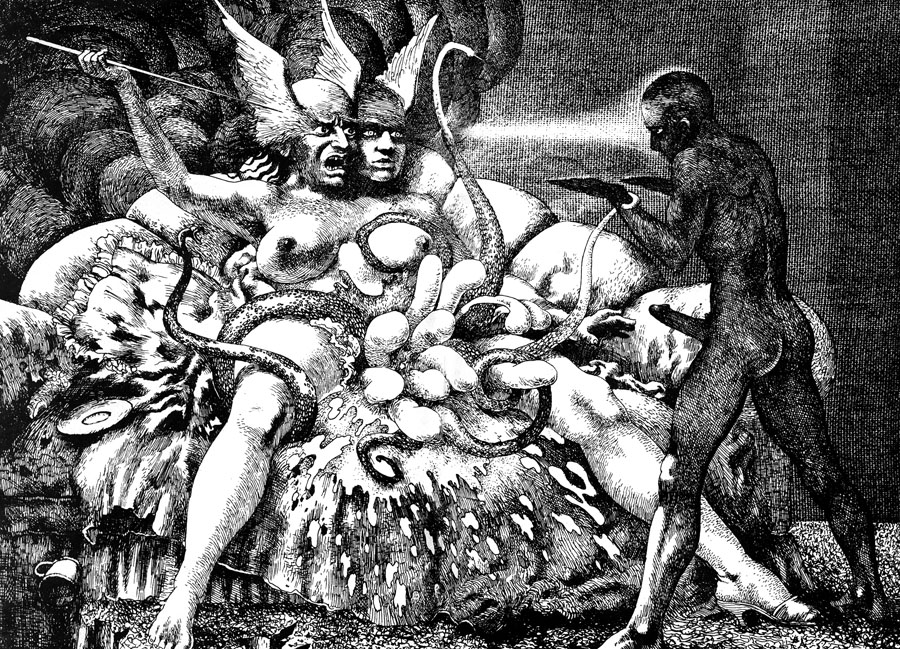
Psychopathia Sexualis (1967).

This, dear friends, is what the art of the fantastic could give us but rarely does, something which combines the metaphysical intensity of the Symbolists with a post-Freudian sensibility to create what Philip José Farmer once called “the pornography of the weird”. Jim Leon was a British artist whose work gained prominence via the underground magazines of the 1960s, especially Oz, although he was never really a psychedelic artist as such. Many of his earliest paintings show the influence of the Pop artists, it was only later in the decade that a distinctly original and surreal imagination came to the fore. Oz was always pretty scurrilous and had no qualms about challenging the authorities with bizarre sexual imagery which other magazines would never dare to print. Leon and other artists were fortunate to have such a public forum for outré work, a few years earlier or later and they might not have found an outlet at all.

leon2.jpg

Untitled (1979).

His early work blended influences from Francis Bacon, surrealism and the baroque. Lurking there is also the English visionary William Blake, together with the obsessive Romanticism of the pre-Raphaelites. A number of his early paintings and drawings refer to William Burroughs’s Naked Lunch (first published in Paris in 1959). These were just some of the ingredients of an amazing, semi-abstract, spatially complex, ritualistic, orgiastic flesh-painting, expressing highly wrought morbidity, eroticism, transcendence and ecstasy; astonishing explorations of the murkier depths of the human mind. (More.)

A Very English Visionary by Simon Wilson.

I first encountered Leon’s work thanks to David Britton’s curating of a portfolio feature in Wordworks magazine which was republished in the Savoy Books anthology, The Savoy Book in 1980. Having seen a Leon painting in a back issue of Oz I was surprised that an artist with such a powerful imagination was so little-known. It turns out that he’d been working all along, albeit far from the public gaze, having moved to Lyons in France where he spent the 1970s and 80s painting many canvases of mystical scenes similar to those produced by the California artists featured in the Visions book. None of his later work explores the darker realms of his earlier Psychopathia Sexualis drawings, and since it’s the early work that I prefer, that’s what’s featured here. These drawings and paintings bear comparison with the art of Raymond Bertrand but where Bertrand has had his work published in lavish book collections, we have to rake through back issues of magazines for Leon’s endeavours. Leon’s later paintings at least have a website which is maintained by his family.

Continue reading “The art of Jim Leon, 1938–2002”

The Mask of Fu Manchu

fumanchu1.jpg

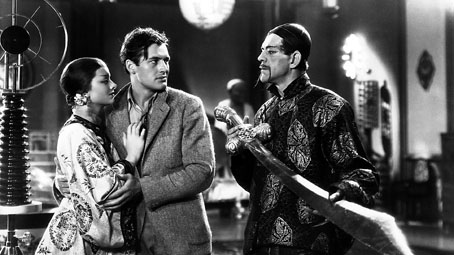
Myrna Loy, Charles Starrett and Boris Karloff.

Los Alamos ranch school where they later made the atom bomb and couldn’t wait to drop it on the yellow peril. The boys are sittin’ on logs and rocks eating some sort of food there’s a stream at the end of a slope. The counsellor was a southerner with a politician’s look about him. He told us stories by the camp fire culled from the racist garbage of the insidious Sax Rohmer. “East is evil, west is good.”

William Burroughs

More pulp, and yes, it’s still racist garbage but Charles Brabin’s 1932 film which stars Boris Karloff as Sax Rohmer’s Oriental super-villain has its pleasures if you look past the severely dated attitudes. Together with The Black Cat (1934), where Boris plays a Satan-worshipping Modernist architect (!), this is one of the best non-Frankenstein Karloff films of the 1930s, as I was reminded this weekend when re-watching it along with several Sherlock Holmes episodes.

fumanchu2.jpg

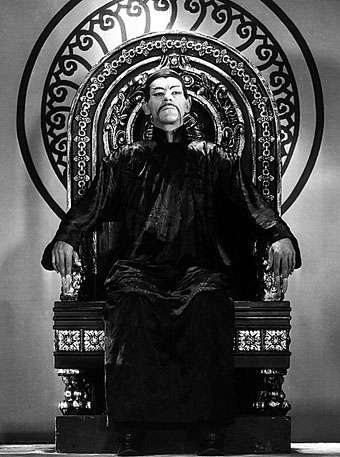
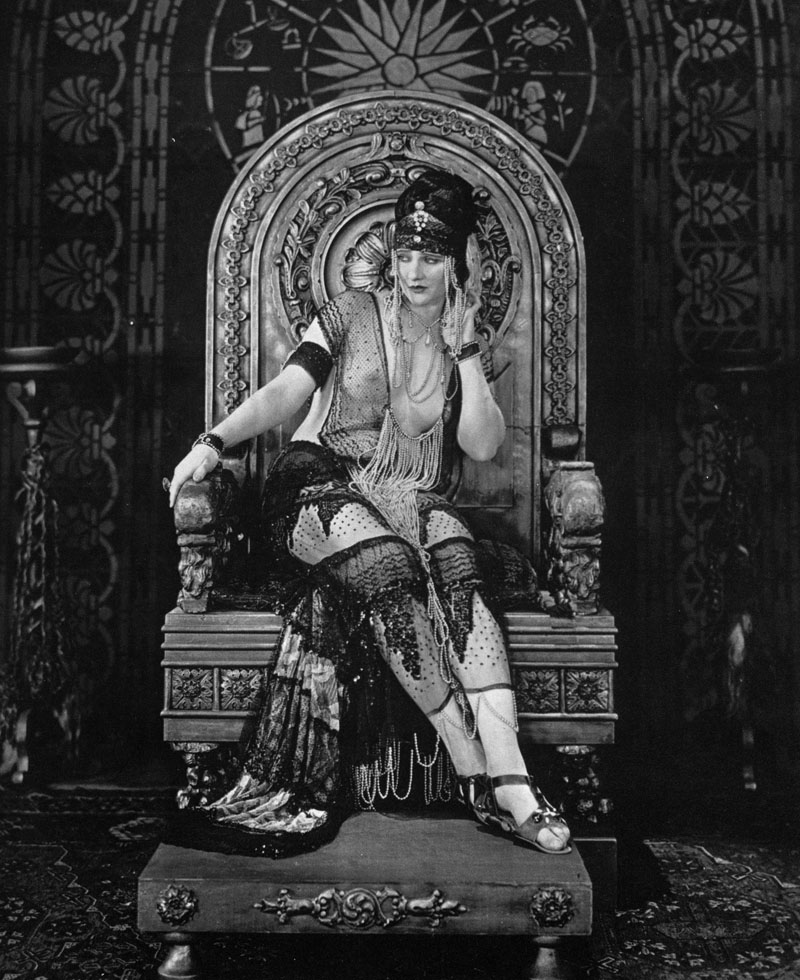
Christopher Lee is elegantly diabolical in the later Fu Manchu films but their cheap budgets force him to skulk around in dismal underground lairs. Karloff’s Doctor has a lavish Art Deco pad whose huge rooms are furnished with a noisy Van de Graaff generator and other scientific apparatus, plus a series of torture rooms where his guests may endure death by encroaching spikes (the “Slim Silver Fingers”), being lowered into an alligator pit, or driven mad by the incessant tolling of a giant bell. I happened to notice that the Doctor’s throne is quite possibly the same one (with a fresh coat of paint) as was used a decade earlier by a notoriously unclad Betty Blythe in The Queen of Sheba (1921), a lavish silent epic which is now unfortunately lost.

sheba.jpg

Betty Blythe as the Queen of Sheba.

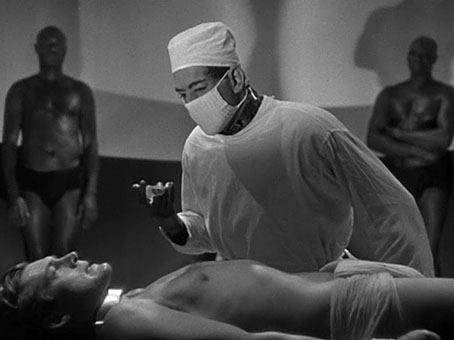
The flaunting of Ms. Blythe’s breasts were one of the many occurrences which led to Hollywood’s adoption of the Hays Code in the 1930s, although the Code’s full effects weren’t felt until later in the decade. The notable scene in The Mask of Fu Manchu where hunk Charles Starrett appears strapped to a table dressed in nothing but a skimpy loin cloth (having previously been thrashed by Fu’s lustful daughter) would have been toned down considerably had the film been made a few years later. All the more reason to watch it today, such scenes only add to the fun.

fumanchu3.jpg

The Doctor prepares to inject his captive with a serum which will turn the man into a compliant slave.

The Mask of Fu Manchu | A page about the original serial, the subsequent novel and its illustrators.

Previously on { feuilleton }
Wladyslaw Benda

Burroughs: The Movie

burroughs.jpg

The author at home in his Bunker.

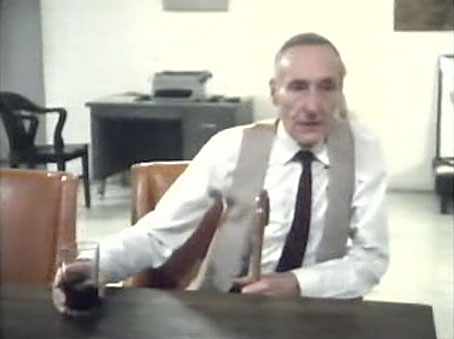
When I was writing last August about Yony Leyser’s new Burroughs documentary William S Burroughs: A Man Within I mentioned Howard Brookner’s 1983 film, Burroughs, a 90-minute study of the writer’s life and work that as a film biography remains definitive. Brookner was fortunate to capture all the surviving Beats (including Ginsberg and Gysin) and also family members like Burroughs’ son, William Jr. (who died shortly after filming), and his brother, Mortimer. If you’re interested in Burroughs and have never seen Brookner’s film it’s essential viewing, so it’s good news that Ubuweb has turned up a blurry copy (which they’ve titled Burroughs The Movie) taken from the BBC’s Arena screening shown after the writer’s death in 1997. As I recall, the beginning is slightly re-edited to make it an obituary piece but the rest of the film is complete.

Update: Ubuweb no longer hosts the film now that a reissue has been announced. The links have been removed here as a result.

Elsewhere on { feuilleton }
The William Burroughs archive

William Burroughs’s Stuff

ross.jpg

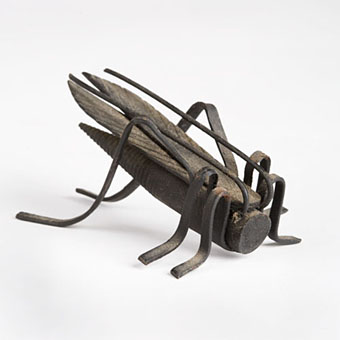
Some of it, anyway. This bullet grasshopper was owned by William Burroughs and photographed by Peter Ross as part of a series presenting some of the writer’s possessions. No clues as to who constructed this but I like the way it combines two of Burroughs’ persistent interests, insects and weapons. Via Coudal.

Previously on { feuilleton }
Jewelled butterflies and cephalopods
William S Burroughs: A Man Within
Geoffrey Haberman’s brass insects
Elizabeth Goluch’s precious metal insects
Kelly McCallum’s insect art
The art of Jo Whaley
The art of Philippe Wolfers, 1858–1929
Lalique’s dragonflies
Lucien Gaillard