Weekend links 150

feanne.jpg

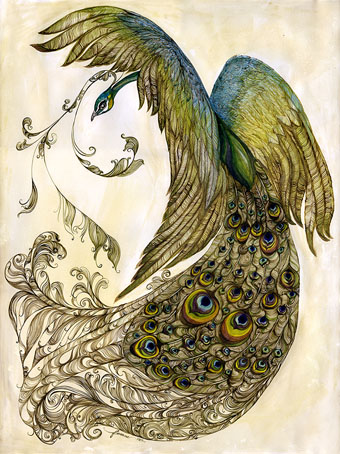
One of A Pair of Peacocks (2012) by Feanne.

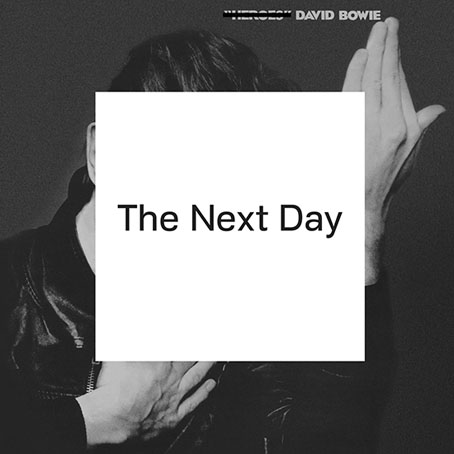
Jonathan Barnbrook reveals his package design for the new David Bowie CD. The Barnbrook studio has also designed the catalogue for the forthcoming V&A Bowie exhibition. And there’s more (don’t worry, it’ll be over soon): Jon Savage on When Bowie met Burroughs.

• “Witches have a fashion moment,” says the NYT. Nice clothes but the writing trots out too many of the usual lazy clichés. Related: A Tale of Witches, Woodland and Half-remembered Melodies…, a new mix by Melmoth the Wanderer.

Calidostópia! is a free album (FLAC & mp3) from Marcus Popp aka Oval: “an enticing 16-track collaboration…with seven wonderful singers/musicians from all over South America”.

Before meeting Moorcock in person, [Hari] Kunzru went on to say, ‘I didn’t realise the role he’d played in connecting so many different scenes and undergrounds together – the psychedelic music scene, the science fiction scene, the hip experimental literature scene around people like William Burroughs, pop art’.

Brave New Worlds: A Michael Moorcock Retrospective by Carol Huston. Moorcock’s Elric novels will be published by Glénat in new bande dessinée adaptations later this year.

• More art by Michael W. Kaluta at The Golden Age. And more fantastic comics/illustration by Philippe Caza at 50 Watts. There’s more Caza here.

• Mine and David Britton’s new book, Lord Horror: Reverbstorm, was reviewed at The Spectator.

Google Street Scene: “Moments of cinema captured by Google Street View cameras”.

Cosmic Sentinels and Spiral Jetties: JG Ballard, Robert Smithson & Tacita Dean

• Strange Flowers showcases the heads of Pavel Tchelitchew, 1949–1952.

Setting in the East: Diamanda Galás on Women and Real Horror

Little Joe: “A magazine about queers and cinema, mostly.”

Nanoparticles loaded with bee venom kill HIV.

Treatises on Dust: Antic Found Texts

The Wizard Blew His Horn (1975) by Hawkwind (with Michael Moorcock) | Brothel In Rosenstrasse (1982) by Michael Moorcock’s Deep Fix | Running Through The Back Brain (1983) by Hawkwind (with Michael Moorcock)
Interzone: A William Burroughs Mix

burroughs.jpg

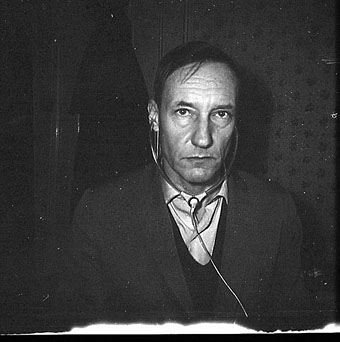
Interzone is a selection of William Burroughs recordings mixed with electronic music and other pieces such as extracts from Howard Shore & Ornette Coleman’s Naked Lunch soundtrack:

A tribute to ‘El Hombre Invisible’. It features some of my favourite readings, to which I’ve added music by John Zorn (from his Burroughs-inspired work), Tod Dockstader, Arne Nordheim and others. Also in the mix are radio recordings and vocal cut-ups by the man himself.

The curator is Mixcloud user Timewriter, one of whose mixes I linked to last Halloween. I was surprised to find I’d already downloaded the Burroughs mix from the Timewriter blog, Include Me Out, but hadn’t managed to listen to it. Better late than never. This week seems a good time to draw attention to both the mix and that blog in general which features among its posts a quantity of Burroughs-related ephemera. Many of the mix readings are from the albums of Burroughs’ tape recordings from the 1960s, including Nothing Here Now But The Recordings, the collection of tape experiments released by Industrial Records in 1981. The latter is essential listening for anyone who appreciates Burroughs’ early novels; some of its pieces such as Last Words of Hassan Sabbah sound less like readings of the author’s work than actual artefacts from the books themselves.

Elsewhere on { feuilleton }
The William Burroughs archive

Sine Fiction

sine6.jpg

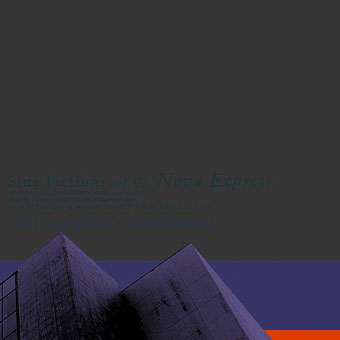
Sine Fiction VI: Nova Express (2003) by Eucci.

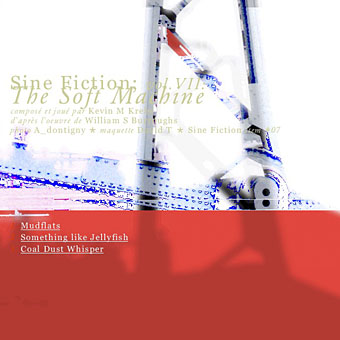
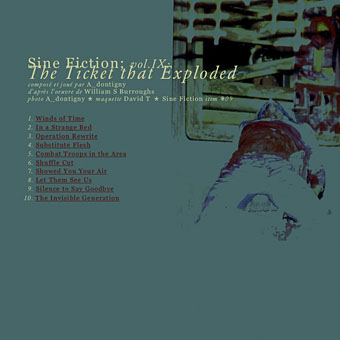
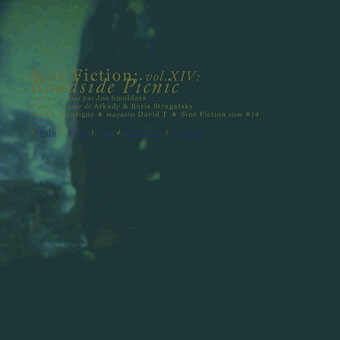
More Burroughsian music, and a selection that includes another interpretation of The Ticket That Exploded. Sine Fiction is a music project curated by Aimé Dontigny that commissions electronic artists to provide soundtracks to science fiction novels. The project has been running since 2000, and has so far managed twenty releases, the most recent of which—Dontigny’s own music for Ballard’s The Drowned World—appeared in 2011. In addition to three Burroughs titles there’s another work with considerable cult status, the Strugatsky Brothers’ Roadside Picnic, which Jos Smolders accompanies in a very minimal fashion. I’d still go for the gloriously doomy atmospheres of Stalker (1995) by Robert Rich & B. Lustmord but there’s room in the world for multiple interpretations.

All the Sine Fiction releases are available as free downloads at the No Type site or (if you prefer) at the Internet Archive.

sine7.jpg

Sine Fiction VII: Soft Machine (2003) by Kevin M Krebs.

sine9.jpg

Sine Fiction IX: The Ticket That Exploded (2003) by A_Dontigny.

sine14.jpg

Sine Fiction XIV: Roadside Picnic (2004) by Jos Smolders.

Elsewhere on { feuilleton }
The William Burroughs archive

Previously on { feuilleton }
A playlist for Halloween: Drones and atmospheres

The Ticket That Exploded: An Ongoing Opera

ticket1.jpg

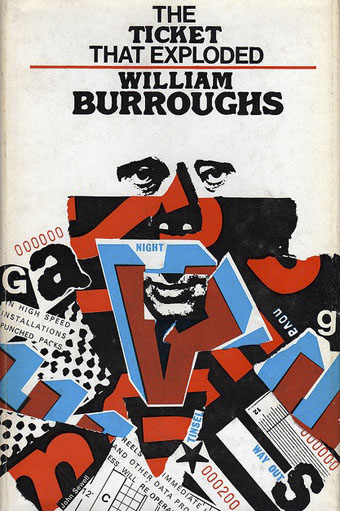
The book that made my head explode when I was 16. Calder & Boyars edition, 1968; design by John Sewell.

Years ago the idea of an opera based on The Ticket That Exploded would have been a wry joke: a novel brimming with text that’s fragmented even by Burroughs’ standards, as well as the usual preoccupations with spurting cocks, alien sex, parasitic invasion and erotic asphyxia. That said, if you can swallow the content (so to speak) a libretto is no doubt easy to create from all those sentence fragments, and there’s no worry about anyone complaining that you’ve missed some crucial part of the story. James Ilgenfritz’s The Ticket That Exploded: An Ongoing Opera attempts just this in an extract which can be seen on YouTube:

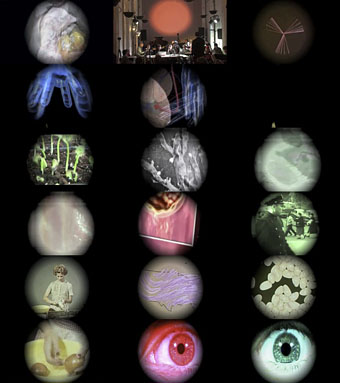
Premiered at Issue Project Room while I was Artist in Resident in 2011, and based on William S. Burroughs’ 1962 novel of the same name, The Ticket That Exploded takes all its text directly from the novel. I wrote the libretto and composed the music, which was then exquisitely interpreted by some of the greatest musicians in the New York area. Jason Ponce collected a massive array of bizarre visual materials and innovative digital processing programs to perform the visual component of this work live onstage at the premiere.

There’s more from Jason Ponce at Vimeo. A DVD of the complete work is planned in 2014. Via Supervert.

ticket2.jpg

Elsewhere on { feuilleton }
The William Burroughs archive

Weekend links 142

bowie.jpg

Gratifying this week to see album cover art under discussion even if the heat-to-light ratio was as unbalanced as it usually is when pop culture is the subject. Jonathan Barnbrook, who also designed the Heathen (2002) and Reality (2003) packaging for David Bowie, wrote about the thinking behind the new cover on his blog. (And for the time being let’s note that this is still only a cover design, we don’t know what else is on its way.)

For my part I’ll point out that the artist-as-cover-image is the great cliché of album design, and the bigger the name the more the rule applies; Neville Brody complains about this in the first book of his work, as does Storm Thorgerson in the Hipgnosis books. In Bowie’s case the rule has been applied almost universally since his debut album in 1967, the only variations being illustrational ones or slight dodges like having his feet appear on the front of Lodger and his back facing the viewer on Earthling. Consequently the new design is a radical gesture from an artist who could have got away with a photo of himself du jour. By way of contrast, consider that Rod Stewart is a year older than David Bowie and presented the world with this artefact in October 2012.

Related: Hard Format responds to the cover, Chris Roberts on “Picasso resurrected in a Rolf Harris era“, and Alexis Petridis on The inside story of how David Bowie made The Next Day.

The Quicksilver typeface, designed by Dean Morris when he was only 16, bought by Letraset and now an indelible feature of pop design from the 1970s. Morris describes his experience here (“they shunned rapidographs!”) and collects examples of the print history here.

When the days are short, we are closest to the medieval world. To the avoidance of mirrors where death improves our portraits every morning with a few more lines and shadows. What would once have been a sermon, a conjuring of hellfire, a phantom slide show, is now an entertainment. But before we can begin again, we have to kick free of the embrace of our inconvenient predecessors, that compost legion of the anonymous dead. They come uninvited, requiring us to sign up for what the late Derek Raymond called the general contract: a brief turn in the light, then extinction. Eternal darkness. How to live with such knowledge? William Burroughs admired the unswerving bleakness of Beckett’s gaze, the way he reduced compensatory illusions to zero. Nowhere left to crawl. And nothing to crawl on. Last breath is last breath. Stare into the abyss and the abyss will stare right back.

Iain Sinclair reviews The Undiscovered Country: Journeys Among the Dead by Carl Watkins

Broadcast’s James Cargill on Morricone, Minidiscs and Scoring Berberian Sound Studio. Related: Melmoth the Wanderer posts a new mix, The Curious Episode of the Wizard’s Skull, and more spooky sounds are on their way from The Haxan Cloak.

• A Firm Turn Toward the Objective: Joanne Meister on meeting the great Swiss designer Josef Müller-Brockmann.

duchess.jpg

Twitter user @thisnorthernboy reworked Paul Emsley’s portrait of Kate Middleton. @barnbrook approved.

• The Beatles of Comedy: David Free on the Monty Python team.

• The history of the London Underground poster.

Impossible Architecture by Filip Dujardin.

• At Pinterest: Art Dolls & Sculpture

• Grace Jones’ Nightclubbing album has been on repeat play this week: Warm Leatherette/Walking In The Rain | I’ve Seen That Face Before (Libertango) | Demolition Man