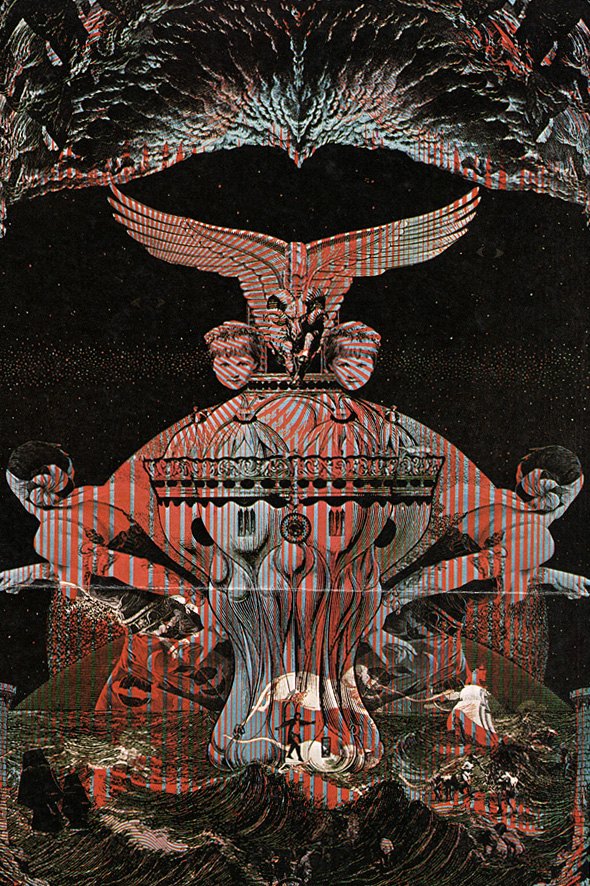
Arthur Rising

arthurrising.jpg

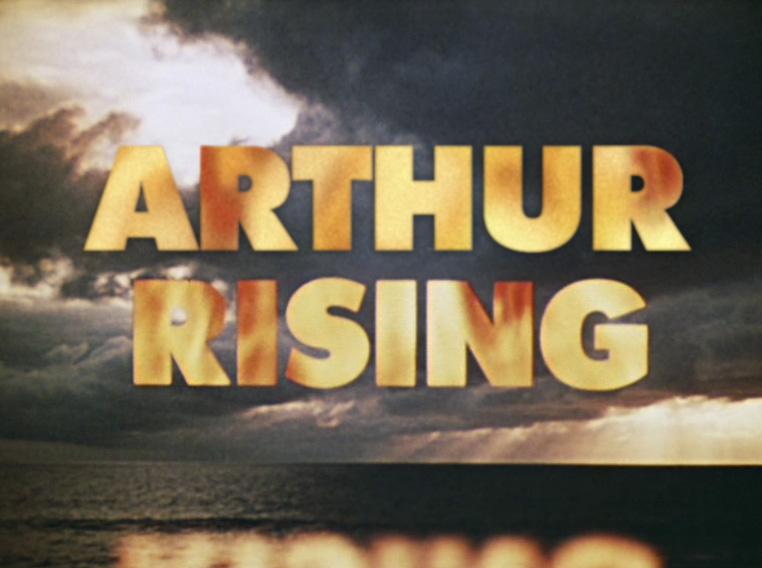
In which the sorely missed Arthur magazine returns to the world of print after a four-year slumber in Avalon. I was involved with the magazine from the outset so regular readers may recall many earlier posts about America’s most vital cultural bulletin:

After a four-year sabbatical (faked death?), your beloved revolutionary sweetheart Arthur returns to print, renewed, refreshed, reinvigorated and in a bold new format: pages as tall and wide as a daily newspaper, printed in color and black and white on compostable newsprint, with ads only on the back cover(s). Amazing!

In partnership with Portland, Oregon’s Floating World Comics, Arthur’s gang of goofs, know-it-alls and village explainers are back, from Bull Tonguers Byron Coley and Thurston Moore to radical ecologist Nance Klehm to trickster activists Center for Tactical Magic to Defend Brooklyn‘s socio-political commentator Dave Reeves to a host of new, fresh-faced troublemakers, edited by ol’ fool Jay Babcock and art directed by Yasmin Khan. You want a peek at the contents? Sorry, compadre. That would be saying too much, too soon. Wait ’til Dec. 22, 2012: that’s right—THE DAY AFTER THE NON-END OF THE WORLD!

Please keep in mind… Arthur is no longer distributed for free anywhere. Those days are (sadly) long gone. Now you gotta buy Arthur or you won’t see it. Our price: Five bucks cheeeeeep!

Arthur No. 33
Broadsheet newspaper, 15″ x 22.75″
Available Dec. 22, 2012
NOW YOU MAY PRE-ORDER ARTHUR NO. 33 HERE.

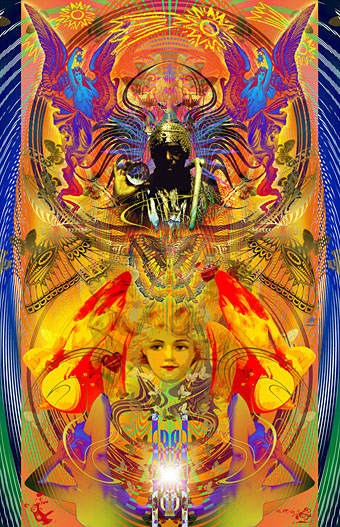
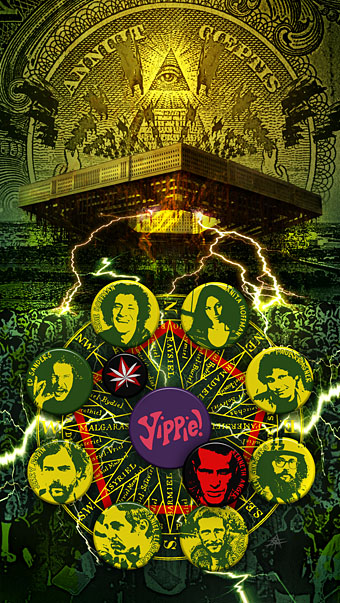
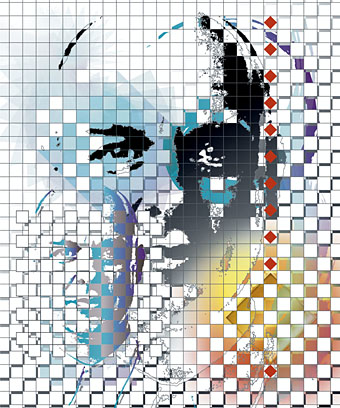
The NYT picked up on the news on Thursday. Is re-launching a paper magazine in 2012 a crazy idea? We’re about to find out. A selection of my illustrations for previous issues follows.

mbvarkestra.jpg

MBV Arkestra (2003).

crowley.jpg

The Aeon of Horus (2004).

pentagon.jpg

Out, Demons, Out! (2004).

eno.jpg

Brian Eno (2005).

richardbishop.jpg

Sir Richard Bishop (2007).

Weekend links 54

starowieyski.jpg

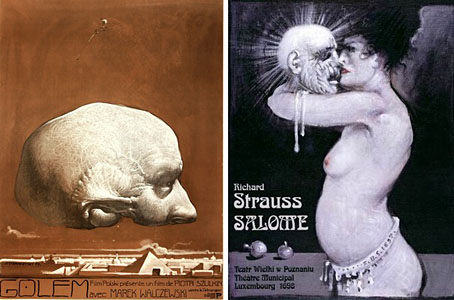
Film and opera posters by Franciszek Starowieyski (see below).

• At first glance, Jerzy Skolimowski’s new film, Essential Killing, sounds like Joseph Losey’s Figures in a Landscape (1970) reworked for our era of renditions, torture and war without end. The trailer is here; Sight & Sound liked the film and dismissed any Losey comparisons. The Quietus interviewed the director this week, and there’s also a video interview here.

“He was trying to tell the truth about war. In the 1950s the US was telling itself a mythic, grandiose, heroic story about the second world war and GI Joe saving the world. [James] Jones was saying, ‘That wasn’t the war I saw, I want to write something more honest and realistic. Whatever the mid-America myth, one of the things men were doing was giving blow jobs for money.'”

From Here to Eternity is published in an uncensored edition.

Edogawa Rampo‘s sinister short story The Human Chair concerns a man who conceals himself inside a chair. Taiwanese artist Lan Hungh may have had Rampo’s story in mind for his Demolished Chair art piece about which we’re told “Hungh’s flaccid penis is the only body part that’s visible, and becomes hard as soon as anyone starts discussing the chair or sitting on it.” BUTT magazine spoke to the artist.

…unaware of their double standards, the police objected to the portrayal of men in Harrison’s work as demeaning. There was Hugh Hefner squeezed into a bunny girl costume, a beefy but emasculated Captain America wearing false breasts and a stars ‘n’ stripes-patterned basque, and Valerie Solanas, the radical feminist who tried to murder Andy Warhol, stamping on his Brillo box artwork.

A piece about artist Margaret Harrison whose work is on show at Payne Shurvell, London.

Connecting Science and Art: “Novelist Cormac McCarthy (!), filmmaker Werner Herzog, and physicist Lawrence Krauss discuss science as inspiration for art and Herzog’s new film on the earliest known cave paintings.”

• At Tumblr: Gurafiku, “a collection of visual research that encompasses the history of Japanese graphic design”, and Archidose.

• “Michael Moorcock’s Modem Times 2.0 is a good introduction to the literary legend.”

• The Spring 2011 edition of Periwinkle Journal (Queer Art + Creativity) is now live.

• Rick Poynor (again) on [Franciszek] Starowieyski’s Graphic Universe of Excess.

• Coudal now have a page of links for the great Terrence Malick.

Wake in Progress is Finnegans Wake illustrated.

Brown Study, a blog by Jay Babcock.

• RIP Sidney Lumet.

Ry Cooder & The Moula Banda Rhythm Aces: Let’s Have a Ball is a film by Les Blank of a fantastic performance by Cooder’s band in Santa Cruz, California, in 1987. It’s not available on DVD but most of it can be seen on YouTube.

Amphitheatrum Sapientiae Aeternae

khunrath1.jpg

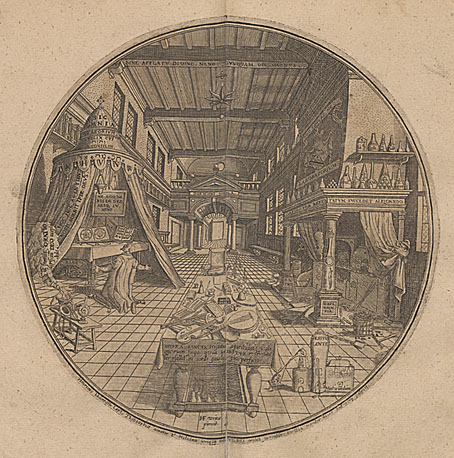
Laboratorium.

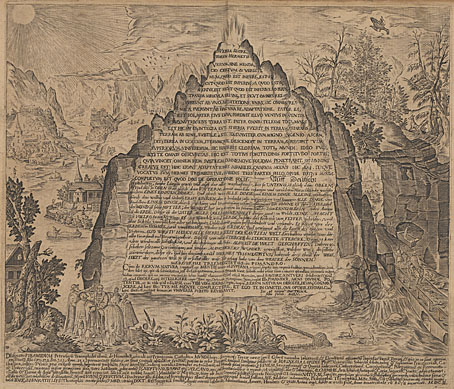
More alchemical business which should be familiar to anyone who’s cracked open an occult history or two. Familiar as these illustrations often are, it’s only recently that we’ve been able to scrutinise their mysteries in detail thanks to the services of various libraries and online archives. These plates are from Amphitheatrum Sapientiae Aeternae (1609) by Heinrich Khunrath, and the Laboratorium is often reproduced as a rather grand example of the alchemist’s workplace. As for the picture below, it’s a shame it didn’t turn up a few years ago when Jay Babcock asked me if I had a decent copy of the illustration for an Arthur magazine article. All I had was a tiny reproduction so I think the piece ran without the picture in the end. The ETH Bibliothek has further illustrations from this volume including a portrait of Meister Khunrath and his pet hound.

Another tip via the BibliOdyssey Twitter feed.

khunrath2.jpg

Designatio Pyramidum.

Elsewhere on { feuilleton }
The etching and engraving archive

Previously on { feuilleton }
Cabala, Speculum Artis Et Naturae In Alchymia
Digital alchemy

Weekend links 46

finalprogramme.jpg

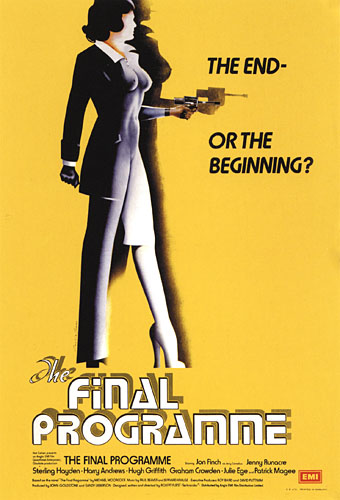
The Final Programme (1973). Philip Castle’s poster art implied the androgynous finale of Moorcock’s novel which the film itself evaded.

They were musty-smelling 10p messages from the futuristic past, complete with cover designs (and content) that were unlike anything I’d seen before. I’m fairly certain that this was how I first came across Michael Moorcock, in an early-70s Mayflower paperback, with a psychedelic cover by Bob Haberfield.

(…)

Moorcock steered New Worlds towards a set of concerns that chimed with the times; this was the period ruled by Marshal McLuhan and RD Laing, and the exploration of “inner space” seemed just as interesting as the “outer space” of satellites and moonshots. This turn was controversial, not just with die-hard pulp fans, but, surprisingly, with people such as the pop artist Richard Hamilton, another denizen of the London scene. “He thought we were turning science fiction into something namby-pamby, losing its roots,” Moorcock says. “He wanted explosions and spaceships and robots.”

When Hari Kunzru met Michael Moorcock, a major feature on a great writer and cultural catalyst. Kunzru posted the full transcript of their conversation here. Jovike’s Moorcock Flickr set has many of the lurid Mayflower covers.

• Moorcock is among the contributors to the forthcoming Thackery T. Lambshead Cabinet of Curiositities. io9 posted a list of contents (and one of my pics) while co-editor Jeff VanderMeer added some detail.

• So long to The White Stripes whose dissolution was announced earlier in the week. We know they’ll be back one day. Jay Babcock gave them their first major interview for the LA Weekly in 2000 which he’s reposted here.

Mister Blues (1962) by Lasry-Baschet aka Structures Sonores, a rare 7″ single showcasing the unique glass-and-metal sounds of the Cristal Baschet. Young Teddy Lasry on clarinet was playing in prog-jazz outfit Magma a few years later. Related: John Payne on Magma and The Mars Volta.

Here’s one thing that changed me: a close reading of Flannery O’Connor’s Mysteries and Manners. In it, she says that, “it is the business of fiction to embody mystery through manners,” manners being those concrete details — depictions of the real — in story. “Mystery through manners…” I had never heard a modern author seeking deep metaphysical mystery through realism before. Well, sure, Robert Musil, Bruno Schulz, Robert Walser, and a handful of other personal faves. By deep mystery I mean, mystery about our relationship with the planet, not anthropocentric mystery. I get sick of thinking about humans quickly, as we only constitute about 1% of what’s happening in our universe, if that much, and it was refreshing to me to hear O’Connor critiquing Henry James’ idea that modern people should aspire to know nothing of mystery, to be completely rooted in humanity. That notion makes me feel like hurling myself off a cliff. In her opinion, great literature seeks to embrace and express mystery through its mimicry of actual mannerisms. Mystery — fantasy — through the real. And with that, the borders between fantasy and realism were completely transgressed in my brain. Suddenly, I saw them as two good means to the same end. This made me excited to write real human situations again.

Trinie Dalton is interviewed here.

• And speaking of mystery through the real, there’s London Intrusion, a sequence of metropolitan adumbrations by China Miéville. Am I the only person to spot an intrusion of a different kind in the presence there of one of Eugène Atget’s Parisian views? There’s a doorway to Viriconium in that curious wedge of buildings but nobody can tell you where.

Rupert Murdoch—A Portrait of Satan. Adam Curtis on top form looking at the Dirty Digger’s career and a reminder of why some of us have always called one of his rags The Scum. A key point for me: Murdoch’s insecure railing against “elites”, a favourite term of aspersion on his Fox News network.

• Rick Poynor asks What Does JG Ballard Look Like? Related: “…only two people in Bucharest are going to read this.” Eduardo Paolozzi in conversation with JG Ballard and Frank Whitford, 1971.

How many days does Bill Murray’s character really spend reliving Groundhog Day?

• Silent Porn Star explores The Translucent Beauty of Androgyny.

Ballets Russes brought back to life on film, and also here.

Dewanatron Electronic Music Instruments.

RIP Tura Satana. Remember her this way.

Warm Leatherette (1978) by The Normal | Warm Leatherette (1982) by Grace Jones | Warm Leatherette (1998) by Chicks On Speed.

Wilfried Sätty: Artist of the occult

satty1.jpg

After last week’s post about Wilfried Sätty‘s illustrated Poe, I thought I’d follow it up with this 1970 interview from Man, Myth & Magic, a part-work publication which built weekly into a seven-volume “illustrated encyclopedia of the occult”. In the back of each issue there was a two-page feature, Frontiers of Belief, usually featuring more topical material, and issue 36 had Sätty as its subject. The interview captures him just after he’d been building his reputation as one of San Francisco’s psychedelic poster artists and just before the book collections of his collage work started to appear. The description of his working methods inevitably plays up the occult associations but helps to give a little insight into the artist. The first two pictures here are from the published article to which I added a couple of the album covers he produced in the 1970s. There’s also a poster for an exhibition with friend and fellow artist David Singer whose lettering adorned many of Sätty’s posters.

A note about Sätty’s name: he was known as Wilfried Podriech when he came to America but changed his name to Sätty thereafter. This surname is often reproduced without an umlaut over the “a” which I regard as an error. When Jay Babcock, Richard Pleuger and I visited David Singer to discuss Sätty’s work (and see some of Singer’s own) we were informed that Sätty’s adopted name was intended to be reminiscent of the Egyptian Pharaohonic name Seti. The umlaut over the “a” gives the pronunciation setty; without it would be satty.

*   *   *

ARTIST OF THE OCCULT by Robert W. Neubert

Alchemy can be a state of being according to Sätty, a German-born artist who now lives in San Francisco; and he believes that this concept can be extended to art. In his attempts to plumb the depths of the subconscious he makes use of his collection of occult works, including a 17th century alchemical text and a book of healing and magic published in 1648.

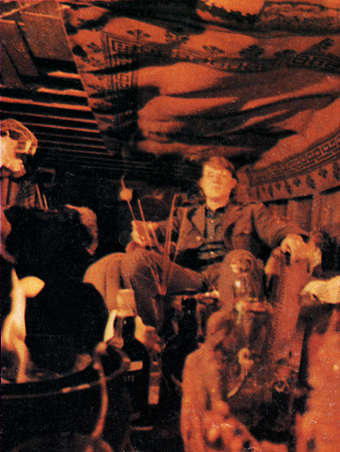
Blue and orange flames flicker from an ancient urn and throw dancing shadows about a dimly-lit subterranean chamber in San Francisco, California. Old, dark-hued tapestries hang from the walls and low ceiling, and occult art objects are crammed into every corner. Baroque harpsichord music filters through the incense-scented air.

Descending a wooden ladder into the nearly black chamber is a tall, lanky man with flowing brown hair, a dark blue Western-styled shirt, and grey flared slacks. He carries under his arm a mystical-looking montage he has recently created and run off on a lithograph press.

The montage is in poster form, and it is a haunting collection of Renaissance and medieval themes, incredible in its intensity, colour and creativity.
satty_photo.jpg

Sätty photographed for Man, Myth & Magic (1970).

The artist is Sätty, a German-born montage-maker with a dream—a dream of plumbing the depths of the subconscious by utilizing alchemy and mysticism in his work.

Alchemy is essential to his creativity, he says. But the 31-year-old artist’s definition of alchemy has a broader meaning than the classic textbook definition of transmuting base metals into gold. He is one of the first non-commercial poster makers, and his work far transcends the psychedelic art used to advertise San Francisco rock and roll dances.

“Alchemy can be a state of being,” he says. “There is such a thing as visual or intellectual or artistic alchemy. The undeveloped mind may be considered akin to lead, the fully-realized mind as gold. And the same is true of art. Much of contemporary art is lead.”

Continue reading “Wilfried Sätty: Artist of the occult”