Leather Cthulhu

mythos1.jpg

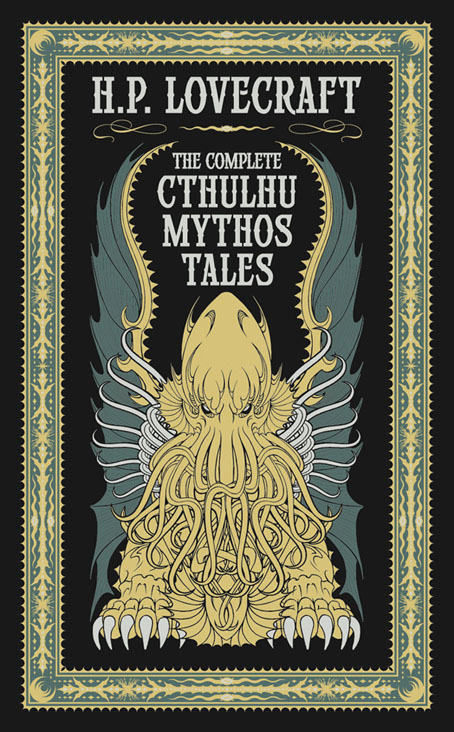
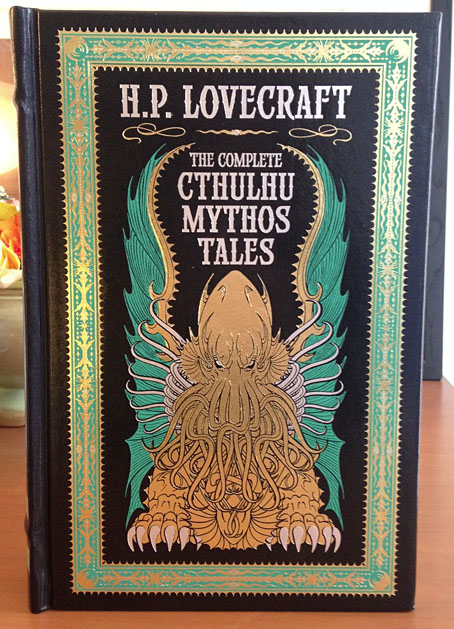
A couple of the projects I’ve been working on for the past few months have yet to be made public but this one from last September has finally shambled into the light of day. The Complete Cthulhu Mythos Tales is a collection of 23 weird tales by HP Lovecraft (some of which are his collaborations with other writers) published by Barnes & Noble in their leatherbound Collectible Editions series. Anyone who’s held one of these volumes will know that they deserve to be called tomes rather than mere books; they’re heavy and lavishly produced, with detailed designs embossed on the front and back boards in a variety of metallic inks.
mythos2.jpg

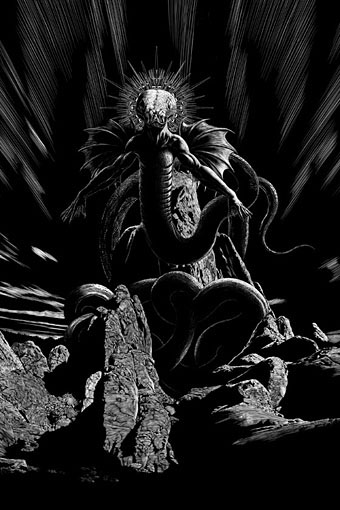
One of my drawings was used a few years ago inside the big B&N edition of Lovecraft’s collected fiction; more recently I also designed a cover for a B&N paperback edition of the Cthulhu Mythos tales but the brief on that occasion was for something quick using pre-existing artwork. Given that the Mythos stories are my favourites in Lovecraft’s oeuvre I would have preferred to have done something more elaborate so I was very pleased when asked last year to create a new design for this hardback edition. The design on the front panel presented some challenges as I didn’t want to have an isolated head with wings but I also didn’t want to reduce the Cthulhu figure to such an extent that detail would be compromised. (This type of embossed printing imposes a limit on the amount of detail you can put into the design.) The compromise was a frontal view of what I consider to be another Cthulhu Sphinx, after the more elaborate sculpted design in my adaptation of The Call of Cthulhu. I find myself wondering now how this creature might look from the side.
mythos3.jpg

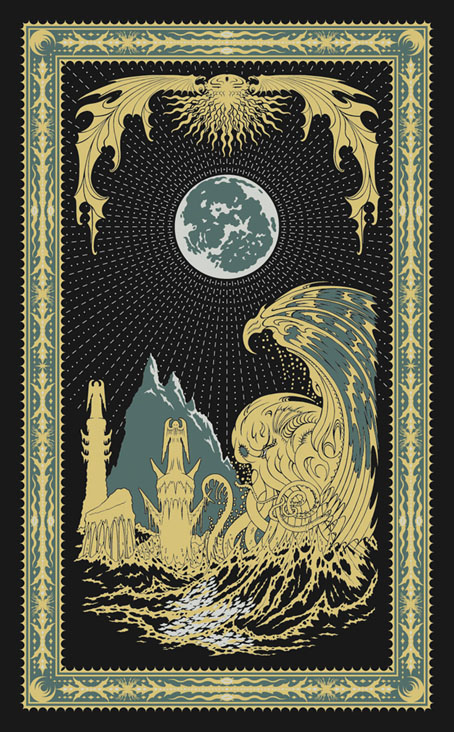
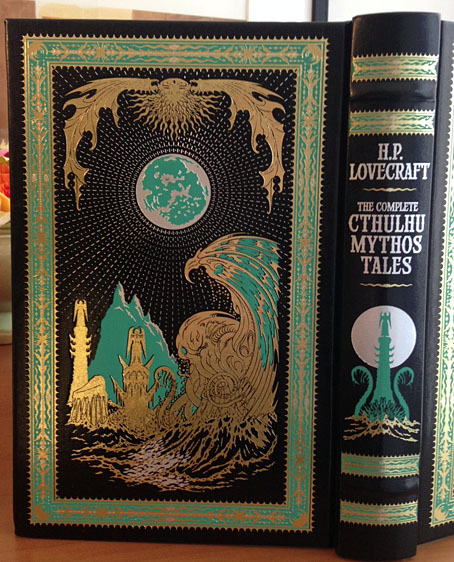
The photos of the boards are courtesy of Betsy Beier at Barnes & Noble, and they show how much more effective the printed design is when you have the light reflecting on it. I’m now eagerly awaiting the arrival of a physical copy. The book will be out at the end of the month, and among the extra features there’s an introduction by Lovecraft scholar ST Joshi, my drawing of R’lyeh on the endpapers, and (if that wasn’t enough) a poster reproduction of my Cthulhu Rising picture.
mythos4.jpg

Elsewhere on { feuilleton }
The Lovecraft archive

Weekend links 292

splendor.jpg

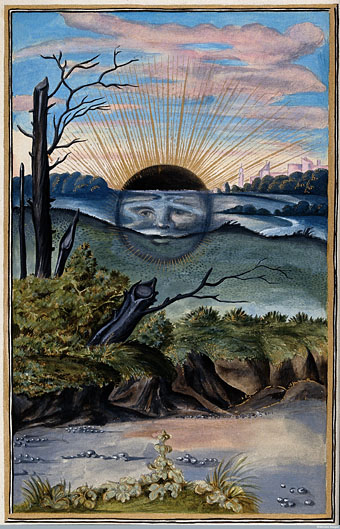
The Black Sun from Splendor Solis (1582) “attributed to the legendary figure Salomon Trismosin”.

Topic B predominates this week. The Black Sun of alchemy was the first thing I thought of when the title of David Bowie’s final album was announced late last year. The Black Sun symbolises the nigredo stage of the alchemical process when putrefaction or decomposition takes place; Carl Jung in Psychology and Alchemy equates the nigredo with the dark night of the soul. At the time I didn’t seriously think that the Bowie of 2015 would have had this in mind as a primary reference even though the Bowie of the early 1970s was immersed in Golden Dawn occultism, the Kabbalah, and a reader of Pauwels & Bergier’s The Morning of the Magicians, a book that informs the lyrics of the Hunky Dory album, and which contains a great deal of discussion about alchemy and other esoteric matters. And yet… Of all the outfits that Bowie might have worn in his final video the one that he chose for Lazarus is a match for the one he wore during the Station To Station Kabbalah-drawing photo session. At Sol Ascendans Alex Sumner and his commenters explored this twilight zone.

Back in the sublunary world, Jonathan Barnbrook’s cut-out sleeve design for the Blackstar album gained additional resonance this week: the black star as the hole that’s left when a more familiar star has been removed from its setting. Hindsight also makes poignant the observation that this was the only album without a picture of the artist on the cover. Elsewhere there were speculations about the title being a reference to Black Star by Elvis Presley (who shared a birthday with Bowie) or a term from oncology, two suggestions that fit so well they’re hard to ignore.

He began to develop a science fiction sensibility, drawing on the New Wave SF movement of Michael Moorcock and JG Ballard, other writers who used the genre such as Anthony Burgess and William S Burroughs, and an older fantasy tradition found in HP Lovecraft and Edward Bulwer-Lytton (whose The Coming Race is name-checked in Oh! You Pretty Things, 1971).

Jake Arnott on David Bowie’s literary influences

• In something-else-also-happened-this-week news, 2016 may see the long-awaited release of Andrei Tarkovsky’s films on Region B Blu-ray. Fingers crossed.

• International posters for The Man Who Fell To Earth. More Nicolas Roeg (and more shiny discs): Eureka (1983) will receive a Blu-ray release in March.

• Cracking the codes of Leena Krohn: Peter Bebergal on the Finnish writer of strange stories.

• Anthems for the Moon: Jason Heller examines David Bowie’s connections to science fiction.

• From 2013: Jon Savage on Bowie’s first meeting with William Burroughs in 1974.

• Mixes of the week: Bowie-esque Vol 1 and Bowie-esque Vol 2 by Abigail Ward.

David Bowie Doing Shit: a Tumblr

“Heroes” (1978) by Blondie & Robert Fripp | “Heroes” (2003) by King Crimson | “Helden” (2007) by Apocalyptica ft. Till Lindemann

The Gods of HP Lovecraft

gods01.jpg

Yig for Rattled by Douglas Wynne.

Presenting one of this summer’s bigger projects, these are my drawings for The Gods of HP Lovecraft, a collection of 12 all-new stories edited by Aaron French for JournalStone. After I’d begun work I was asked whether I could illustrate all 12 stories but since I was already busy with The Monstrous it wasn’t possible. My drawings occupy the second half of the book, with the first half being filled out with suitable illustrations by Paul Carrick and Steve Santiago. The contents are as follows:

Call the Name by Adam LG Nevill (Cthulhu)
The Dark Gates by Martha Wells (Yog-Sothoth)
We Smoke the Northern Lights by Laird Barron (Azathoth)
Petohtalrayn by Bentley Little (Nyarlathotep)
The Doors that Never Close and the Doors that Are Always Open by David Liss (Shub-Niggurath)
The Apotheosis of a Rodeo Clown by Brett J. Talley (Tsathoggua)
Rattled by Douglas Wynne (Yig)
In Their Presence by Christopher Golden & James A. Moore (The Mi-Go)
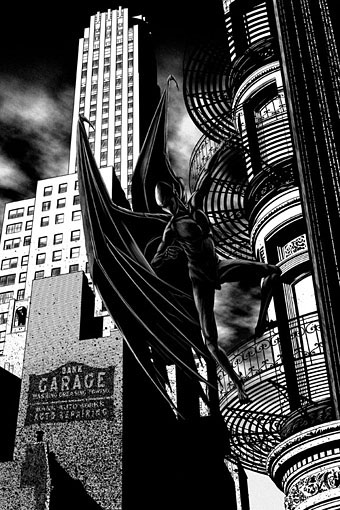
Dream a Little Dream of Me by Jonathan Maberry (Nightgaunts)
In the Mad Mountains by Joe R. Lansdale (Elder Things)
A Dying of the Light by Rachel Caine (Great Race of Yith)
Down, Deep Down, Below the Waves by Seanan McGuire (The Deep Ones)

gods02.jpg

Mi-Go for In Their Presence by Christopher Golden & James A. Moore.

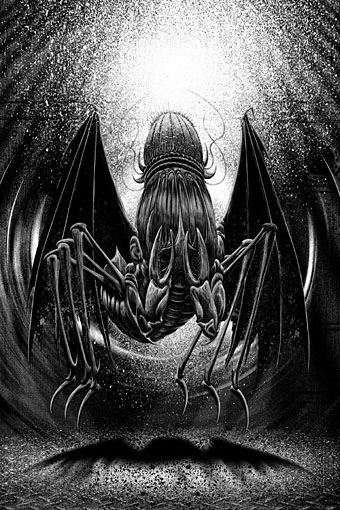
Despite having produced a fair amount of Lovecraft-related illlustration there’s still some areas of his work that I haven’t touched, especially where creature portraits are concerned. So this collection features my first attempts at rendering one of the Mi-Go and one of the Yithians from The Shadow Out of Time. The latter are often represented as fearsome monsters which always strikes me as erroneous when so much description in the story is devoted to their book reading and archive building. Aliens, yes, but monsters they are not. There was some concern when I delivered the artwork that the fine lines and detail might not print so well on paperback stock but the printing is excellent throughout. I recommend this collection for anyone in the mood for some new Lovecraftian fiction.

gods03.jpg

Night-Gaunt for Dream a Little Dream of Me by Jonathan Maberry.

Continue reading “The Gods of HP Lovecraft”

Weekend links 286

ahmed.jpg

One of Faig Ahmed‘s melted Azerbaijani rugs.

• “I asked [William Burroughs] about the future of typography and he said that letterforms would go back to hieroglyphs, similar to the ancient Egyptians.” Jonathan Barnbrook discussing the thinking behind his design for blackstar, the new David Bowie album.

• “…a thick, yellow fog fills the air, sinks, crawls on the very ground; at 30 paces a house or a steam-ship look like ink-stains on blotting paper.” PD Smith review London Fog, a history of the capital’s lethal pea-soupers by Christine Corton.

• At Rue Morgue: Dejan Ognjanovic asks seven writers and editors why HP Lovecraft is still relevant. Related: big thanks to Paul Gallagher for plugging my Lovecraft calendar at Dangerous Minds.

• Some end-of-year weirdness from Moon Wiring Club: Into The Chattering Ground, a sample of the new releases available at the MWC website.

Elaine Lustig Cohen: accidental graphic designer. Related: book covers and other designs by Elaine Lustig Cohen.

• The tomb that architect John Soane built for his wife inspired the shape of Gilbert Scott’s red telephone box.

• Mix of the week: Stephen O’Malley at the controls of Stuart Maconie’s Freak Zone on BBC Radio 6.

• At Dirge Magazine: S. Elizabeth talks to Alice Rogers about art and occultism.

Simon Callow on taking 25 years to write a three-volume life of Orson Welles.

Todd Haynes on Cate Blanchett, Saul Leiter and Queer Cinema.

Le Freak (1978) by Chic | Freak (2003) by LFO | Jovan Freak (Rune Lindbaek Nomaden Mix) (2012) by Georges Vert

Paul Laffoley, 1940–2015

laffoley1.jpg

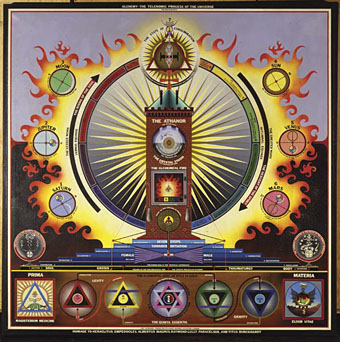
Alchemy: The Telnomic Process of the Universe (1973).

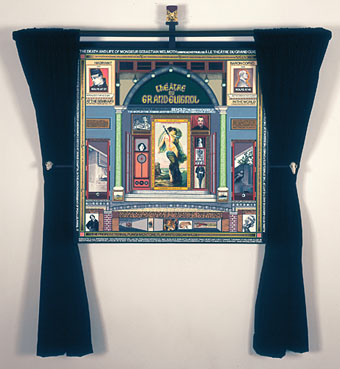
Another week, another incomparable artist gone. This small selection of Laffoley’s unique art and sculpture manages to combine references to (among other things) alchemy, William Blake, Charles Baudelaire, Oscar Wilde, HP Lovecraft, Mark of the Vampire, and Night of the Demon. And this is only a fraction of his work. Richard Metzger has a memorial post at Dangerous Minds together with more paintings and some video links. There’s more at the official website and Kent Fine Art. It’s good to read that the University of Chicago Press will be publishing The Essential Paul Laffoley in March, 2016.

laffoley2.jpg

The Death and Life of Monsieur Sebastian Melmoth: Au Théâtre du Grand Guignol (2001–2003).

laffoley3.jpg

The Solitron (1997).

Continue reading “Paul Laffoley, 1940–2015”