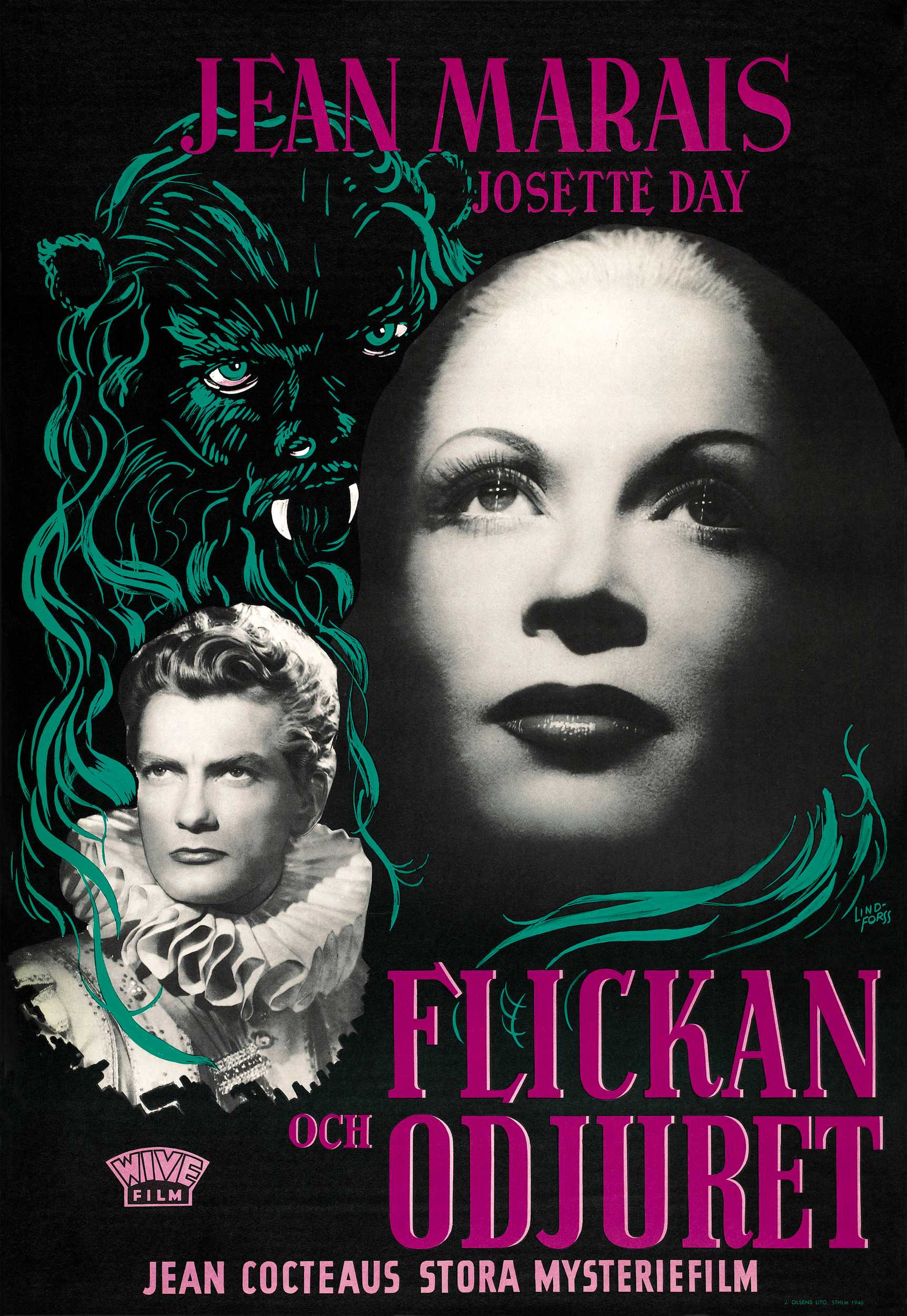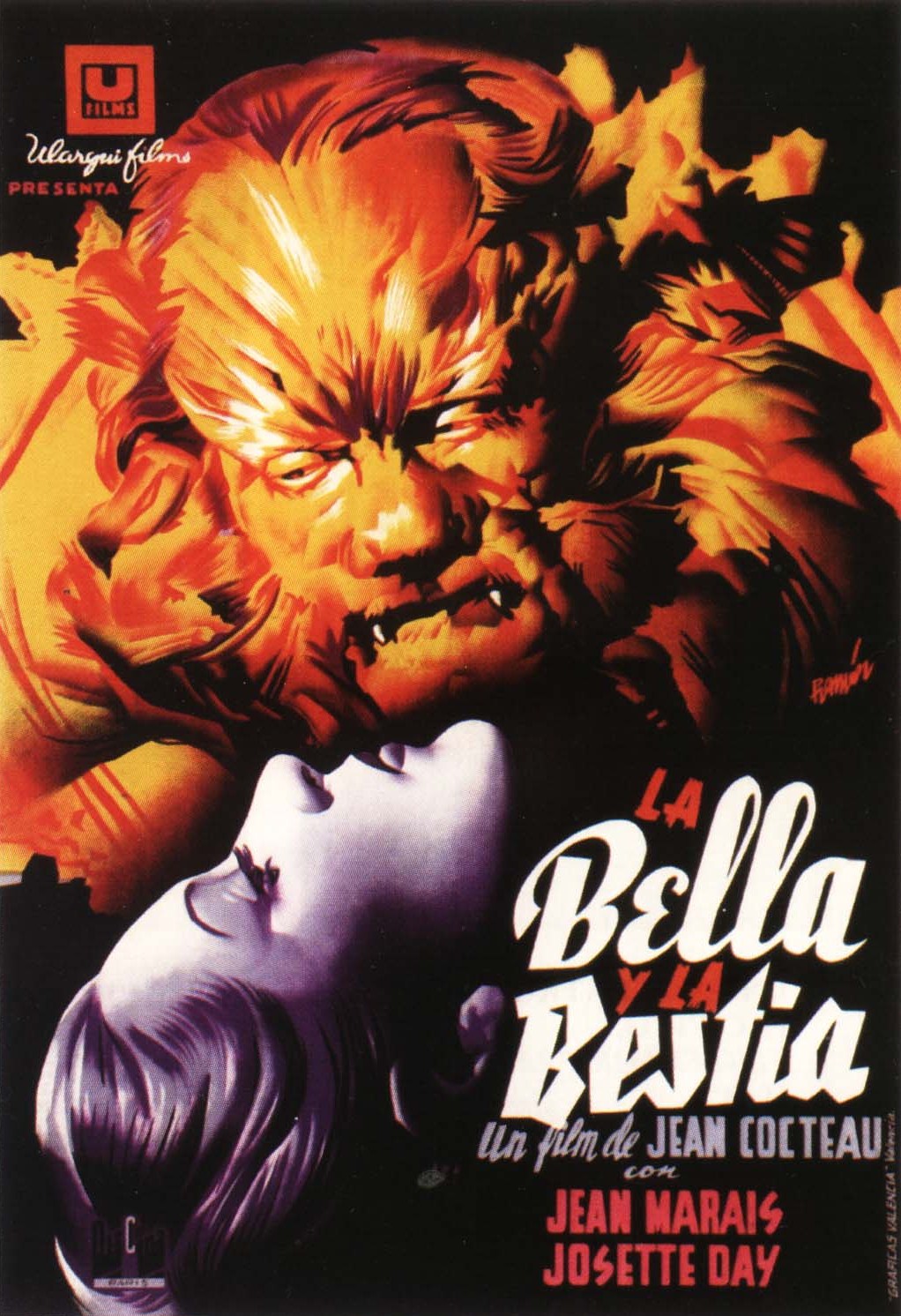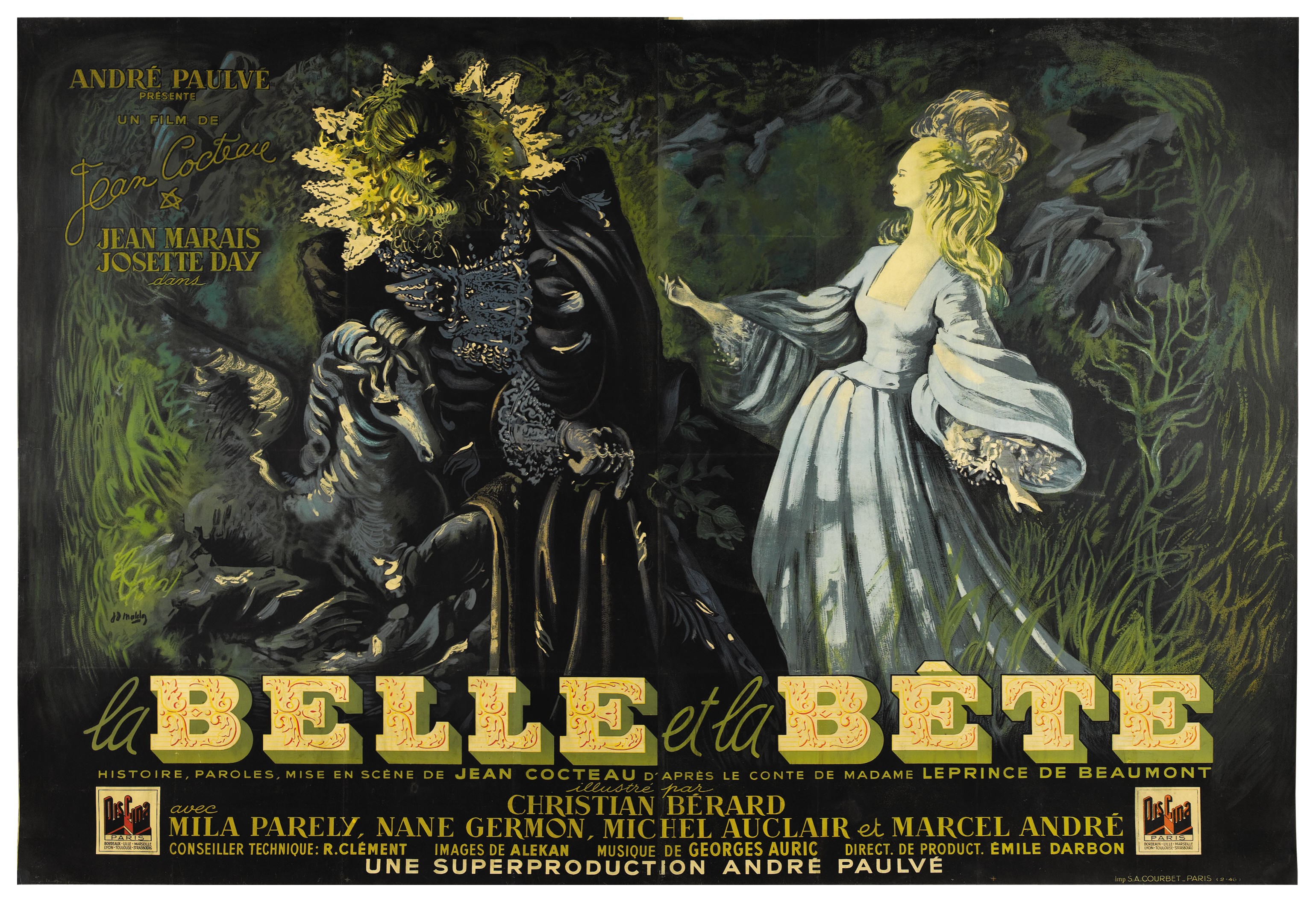
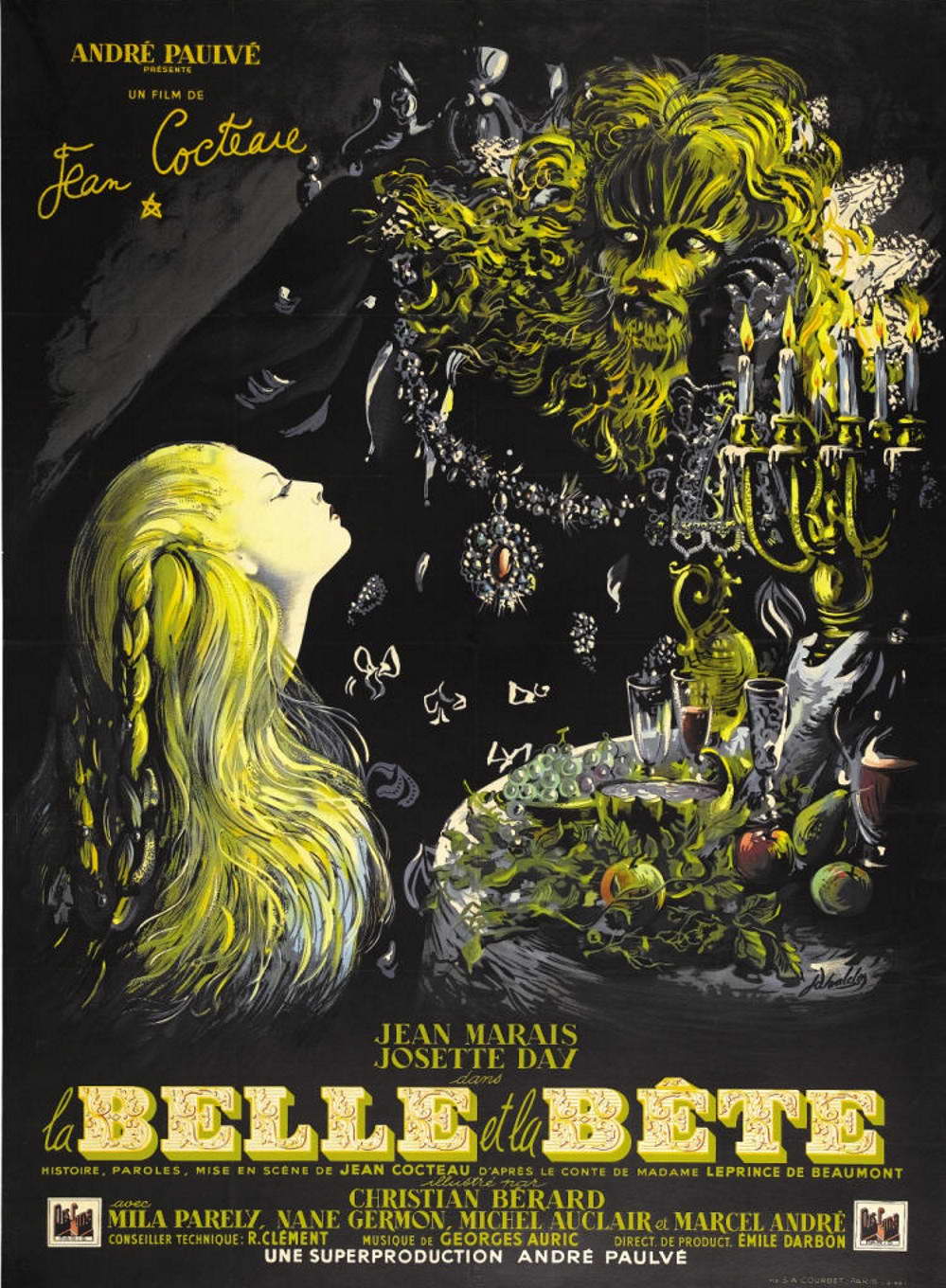
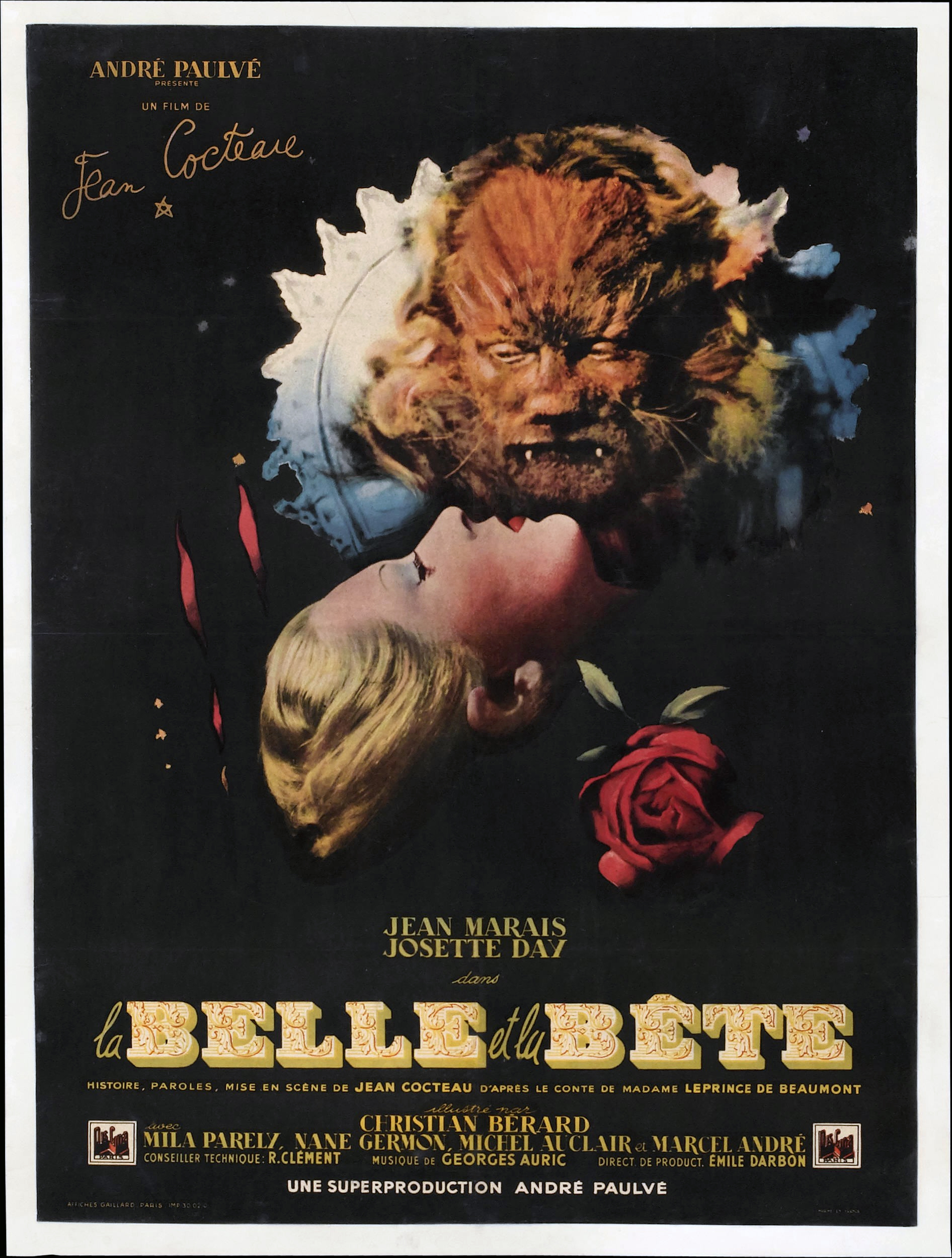
La Belle et la Bête posters

belle1.jpg

Clive’s posts last week about Cocteau’s La Belle et la Bête (here, here and here) sent me back to the film, a most welcome re-viewing. This in turn had me searching for copies of the posters of which these are some of the better examples. No dates or credits, unfortunately, although the French ones above and below look as though they may have been drawn by the film’s production designer, Christian Bérard. (Update: not Bérard, they’re the work of poster artist Jean-Denis Malclès.)

The style of Bérard’s drawings, and much of the film itself, had me thinking this time round of Hein Heckroth, Michael Powell’s favourite production designer whose sketches also had a painterly style. Powell and Pressburger’s The Red Shoes (with designs by Heckroth) appeared a couple of years after La Belle et la Bête although Powell doesn’t mention Cocteau at all in his autobiography so there’s no need to go looking for influences. Both films are based on fairy tales, of course. Powell shared Cocteau’s taste for fantasy and cinematic magic although the closest he gets to the story of Beauty and the Beast is Peeping Tom (1960), a film that contains little of either. By coincidence, Powell scholar Ian Christie calls Peeping Tom the director’s equivalent of Cocteau’s Le testament d’Orphée which was also released in 1960. But that’s a speculation for another day.
belle2.jpg

belle3.jpg

belle4.jpg

belle6.jpg

belle5.jpg

Previously on { feuilleton }
The writhing on the wall
Le livre blanc by Jean Cocteau
Cocteau’s sword
Cristalophonics: searching for the Cocteau sound
Cocteau at the Louvre des Antiquaires
La Villa Santo Sospir by Jean Cocteau

Weekend links 172

thielker.jpg

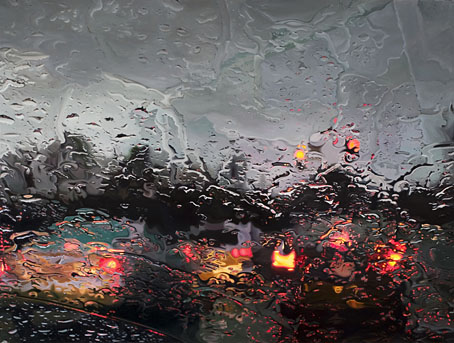
Complete Stop (2008), an oil painting by Gregory Thielker from his Under the Unminding Sky series.

• For Halloween last year I watched a very poor copy of a BBC Play For Today production, Robin Redbreast, a piece of rural horror by John Bowen which received a single screening in 1970. That poor copy—black-and-white, timecoded, multi-generation video—has been circulating for years, so it’s good to know that the BFI will be releasing Robin Redbreast on DVD in time for this year’s Halloween. This might be news enough but the following month the BFI also releases Leslie Megahey’s stunning adaptation of Schalcken the Painter in a dual DVD/Blu-ray edition. I wrote a short review of the latter film last October.

• Mixes of the week: August Sun High from The Advisory Circle, and John Wizards’ Quietus Mix “African music, R&B and chamber pop, filtered through gentle electronic arrangements that cross-pollinate with South African house, Shangaan electro and dub”.

• A trailer has surfaced for The Counselor, a film by Ridley Scott from an original screenplay by Cormac McCarthy. Trailers are too spoilerish so I’m refusing to watch it but for those interested Slate has the details.

Luckhurst makes an admirable attempt to link Lovecraft’s most frustrating writing tic to this theme of the unknown when he claims that Lovecraft’s “catachresis”—deliberate muddling of language through the use of mixed metaphors and the like—is a tool he uses to bolster the atmosphere of futility in the face of “absolute otherness.” The trauma of encountering something so far outside the realms of imagination triggers a collapse of logic in the language itself.

Cate Fricke reviews The Classic Horror Stories of HP Lovecraft, a collection from Oxford University Press edited by Roger Luckhurst.

• “Contemporary audiences found it too weird, too wonky and even borderline distasteful…” Xan Brooks goes looking for the locations from Powell & Pressburger’s 1943 film, A Canterbury Tale.

• Two songs from Julia Holter’s forthcoming album, Loud City Song: World and Maxim’s I. Also unveiled this week: Evangeline, a new track by John Foxx & Jori Hulkkonen.

• Have Ghost, Will Find: Colin Fleming on William Hope Hodgson’s Carnacki, The Ghost Finder.

• At PingMag: Urban Calligraphy: Turning the Streets into Big, Loud Canvases.

• Sex, Spirit, and Porn: Conner Habib talks to Erik Davis.

Serendip-o-matic: Let Your Sources Surprise You

The Pronunciation of European Typefaces

Twilight (2004) by Robin Guthrie & Harold Budd | Luminous (2009) by John Foxx & Robin Guthrie | Cling (2011) by Robin The Fog

The Rite of Spring and The Red Shoes

redshoes1.jpg

The Red Shoes: Moira Shearer and Léonide Massine.

Emeric is often too easily accused of basing the principal male character of The Red Shoes on Serge Diaghilev, to which he replies: “There is something of Diaghilev, something of Alex Korda, something of Michael, and quite a little bit of me.”

Michael Powell, A Life in Movies (1986)

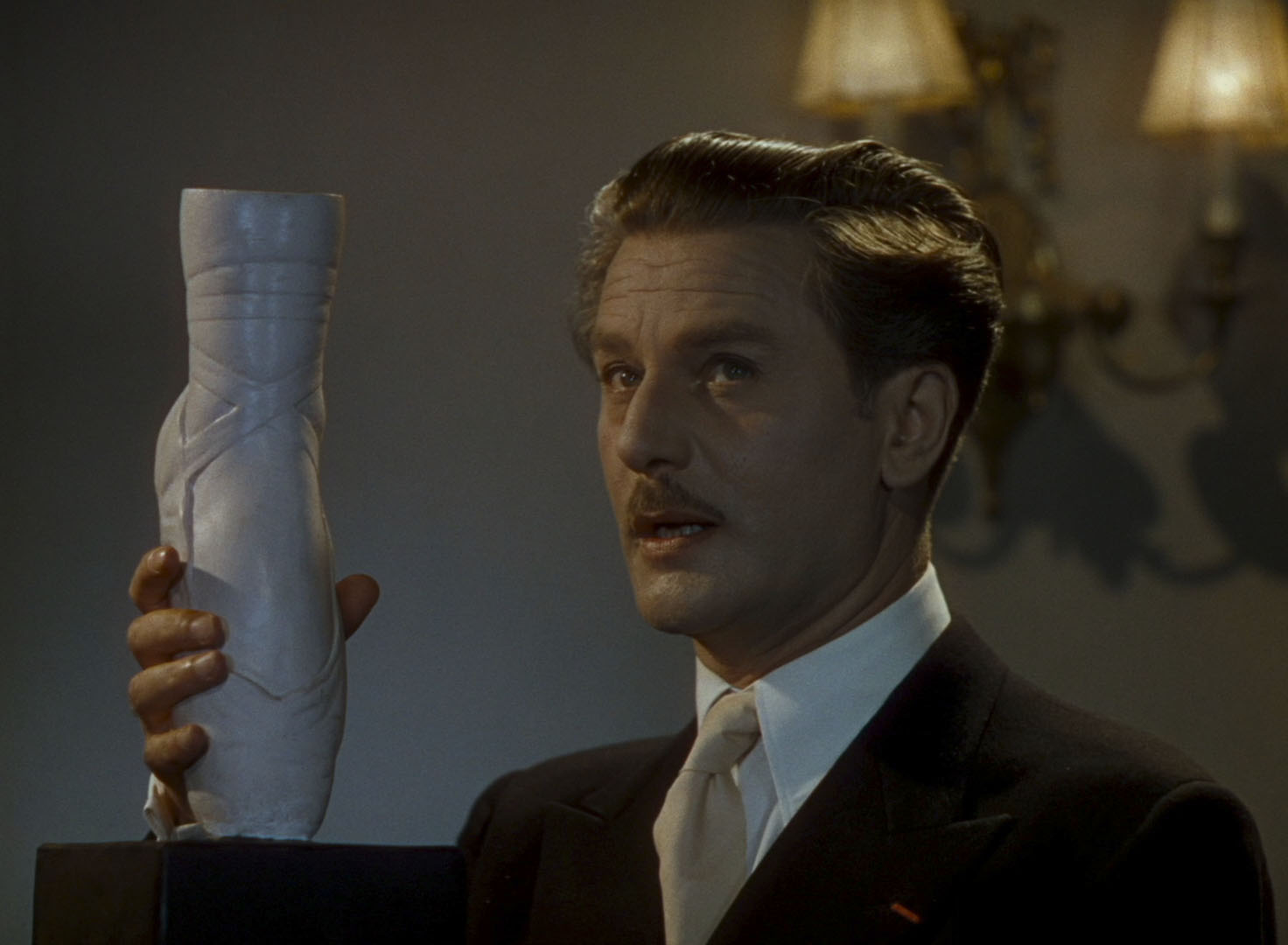
Despite Emeric Pressburger’s qualificatory comments, there’s a lot more of the Ballets Russes in Powell and Pressburger’s film of The Red Shoes (1948) than first meets the eye. Or so I discovered, since I’d known about the film via my ballet-obsessed mother for years before I’d even heard of Diaghilev or Stravinsky. The most obvious connection is the presence of Léonide Massine who took the leading male roles in Diaghilev’s company following the departure of Nijinsky. He also choreographed Parade, the ballet which featured an Erik Satie score and designs by Picasso. The fraught relationship between Diaghilev and Nijinsky forms the heart of The Red Shoes: Anton Walbrook’s impresario, Boris Lermontov, is the Diaghilev figure while the brilliant dancer who obsesses him, and for whom he creates the ballet of The Red Shoes, is Moira Shearer as Victoria Page. That the dancer happens to be a woman is a detail which makes the film “secretly gay”, as Tony Rayns once put it. Diaghilev and Nijinsky were lovers, and fell out when Nijinsky married; in The Red Shoes Lermontov demands that Vicky choose between a life of art or a life of marriage to composer Julian Craster (Marius Goring). She chooses love but ends up drawn back to art, with tragic consequences that mirror the Hans Christian Andersen story. That story, of course, ends with a young woman dancing herself to death after donning the fatal shoes, a dénouement that’s unavoidably reminiscent of The Rite of Spring.

redshoes2.jpg

Anton Walbrook as Lermontov.

Lermontov: Why do you want to dance?

Vicky: Why do you want to live?

Other parallels may be found if you look for them, notably the figure of Julian Craster who comes to Lermontov as a young and unknown composer just as Stravinsky did with Diaghilev. Craster’s music isn’t as radical as Stravinsky but The Red Shoes was already giving the audience of 1948 enough unapologetic Art with a capital “A” without dosing them with twelve-tone serialism. The film aims for the same combination of the arts as that achieved by Diaghilev, especially in the long and increasingly fantastic ballet sequence. This was another of Powell’s shots at what he called “a composed film” in which dramaturgy and music work to create something unique. The Red Shoes is a film that’s deadly serious about the importance of art, a rare thing in a medium which is so often at the mercy of Philistines. In the past I’ve tended to favour other Powell and Pressburger films, probably because I’ve taken The Red Shoes for granted for so long. But the more I watch The Red Shoes the more it seems their greatest film, even without this wonderful train of associations. The recent restoration is out now on Blu-ray, and it looks astonishing for a film that’s over sixty years old.

Seeing as this week has been all about The Rite of Spring, here’s a few more centenary links:

Stravinsky’s The Rite of Spring, Visualized in a Computer Animation for its 100th Anniversary
• George Benjamin on How Stravinsky’s Rite of Spring has shaped 100 years of music
Strange Flowers visits the Théâtre des Champs-Elysées

Previously on { feuilleton }
The Rite of Spring, 2001
The Rite of Spring, 1970
The Rite of Spring reconstructed

Michael Powell’s Bluebeard revisited

powell1.jpg

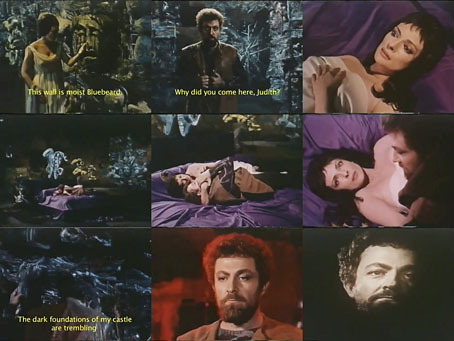
Yesterday’s post prompted me to look again for one of Michael Powell’s scarcest films, his television version of Bartók’s Bluebeard’s Castle made for  Süddeutscher Rundfunk in 1963. Sure enough, it’s now on YouTube in a watchable copy taken from VHS tape. Herzog Blaubarts Burg (to use its German title) was made post-Peeping Tom when the director’s career was at its lowest ebb, and while the production values don’t match those he’d been used to in the 1940s he was no doubt happy to be working at all after being vilified by the UK press. Norman Foster is Bluebeard and Ana Raquel Satre plays Judith, with the libretto being a German translation with English subtitles. I ought to note here that I’ve not read the second volume of Powell’s biography (mea culpa) so the only information I have about this comes from Ian Christie’s Arrows of Desire: The Films of Michael Powell and Emeric Pressburger (1985). Christie doesn’t have much to say about it other than pointing out that Norman Foster financed the film, and that it’s seldom been screened in Britain: IMDB has the first UK screening as 1978, just prior to the time when Powell and Pressburger began to receive to some belated recognition.

powell2.jpg

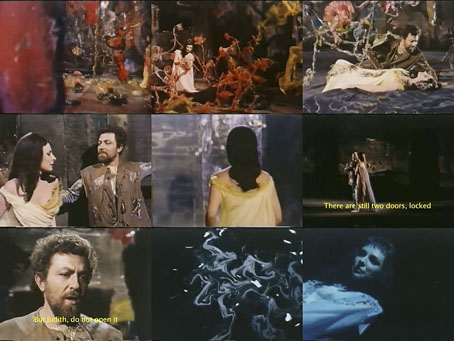
The YouTube copy suffers in the sound department by being a muffled mono transmission but it’s the visuals which will be of most interest to Powell aficionados. Powell & Pressburger’s regular production designer Hein Heckroth created the multi-coloured labyrinth which serves as the castle. The overall effect is stagey but contains some unique details, such as the rune-etched standing stones shown at the opening and close, and also some painted moments similar to those seen during the celebrated dance sequence in The Red Shoes (1948). Powell’s staging is much more vivid and artificial than Leslie Megahey’s 1988 adaptation whose Gothic gloom remains a personal favourite. Despite its shortcomings, when compared to the other Powell films that came after—the two Australian features, the Children’s Film Foundation commission which reunited him with Pressburger—this is far closer to the greatest works of the Archers era, and provides a more satisfying career coda for the man who directed The Red Shoes and The Tales of Hoffmann.

Previously on { feuilleton }
Joseph Southall’s Bluebeard
Leslie Megahey’s Bluebeard
Powell’s Bluebeard
The Tale of Giulietta

Devils debris

devils.jpg

The Devils (1971).

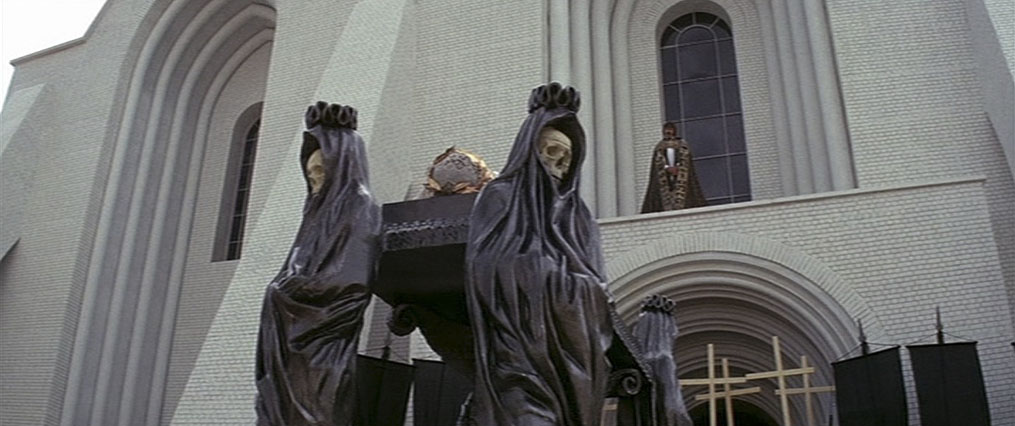
There is only one English feature director whose work is in the first rank. Michael Powell is the only director to make a clear political analysis in his films, his work is unequalled. The Life and Death of Colonel Blimp is the finest English feature, and A Canterbury Tale and A Matter of Life and Death are not far behind. When he made these films he was heavily criticized for his treatment of serious themes. Blimp was banned by Churchill and remained in a savaged version for nearly forty years, a plea for tolerance and regard for the enemy as human made at the height of the war there is no more courageous English film. It is a tragedy he has made so few films in the last twenty years, none in the last ten, and a lasting condemnation of all those who make films. He was a major casualty of the spurious social realism of the sixties, whose practitioners have grown fat and invaded the media with their well-scrubbed minds.

Thus Derek Jarman writing in 1980. Ian Christie quoted Jarman’s sentiments in Arrows of Desire: the films of Michael Powell and Emeric Pressburger (1985), pointing to the shared attitudes of the two directors, especially their outsider stance. There were other correspondences: both maintained an abiding interest in the artistic scope of cinema; both were marginalised by the British film world during their lives then lauded after their deaths. Michael Powell for years attempted to produce a film of The Tempest; Derek Jarman, of course, succeeded.

return1.jpg

Return to the Edge of the World (1978).

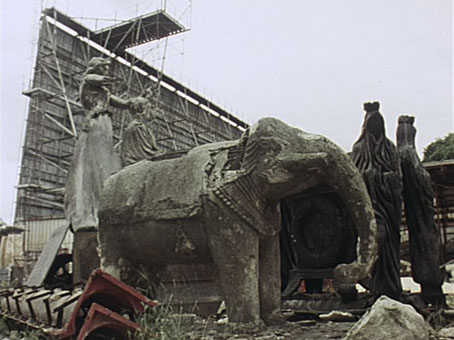
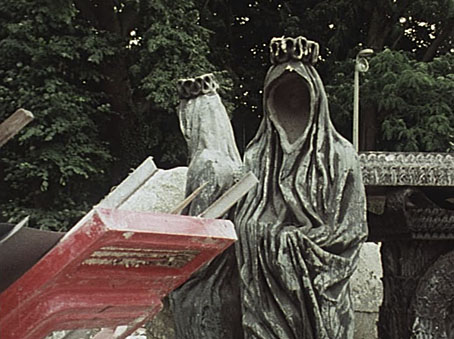
Then there’s this odd coincidence from Return to the Edge of the World, a short documentary made in 1978 in which Powell and actor John Laurie returned to the Scottish island of Foula where they’d made Powell’s first feature film, The Edge of the World in 1937. The film opens with shots of Pinewood studios and the very first things we see are this pair of abandoned statues which anyone who’s seen Ken Russell’s The Devils will recognise from an early scene. Derek Jarman was the production designer on The Devils so these would have been created according to his instruction. I only noticed this recently when watching Return to the Edge of the World again as it’s now an extra on the BFI DVD of Edge of the World. No need to dwell on the inadvertent symbolism of abandoned statues and languishing careers.

Powell and Pressburger’s marvellous The Life and Death of Colonel Blimp was reissued recently. John Patterson discussing its writer and director tells us why the most English of movies often benefit from an outsider’s perspective.

return2.jpg

Previously on { feuilleton }
Rex Ingram’s The Magician
The Devils on DVD
Derek Jarman’s music videos
Derek Jarman’s Neutron
Mister Jarman, Mister Moore and Doctor Dee
Powell’s Bluebeard
The Tale of Giulietta
The Tempest illustrated
In the Shadow of the Sun by Derek Jarman
The Angelic Conversation
The life and work of Derek Jarman