Arthur Rising

arthurrising.jpg

In which the sorely missed Arthur magazine returns to the world of print after a four-year slumber in Avalon. I was involved with the magazine from the outset so regular readers may recall many earlier posts about America’s most vital cultural bulletin:

After a four-year sabbatical (faked death?), your beloved revolutionary sweetheart Arthur returns to print, renewed, refreshed, reinvigorated and in a bold new format: pages as tall and wide as a daily newspaper, printed in color and black and white on compostable newsprint, with ads only on the back cover(s). Amazing!

In partnership with Portland, Oregon’s Floating World Comics, Arthur’s gang of goofs, know-it-alls and village explainers are back, from Bull Tonguers Byron Coley and Thurston Moore to radical ecologist Nance Klehm to trickster activists Center for Tactical Magic to Defend Brooklyn‘s socio-political commentator Dave Reeves to a host of new, fresh-faced troublemakers, edited by ol’ fool Jay Babcock and art directed by Yasmin Khan. You want a peek at the contents? Sorry, compadre. That would be saying too much, too soon. Wait ’til Dec. 22, 2012: that’s right—THE DAY AFTER THE NON-END OF THE WORLD!

Please keep in mind… Arthur is no longer distributed for free anywhere. Those days are (sadly) long gone. Now you gotta buy Arthur or you won’t see it. Our price: Five bucks cheeeeeep!

Arthur No. 33
Broadsheet newspaper, 15″ x 22.75″
Available Dec. 22, 2012
NOW YOU MAY PRE-ORDER ARTHUR NO. 33 HERE.

The NYT picked up on the news on Thursday. Is re-launching a paper magazine in 2012 a crazy idea? We’re about to find out. A selection of my illustrations for previous issues follows.

mbvarkestra.jpg

MBV Arkestra (2003).

crowley.jpg

The Aeon of Horus (2004).

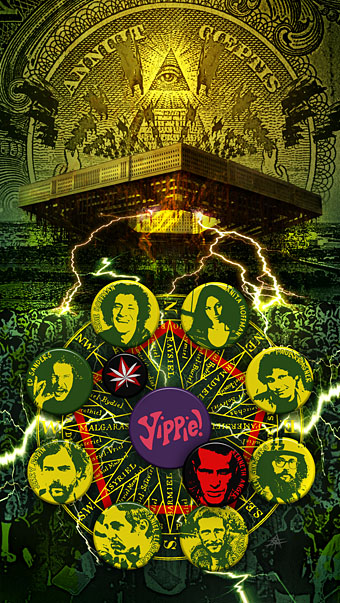
pentagon.jpg

Out, Demons, Out! (2004).

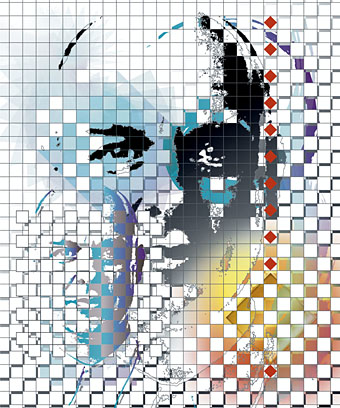
eno.jpg

Brian Eno (2005).

richardbishop.jpg

Sir Richard Bishop (2007).
Golden apples and silver apples

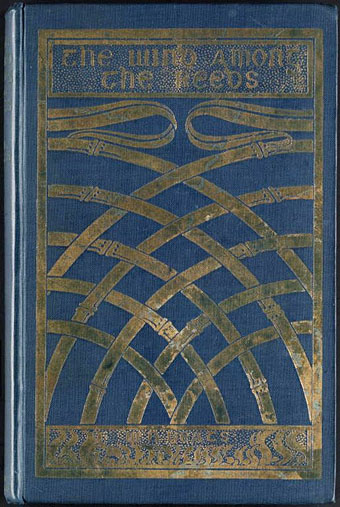
yeats.jpg

The Wind Among the Reeds (1899). Cover design by Althea Gyles.

1: The Song of Wandering Aengus by WB Yeats.

I went out to the hazel wood,
Because a fire was in my head,
And cut and peeled a hazel wand,
And hooked a berry to a thread;
And when white moths were on the wing,
And moth-like stars were flickering out,
I dropped the berry in a stream
And caught a little silver trout.

When I had laid it on the floor
I went to blow the fire a-flame,
But something rustled on the floor,
And someone called me by my name:
It had become a glimmering girl
With apple blossom in her hair
Who called me by my name and ran
And faded through the brightening air.

Though I am old with wandering
Through hollow lands and hilly lands,
I will find out where she has gone,
And kiss her lips and take her hands;
And walk among long dappled grass,
And pluck till time and times are done,
The silver apples of the moon,
The golden apples of the sun.


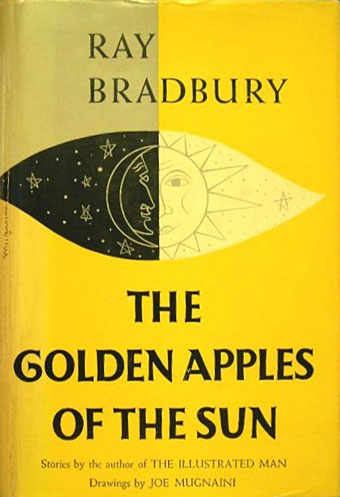
bradbury.jpg

Illustration by Joe Mugnaini.

2: The Golden Apples of the Sun (1953), a story collection by Ray Bradbury.


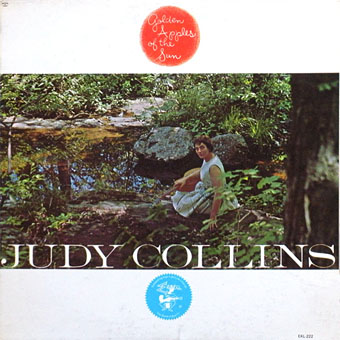
judycollins.jpg

Cover design by William S. Harvey.

3: Golden Apples of the Sun (1962), the debut album by Judy Collins. The first track is her setting of The Song of Wandering Aengus.


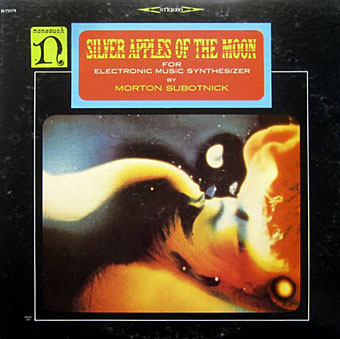
subotnick.jpg

Cover design by William S. Harvey. Artwork by Anthony Martin.

4: The Silver Apples of the Moon (1967), an album of electronic music by Morton Subotnick.


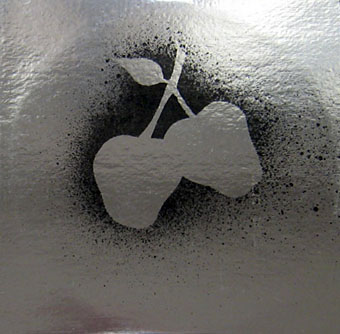
silverapples.jpg

Artwork by Anonymous Arts.

5: Silver Apples (1968), an album of electronic music by Silver Apples.


donovan.jpg

Art Direction by Sid Maurer. Artwork by Patrick.

6: HMS Donovan (1971), a double album of poems for children set to music by Donovan. The second song on side four is The Song of Wandering Aengus.


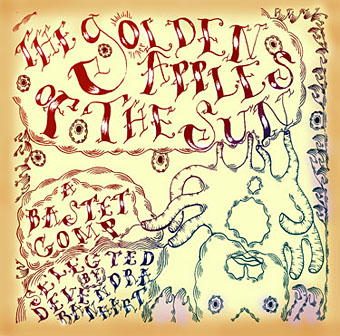
goldenapples.jpg

Cover by Devendra Banhart.

7: The Golden Apples of the Sun (2004), a freak folk compilation selected by Devendra Banhart for Arthur magazine‘s Bastet label.

Previously on { feuilleton }
The Golden Apples of the Sun

Weekend links 118

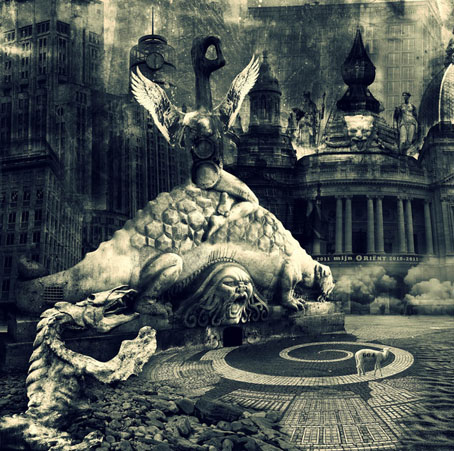
owczarek.jpg

The Garden of Urban Delights (2010) by Marcin Owczarek.

His protagonists are misfits: alienated, implicitly gay, longing for love, frequently hard to be around, always fixated on small pleasures that compensate for an essential feeling of not belonging. […] His patroness Edith Sitwell termed him “that rare being, a born writer.” William Burroughs dedicated The Place of Dead Roads to him, declaring Welch “certainly the writer who most directly influenced my work.” John Waters has called In Youth is Pleasure “so precious, so beyond gay, so deliciously subversive, [it] is enough to make illiteracy a worse social crime than hunger.”

Sadie Stein on Denton Welch, a writer I’m embarrassed about still not having read. Edith Sitwell and William Burroughs had a famously disputatious correspondence in the pages of the TLS over The Naked Lunch. An appreciation of Welch’s work was one of the few things they had in common.

• Don’t mention guitars: Robert Hampson on acousmatic music, the curse of Loop and the rebirth of Main.

• No Straight Lines: A Collection Of Queer Comics part one, part two, part three. A history by Justin Hall.

Pieces Of Gold by The Aikiu: shots from gay porn videos repurposed via some smart editing.

• RIP İlhan Mimaroğlu, electroacoustic composer. Ubuweb has a selection of his recordings.

“A good ground rule for writing in any genre is: start with a form, then undermine its confidence in itself,” he says. “Ask what it’s afraid of, what it’s trying to hide – then write that.” For Harrison, the most satisfying writers are “at odds with their cultural context. They’re trying to fit in and failing, or they’re trying to remove themselves and failing. The attempt to resolve the conflict is an angle – a frame or a context – in itself.”

The Guardian’s A Life in Writing profiles M. John Harrison. His new novel, Empty Space, was published on Thursday. There’s also this recent video interview with Arc magazine.

• Stephen Usery interviews editor Russ Kick about The Graphic Canon: Volume One.

At home with Prince Zaleski, the “most decadent and imperial detective in fiction”.

• A Visit with Magritte: photographs by Duane Michals.

Loitering airships could dispense drones on demand.

• Creating a Forever Object: Ian Schon’s Pen Project.

• A Tumblr for the late, lamented Arthur Magazine.

• “Few cities can boast a railway line for the dead.”

The Lost Tapes by Can: An Oral History.

Space Reflex (1963) by Dick Hyman & Mary Mayo | Space Is Deep (1972) by Hawkwind | Space Is The Place (1973) by Sun Ra | Space Moment (1995) by Stereolab | Space Pong (2006) by T++

Weekend links 100

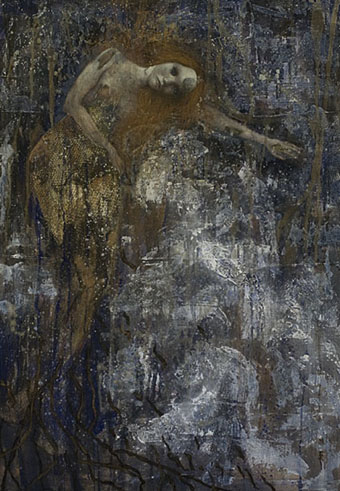
bedini.jpg

How to become a mermaid and dissolve into sea foam in just seven surgical operations (2010) by Carla Bedini.

D.I.Y. Magic was a regular feature in the late Arthur Magazine that’s now become a book by Anthony Alvarado: “Think of it as jail-breaking the iPhone of your mind. Teaching it to do things that its basic programming was never set up for. Advanced self-psychology.” A first edition letterpress silver foil cover is limited to 1000 copies. | More magic: Jimmy Page’s unused soundtrack for Kenneth Anger’s Lucifer’s Rising finally gets an official release on March 20th.

Julia Holter‘s tremendous new album, Ekstasis, has been rocking my world this week. She’s interviewed at FACT where you can also hear the opening track, Marienbad, which receives extra points for being derived from that film. And there’s more: Ritual Music, a live performance at Sea & Space Gallery in Los Angeles, and Fur Felix, a film by Eric Fensler.

Brute Ornament, an exhibition of new work by Seher Shah and Kamrooz Aram opens at the Green Art Gallery, Dubai, on Monday. While the UAE is out of reach for most of us, the gallery site has samples of the work on display.

• This week’s mixtape arrives courtesy of BUTT magazine: Rock Bottom Mix by Cesar Padilla, a blend of acid, glam, grunge, punk, surf and stoner rock. Elsewhere, Richard Norris lists his 20 favourite UK psychedelic records.

the name is BURROUGHS ? Expanded Media at ZKM, the Center for Art and Media in Karlsruhe, is a comprehensive exhibition presenting for the first time in Germany the artistic output of William Burroughs.

Boneland by Alan Garner will be published in August, a new novel that concludes a narrative thread begun with The Weirdstone of Brisingamen in 1960.

• Coming soon (so to speak) on BFI DVD, The Erotic Films of Peter de Rome, more gay obscurities receiving quality attention.

The Northampton Chronicle reports on Alan Moore’s forthcoming novel about the town, Jerusalem.

Susan Cain is playing my tune (again): Why the world needs introverts.

• Techniques of terror: Carl Dreyer‘s Danish Gothic dissected.

• NASA has the latest map of Everything.

The male sex toy revolution.

Lucifer Rising Sessions (1972) by Bobby Beausoleil.

William Burroughs interviews

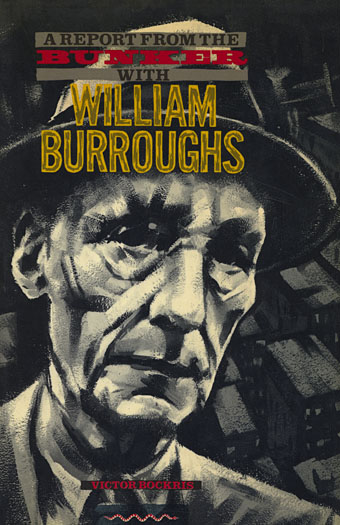
bunker.jpg

With William Burroughs: A Report from the Bunker (1982) by Victor Bockris. Design by Neville Brody.

If it’s interviews you want, some of the most entertaining are in Victor Bockris’s collection of conversations between El Hombre Invisible and the various New York notables ferried round to sit at Burroughs’ table in his Bowery Bunker. The British edition published by Vermilion was always preferrable for its Neville Brody cover design beside which the US original looks very dull indeed. The encyclopedic Burroughs site Reality Studio has copious lists of earlier Burroughs interviews. They also note the occasions when he put on his journalist hat and went out to interview someone equally famous, usually at the behest of a music magazine. A couple of those pieces are online thanks to the diligence of various fans.

diamond_dogs.jpg

Diamond Dogs (1974), a blend of Lou Reed, George Orwell and William Burroughs.

One such is the 1974 interview with David Bowie for Rolling Stone in which Bowie discusses Burroughs as an influence while Burroughs informs the singer that the heroes of his latest novel, The Wild Boys, favour the Bowie knife as a weapon:

Bowie: Nova Express really reminded me of Ziggy Stardust, which I am going to be putting into a theatrical performance. Forty scenes are in it and it would be nice if the characters and actors learned the scenes and we all shuffled them around in a hat the afternoon of the performance and just performed it as the scenes come out. I got this all from you Bill… so it would change every night.

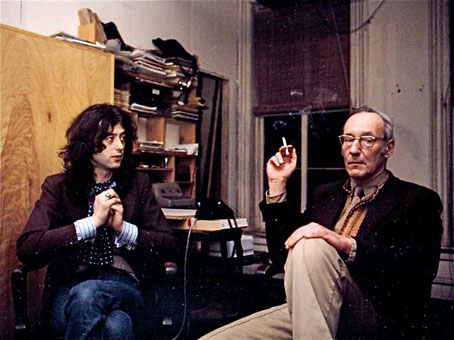
burroughspage.jpg

A year later Burroughs got together with Jimmy Page for Crawdaddy magazine where the discussion circles around some of the same subjects, notably the writer’s obsession with sound as a weapon. There’s also this comment from Burroughs which is the kind of thing that always gets my neurons firing:

Antony Balch and I collaborated on a film called Cut-Ups, in which the film was cut into segments and rearranged at random. Nicolas Roeg and Donald Cammell saw a screening of the film not long before they made Performance.

Roeg later directed Bowie, of course, and is one of the dinner guests in With William Burroughs, while Jimmy Page and Donald Cammell both appear in Kenneth Anger’s Lucifer Rising. The connections go round and round… Read the whole piece in a post I made a few years ago at the late, lamented Arthur magazine site.

Elsewhere on { feuilleton }
The William Burroughs archive