The art of Carlos Schwabe, 1866–1926

schwabe01.jpg

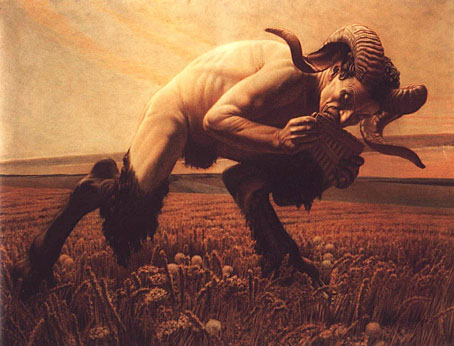
Le Faune (1923).

Yesterday’s Pan prompted me to repost Carlos Schwabe’s wonderful painting of a faun, one of my favourite faun/satyr depictions, and easily one of the best in the entire Symbolist corpus. Other satyr aficionados of the period such as Arnold Böcklin and Franz Stuck had an unfortunate knack for making their goat gods look rather foolish.

Schwabe was a German artist, and one of the more mystical of the Symbolists, with a fondness for winged figures and a preoccupation with death. The mystical end of the Symbolist spectrum is the one I enjoy the most so I often point to Schwabe or Jean Delville as exemplars of this type of art. Both Schwabe and Delville were connected briefly by Joséphin Péladan’s very mystical Salon de la Rose + Croix although Delville later gravitated to Theosophy. Schwabe produced illustrations for an edition of Baudelaire’s Les Fleurs du Mal, and would have featured in the Baudelaire posts last week if some of those drawings hadn’t appeared here already. The title page was a new find, however, so it’s included below.

schwabe09.jpg

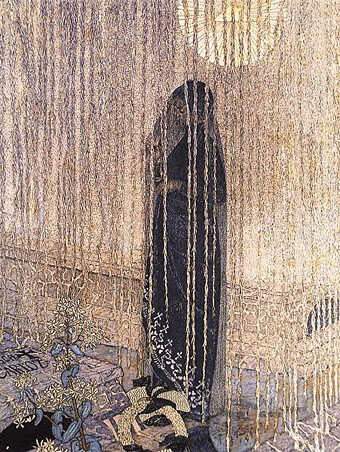
Jour de morts (1890).

schwabe04.jpg

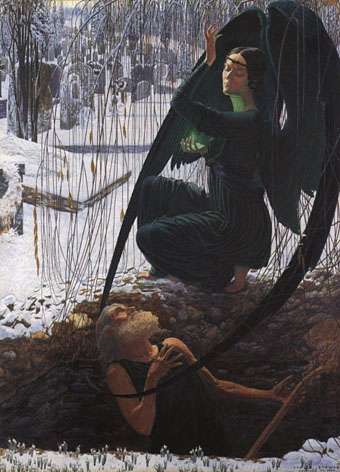
La mort du fossoyeur (1895).

Continue reading “The art of Carlos Schwabe, 1866–1926”

Intertextuality

cthulhu17.jpg

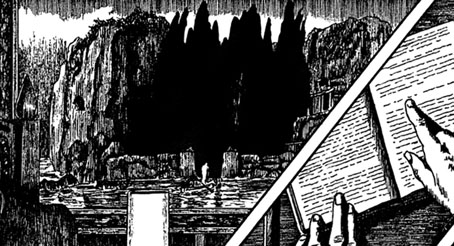
The Call of Cthulhu (1988): in the upper half there’s the big sun from Bob Peak’s poster for Apocalypse Now, in the lower half a radical reworking of Arnold Böcklin’s The Isle of the Dead.

In 1990, shortly after the first season of Twin Peaks had finished showing in the US, Video Watchdog magazine ran a feature by Tim Lucas which attempted to trace all the various cultural allusions in the character names and dialogue, references to old TV shows, song lyrics and the like. This was done in a spirit of celebration, with Lucas and other contributors welcoming the opportunity to dig deeper into something they’d already enjoyed. This week we’ve had a similar unravelling of textual borrowings in a TV series, only now we have the internet which, with its boundless appetite for accusing and shaming, can often seem like something from the grand old days of the Cultural Revolution.
cthulhu01.jpg

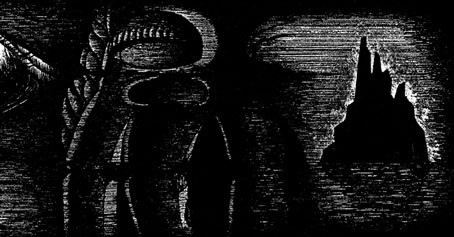
The Call of Cthulhu (1988): a more subtle allusion to Apocalypse Now.

The latest culprit ushered to the front of the assembly for the Great Internet Struggle Session is Nic Pizzolatto whose script for True Detective has indeed been celebrated for its nods to Robert Chambers and The King in Yellow. It’s also in the process of being condemned for having borrowed phrases or aphorisms from Thomas Ligotti’s The Conspiracy Against the Human Race (2011). See this post for chapter and verse.
cthulhu02.jpg

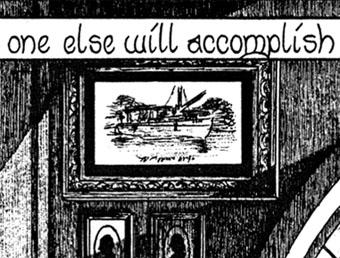
The Call of Cthulhu (1988): It’s not very clear but that’s a boat from The Creature from the Black Lagoon.

If I find it difficult to get worked up over all this pearl-clutching it’s because a) it shows a misunderstanding of art and the way many artists work; b) True Detective was an outstanding series, and I’d love to see more from Pizzolatto and co; and c) I’ve done more than enough borrowing of my own in a variety of media, as these samples from my adaptation of The Call of Cthulhu demonstrate, a 33-page comic strip where there’s a reference to a painting, artist or film on almost all the pages, sometimes several on the same page.
cthulhu03.jpg

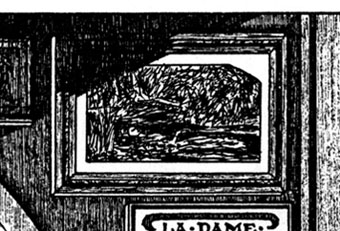
The Call of Cthulhu (1988): Ophelia by Millais.

Cthulhu is a good choice here since Pizzolatto’s story edged towards Lovecraft via the repeated “Carcosa” references. You’d think a Lovecraft zine of all things would know better than to haul someone over the coals for borrowing from another writer when Lovecraft himself borrowed from Robert Chambers (and Arthur Machen and others), while “Carcosa” isn’t even original to Chambers’ The King in Yellow but a borrowing from an Ambrose Bierce story, An Inhabitant of Carcosa (1886). Furthermore, Lovecraft famously complained about his own tendencies to pastiche other writers in a 1929 letter to Elizabeth Toldridge: “There are my ‘Poe’ pieces and my ‘Dunsany pieces’—but alas—where are any Lovecraft pieces?”

Continue reading “Intertextuality”

Max and Dorothea

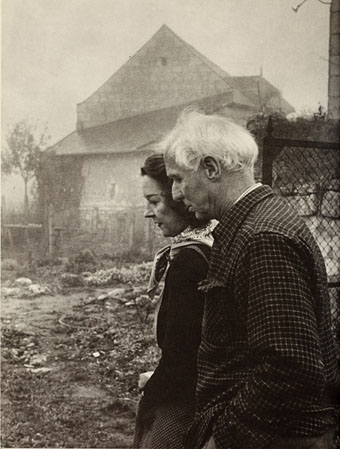
ernst1.jpg

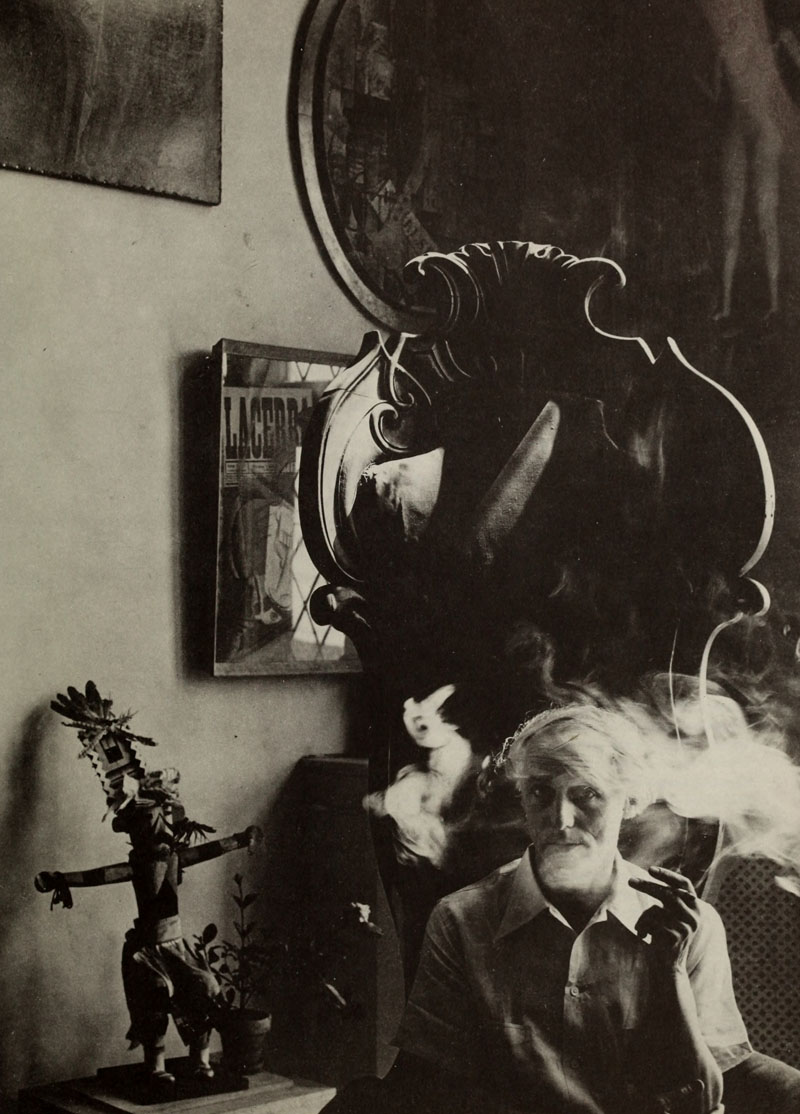
Photo by Arnold Newman (1942).

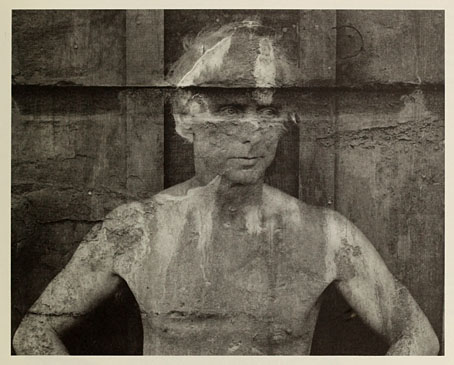
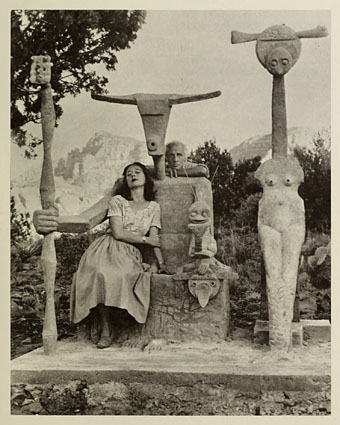
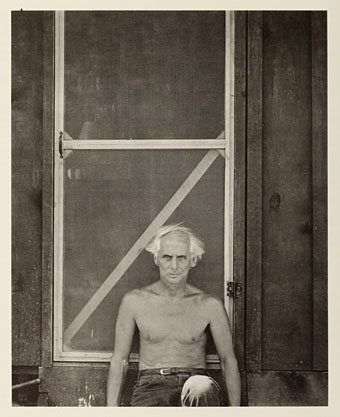
I love this photo of Max Ernst by Arnold Newman, one of several pictures of the artist together with Dorothea Tanning in Max Ernst: A Retrospective, a catalogue for a 1975 Guggenheim Museum exhibition at the Internet Archive. The catalogue itself isn’t so revelatory (and most of the reproductions are monochrome) but it’s good to see a connection made between Arnold Böcklin’s Isle of the Dead and Ernst’s work. It’s an obvious parallel: all those porous landscapes and “fishbone forests” which offer a kind of mutated Symbolism. Browse the book here or download it here.

ernst2.jpg

Photo by Henri Cartier-Bresson (1961).

ernst3.jpg

Photo by Frederick Sommer (1946).

ernst4.jpg

No photographer credited.

ernst5.jpg

Photo by Frederick Sommer (1946).

Previously on { feuilleton }
Dorothea Tanning, 1910–2012
Dreams That Money Can Buy
La femme 100 têtes by Eric Duvivier
A Picture to Dream Over: The Isle of the Dead
Dorothea Tanning: Early Designs for the Stage

Ver Sacrum, 1901

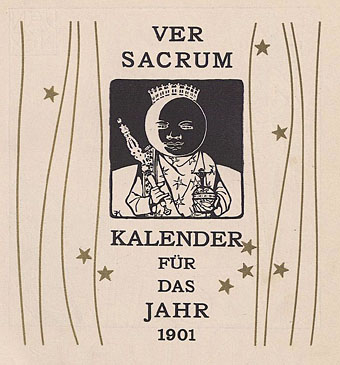
vs-1901-01.jpg

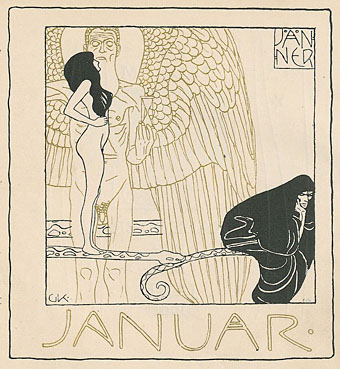
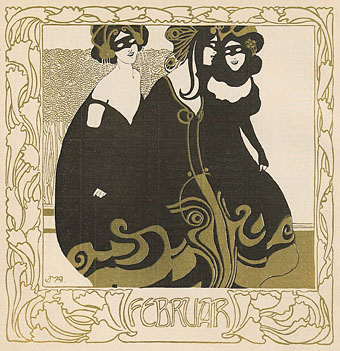
Continuing the series of posts about Ver Sacrum, the art journal of the Viennese Secession. After a somewhat lacklustre collection for 1900 the journal finds its vitality again, the painters of happy Teutonic peasants having been dropped in favour of more remarkable prints and graphics from Vienna’s finest. The contents for this year parallel some of the works being featured in Deutsche Kunst und Dekoration for the same period. Gustav Klimt is given a great deal of attention, beginning with the calendar piece below. There’s also work from the Symbolist sculptor George Minne and a feature on the Glasgow School artists Charles Rennie Mackintosh and Margaret MacDonald. Throughout the year each issue tends to concentrate on a single artist or exhibition. There’s so much good stuff in this year it’s not possible to present more than a small sample. Those interested are encouraged to browse all 432 pages or download the entire volume here.

vs-1901-02.jpg

vs-1901-03.jpg

Continue reading “Ver Sacrum, 1901”

A Picture to Dream Over: The Isle of the Dead

iod_basle.jpg

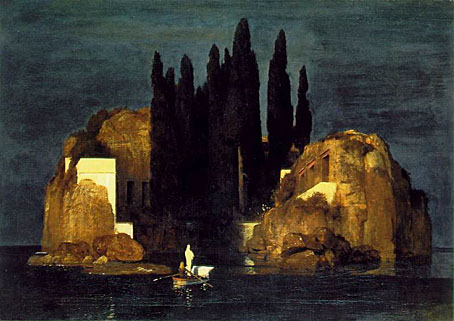
The Isle of the Dead (second version, 1880), Kunstmuseum, Basel.

In the sudden flares of light over the water, reflected off the sharp points of his cheeks and jaw, a harder profile for a moment showed itself. Conscious of Sanders’s critical eye, Father Balthus added as an afterthought, to reassure the doctor: “The light at Port Matarre is always like this, very heavy and penumbral – do you know Böcklin’s painting, ‘Island of the Dead’, where the cypresses stand guard above a cliff pierced by a hypogeum, while a storm hovers over the sea? It’s in the Kunstmuseum in my native Basel –”

The Crystal World (1966) by JG Ballard.

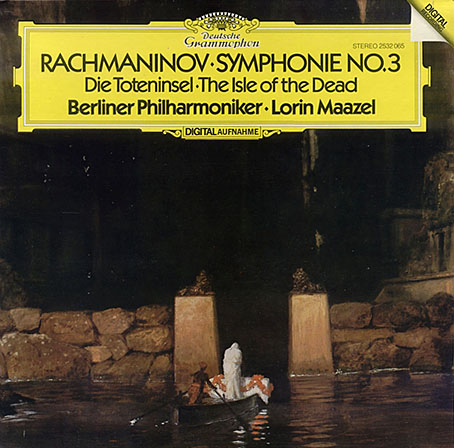
rachmaninov.jpg

A 1982 recording.

Today’s post is another guest piece over at Tor.com where I run through a history of some of the works in different media inspired by Arnold Böcklin’s The Isle of the Dead (1880–1886). The four versions of Böcklin’s painting are favourites of mine so I’ve touched on this subject a couple of times before but this is the first time I’ve gone into any detail examining their influence. Many artworks have become highly visible in the past century via copies, parodies and imitations: think of Leonardo’s Mona Lisa and The Last Supper, or Michelangelo’s David and The Creation of Adam. What’s fascinating about The Isle of the Dead is that it’s not one picture but four versions of the same scene, and they’ve all been very influential not as parodies but as direct inspirations for other artworks—musical compositions, feature films, a novel—yet few people would recognise the artist’s name. My post only scratches the surface by running through some of the more well-known works but there’s a whole website devoted to the subject for anyone wishing to investigate further.

coc.jpg

The Call of Cthulhu (1988).

Modesty prevented me from mentioning my own work in the Tor post but I’ll do so here. Among the many references ladled into my adaptation of The Call of Cthulhu there’s the 1886 Leipzig version of Böcklin’s painting in the background of a panel. A prefiguring of the end of the story and also an excuse to add to the list of works acknowledging one of the great Symbolist paintings.

Previously on { feuilleton }
The Isle of the Dead in detail
Arnold Böcklin and The Isle of the Dead