Weekend links 441

jakuchu.jpg

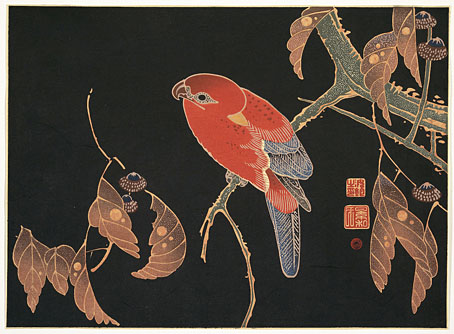
Red Parrot on the Branch of a Tree (c.1771) by Ito Jakuchu.

• Reporter John Stapleton (later a fixture of BBC TV) visits the Portobello Road offices of British underground newspaper Frendz for newsreel service British Pathé. The date says 1969 but it’s probably 1971 since earlier that year the magazine had changed its name from Friends. Among the unidentified interviewees is Rosie Boycott, later the founder of Britain’s first feminist magazine, Spare Rib, and now Baroness Boycott. She may have predicted the former in 1971 but I doubt she would have expected a seat in the House of Lords.

• At Expanding Mind: Erik Davis talks with martial artist and psilocybin explorer Kilindi Iyi about African martial arts, high dose psilocybin work, African-American psychedelia, Dr. Strange, and the metaphysics of darkness.

Bloom, the generative music app by Brian Eno and Peter Chilvers, is given a tenth-anniversary relaunch this month. The new app will also (finally) be available for Android as well as Apple machines.

Early on, I realized my interest in [William] Burroughs’ work was less to do with the cut-up novels and more with the documented research and investigation of the human condition, technology, control, travel, dreams, drug culture, shamanism, and Hassan-I Sabbah. Books like The Job, The Electronic Revolution and especially, The Third Mind with Brion Gysin were particularly important to me. […] As for integrating Burroughs’ work into the music, it’s not about the history of a literary collaboration, but rather the complete fusion in a praxis of two subjectivities that metamorphosize into a third. From this collusion, a new author emerges—an absent third person, invisible and beyond reach, recording the silence.

From 2017: Bill Laswell in a satisfyingly lengthy interview with Anil Prasad

Secret Satan, 2018: being the annual Strange Flowers “round-up of giftable cultural history with which you can unmistakably signal your degenerate cosmopolitan values”.

• Laurie Spiegel’s second album of electronic music, Unseen Worlds, was never given a proper release in 1990. This situation will be rectified in January.

• Mixes of the week: Secret Thirteen Mix 272 by Paulie Jan, and XLR8R Influences Podcast 12 by Ripperton.

• More Gorey: biographer Mark Dery and design historian Steven Heller discuss Edward Gorey’s life and work.

Rumsey Taylor on Roger Excoffon’s Choc, “the mystery font that took over New York”.

• More Nicolas Roeg: David Thompson on one of Britain’s greatest film directors.

John Waters picks his films of the year.

• RIP Bernardo Bertolucci

In Bloom (1991) by Nirvana | Bloom (2001) by Brian Eno & J. Peter Schwalm | Violet Bloom (2010) by John Foxx
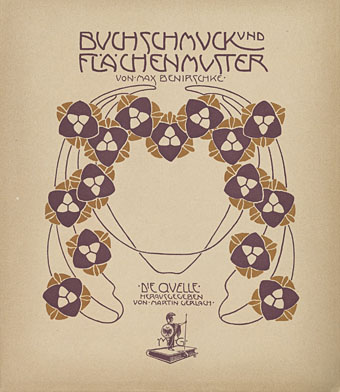
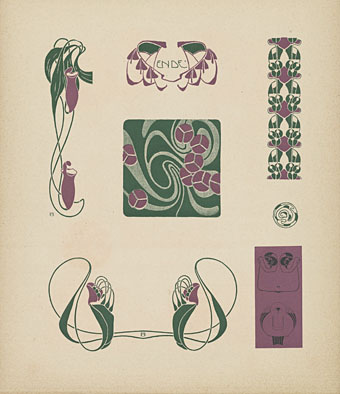
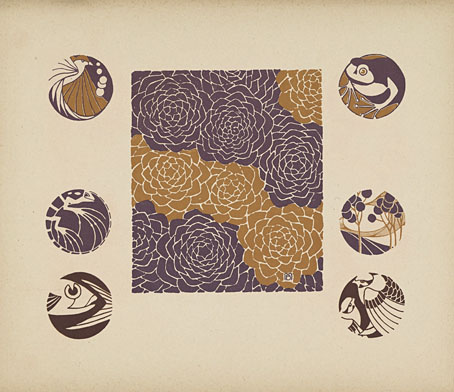
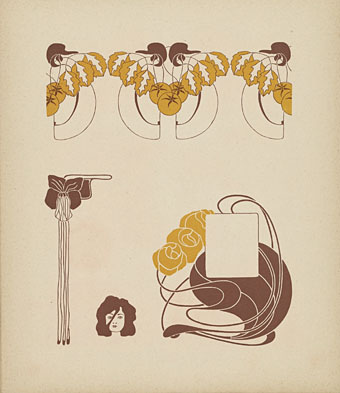
Buchschmuck und Flächenmuster by Max Benirschke

benirschke01.jpg

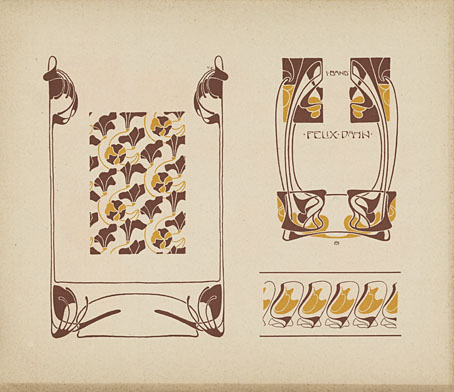
A recent arrival at the Internet Archive was this collection of Art Nouveau book decorations by Max Benirschke (1880–1961). Very welcome it is too, although I wish it had been accompanied by its companion volumes from Koloman Moser and Carl Otto Czeschka. The three books formed a series, Die Quelle (The Source), a Viennese equivalent of the design books produced by Alphonse Mucha and others in France. Both the Benirschke and Moser books have been available from Dover Publications at one time or another but the Benirschke one seems now to be out of print. There’s more about Die Quelle and its artists (plus related subjects) at the excellent Vienna Secession. Benirschke’s book may be browsed and downloaded here.

benirschke02.jpg

benirschke03.jpg

benirschke04.jpg

benirschke05.jpg

Continue reading “Buchschmuck und Flächenmuster by Max Benirschke”

Weekend links 440

roeg.jpg

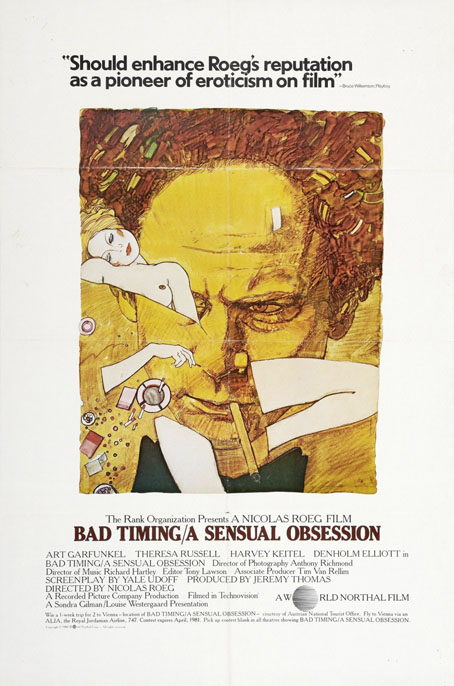
The title of that film was originally different [Illusions]… I woke up one day and thought of Bad Timing which sounds exactly like the right title—for my career. Now there was a film I really thought was one to which there would be a different response. Whilst filming I felt sure that this was one for the streets, one that people would really want to see. — Nicolas Roeg

So long to the great Nicolas Roeg, always one of my favourite film-makers. Roeg’s works were naturally attractive when I was a teenager because he’d made a horror film and a science-fiction film; when these eventually turned up on TV it was evident that this was a director working on a level that had more in common with Continental Europe than Hollywood. Beyond the generic content it was his approach to directing that made his films essential: a fragmented editing style derived from Alain Resnais via Richard Lester (see below), a cosmic perspective almost entirely absent from the parochial concerns of British cinema, and a seemingly effortless ability to find visual rhymes in anything. Despite the “bad timing” comment above Roeg was fortunate to be working throughout the 1970s when having an approach that ran counter to the prevailing trends wasn’t an obstacle to maintaining a career; as with Ken Russell, you watch some of the films today and are amazed and grateful that they were made at all. When reading the forthcoming plaudits it would be worth remembering that even the films regarded now as Roeg’s best struggled for acceptance: Pauline Kael dismissed Don’t Look Now as “trash”, US screenings of The Man Who Fell To Earth provided explanatory notes for the hard-of-thinking, Bad Timing was described by its own distributors as “a sick film made by sick people for sick people”, while the distributors of Eureka hated the film so much that for a time it could only be screened in the UK if the director was also present.

• Related: Where to begin with Nicolas Roeg, and Nicolas Roeg: It’s About Time (2015), a 59-minute documentary for the BBC directed by David Thompson. Previous Roeg-related postings on this site include: The Nicolas Roeg Guardian Lecture, 1983 (Roeg discusses Eureka and other films with Philip Strick); Beyond the Fragile Geometry of Space (charting the recurrence of a book title from Don’t Look Now); Canal view (using Google Street View to find the church in Don’t Look Now); and Petulia film posters (designs for a Richard Lester film from 1968 that was photographed by Roeg, and whose fragmentary editing style prefigures the familiar Roeg technique).

• Edward Woodward’s greatest screen role wasn’t a prudish policeman or a mysterious vigilante but was David Callan, a conflicted assassin working for a division of the British Secret Service. Joseph Oldham explains.

• Mixes of the week: A mix for The Wire by Jing, FACT Mix 681 by Kelly Moran, and Crépuscules d’Automne, a seasonal mix by Stephen O’Malley.

• More Gorey: in 1978 Jeremy Brett was playing Dracula in the touring version of the Edward Gorey-designed play.

• Liberated from the LRB paywall for a brief time: George Melly writing in 1992 about René Magritte.

• Welcome to the witch capital of Norway: Chelsea G. Summers investigates.

Space colony artwork from the 1970s.

• At I Love Typography: Magic printed.

Memo From Turner (1970) by Mick Jagger | Wild Hearts (1985) by Roy Orbison | Be Kind To My Mistakes (1987) by Kate Bush

More detectives

detective.jpg

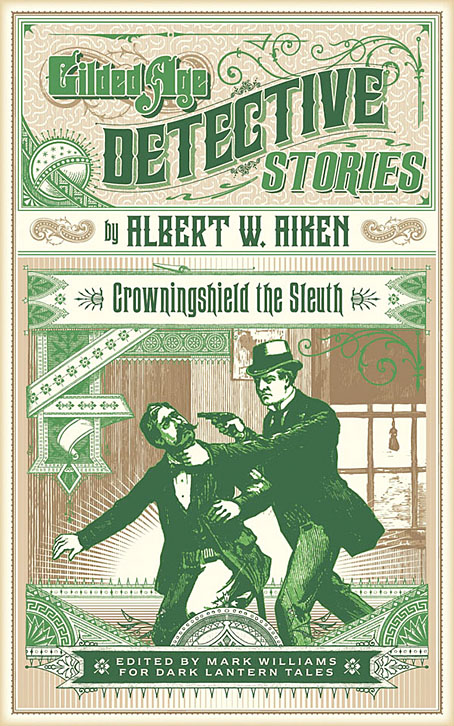
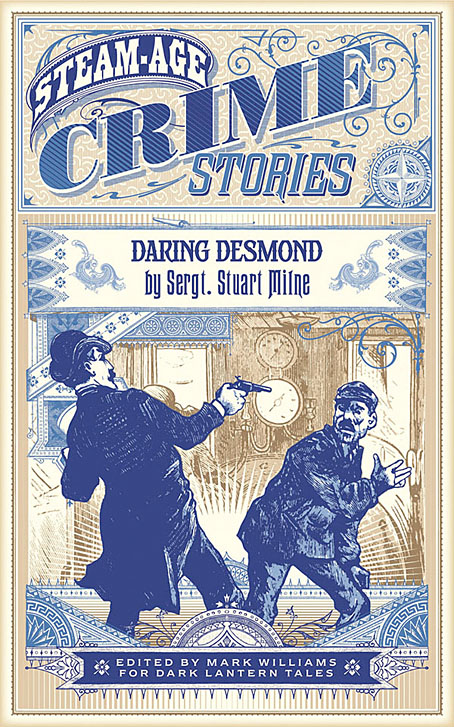
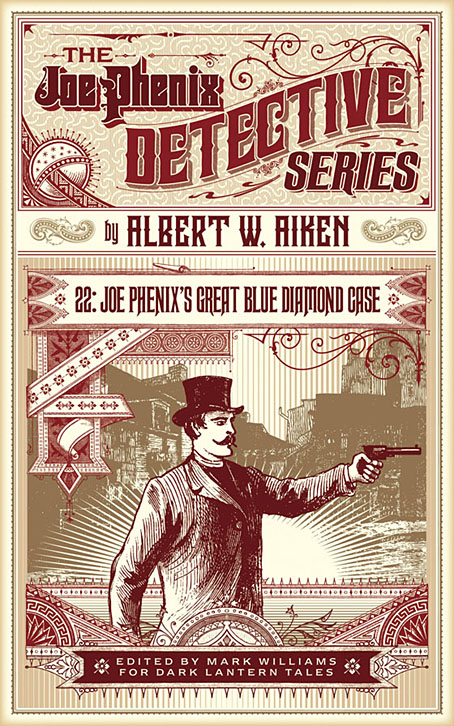
I was going to post these designs a couple of weeks ago but other things kept intervening. Gilded Age Detective Stories and Steam-Age Crime Stories follow my earlier design for the Joe Phenix Detective Series (below), with all three forming a colour-coded trilogy of books from Dark Lantern Tales reprinting late-Victorian crime fiction. My earlier post about the Joe Phenix series went into some detail about the lettering design so there’s no need to repeat that here. The new covers follow the template established by the first, the main deviation being the larger title box for Crime Stories, each title of which is by a different author. As before, the illustrations are adapted from the often crude wood engravings that ran with the original stories. The illustrations in pulp magazines of this period tend to lack the finesse of their counterparts in books and newspapers but then you could say the same about the stories; if you’re attracted to this material then the rough edges are part of the package.

crime.jpg

As before, all these books are currently available as ebooks only but plans are afoot for a series of paperback reprints. Any further news about this will be posted in due course.

joephenix.jpg

Previously on { feuilleton }
The Joe Phenix Detective Series

Weekend links 439

sadismo.jpg

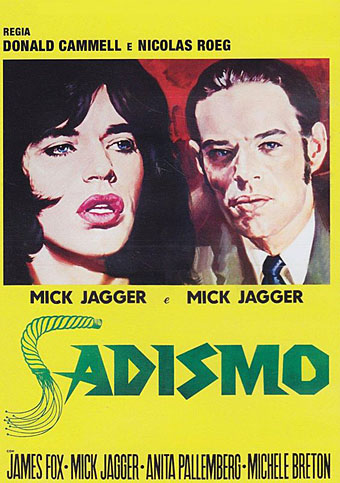
Cammell & Roeg’s Performance (1970) was marketed in Italy with all the restraint for which the Italian film industry has long been celebrated.

• “To the good men I offer the hand of friendship, to the foes of our sex I offer resistance and annihilation!” We Women Have no Fatherland (1899), a novel by Ilse Frapan, is the latest title from Rixdorf Editions.

• More Edward Gorey: Mark Derey discusses his biography on the Virtual Memories Show podcast. Related: Edward Gorey’s Calling Cards, a spoiler-heavy investigation.

• “It starts how most horror films end, and it just keeps building and building, crescendo on crescendo…” Ben Cobb on the original (and, for me, only) Suspiria.

• The next compilation release from the excellent Light In The Attic label will be Kankyo Ongaku: Japanese Ambient, Environmental & New Age Music 1980–1990.

Saint Flournoy Lobos-Logos and the Eastern Europe Fetus Taxing Japan Brides in West Coast Places Sucking Alabama Air (1970) is a short film by Will Hindle.

• Film producer Sandy Lieberson and author Jay Glennie on Donald Cammell & Nicolas Roeg’s Performance.

• “Wes Anderson‘s offbeat debut as a curator drove a storied museum’s staff crazy. The results are enchanting.”

Above Water, Inside, a video by James Ginzburg from his recent album, Six Correlations.

• For the LRB Podcast: Iain Sinclair and Patrick Wright discuss living with buildings.

• Not necessarily the best ambient and space music of 2018: a list by Dave Maier.

• “The net is not a good guide to book prices,” says Mark Valentine.

David Bennun on 30 years of the Pet Shop Boys’ Introspective.

• Mix of the week: XLR8R Podcast 568 by Young Marco.

• At Dennis Cooper’s: Chris Marker Day.

Introspection Pt. 1 (1969) by The End | Introspection (1984) by Minimal Compact | Intro-Spectiv (1996) by Chris & Cosey