Deutsche Kunst und Dekoration #7

dkd07-01.jpg

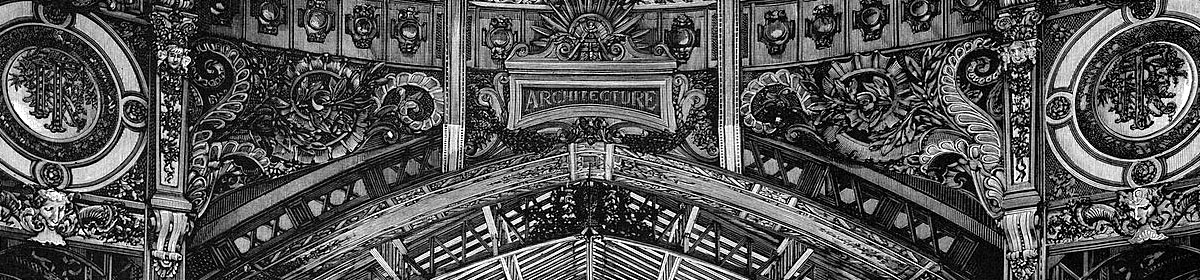
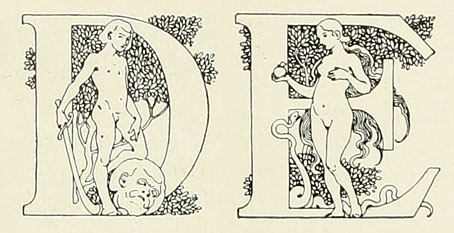
Continuing the delve into back numbers of Deutsche Kunst und Dekoration, the German periodical of art and decoration. Volume 7 covers the period from October 1900 to March 1901 and features a set of ornamental capitals throughout this edition designed by Karl Lürtzing, part of a presentation of typefaces in the Art Nouveau style. The figures in Lürtzing’s alphabet all seem to be Biblical or mythological (as with David and Eve above) although some are easier to decipher than others. Volume 6 paid a visit to the Exposition Universelle in Paris and there’s a few more examples from that event here, along with further examinations of the best in German art and design. As usual, anyone wishing to see these samples in greater detail is advised to download the entire volume (which comprises over 300 pages) at the Internet Archive. There’ll be more DK&D next week.
dkd07-02.jpg

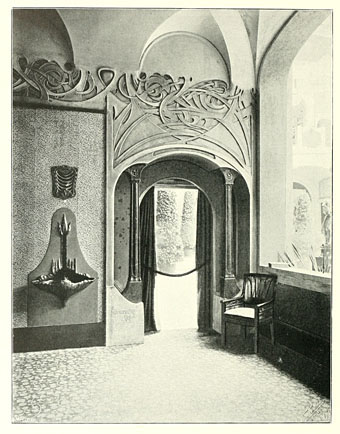
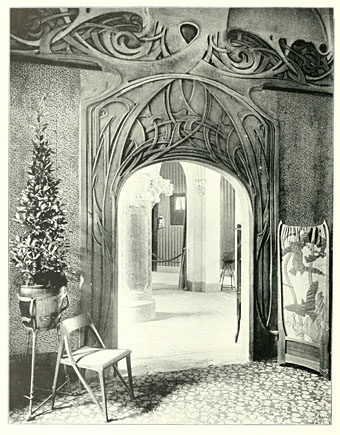
Remarkable interiors by Richard Riemerschmid.
dkd07-03.jpg

Continue reading “Deutsche Kunst und Dekoration #7”

More Queer Noise

smiths.jpg

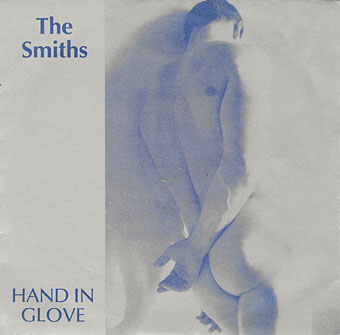
Hand In Glove (1973) by The Smiths, 7″ single.

This celebrated pair of buttocks turned up in the inbox this week, courtesy of a news mail from the Manchester District Music Archive announcing their Queer Noise website, an online exhibition exploring LGBT music and club culture in Greater Manchester. It was just over a year ago that I designed a poster for the Queer Noise music event which preceded the online collection; writer and journalist Jon Savage was the host that evening and he’s provided an intro for the site. And speaking of queer noises, I’ve been told recently that John Gill’s 1995 book of that name, Queer Noises: Male and Female Homosexuality in Twentieth-Century Music is shortly to be republished in an updated edition. No further details as yet.

french.jpg

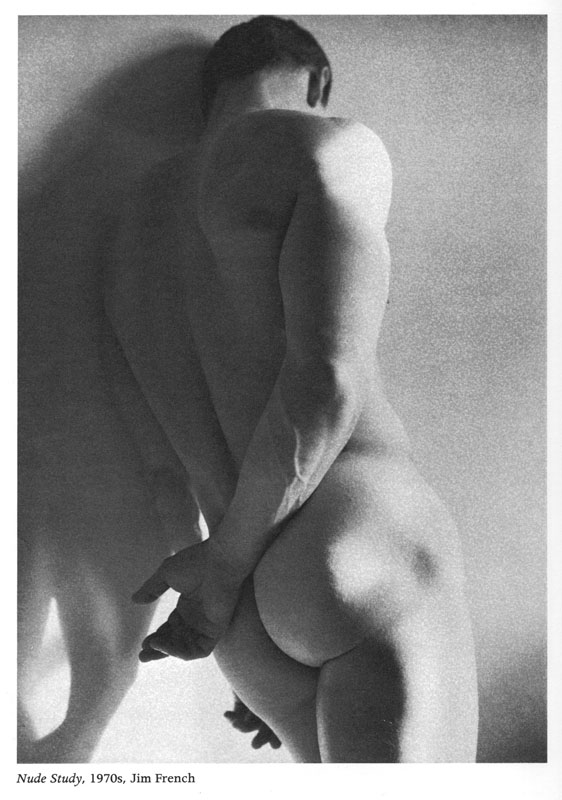
Meanwhile, back at the buttocks, it seems that Morrissey swiped his cover photo for the first Smiths single from The Nude Male (1978) by Margaret Walters. I have that very book so here is that very photo, an impressive study by beefcake photographer Jim French.

Previously on { feuilleton }
Queer Noise in Manchester
Queer Noise and the Wolf Girl
The fascinating phallus
Queer Noises

The writhing on the wall

hands9.jpg

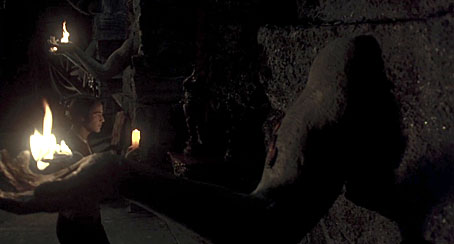
Dracula (1992).

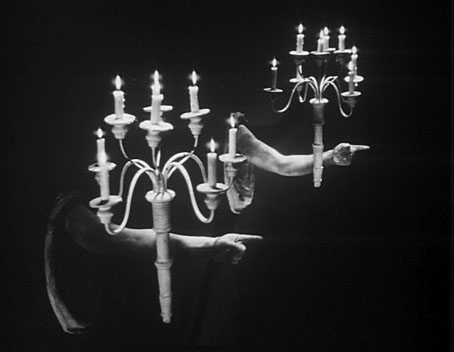
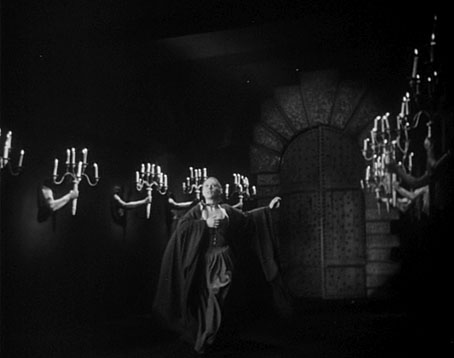
This is the closest you’ll get to a guest post here even though it’s been done remotely and I’ve changed things around a little. Following my mention yesterday of the Cocteau-derived lantern-arms in Francis Coppola’s Dracula, Jescie sent me an abandoned blog post which collected similar examples of the arms-through-the-walls motif. I’ve done this kind of thing here in the past so it’s good {feuilleton} material. Almost all these examples are fantasy- and horror-related which isn’t too surprising, and I’m sure there’ll be other examples in films I haven’t seen. If anyone has any suggestions just remember that hands grasping through doors and windows don’t count with this, it’s through the wall or not at all.

hands1.jpg

La Belle et la Bête (1946).

Jean Cocteau sets things off in 1946, a perfect piece of fairytale Surrealism and one of the many memorable aspects of this film.

hands2.jpg

La Belle et la Bête (1946).

Continue reading “The writhing on the wall”

Symbolist cinema

dracula1.jpg

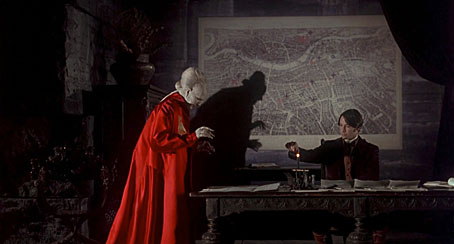
Symbolist? Arguably. Decadent? Certainly. Watching Francis Ford Coppola’s Dracula (1992) again this weekend I thought it worth making note of some of these resonances. The real age of Symbolist cinema was the Silent Era from around 1910 onwards, something I discussed in more detail here. That being so, several films made since can be taken as Symbolist (more usually Decadent) productions even if this was never their original intention. Kenneth Anger‘s Magic Lantern Cycle comes immediately to mind, so too Sergei Parajanov’s The Colour of Pomegranates.

dracula3.jpg

Bram Stoker’s novel was published in 1897 at the ebbing of the fin de siècle but vampires and vampirism were already recurrent Symbolist themes. Aesthetic magus Walter Pater wrote of the Mona Lisa in 1893, “She is older than the rocks among which she sits; like the vampire, she has been dead many times, and learned the secrets of the grave…” Dracula almost demands a Symbolist interpretation, and for now Coppola’s production is the closest we get. I’ve found this makes the film more satisfying in a way: you can ignore the shoddy performances by secondary characters and concentrate on the decor and details (and the tremendous score by Wojciech Kilar). Some of the following screen grabs argue my point.

dracula2.jpg

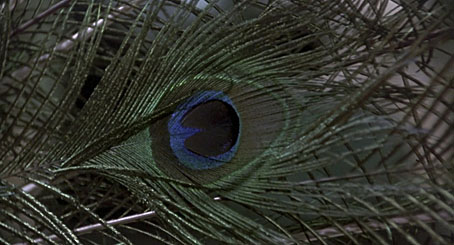
Oh look, peacock feathers. I loved the artificiality of this film, the excessive palette, the obvious models and miniatures, the layering of images. The dissolve from a peacock feather to Jonathan Harker’s infernal train journey is a great moment.

Continue reading “Symbolist cinema”

The Peacock Clock

peacockclock1.jpg

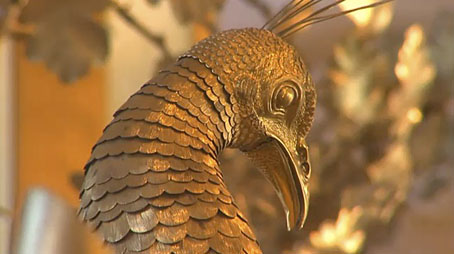
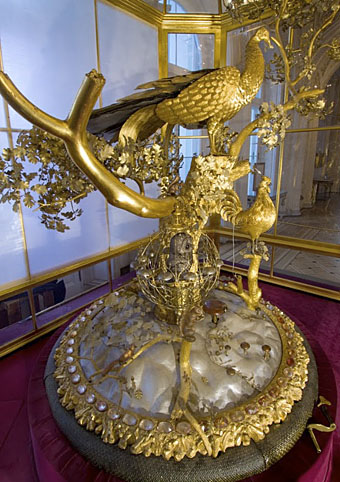
Something discovered courtesy of the Google Art Project is James Cox’s splendid Peacock Clock automaton, an exhibit at the Hermitage Museum, St Petersburg:

The history of the Hermitage’s Peacock Clock begins in 1777, when the Duchess of Kingston visited St Petersburg. Balls were given in the Russian capital in honour of this wealthy and distinguished guest. Grigory Potiomkin, who met the Duchess in society, learned of James Cox’s magnificent mechanisms. Pandering to Catherine II’s passion for collecting, the Prince commissioned the celebrated craftsman to make a monumental automaton with a clock for the Empress’s Hermitage. In order to meet this expensive order as quickly as possible, Cox, whose financial affairs were currently not in the best of health, decided to use an existing mechanical peacock that featured in the Dublin lottery. He expanded the composition with a cockerel, owl and a clock mechanism with a dial incorporated into the head of a mushroom, and removed the snakes. To create his new automaton, Cox recruited the assistance of Friedrich Jury, a German craftsman who had settled in London. (More.)

The snakes referred to were from an earlier work which Cox used to create this one, and the Google view shows a snake-like base to the construction. Google shows us all the detail but to see the clock in action we need YouTube. Astonishing work even if the crowing rooster spoils things a little. Cox was the first owner of the equally remarkable (and arguably more beautiful) Bowes Swan automaton which was featured here some time ago.

peacockclock2.jpg

Previously on { feuilleton }
Ghost clocks
Mystery clocks
Skeleton clocks
The Midsummer Chronophage
Andrew Chase’s steel cheetah
The Corpus Clock
The Bowes Swan