Weekend links 316

pca.jpg

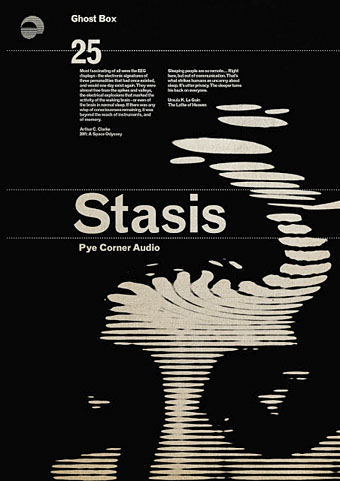
Stasis, the second album by Pye Corner Audio for the Ghost Box label, will be released at the end of August. Design, as always, is by Julian House.

• “In the modern internet world you have what I talk about as the ‘War of the Certain’: people insisting that their absolutist viewpoint, in 140 characters, is exactly the right way to think, and anyone who doesn’t agree with them is terrible. If you’ve grown up reading Robert Anton Wilson this is awful. Having all of these certain people with no nuance or doubt, and no understanding of multiple-model agnosticism, is not going to go anywhere good.” Writer John Higgs talking to Ben Graham about RAW, Discordianism and related matters. A related matter: Higgs talks to Alan Moore about virtual-reality mysticism, creating a new counterculture, reinventing magick, and the eternal nature of time.

• Nicolas Winding Refn’s The Neon Demon is out this month so features and interviews are proliferating. I’ve been avoiding them for the usual spoiler-shunning reasons, but this was worth noting: Refn’s mood-establishing playlist for the production. More Neon Demon: Cliff Martinez talks about working with Refn.

• ” ‘Paint me like one of your French girls” takes on a whole new meaning in Nicole G. Albert’s book Lesbian Decadence: Representations in Art and Literature in Fin-De-Siècle France,” says Rachel Wexelbaum.

The decaying low-baroque tableau of conjugal tenderness, features eaten away by the syphilis of time, played so well, on an anvil of whitewashed cement, alongside a municipal bowling green, that it became the provocation for a pedestrian expedition testing the Brexit boundaries of a timeless mead-hall England, before the fleet of plundering Papist Normans came sailing over the horizon. Just as tabloid gangs of Albanian drug-trafficking white slavers were now reputed to be sneaking ashore on Romney Marshes, at Deal and Camber Sands, on their Rigid Inflatable Boats, kayaks and leaking air mattresses. Could anyone bring themselves actually to cast a vote for Brexit, a commodity that sounds like a cereal bowl of Nordic cattlecake manufactured from wood shavings with an added ingredient to purge the bowels?

Iain Sinclair and company head south in turbulent times

• At Dangerous Minds: a video recording of Psychic TV live in Manchester, 1983 (I’m in the audience but up on the balcony so you won’t see me), and an interview with dub maestro Adrian Sherwood.

The Columbia Years, 1968–1969: fabled recording sessions by Betty Davis are to receive an official release by Light In The Attic.

We’re Here Because We’re Here – Jeremy Deller’s silent commemoration of the soldiers of the Somme.

• Inside Las Pozas, Edward James’ Surrealist Garden in the Mexican Jungle.

• The body as amusement park: A history of masturbation by Barry Reay.

Nicholas Olsberg on the mirage of an ideal metropolis.

The Strange World of…David Toop

Static Electrician (1994) by ELpH | Static (1998) by Redshift | Static (2001) by Monolake
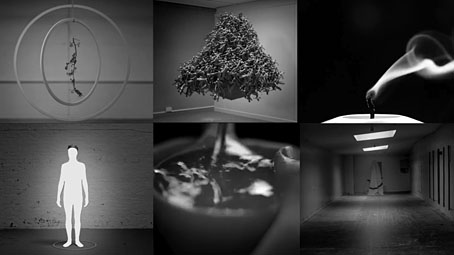
The Mountain of Dead Selves

bradburn.jpg

John Bradburn, an artist/filmmaker who also performs as Ferric Lux, notified me recently about his David Bowie-related project, The Mountain of Dead Selves, a video piece that was showing earlier this month at Vivid Gallery, Birmingham. Bradburn’s video, part of a group show, Constructing The Self: David Bowie, takes the occult influences of the Station To Station album as its subject. A short version of the video may be seen here although the gallery version was a looping piece which would no doubt appear very different when seen in situ.

Back in January I linked to some of the posthumous theorising around Bowie’s final album, Blackstar, including musings which looked back to Station To Station‘s Kabbalistic elements. It used to seem that discussion of Bowie and the occult would remain fixed on the 1970s so one of the many surprises about his final statement was the way the esoteric was brought to the fore again. The Mountain of Dead Selves won’t be the last exploration of this. There’s more from Ferric Lux here.

Weekend links 315

knights.jpg

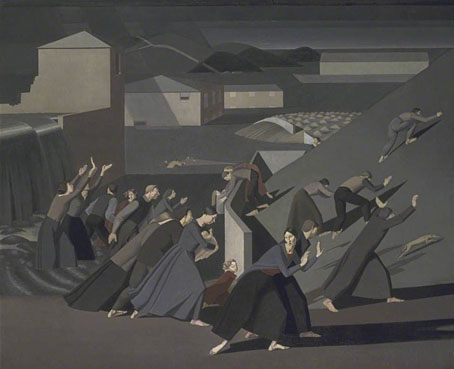
The Deluge (1920) by Winifred Knights.

Dennis Cooper‘s favourite fiction, poetry, nonfiction, film, music, art & internet of 2016 so far. (Thanks again for the nod to this blog!)

• At Literary Hub: Jonathan Russell Clark on Jorge Luis Borges, and Jon Sealy on why indie presses [in the US] are opening bookstores.

• “It’s not just about the music.” A conversation on the occult practices in the arts between poet Janaka Stucky and Peter Bebergal.

• Daisy Woodward talks to Andreas Horvath about Helmut Berger, Actor, a documentary about Visconti’s muse and lover.

• More Fritz Leiber: Brian J. Showers on his decision to republish Leiber’s horror novel, The Pale Brown Thing.

• Mixes of the week: Sextape 4 by Drixxxe, and Radio Oscillations #96 (Richard Pinhas/Heldon) by Iron Blu.

• The 5th Young One: Pay No Attention to the Girl Behind the Sofa; John Reppion on a television mystery.

• More reading suggestions: Cheerless beach reads for gloomsters and saddies by S. Elizabeth.

• Never the same film twice: Seances by Guy Maddin, Evan Johnson, Galen Johnson.

• How painter Winifred Knights became Britain’s “unknown genius”.

• The Journey & The Destination: An interview with Hawthonn.

Robert Latona goes in search of the grave of Constance Wilde.

• Invisible by Day: photos by Mikko Lagerstedt.

• A Queer Lit Q&A with Evan J. Peterson.

• RIP Michael Herr and Bernie Worrell.

Bridget Riley: The Curve Paintings.

• The typography of Blade Runner.

Japanese matchbox labels

SOS by Portishead

A Rainbow In Curved Air (1969) by Terry Riley | The Great Curve (1980) by Talking Heads | Dangerous Curves (2003) by King Crimson

The art of Paul Thévenaz, 1891–1921

thevenaz01.jpg

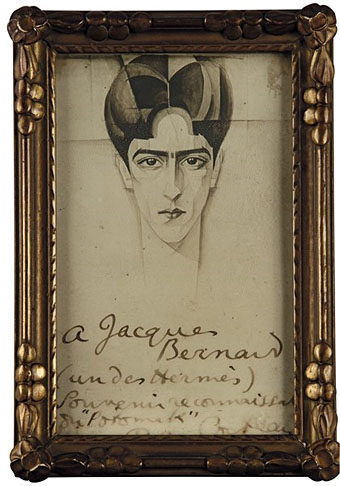
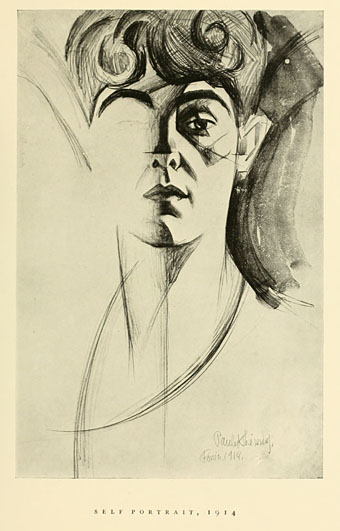
This portrait of Jean Cocteau by Swiss artist Paul Thévenaz isn’t included in the artist’s memorial book, Paul Thévenaz, A Record of His Life and Art (1922) which was published after Thévenaz died suddenly at the age of 30. Everything else in this post is, however, and there’s more in the book itself which shows Thévenaz ranging through society portraits (and self-portraits), designs for the theatre (I’ve included a Salomé below), murals and sketches.

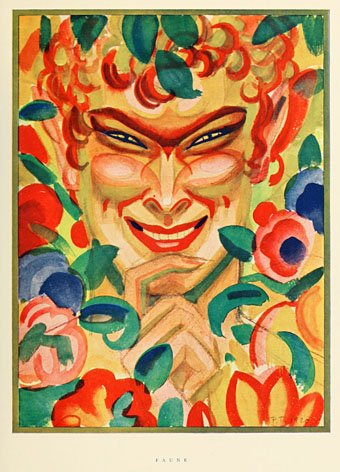
Thévenaz is another candidate for the pantheon of lost gay artists although the work in the book isn’t especially homoerotic. There are fauns, however, which might be connected to his romantic association with poet Witter Brynner. The latter’s A Canticle of Pan was written in 1918, and is one of the many manifestations of the horned god in the literature of the period. As for Thévenaz, I like his drawing style a great deal; in places it resembles Wyndham Lewis in its sweeping curves and stylisations. (Thanks to Callum for the tip!)

thevenaz02.jpg

thevenaz03.jpg

thevenaz04.jpg

Continue reading “The art of Paul Thévenaz, 1891–1921”

Weekend links 314

alderslade.jpg

Avebury Kite (2006) by David Alderslade.

• “Klaus Mann, son of Thomas Mann, author of Mephisto, was one of the first in Germany to write gay novels and plays.” Walter Holland reviews Cursed Legacy: The Tragic Life of Klaus Mann by Frederic Spotts.

The Pale Brown Thing, a shorter/alternate version of Fritz Leiber’s supernatural masterwork, Our Lady of Darkness, is given a limited reprinting by Swan River Press next month.

• “Not only is metal not directly harmful to adolescent minds, as the thinking goes, it may actually be helpful.” Christine Ro on the reappraisal of a once-suspect musical genre.

Something of that tension between past and future is visible in Beardsley’s work. It is the art of a dying era peering, with a mixture of excitement and trepidation, into the next. For all the prancing and bravado, Beardsley’s art was really about finding something in which to believe—and if Beardsley came to believe in anything it was the deep black line. Shading held little interest for Beardsley, and color fascinated him not at all. The black line and white space were all he needed.

Morgan Meis on Aubrey Beardsley

• More of my art for Bruce Sterling’s forthcoming Dieselpunk novella, Pirate Utopia, has been revealed. Tachyon will be publishing the book in November.

• “Secretly, though, I frequent junk shops because I am wishing for some kind of transcendence,” says Luc Sante.

• Mixes of the week: Gizehcast #28 by Christine Ott, and a mix for The Wire by Asher Levitas.

• “It took centuries, but we now know the size of the Universe.” Chris Baraniuk explains.

Barnbrook Studios creates identity for Kubrick exhibition at Somerset House.

• Watch a haunting video from Subtext Recordings and Eric Holm.

• Folklore Tapes: A Rum Music Special by Joseph Burnett.

Brion Gysin’s Dreamachine is on sale again.

Rhys Chatham’s favourite albums.

A Guide to Occult London

Skulls and Bones

Zero Time (1979) by Chrome | Zero-Gravity (1996) by Sidewinder |  Zero Moment (2016) by Contact