Weekend links 513

tower.jpg

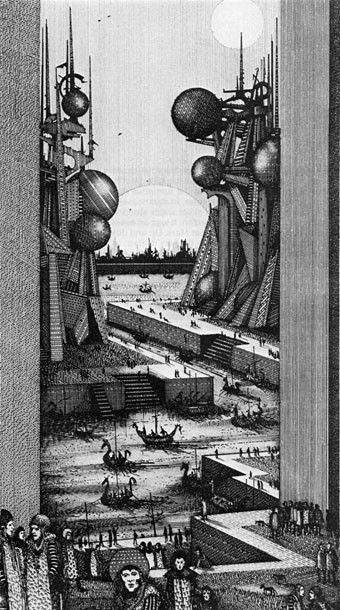
Water Tower (1914), Margaret Island, Budapest, Hungary.

George Bass on five ways The Year of the Sex Olympics (1968) predicted the way we live now. Nigel Kneale’s TV play will be reissued on DVD next week.

Ballardism (Corona Mix): three new drone pieces by Robert Hampson available as free downloads.

• Grace Jones: where to start in her back catalogue; John Doran has some suggestions.

Hal was the wry and soulful and mysterious historical rememberer. He specialized in staging strange musical bedfellows like Betty Carter and the Replacements or The Residents backing up Conway Twitty. Oh, the wild seeds of Impresario Hal. He was drawn equally to the danger of a fiasco and the magical power of illumination that his legendary productions held. Many years ago he bought Jimmy Durante’s piano along with Bela Lugosi’s wristwatch and a headscarf worn by Karen Carpenter. Some say he also owned Sarah Bernhardt’s wooden leg. He had a variety of hand and string puppets, dummies, busts of Laurel and Hardy, duck whistles and scary Jerry Mahoney dolls and a free ranging collection of vinyl and rare books. These were his talismans and his vestments because his heart was a reliquary.

Tom Waits pens a letter to remember Hal Willner

• The food expiration dates you should actually follow according to J. Kenji López-Alt.

• Blown-up buildings and suffocating fish: the Sony world photography awards, 2020.

• Rumbling under the mountains: a report on Czech Dungeon Synth by Milos Hroch.

Sophie Pinkham on The Collective Body: Russian experiments in life after death.

• Mix of the week: Spring 2020: A Mixtape by Christopher Budd.

Olivia Laing on why art matters in an emergency.

• At Dennis Cooper’s: Bloody.

Blood (1972) by Annette Peacock | Blood (1994) by Paul Schütze | Blood (1994) by Voodoo Warriors Of Love

Weekend links 508

lee-nova.jpg

Detecting the Forgery (1967), a collage print by Gary Lee-Nova.

• Nigel Kneale’s adaptation of Susan Hill’s The Woman in Black was given a UK TV screening in 1989, followed by a brief video release after which it was buried for years, and subsequently overshadowed by the later (inferior) big-budget feature film. Network will be releasing the Kneale version on blu-ray in May. I wrote about the TV film a while ago.

• At the BFI: David Parkinson on 10 essential films featuring the late Max von Sydow, a welcome riposte to obituaries that headlined the often mediocre Hollywood fare that Von Sydow elevated with his minor roles. And at the same site, John Berra on where to begin with the martial arts films of King Hu.

• “Enthusiasts Archive, an artistic project by Neil Cummings and Marysia Lewandowska, is the result of extensive research amongst the remnants of amateur film clubs in Poland under socialism. It is a critical archive of amateur films found, restored and made available online.”

Stephen Calloway, co-curator of the Tate Britain Aubrey Beardsley exhibition, and drag performer Holly James Johnston sit down to tea to discuss the “dos and don’ts” of dandyism according to the artist.

• Mutinous Jester: The Collage Novels of Akbar Del Piombo by Gregory Stephenson. Related: Fuzz Against Junk: The Saga of the Narcotics Brigade (1959) by Akbar Del Piombo.

• Michael Richey on chindogu, the useless inventions of Kenji Kawakami.

• From farting to fornication: John Boardley on early print censorship.

Douglas A. Anderson on a case of plagiarism in Weird Tales.

• Mix of the week: mr.K’s Soundstripe vol 3 by radioShirley.

How To Get To Spring is a new album by Jon Brooks.

Rufus Wainwright‘s favourite music.

• At Dennis Cooper’s: Occultists.

Spring Rounds From The Rite Of Spring (1975) by Alice Coltrane | Springlight Rite (1981) by Irmin Schmidt & Bruno Spoerri | Spring Returns (1999) by Isao Tomita

Weekend links 501

ashman.jpg

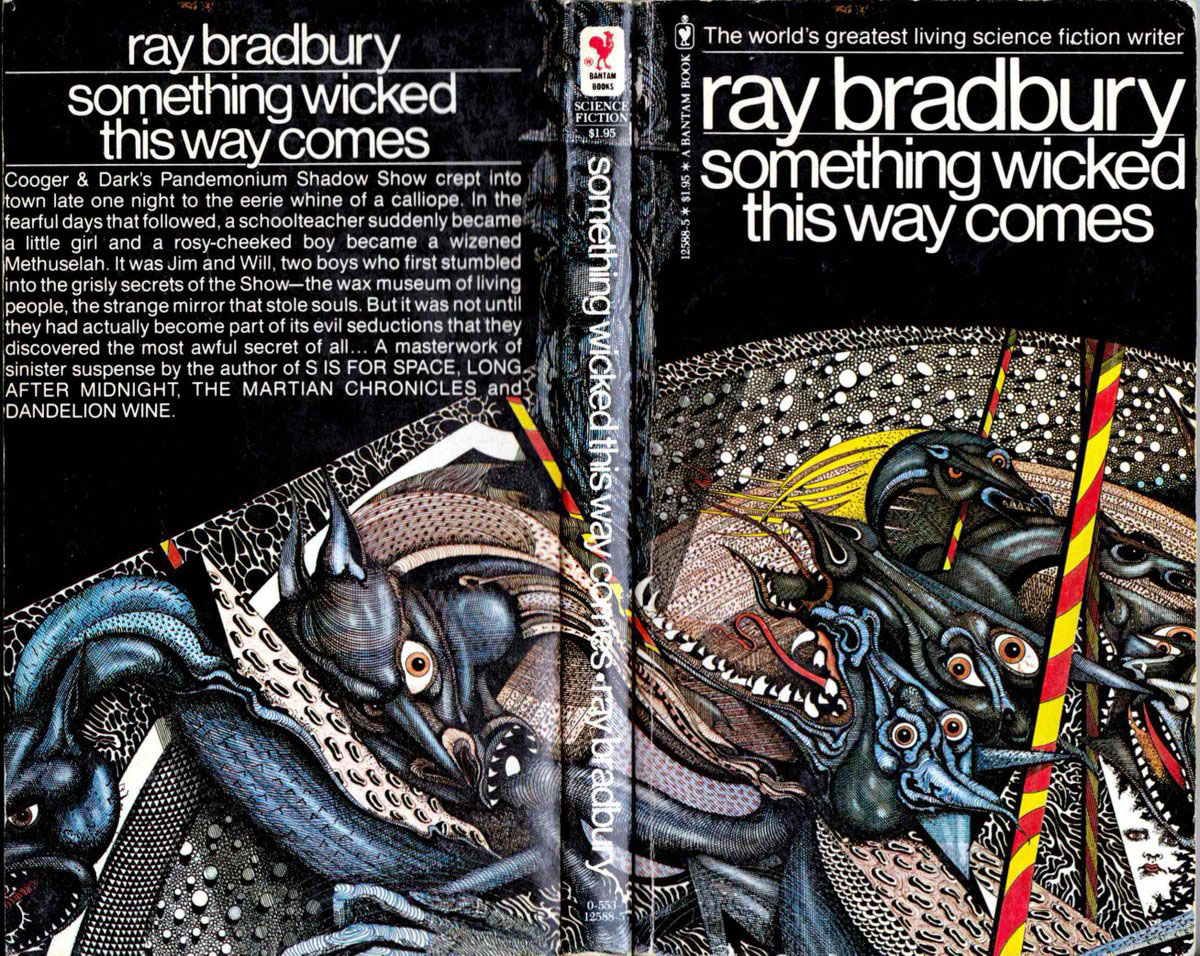
Cover art by Michael Ashman, 1979.

• RIP Terry Jones, not only a writer, actor and director but also a presenter of the BBC’s short-lived Paperbacks series in 1981, a programme that included Angela Carter among its guests. Related: The Box (1981), a short film directed by Micky Dolenz, based on a play by Terry Jones and Michael Palin.

• “[David] Lynch in a suit and tie that echoes the formal dress of Twin Peaks’ FBI Agent Cooper, presses a small capuchin monkey, called Jack Cruz, to confess to the murder of Max.” What Did Jack Do?

• The week in Ghost Box: Flying Lotus and Julian House collaborate on a promo for the Moog Subsequent 25 synthesizer, while at Grave Goods Jim Jupp answers questions from beyond.

Bruce Sterling: “This is an essay about lists of moral principles for the creators of Artificial Intelligence. I collect these lists, and I have to confess that I find them funny.”

• A campaign to protect and maintain Derek Jarman’s Prospect Cottage.

• Winners of the Wiki Loves Monuments 2019 photo competition.

• Mix of the week: Sehnsucht by The Ephemeral Man.

• Susan Schulten on Emma Willard’s Maps of Time.

• At Dennis Cooper’s: Roland Topor’s Brains.

• At Strange Flowers: 20 books for 2020.

Beat Box (1984) by Art Of Noise | Glory Box (1994) by Portishead | Black Box (1995) by Scorn

Shades of Darkness

sod1.jpg

The end of the year in Britain is as much a time for ghost stories as the end of October, and this is one Christmas tradition (one of the few…) that I’ve always been happy to support. In recent years all of the best of the British TV ghost stories have appeared on DVD, along with some of the minor ones, but exceptions remain. Shades of Darkness was a series of hour-long supernatural dramas made by Granada TV in the 1980s, and so far seems to have only appeared on disc as a now-deleted Region 1 set.

sod2.jpg

The series comprised two short seasons in 1983 and 1986, and dates from the period when Granada was in serious competition with the BBC for well-crafted period drama. Granada’s flagship production was the long-running Sherlock Holmes series, an attempt to film all the Holmes stories with Jeremy Brett in the lead, a mostly successful endeavour that was only compromised at the end by Brett’s failing health. Shades of Darkness shares with the Holmes adaptations some of the same production team (producer June Wyndham Davies and director Peter Hammond) together with well-chosen rural locations in damp and autumnal Lancashire and Cheshire.

sod3.jpg

I’d only seen one of these films before, the adaptation by Ken Taylor of Walter de la Mare’s most anthologised story, Seaton’s Aunt. The story is a good choice for a series where the human drama is given as much space as the supernatural although the film doesn’t capture the subtleties or the insidious horror of de la Mare’s best writing. (The copy at YouTube is also blighted with Norwegian subtitles throughout.) I doubt that any adaptation of Seaton’s Aunt could satisfy me but it’s good to see Mary Morris in one of her last roles as poor Seaton’s malign and domineering guardian.

sod4.jpg

More successful are Afterward by Edith Wharton, another popular entry in ghost-story collections, and The Maze by CHB Kitchin in which Francesca Annis’s post-war housewife is tormented by memories of a dead lover. Kitchin’s story is an odd inclusion among the familiar tales, and I wonder how it came to be chosen when it doesn’t seem to be subject to the same republication as the others. Kitchin was a writer best known for his detective novels but he’s received more attention in recent years for a number of novels with gay themes. The Maze includes a character coded as gay who isn’t treated as an outright villain, an unusual detail in a story first published in 1954.

sod5.jpg

Elsewhere, Hugh Grant has an early role in Elizabeth Bowen’s The Demon Lover, and there are three adaptations by Alan Plater, one of which, LP Hartley’s Feet Foremost, is another frequently collected story which Plater surprisingly mishandles. Plater’s adaptation of The Intercessor by May Sinclair is better, with John Duttine in the role of a writer trying to work in a haunted farmhouse. I saw Duttine on stage a few years after this when he played a similar role as The Actor in the first theatrical run of Susan Hill’s The Woman in Black. It’s possible that The Intercessor secured him the part.

sod6.jpg

All these films are currently on YouTube with the exception of the final episode in season two, The Last Seance by Agatha Christie. Watch them here.

sod7.jpg

sod8.jpg

sod9.jpg

Previously on { feuilleton }
The Return: a ghost story
Nigel Kneale’s Woman in Black
“Who is this who is coming?”

Peter Strickland’s Stone Tape

stonetape.jpg

My annual Halloween post breaks with its usual music mix/playlist format this year for a recording of The Stone Tape, Peter Strickland’s hour-long radio drama made for Halloween in 2015. This was an adaptation, co-written with Matthew Graham, of Nigel Kneale’s celebrated TV play of the same name, first broadcast in 1972 for the BBC’s Christmas ghost-story slot then unavailable for many years. The combination of Kneale’s name and the impossibility of easily seeing the play gave The Stone Tape a reputation somewhat greater than it might otherwise have warranted. The drama has a number of shortcomings by contemporary standards: the whole thing is shot on video, so it compares unfavourably to the ghost films the BBC were making throughout the 1970s, and the acting is also quite histrionic in places. On the plus side there’s a woman scientist as the central character (an excellent performance by Jane Asher), and another of Kneale’s examinations of a horror staple—the haunted house, in this case—which adeptly twists your expectations while combining science and the supernatural in equal measure.

Strickland’s adaptation uses the same scenario—struggling electronics company moves into a house with a haunted reputation—but with the events moved slightly forward to 1979. The director’s fondness for electronic music shifts the emphasis of the story to the capabilities of electronic sound, both its destructive potential and its use as a diagnostic tool. James Cargill, formerly of Broadcast, now in Children Of Alice, was the soundtrack composer on Strickland’s second feature film, Berberian Sound Studio, and here creates the music and electronic sounds. The radio play is closer to Berberian Sound Studio than anything else Strickland has done to date, and could even be regarded as a companion piece with its recording equipment and repeated screams. (Eugenia Caruso provides screams for both.) As with the film, two thirds into the drama the narrative becomes much more diffuse and fragmented; the recording medium itself is foregrounded for a lengthy sequence that works like an audio equivalent of found-footage horror films. The hazard of this is that the layered nature of Kneale’s horrors may not be so apparent if you’ve not seen the TV version (I can’t say) but the sound design is excellent throughout, and benefits from the use of headphones to appreciate its subtleties. There’s also some sly reference to Alvin Lucier if you’re familiar with his compositions. Jane Asher makes a cameo appearance as the mother of the character she portrayed in the TV version.

The Stone Tape may be listened to or downloaded here.

Previously on { feuilleton }
Nigel Kneale’s Woman in Black
Stone Tapes and Quatermasses
Nigel Kneale’s Nineteen Eighty-Four
The Stone Tape