Weekend links 483

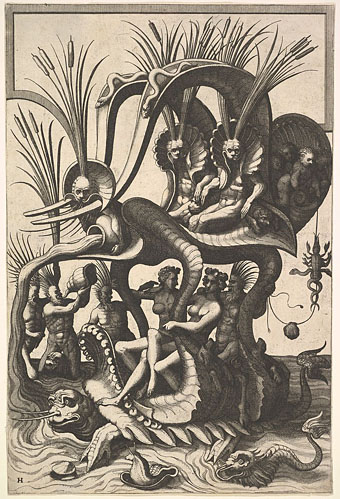
doetecum.jpg

Fantastic Sea Carriage (1556) by Johannes van Doetecum the Elder.

• I’ve grown increasingly tired of Kubrick-related micro-fetishism (despite contributing to it myself with previous posts) but this piece at Film and Furniture about the history of David Hicks’ Hexagon carpet design is a good one.

• “In hindsight, we can see how rarely one technology supersedes another…” Leah Price on the oft-predicted, never arriving death of the book.

• From Rome To Weston-Super-Mare: Eden Tizard on Coil’s Musick To Play In The Dark.

“It is,” the editor of the London Sunday Express had written nine years earlier, sounding like HP Lovecraft describing Necronomicon:

the most infamously obscene book in ancient or modern literature….All the secret sewers of vice are canalized in its flood of unimaginable thoughts, images and pornographic words. And its unclean lunacies are larded with appalling and revolting blasphemies directed against the Christian religion and against the name of Christ—blasphemies hitherto associated with the most degraded orgies of Satanism and the Black Mass.

Regarded as a masterpiece by contemporary writers such as TS Eliot and Ernest Hemingway, celebrated for being as difficult to read as to obtain, Ulysses had been shocking the sensibilities of critics, censors, and readers from the moment it began to see print between 1918 and 1920, when four chapters were abortively serialized in the pages of a New York quarterly called The Little Review. Even sophisticated readers often found themselves recoiling in Lovecraftian dread from contact with its pages. “I can’t get over the feeling,” wrote Katherine Mansfield, “of wet linoleum and unemptied pails and far worse horrors in the house of [Joyce’s] mind.” Encyclopedic in its use of detail and allusion, orchestral in its multiplicity of voices and rhetorical strategies, virtuosic in its technique, Ulysses was a thoroughly modernist production, exhibiting—sometimes within a single chapter or a single paragraph—the vandalistic glee of Futurism, the decentered subjectivity of Cubism, the absurdist blasphemies and pranks of Dadaism, and Surrealism’s penchant for finding the mythic in the ordinary and the primitive in the low dives and nighttowns of the City.

Michael Chabon on the US trial of James Joyce’s Ulysses

• Mix of the week: Through A Landscape Of Mirrors Vol. III—France II by David Colohan.

• Another Not The Best Ambient And Space Music Of The Year Post by Dave Maier.

Sarah Angliss and friends perform Air Loom at Supernormal, 2019.

• Out next month: The World Is A Bell by The Leaf Library.

Amy Simmons on where to start with Pier Paolo Pasolini.

• At Dennis Cooper’s: Candy Clark Day.

• Uccellacci E Uccellini (1966) by Ennio Morricone | Liriïk Necronomicus Kahnt (1978) by Magma | Ostia (The Death Of Pasolini) (1986) by Coil

Weekend links 474

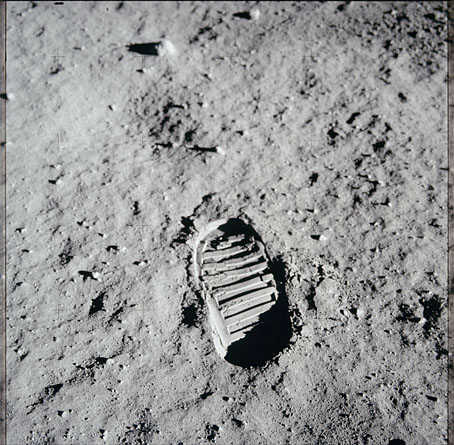
moon.jpg

AS11-40-5877 (1969).

• A minimum of Moon-related links this week because this is a subject I always return to. Previous links to NASA’s photo archives are now redundant after they changed their website but the archive of photos from the Apollo missions are currently hosted on Flickr…while Flickr lasts, anyway. The Albums section features whole film rolls from each of the missions.

• Mixes of the week: Stephen O’Malley presents In Session: Richard Pinhas (a re-posting of a mix from last year), and The Ivy-Strangled Path Vol. XVII by David Colohan.

• Living With The Human Machines: experimental artist Sarah Angliss speaks to Matthew Neale about the cyborgs, dummies and ghosts that populate her work.

• On And On And On: A Guide to Generative Electronic Music. Related: Deconstructing Brian Eno’s Music for Airports.

• At Dennis Cooper’s: Jesse Bransford presents…A List of Grimoires for the Twilight of the Age of the Book.

A Dandy in Aspic exclusive: Paul Gallagher interviewed cult author Derek Marlowe in 1984.

• From Ted Hughes to HG Wells: Jeanette Winterson picks the best books about the Moon.

• Tate acquires vast archive of British surrealist Ithell Colquhoun.

• At Greydogtales: Ten supernatural stories which stay with you.

• Emptyset turn to machine learning on new album Blossoms.

• Paul Grimstad on the absolute originality of Georges Perec.

• Valerie Stivers on cooking with Bruno Schulz.

• Blown out ’77: in the studio with Suicide.

Astronauts on record covers.

Back Side Of The Moon (1991) by The Orb | Moonshot (1999) by Hallucinator | Under The Moon (2019) by Brian Eno with Daniel Lanois & Roger Eno

Weekend links 471

maclean.jpg

Pink Floyd, Lee Michaels, Clear Light (1967) by Bonnie MacLean.

• Electronic musician Mort Garson has been subject to a revival of interest recently, with reissues of his works as Ataraxia (The Unexplained), and Lucifer (Black Mass). The latest reissue is Mother Earth’s Plantasia (1976), an album released under Garson’s own name, and one of several works of plant mysticism from the 1970s (see Stevie Wonder’s Journey Through The Secret Life Of Plants, and Green by Steve Hillage).

• “It is striking how much of this work sounds like a missing link from the art world to the popular groups of the time, such as the Detroit techno pioneers Cybotron and the Japanese electro legends Yellow Magic Orchestra.” Geeta Dayal on the reconfigured Speak & Spell machinery of Paul DeMarinis.

The cost of free love and the designers who bore it: Madeleine Morley meets the women of psychedelic design.

For the transhumanist anarchist Wilson, the neurological relativism revealed by his own learning and personal deprogramming experiments called for a form of ‘guerrilla ontology’ that lampooned, rejected and transmitted much needed interference into the ‘reality tunnels’ that attempt to control much of contemporary society and individual behaviour. In the Schrödinger’s Cat Trilogy, characters are repeatedly placed in positions of cognitive dissonance, where they are forced to reevaluate their own belief systems due to experiences that they are unable to accommodate.

Sean Kitching on the 40th anniversary of Robert Anton Wilson’s Schrödinger’s Cat Trilogy

• They said books were dead, they were wrong: Adrian Shaughnessy on a decade of Unit Editions.

• Mixes of the week: Xianedelica by Jesús Bacalão, and Kosmische Mix By Tarotplane.

• Swinging 60s surrealist Penny Slinger: “Collectors thought I came with the art”.

• Cabaret Voltaire: Chance Versus Causality (Teaser).

Luc Sante on postcards of American violence.

• At Dennis Cooper’s: Peter Whitehead Day.

Computerwelt (1981) by Kraftwerk | Speak And Spell (1984) by Christina Kubisch | Time Space Transmat (1985) by Model 500

Weekend links 470

genso.jpg

A rail station in ruins by Tokyo Genso. From a series of views of Tokyo showing a ruined and abandoned city.

• Old music technology of the week: The EKO ComputeRhythm, a programmable drum machine from 1972 used by Chris Franke (who didn’t like the sounds so he used it to trigger other instruments), Manuel Göttsching (the rhythms on New Age Of Earth), and Jean-Michel Jarre (on Equinoxe); and Yuri Suzuki‘s digital reconstruction of Raymond Scott’s Electronium.

• At Dennis Cooper’s: Spotlight on…Ishmael Reed Mumbo Jumbo (1972), and DC’s favourite fiction, poetry, non-fiction, film, art, and internet of the year so far. Thanks again for the link here!

• “Pauline told her to shove her shyckle up her khyber.” Philip Hensher on the origins and revival of Polari, the secret gay argot. Related: a Polari word list, plus other links.

In Star, Mishima fuses his major theme of the mask, the public role all humans are destined to play out, with the theme of suicide, an act which Mishima considered a work of art. All of his work is punctuated by suicide, and it is peopled with masks, with people knowing they are nothing but masks, who are aware that the center doesn’t hold because there is no center, that character is a flowing fixture, a paradoxical constancy and a definite variable, always.

Jan Wilm on Star, a novella by Yukio Mishima receiving its first publication in English

• “How have these places managed to transform from monuments to atrocity and resistance into concrete clickbait?” Owen Hatherley on the popularity of spomeniks.

• The late George Craig on translating the scrawl of Samuel Beckett’s letters (written in French) into coherent English.

• Outsider Literature, Part 1: a Wormwoodiana guide by RB Russell.

• Mix of the week: Secret Thirteen Mix 291 by Arturas Bumsteinas.

Symbiose, a split album by Prana Crafter and Tarotplane.

Robby Müller’s Polaroids

Apollo 11 in Real-time

Tokyo Shyness Boy (1976) by Haruomi Hosono | Tokyo (1979) by Jean-Claude Eloy | Tokyosaka Train (2002) by Funki Porcini

Weekend links 469

X.jpg

X from Theodore Howard’s ABC (1880) by Theodore Howard.

• “[Parade] has everything: joy and sadness, get-down and wistfulness, mourning and melancholia, group funk and Debussy interludes, echoes of Ellington, Joni, film music, chanson. It’s a perfectly realised whole.” Ian Penman on the enigmas and pleasures of Prince.

• “Mescaline reads like the culmination of a lifetime’s wanderings in the very farthest outposts of scientific and medical history.” Ian Sansom review’s Mike Jay’s history of the psychedelic alkaloid.

• The Day the Music Burned by Jody Rosen: “It was the biggest disaster in the history of the music business—and almost nobody knew. This is the story of the 2008 Universal fire.”

This willing constriction of intellectual freedom will do lasting damage. It corrupts the ability to think clearly, and it undermines both culture and progress. Good art doesn’t come from wokeness, and social problems starved of debate can’t find real solutions. “Nothing is gained by teaching a parrot a new word,” Orwell wrote in 1946. “What is needed is the right to print what one believes to be true, without having to fear bullying or blackmail from any side.” Not much has changed since the 1940s. The will to power still passes through hatred on the right and virtue on the left.

George Packer on what George Orwell’s Nineteen Eighty-Four means today

• Having spent the past week watching Jacques Rivette’s 775-minute Out 1, this interview with Rivette from 1974 was of particular interest.

• At Dangerous Minds: Donald Sutherland as “a sperm-filled waxwork with the eyes of a masturbator” in Fellini’s Casanova.

The Adventures of the Son of Exploding Sausage (1969): the Bonzo Dog Band getting it untogether in the country.

• Dark, velvety dark: Nabokov’s discarded ending to Camera Obscura, introduced by Olga Voronina.

• “Spotify pursues emotional surveillance for global profit”, says Liz Pelly.

• Mix of the week: Then Space Began To Toll by The Ephemeral Man.

• An interview with master of horror manga Junji Ito.

• Announcing the Arthur Machen Essay Prizes.

• RIP film-maker and author Peter Whitehead.

X is for…

X Offender (1976) by Blondie | X-Factor (1981) by Patrick Cowley | X-Flies (1997) by Mouse On Mars