Raoul Servais: Courts-Métrages

servais.jpg

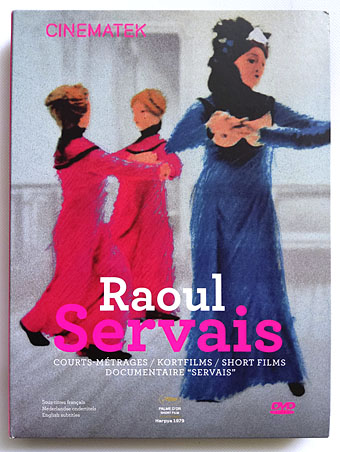
“Courts-métrages”, the French term for short films, is one of those phrases like “bande dessinée” that I prefer to its English equivalent. Among the weekend’s viewing was this double-disc DVD release devoted to the animated films of the Belgian director Raoul Servais. Some of the films are very familiar and have been the subject of previous posts, but the set comprises 14 films in total, and includes many I’d not seen before. Like Jan Švankmajer, Servais is generally the writer/director of his films rather than the animator which accounts for the great variety of graphic styles, although both directors helped animate their early works. The Servais art styles range from the flat UPA-derived idiom of the 1950s, through a variety of drawing techniques, to the later films which deploy “Servaisgraphy”, a process that combines live action and animation with drawn or photographed backgrounds. The last two films in the collection use digital technology.

harpya.jpg

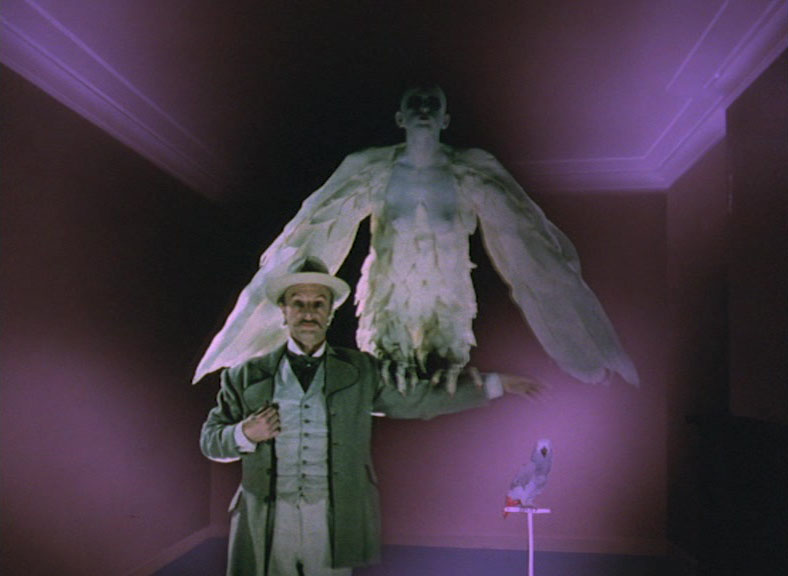
Harpya.

If there’s a common thread to this oeuvre it would be the Belgian brand of Surrealism, which might seem like a lazy comparison when so much animation can be described as superficially “surreal”. In the case of Servais, however, the connection is made explicit in Nocturnal Butterflies, a film dedicated to the Surrealist painter Paul Delvaux, whose paintings also inspired the director’s flawed feature film, Taxandria (1994). The Servais masterwork, Harpya, which won a Cannes Palme d’Or for best short film, is Surrealist to the tips of its feathers, a dark and absurd dream that’s a world away from his moralistic early works. One of the films I’d not seen before, November Diversion, resembles a Švankmajer live-action short, a wordless piece about a man trying to escape from an automobile cemetery. All the shorts have been restored by Cinematek, the Belgian film archive. I ordered my DVDs from Potemkine, Paris.

Contents
Disc 1: Harbour Lights (1960) / November Diversion (1962) / The False Note (1963) / Chromophobia (1965) / Sirene (1968) / Goldframe (1969) / To Speak or Not To Speak (1970) / Operation X-70 (1971) / Pegasus (1973) / Halewyn’s Song (1976) / Harpya (1979) / Nocturnal Butterflies (1998) / Atraksion (2001) / Tank (2015)
Disc 2: Servais (2018), a 60-minute documentary by Rudy Pinceel

Previously on { feuilleton }
• Papillons de Nuit, a film by Raoul Servais
• Sirene by Raoul Servais
• Harpya by Raoul Servais
• Taxandria, or Raoul Servais meets Paul Delvaux

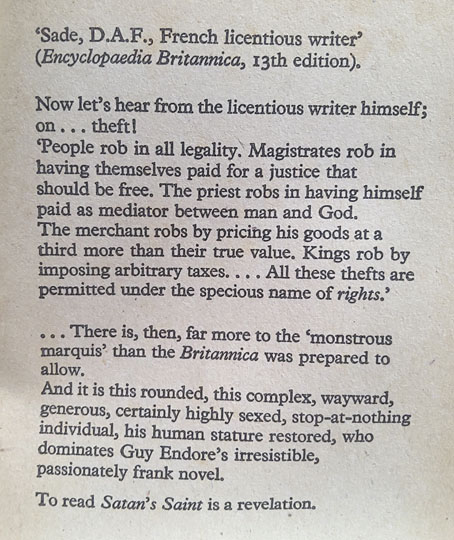
Satan’s Saint

endore1.jpg

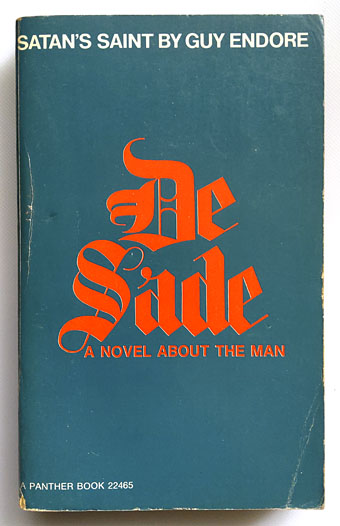
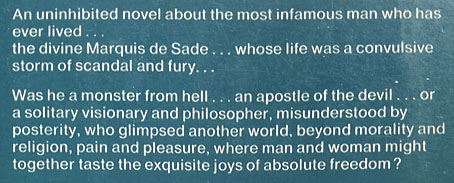
Digging in a box for an errant paperback turned up this volume which I’ve owned for years but never read. Having recently watched Jan Švankmajer’s Lunacy, which has a Sade-like character among its cast, I thought I should give it a proper look. Sade’s irreligious and libertine philosophies haunt the Surrealist world, hence Švankmajer’s interest, Jean Benoît’s performance art and so on. Surrealism didn’t have any saints but it did maintain a pantheon of precursors, with Sade accorded the status of “Genius of Wheels” (ie: revolution) in the Surrealist deck of playing cards.

endore2.jpg

Guy Endore (1900–1970) wasn’t a genius, a satanist or a saint but he was an interesting character, an American writer best known today for The Werewolf of Paris, another novel I own and have yet to read. He was a vegetarian and a socialist at a time when both these pursuits were regarded with suspicion or outright hostility (his Communist sympathies later caused him to be placed on the Hollywood blacklist). He wrote a great deal of historical fiction—in addition to Satan’s Saint there are novels based on the lives of Casanova, Voltaire and Shakespeare. And his Hollywood credits include work on scripts for Tod Browning (Mark of the Vampire, The Devil-Doll), writing the source novel (Methinks the Lady) that became Otto Preminger’s psychological film noir, Whirlpool, and, with John Balderstone, adapting Maurice Renard’s The Hands of Orlac into the screenplay that became Peter Lorre’s Hollywood debut, Mad Love. The latter is a great film that I’d love to see again. Satan’s Saint was first published in 1965. This Panther edition appeared in 1967. Now I just have to find the time to read it…

endore3.jpg

Continue reading “Satan’s Saint”

Weekend links 526

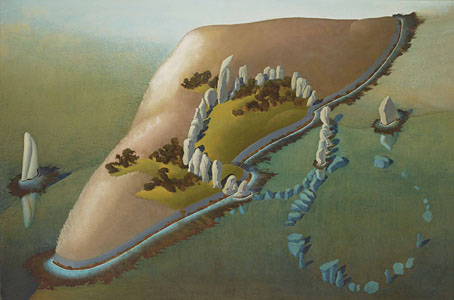
colquhoun.jpg

La Cathédrale Engloutie (1952) by Ithell Colquhoun.

• Many of the recent lists of “where to start with the music of [x]” aren’t filling an urgent requirement, but in the case of Sun Ra—whose discography runs to 95 albums—any guide is a useful one: Sean Kitching chooses 10 recordings from the Ra galaxy. I’m not unacquainted with Sun Ra’s music but there’s so much of it that almost all these suggestions are news. Related: Namwali Serpell on the life and work of a cosmic visionary.

• Coming soon from Strange Attractor, Ithell Colquhoun: Genius of The Fern Loved Gulley by Amy Hale, the first book-length study of the life and work of the British Surrealist and occult artist.

• I doubt I’ll get to see it but I’m pleased to know that the prematurely shuttered Aubrey Beardsley exhibition is returning to Tate Britain. You’ll need a Decadent face-mask.

• And speaking of music lists, Alexis Petridis compiles a ranking of all the songs by a little-known post-punk band from Manchester.

• The Last Arcadian (Process Mix): more psychotropic nougat from Moon Wiring Club.

• Kill Me Again… Ken Hollings on Ennio Morricone and the music of the future.

• Mervyn Peake‘s visual archive has been acquired by the British Library.

• Anitra Pavlico on the fantastic world (and music) of Maurice Ravel.

• Stanley Stellar‘s photos of the New York gay scene in the 1980s.

• At Dennis Cooper’s: Fetish.

• RIP Judy Dyble.

• Wikidelia

• Chelsea Morning (1968) by Fairport Convention | I Talk To The Wind (1968) by Giles, Giles & Fripp feat. Judy Dyble | Morning Way (1970) by Trader Horne

Weekend links 524

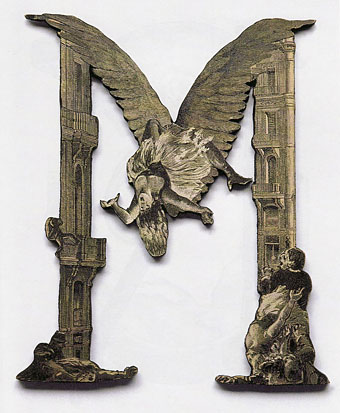
heisler.jpg

Letter M from Abeceda (1942) by Jindrich Heisler.

• At the BFI: Matthew Thrift chooses 10 essential Ray Harryhausen films. “This is, I can assure the reader, the one and only time that I have eaten the actors. Hitchcock would have approved,” says Harryhausen about eating the crabs whose shells were used for Mysterious Island. Meanwhile, Alfred Hitchcock himself explains the attraction and challenges of directing thrillers.

“Although largely confined to the page, Haeusser’s violent fantasies were even less restrained, his writings littered with deranged, bloodthirsty, scatological scenarios.” Strange Flowers on Ludwig Christian Haeusser and the “Inflation Saints” of Weimar Germany.

• Death, Pestilence, Emptiness: Putting covers on Albert Camus’s The Plague; Dylan Mulvaney on the different design approaches to a classic novel.

• A trailer (more of a teaser) for Last and First Men, a film adaptation of Olaf Stapledon’s novel by the late Jóhann Jóhannsson.

• At Dennis Cooper’s: Spotlight on…James Purdy: The Complete Short Stories of James Purdy.

• Al Jaffee at 99: Gary Groth and Jaffee talk comics and humour.

• Steven Heller on Command Records’ design distinction.

• Czech Surrealism at Flickr.

• Sisters with Transistors.

• Solitude by Hakobune.

• Mysterious Semblance At The Strand Of Nightmares (1974) by Tangerine Dream | Mysterious Traveller (Dust Devils Mix) (1994) by System 7 | The Mysterious Vanishing of Electra (2018) by Anna von Hausswolff

Kenneth Anger’s Maldoror

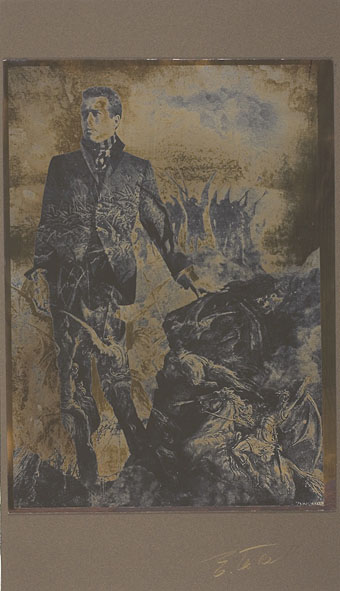
teske.jpg

Kenneth Anger, Topanga Canyon, Composite with Gustave Doré Engraving (1954) by Edmund Teske.

Les Chants de Maldoror, 1951–1952.
16mm; black and white; filmed in Paris and Deauville.

With a hand-held 16mm camera I shot my first series of short haiku. This was my apprenticeship in the marvels that surround us, waiting to be discovered, awake to knowledge and life and whose magical essence is revealed by selection. At 17, I composed my first long poem, a 15 minute suite of images, my black tanka: Fireworks.

I had seen this drama entirely on the screen of my dreams. This vision was uniquely amenable to the instrument that awaited it. With three lights, a black cloth as décor, the greatest economy of means and enormous inner concentration, Fireworks was made in three days.

An example of the direct transfer of a spontaneous inspiration, this film reveals the possibilities of automatic writing on the screen, of a new language that reveals thought; it allows the triumph of the dream.

The wholly intellectual belief of the “icy masters” of cinema in the supremacy of technique recalls, on the literary level, the analytical essays of a Poe or the methods of a Valéry, who said: “I only write to order. Poetry is an assignment.”

At the opposite pole to these creative systems there is the divine inspiration of a Rimbaud or a Lautréamont, prophets of thought. The cinema has explored the northern regions of impersonal stylization; it should now discover the southern regions of personal lyricism; it should have its prophets.

These prophets will restore faith in a “pure cinema” of sensual revelation. They will re-establish the primacy of the image. They will teach us the principles of their faith: that we participate before evaluating. We will give back to the dream its first state of veneration. We will recall primitive mysteries. The future of film is in the hands of the poet and his camera. Hidden away are the followers of a faith in “pure cinema.” even in this unlikely age. They make their modest “fireworks” in secret, showing them from time to time, they pass unnoticed in the glare of the “silver rain” of the commercial cinema. Maybe one of these sparks will liberate the cinema….

Angels exist. Nature provides “the inexhaustible flow of visions of beauty.” It is for the poet, with his personal vision, to “capture” them.

Kenneth Anger—Modesty and the Art of Film, Cahiers du Cinéma no. 5, September 1951

* * *

Little is known about Anger’s activities during the mid-1950s. By 1958 he still had not been able to complete any films in Paris. He held on to his hope of completing Maldoror. His stack of preproduction notes and sketches had grown larger and he had plans to photograph nudes in a graveyard. Several Parisian Surrealists threatened to hand Anger’s head to him if he shot Maldoror. The book’s fluid, dreamlike imagery had been one of the trailblazers of Surrealism, and his detractors felt that a gauche American with a reputation for pop iconography and bold homosexual statement would debase a sacred text.

Bill Landis—Anger: The Unauthorized Biography of Kenneth Anger, 1995

* * *

I discovered the book when I was quite young. I loved it, put a lot of passion into it. I found people to play the parts. I found settings, gaslit corners, places still had the romantic look of a Second Empire. It was a terrific ambition to make this epic film-poem. I found ways to translate the text’s extraordinary images. I planned to film a mid-nineteenth century story taking place in twentieth century Paris. I filmed “the hymn to the ocean” on the beach at Deauville, with Hightower and members of the Marquis de Cuevas Ballet. They danced in the sea; tables were placed beneath the water line so the dancers could stand on their points. It looked as though they were standing on waves. The people who called themselves “Surrealists” were furious—this group of punks threatened me—they didn’t want a Yank messing round with their sacred text. I just told them to go to hell! I also managed to film the war of the flies and pins. I put bags of pins and dozens of flies into a glass container; revolved the container and filmed in close-up. As the pins dropped the flies zigzagged to escape. In slow motion an impressive image.

Kenneth Anger—Into the Pleasure Dome: The Films of Kenneth Anger, edited by Jayne Pilling & Michael O’Pray, 1989

* * *

The sections of the film that were completed [are] stored in the Cinémathèque Française, but [their] exact whereabouts in the archive is unknown, with no images from the film being currently available for reproduction.

Alice L. Hutchinson—Kenneth Anger, 2004

Previously on { feuilleton }
• Donald Cammell and Kenneth Anger, 1972
• My Surfing Lucifer by Kenneth Anger
• Inauguration of the Pleasure Dome: The Eldorado Edition
• Brush of Baphomet by Kenneth Anger
• Anger Sees Red
• Kenneth Anger’s Hollywood Babylon
• Lucifer Rising posters
• Missoni by Kenneth Anger
• Anger in London
• Arabesque for Kenneth Anger by Marie Menken
• Edmund Teske
• Kenneth Anger on DVD again
• Mouse Heaven by Kenneth Anger
• The Man We Want to Hang by Kenneth Anger
• Relighting the Magick Lantern
• Kenneth Anger on DVD…finally