Weekend links 41

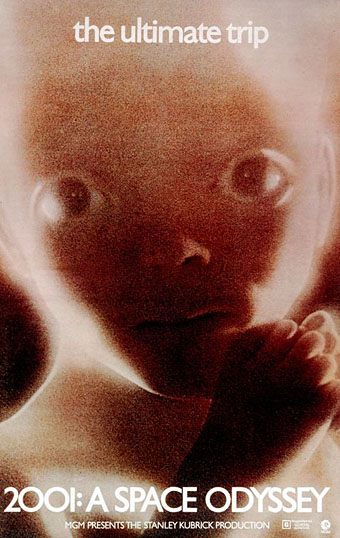
2001.jpg

Being an inveterate Kubrickphile I was naturally pleased to hear that some of the excised scenes from 2001: A Space Odyssey have survived in a watchable form, even though I’m often ambivalent about the restoration of such material. While it was good to see at last the missing French compound sequence of Apocalypse Now, for example, that sequence added nothing to the film as a whole and its inclusion was spoiled by music which Coppola used for sentimental reasons. In Kubrick’s case, there’s a longer version of The Shining which the director allowed to be screened on UK TV in the 1980s but, again, most of the unseen material was incidental and added nothing to the film.

• Related: Roger Ebert’s review of 2001 from 1968; Olivier Mourgue, designer of the Djinn chairs seen in the film’s space Hilton scenes; Magnificent obsession, a Vanity Fair piece from 2002 about the search for the missing scenes from The Magnificent Ambersons. Meanwhile, the trailer for Terrence Malick’s new film, The Tree of Life, features some surprising cosmic moments among its scenes of family life.

The separate history [of gay and lesbian artists] has been kind of edited out of art history but in fact art history is very much interwoven with gay or queer history. In a way the two can’t be separated. America doesn’t like anything uncomfortable. I find in my dealings with museums that if I ask a question and the answer is ‘no,’ they don’t answer. If the answer is ‘yes,’ I get these amazingly enthusiastic responses. I find it sort of strange sometimes, not being American myself. In a way what they’re doing is editing out the uncomfortable. David Wojnarowicz’s work can make you uncomfortable — and they’ve edited out that possibility in the show.

Canadian artist AA Bronson (see below).

• More on the Smithsonian versus David Wojnarowicz affair: Frank Rich examined the train of events in a comment piece, Gay Bashing at the Smithsonian, for the NYT; the Andy Warhol Foundation threatened to withdraw their funding for future Smithsonian events unless the work is reinstated, the Robert Mapplethorpe Foundation will be doing the same; another artist featured in the National Portrait Gallery exhibition, AA Bronson, requested that the gallery withdraw his work from the show in protest; the NPG refused, citing a contractual arrangement; among the increasing number of galleries showing support for Wojnarowicz, Tate Modern, London, will host an event in January which will feature a screening of the contentious video; lastly, there’s a protest event in New York City today (Sunday, December 19th) at 1.00pm, details here.

• More censorship in America: Jeffrey Deitch Censors Blu’s Political Street Art Mural. In the book world, writer Selena Kitt finds her erotic incest stories removed from Amazon’s Kindle store. Other authors, Jess C Scott and Esmerelda Green, have had their erotic titles removed from the store. Selena Kitt says:

When some of my readers began checking their Kindle archives for books of mine they’d purchased on Amazon, they found them missing from their archives. When one reader called to get a refund for the book she no longer had access to, she was chastised by the Amazon customer service representative about the “severity” of the book she’d chosen to purchase.

Can you imagine buying a paper book and the bookstore then paying you a visit to forcibly reclaim it? To date no adequate explanation from Amazon has been forthcoming but they’ll be happy to sell you a Kindle edition of the Marquis de Sade’s The 120 Days of Sodom.

m51.jpg

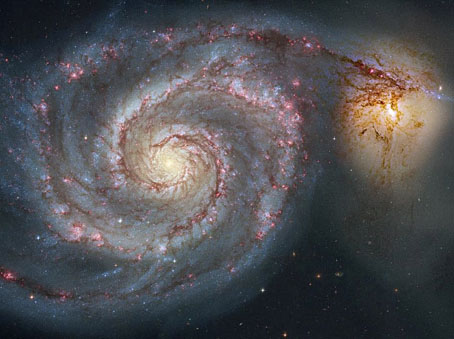
Galaxy M51 aka The Whirlpool. One of the Top Astronomy Pictures of the Year from a selection by Bad Astronomy. Photo by the Hubble Heritage Team & Robert Gendler.

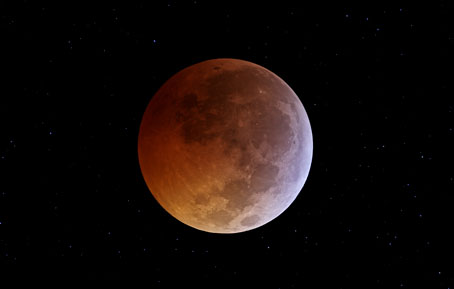
• More cosmic events: there’ll be a total lunar eclipse this coming Monday, visible in much of the Northern Hemisphere.

• “Heterosexuality is the opiate of the masses!” The Raspberry Reich (2004), a film by Bruce LaBruce.

New editions of Borges poetry. Fine so long as you accept that the translations can never truly satisfy.

• Just the thing for the winter weather, illustrations for Pushkin’s Queen of Spades from 1966.

• Another Ghost Box download: Radio Belbury Programme 1: “Holidays & Hintermass”.

Monsters, Inc: Arcimboldo and the Wunderkammer of Rudolf II.

• Silent Porn Star found some burlesque lamps.

Giant airship powered by algae.

Space Oddity (1969) by David Bowie.

Weekend links 39

galas.jpg

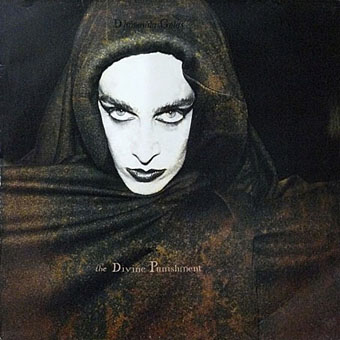
The Divine Punishment (1986) by Diamanda Galás. Design by Paul White/Me Company.

What the Catholic League and certain members of the House presumably wish to remove from their consciousness is thirty years of death sentences handed down to their parishioners and citizenry, who were told not to wear condoms, and the mistreatment of those stigmatized as miscreants and sinners by their viral status and/or homosexuality and/or status as drug addicts.

• Diamanda Galás responds in her usual forthright manner to the censoring of David Wojnarowicz’s film (and her music which accompanied it) by the Catholic League and members of the House of Representatives earlier this week. Related: Demonstrators gather to protest removal of Wojnarowicz art from NPG | Is the censored David Wojnarowicz video really ‘anti-Christian’? | Vengeance is hers: a conversation with Diamanda Galás.

Update: Hide/Seek: Too shocking for America. One of the exhibition curators speaks out against the censorship.

“Their attitude is: ‘Next time you think of writing about sex, don’t,'” said Susie Bright, who was the editor of the Best American Erotica anthology series for 15 years. “I can’t think of any other fundamental human experience that writers would be encouraged to keep to themselves.” Melissa Katsoulis, a literary reviewer for the Times of London, certainly seemed to conform to Bright’s impression when asked to comment on the award by the BBC: “Sex is a subject best avoided altogether,” she said. “If I was writing a novel, I wouldn’t attempt to write it except in the most Victorian and prim way, because it’s awful. It’s a cliché, but the moments of genuine frisson in books are when hardly anything happens.” Speak for yourself, missy.

Laura Miller dissing the Literary Review‘s annual Bad Sex Award. Good to find more voices being raised against this drivel and the admission of failure which it implies.

The latest offbeat experiment from filmmaker David Lynch: pop singles. He gets crazy with the vocoder here. Related: David Lynch talks new music projects.

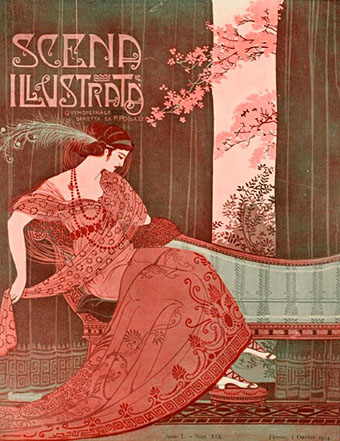
scenaillustrata.jpg

Scena Illustrata (1914). Cover by Ezio Anichini (?). Via this set of magazine covers from 1880–1920.

• Tumblrs of the week: Heart Killer and Pretty Pictures from the Paleo-Future Blog.

The Big Picture’s 2010 Hubble Space Telescope Advent Calendar.

National Geographic‘s Best Underwater Views of 2010.

A seasonal gift from a famous Northampton resident.

Paris versus New York: A Tally of Two Cities.

This is your browser on drugs.

Double-Barrel Prayer (1988) by Diamanda Galás, with a video directed by the late Peter Christopherson.

Weekend links 38

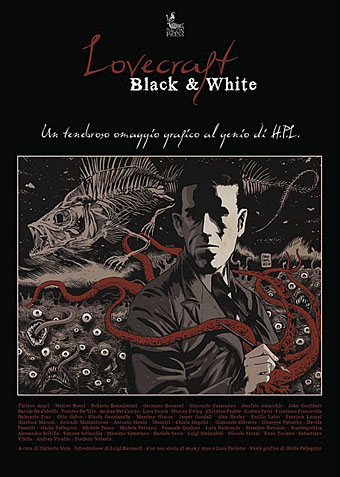
lovecraftbaw.jpg

Arriving in the post this week was Lovecraft Black & White, an Italian book whose contents are spelled out in the title, black-and-white illustrations based on the work of the Providence master. Among the featured works is my 1999 rendering of Azathoth. There’s more about the book here and here.

Also on the work front, one of the books I designed interiors for a couple of months back was The Search for Philip K. Dick, a sombre biography and memoir by Anne R. Dick, the author’s third wife. Ms Dick discussed the book with the NYT a few days ago. The design was mostly straightforward layout but I did make a quick ASCII portrait of PKD from one of Anne Dick’s photos.

Farewell, the documentary film about Lady Grace Drummond-Hay’s flight around the world in the Graf Zeppelin, can be viewed here.

• “I personally think that the pages look better on the iPad than they do in real life.” Artist Tom Phillips again on the Humument iPad app.

The Birds Are Flying Elsewhere: singer/songwriter Linda Perhacs. Related: Parallelograms – A Short Film About Linda Perhacs.

St Eia, guitar improvisations by Zali Krishna, “Keywords: jazzgazing; entropy circus; st ives; cornwall; psychogeography”.

Moon Wiring Club and DD Denham: music for children, by children. Related: Moon Wiring Club’s Jayston Mix.

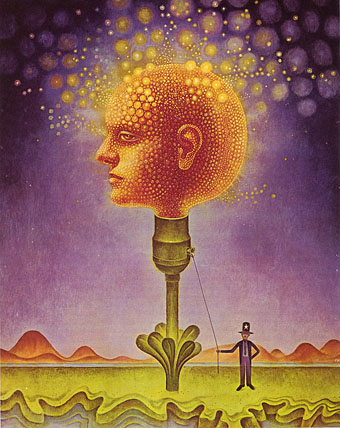
kirkland.jpg

The 1970s was another country, they did things differently there. One of a number of illustrations for science textbooks by Phil Kirkland at A Journey Round My Skull.

• “Fellatio has become a recurrent theme in your work hasn’t it, I say.” Alan Bennett sheds some inhibitions.

Talking To The Sci-Fi Lord: Regenerations & Ruminations With Michael Moorcock.

Time and the Gods (1906) by Lord Dunsany, illustrated by Sidney Sime.

City of Silence, a calendar for 2011 by Thom Ayres.

Scientists glimpse universe before the Big Bang.

• Photography by Josef Sudek (1896–1976).

Aurora photo gallery, November 2010.

The Last Tuesday Society.

Parallelograms (1970) by Linda Perhacs | Six AM (1979) by Thomas Leer & Robert Rental | Rockin’ Back Inside My Heart (1989) by Julee Cruise.

Weekend links: Hodgson edition

hodgson.jpg

Masters of Terror, Vol 1, Corgi Books, 1977. No illustrator credited.

It was all happening this week so there’s a lot to get through. Are you ready? Deep breath…

For ye Hogge doth be of ye outer Monstrous Ones, nor shall any human come nigh him nor continue meddling when ye hear his voice, for in ye earlier life upon the world did the Hogge have power, and shall again in ye end.

The Hog (c. 1910) by William Hope Hodgson.

• “The Hog is Hodgson’s most nakedly Jungian setpiece; fetid waves of archetypes sweep repeatedly against the thin walls of quotidian reality.” Thus Iain Sinclair, writing in a 1991 afterword to Carnaki the Ghost-Finder which I highly recommend to both Hodgson and Sinclair enthusiasts. China Miéville dissected Hodgson’s Hog on Wednesday and a few hours later a student protest in London turned into an assault on the Tory HQ. Coincidence? Here at {feuilleton} we only offer the facts, it’s up to you to join the dots. M John Harrison approved. Of the protest, that is, not the raising of Porcine Malevolence from the Gulfs Beyond, although he might approve of that as well.

• Further Hodgsonia: Science of The Night Land: Dying Suns and Earth Energy while for real devotees there’s Andy Robertson’s Night Land site.

• “Amplifying the vibrations of the ether” for a view “beyond the limits of ordinary life”: The Fugitive Futurist (1924), a remarkable short film at the BFI’s YouTube channel in which Trafalgar Square is flooded, a monorail crosses Tower Bridge and a dirigible takes to the air over the Houses of Parliament. Also Trafalgar Square Riot (1913), a newsreel with suffragettes at the centre of a civil disturbance. Some of the critics of Wednesday’s events seem to have forgotten that women gained the vote in this country only after repeatedly smashing windows and causing trouble.

• Related to the above: How to Hex a Corporation at Arthur magazine. And let’s not forget Hakim Bey’s Occult Assault on Institutions.

ian_miller4

Cover illustration by Ian Miller (1972). The other great cover for THOTB was by Ed Emshwiller in 1962.

The wanderings of the Narrator’s spirit through limitless light-years of cosmic space and Kalpas of eternity, and its witnessing of the solar system’s final destruction, constitute something almost unique in standard literature.

HP Lovecraft reviewing Hodgson’s The House on the Borderland in Supernatural Horror in Literature.

• Lovecraft has long cast a shadow over Hodgson’s fevered visions even though words of praise like those above have done much to keep the earlier writer’s work in print. I’ve been talking for years about doing a series of illustrations for The House on the Borderland and may yet make good on that threat; never say never. Meanwhile, Rick Poyner returned to Design Observer this week pondering the challenge of non-Euclidean architecture in What does HP Lovecraft look like?

hodgson2.jpg

Druillet illustrates Hodgson (1971).

• In his latest piece of Barney Bubbles detective work, Paul Gorman discovered the identity of BB’s first design employer, the alluded to but never named Michael Tucker. More surprising for me than the Robert Brownjohn connection is that there’s now a tenuous link between Barney Bubbles and William Gerhardi.

777 classical music album covers from the collection of Dr Horst Scherg. Related: The Golden Age of Wacky Classical LP Covers — Westminster Gold and the Westminster Gold discography.

Chez Fini: Little Augury looks at the work and workplaces (and cats!) of the marvellous Leonor Fini.

• There’s yet more Lovecraft (and much else besides) in Nomad Codes, a new book from Erik Davis.

• The Irrepressibles: “They’re scared of what we’re going to do next”.

• New Scientist asks Is this evidence that we can see the future?

Of Electricity And Water: A Thomas Dolby Interview.

Jarvis Cocker talks to Brian Eno.

Fuck Yeah, Gay Vintage

Hog Callin’ Blues (1962) by Charles Mingus. Play loud and often.

Gilliam’s shaver and Bovril by electrocution

pears.jpg

Pears Soap ad, Illustrated London News, March 16, 1895.

I’ve been working feverishly this week to complete page designs for The Thackery T. Lambshead Cabinet of Curiosities which will be published next year by HarperCollins. This is a sequel of sorts to 2003’s Thackery T. Lambshead Pocket Guide to Eccentric and Discredited Diseases to which I was also a contributor and designer. Ann and Jeff VanderMeer are editing the new collection, and Jeff has posted a couple of teaser introductions to the contents here and here. Gabriel in yesterday’s comments mentioned Terry Gilliam’s animations for the Monty Python TV series, something I was reminded of today while leafing through a 1968 collection of old advertising graphics looking for suitable pictures. Victorian Advertisements was compiled by Leonard de Vries and Ilonka van Amstel, and its Pears Soap ad (above) is obviously the source of Gilliam’s animation (below) showing a man lathering his face then beheading himself with a straight razor, a gag which features in both the TV series and the first Monty Python feature film And Now For Something Completely Different.

gilliam.jpg

And Now For Something Completely Different (1971).

It’s easy to see what would have attracted Gilliam to the De Vries book when it’s filled with bizarre or grotesque ads like the Bovril one below; someone evidently decided that the meaty drink ought to be promoted via the novelty of electricity.

bovril.jpg

Bovril ad from The Graphic, Christmas number, 1891.

De Vries features many ads for electrical products, not all of them genuine or even likely:

Pseudo-science began to play the part it still plays in therapeutic advertising. Electric light was, by the end of the century, being installed in theatres and restaurants and in some private houses. To what other uses could the magnetic fluid be put? Electricity was the new magic and all kinds of quarters began to exploit its possibilities—and impossibilities. The Medical Battery Company Limited, of Oxford Street, assured the public that its Electropathic Belt had “restored thousands of sufferers to health and vigour”, and had “proved an inestimable blessing to the weak and languid”. It was particularly recommended for “weak men suffering from the effect of youthful errors”. Did the weak men in question wear the contraption in bed? Women also could benefit by it, and one is a little surprised to find this and other remedies for “female irregularities” so frankly discussed. An Electric Corset was the “Very Thing” for ladies. One can only wonder how the batteries if there were any operated. And what could possibly be meant by an “electric” towel, and how could failing sight be cured by an “eye battery”?

There’s also an Electric Hair Brush which gives “hope for the bald” without explaining how it differs from an ordinary brush. Several of the pieces in the new Lambshead volume will be exploring similarly eccentric territory. Watch this space for further details.

Previously on { feuilleton }
Portuguese Diseases
Pasticheur’s Addiction
Short films by Walerian Borowczyk