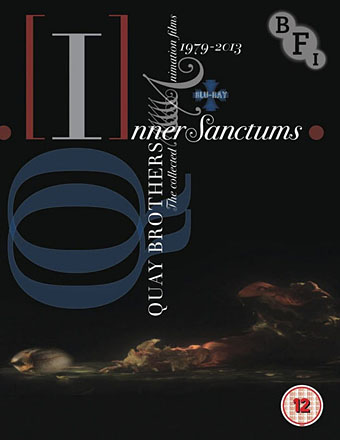
Inner Sanctums—Quay Brothers: The Collected Animated Films 1979–2013

quays.jpg

In previous posts about the Quay Brothers’ films I’ve expressed a hope that we might see a new collection from the BFI that gathers together more of their recent works. That’s what we have now in a 2-disc Blu-ray set that will be released in the UK on 10th October.
quay.jpg

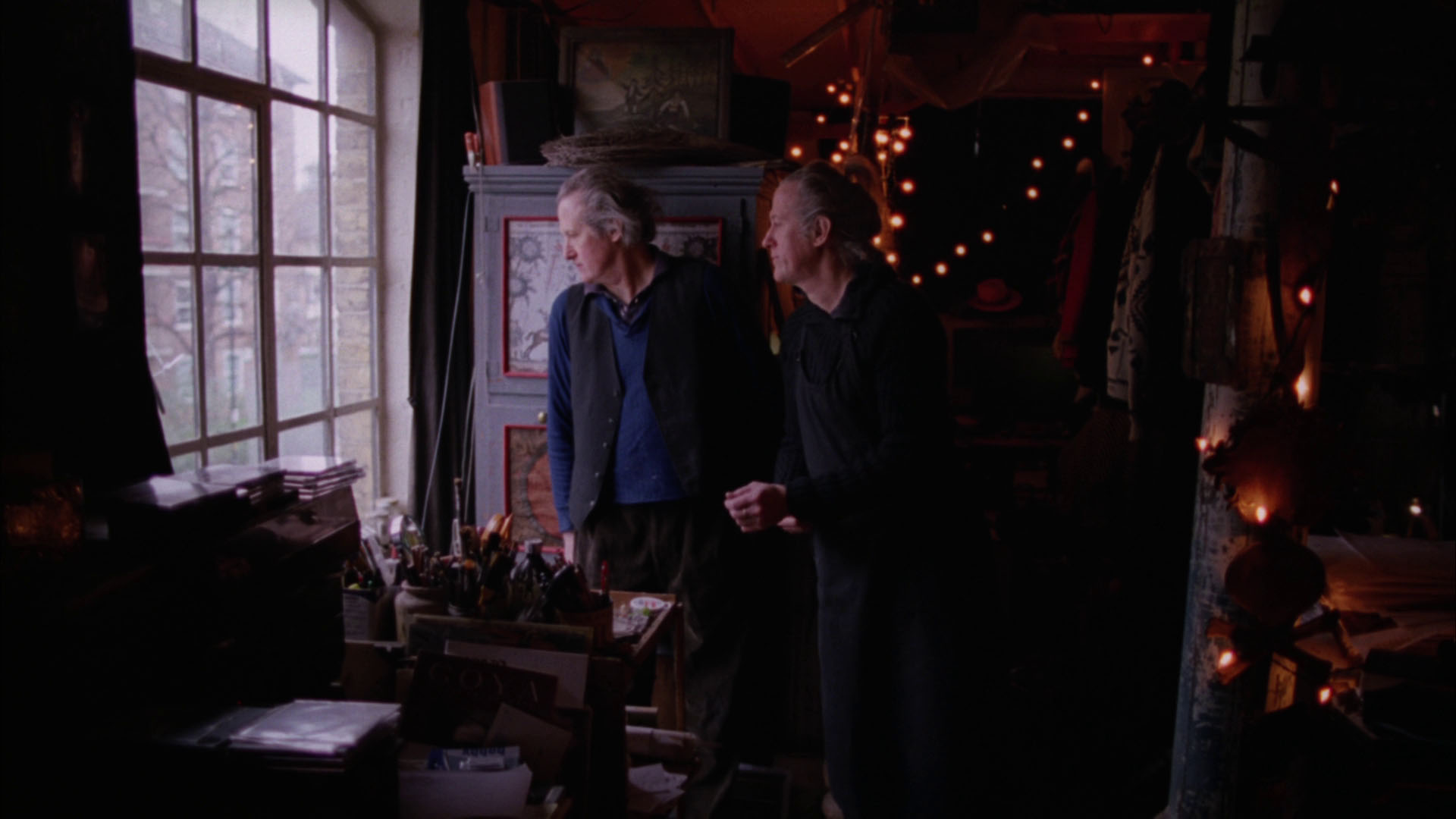
Quay (2015) directed by Christopher Nolan.

The new collection repeats the contents of the earlier BFI DVD set, The Short Films 1979–2003, while adding some of their recent commissions including Maska (2010), Through the Weeping Glass (2011), and Unmistaken Hands: Ex Voto F.H. (2013). Among the extras there’s a short portrait of the brothers, Quay (2015), directed by Christopher Nolan. This shows the Quays at work in their Southwark studio where they discuss the technical details of animation and puppet-making a little more than I’ve seen in other interviews. Nolan’s film is both beguiling and frustrating, the latter for being so inexplicably short. When I first saw Quay announced I thought it might be a feature-length documentary rather than a fleeting glimpse; the Quays have been interviewed regularly over the past few years so they’re not exactly unforthcoming. I’m hoping now that Nolan’s public enthusiasm for the brothers might at least help them to make another feature, a decade having elapsed since The Piano Tuner of Earthquakes (2005).
street1.jpg

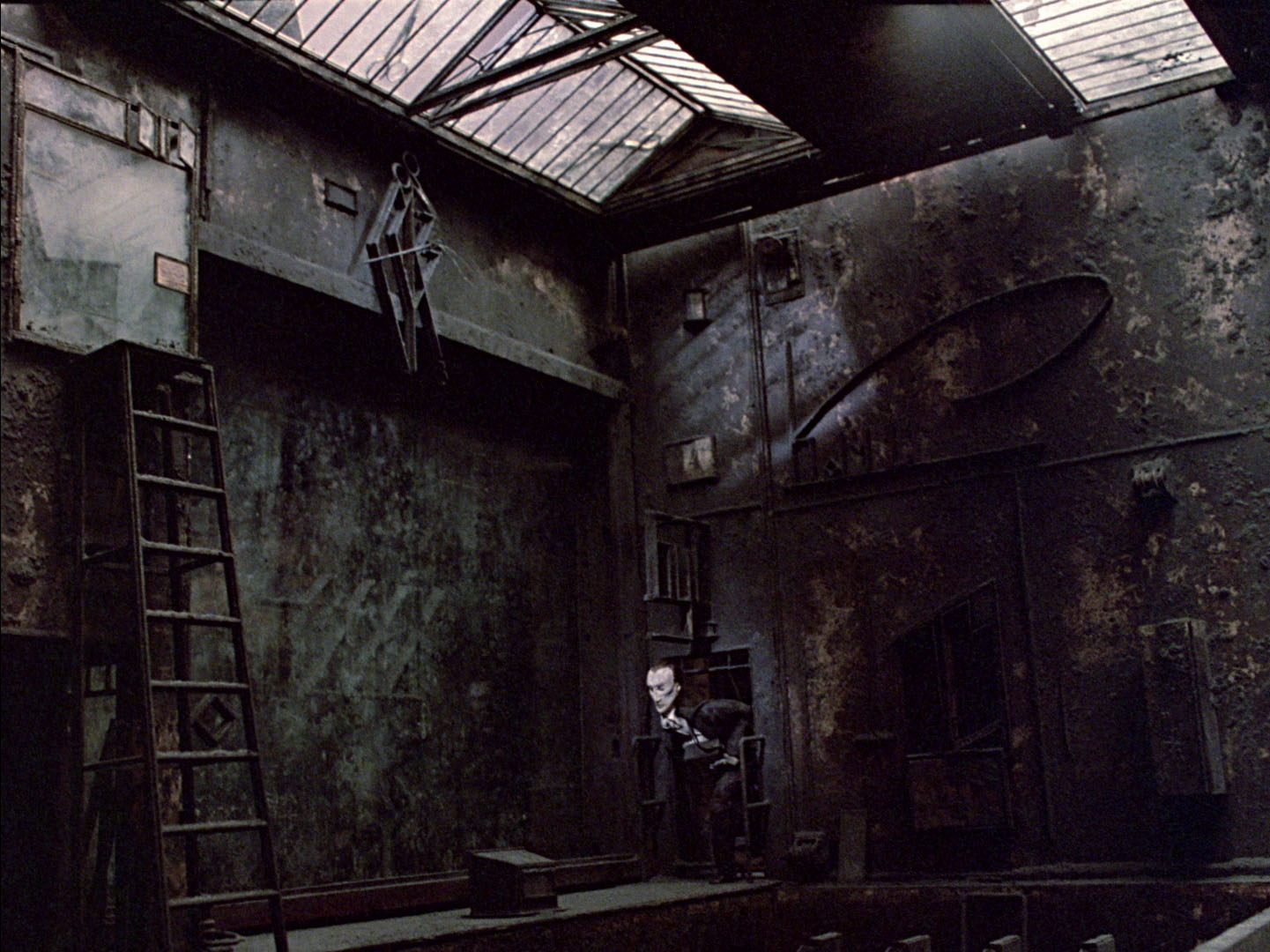
Street of Crocodiles (1986).

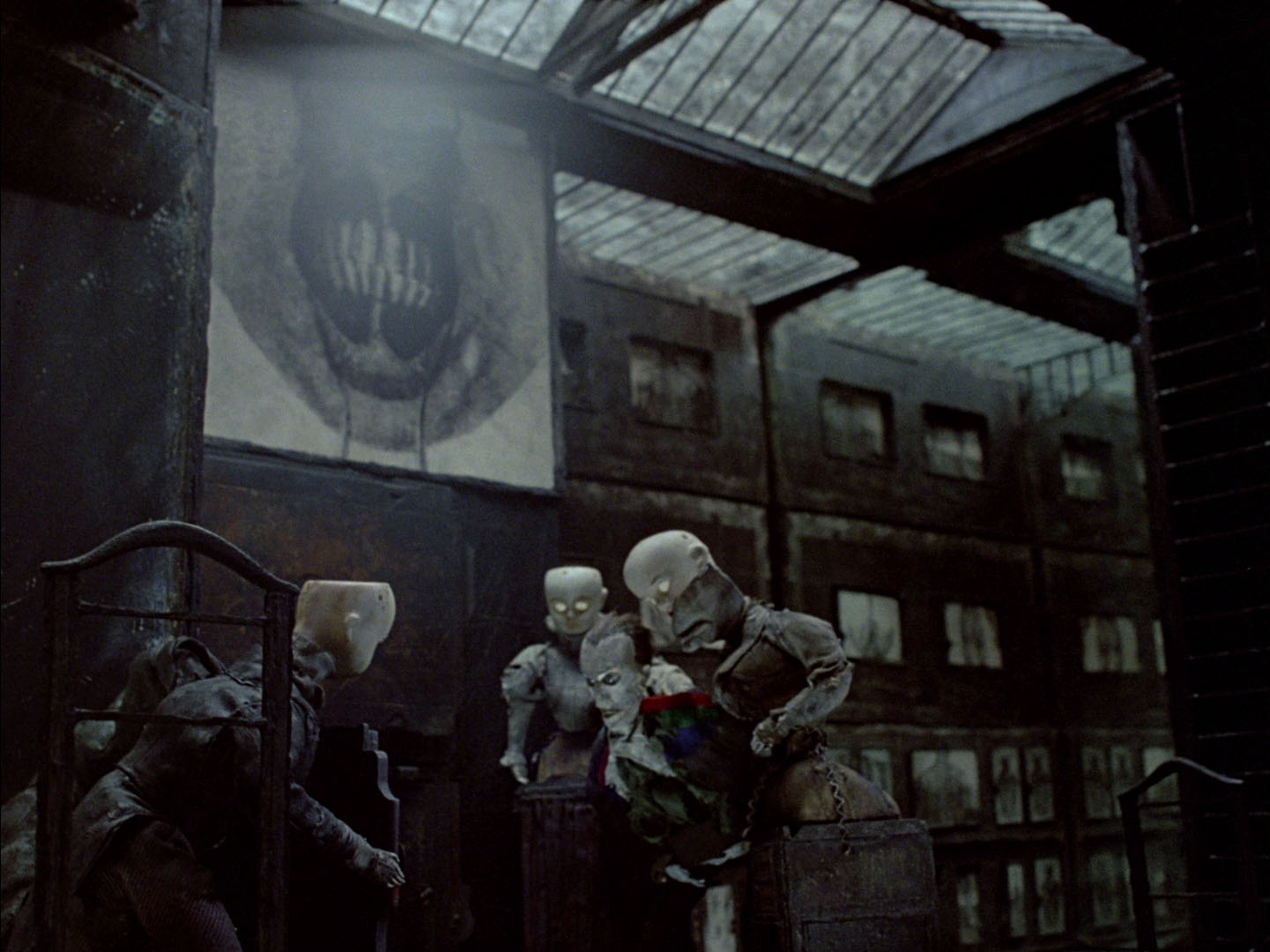
As to the films, seeing them in high-definition is certainly a plus although the earliest ones were all made in 16mm so they don’t gain a great deal. Street of Crocodiles, however, looks superb, and I found myself noticing details that I’d earlier missed despite numerous viewings. I’m disappointed that two early shorts, Igor: The Paris Years (1982) and Leoš Janáček: Intimate Excursions (1983), remain unreleased due to apparent problems with music copyrights. (See this post for YouTube links.) Also uncollected are their other music videos apart from the two produced for His Name Is Alive, together with a handful of other short pieces. (See this post for further links.)
street2.jpg

Street of Crocodiles (1986).

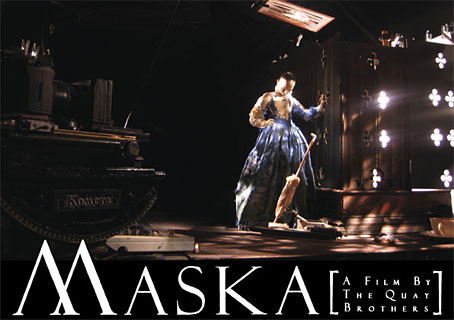
Of the longer films on the second disc, Maska has become a favourite, with its combination of a baroque science-fiction scenario (from Stanisław Lem) and a score by Penderecki. Through the Weeping Glass, a 30-minute documentary about the medical oddities housed in the Mütter Museum in the Quays’ home city of Philadelphia, is a kind of companion piece to The Phantom Museum (2003), a similar study of the Wellcome Collection in London. This is the first film the Europhile Quays have made in the US, and comes with a short documentary showing them at work on the film, and an interview about the production. I’m still getting used to their shift to digital video—I miss the grain and texture of their films—but since I’ve been working digitally myself for many years now I can’t complain if others choose to do the same.
maska1.jpg

The preview discs of the new collection came without the booklet which will be present in the package. This will include an updated Quays Dictionary by Michael Brooke (as featured in the previous BFI collection), and the 2012 “interview” by the deceased calligrapher Heinrich Holzmüller, On Deciphering the Pharmacist’s Prescription for Lip-Reading Puppets. The latter appeared in the catalogue for the Quays’ MoMA exhibition where it was printed at an eye-straining point size. I’m hoping the BFI version will be an improvement.

The Films
Nocturna Artificialia (1979)
The Cabinet of Jan Švankmajer (1984)
This Unnameable Little Broom (1985)
Street of Crocodiles (1986)
Rehearsals for Extinct Anatomies (1988)
Stille Nacht I: Dramolet (1988)
Ex-Voto (1989)
The Comb (1990)
Anamorphosis (1991)
The Calligrapher (Parts I, II, III) (1991)
Stille Nacht II: Are We Still Married? (1992)
Stille Nacht III: Tales from Vienna Woods (1993)
Stille Nacht IV: Can’t Go Wrong Without You (1994)
In Absentia (2000)
The Phantom Museum (2003)
Songs for Dead Children (2003)
Eurydice, She So Beloved (2007)
Alice in Not so Wonderland (2007)
Kinoteka Ident (2008)
Inventorium of Traces (2009)
Wonderwood for Comme des Garçons (2010)
Maska (2010)
Through the Weeping Glass (2011)
Unmistaken Hands: Ex Voto F.H. (2013)

Special features
Introduction by the Quay Brothers (2006, 20 mins)
Quay (2015, 8 mins): a film by Christopher Nolan
Quay Brothers audio commentaries for This Unnameable Little Broom, Street of Crocodiles, Stille Nacht I-III and In Absentia
The Falls [excerpt] (1980, 5 mins)
BFI Distribution ident (1991, 30 secs)
The Summit (1995, 12 mins)
No Bones About It: Quay Brothers (2010, 12 mins)
Behind the Scenes with the Quay Brothers (2013, 31 mins)
Unmistaken Hands: Ex Voto F.H. trailer (2 mins)

Elsewhere on { feuilleton }
• The Quay Brothers archive
Weekend links 327

hickjenkins.jpg

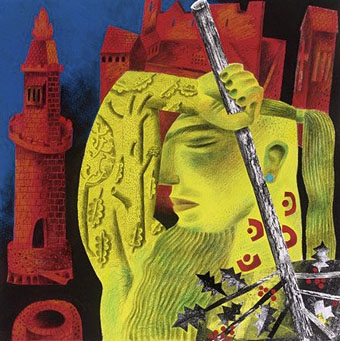
The Green Knight Arrives by Clive Hicks-Jenkins. Part of a series based on the theme of Gawain and the Green Knight.

• RIP Don Buchla, inventor of the Buchla Electronic Musical Instrument (or simply Buchla to aficionados). The early Buchlas were produced contemporaneously with the Moogs but never achieved an equivalent popularity. Morton Subotnick was an early serious player, using one of the first Buchlas to record Silver Apples Of The Moon in 1967. By coincidence, this month has seen the release of Sunergy, an album created by two Buchla enthusiasts, Kaitlyn Aurelia Smith & Suzanne Ciani, the latter having been a Buchla player for many years. Sean Hellfritsch made a 25-minute film of the pair playing their machines, while they talked about their collaboration to Danny Riley.

• Erik Davis talks to occult book-dealer Todd Pratum about rejected knowledge, growing up Californian, book synchronicities, and the loss of knowledge in the age of the Internet.

• Mix of the week (month, year, etc) is undoubtedly this 12-hour history of Spiritual Jazz. Less intimidating (and more eclectic) is an exclusive mix by Fenriz for The Wire.

• More electronica: (The Microcosm): Visionary Music of Continental Europe, 1970–1986, another quality music collection from Light In The Attic.

• Flying Saucers Are Real! is a history of 20th-century UFOdom by Jack Womack. Related: A map of the last remaining Flying Saucer Homes.

• Coming soon from the Ghost Box label, Peel Away The Ivy by The Pattern Forms. Jon Brooks gives an account of the album’s creation.

• Uri Bram meets computer scientist David Chapman to discuss the limits of formal learning, or why robots can’t dance.

• Andrew Male on Julius Eastman: the groundbreaking composer America almost forgot.

• Ship found in Arctic 168 years after doomed Northwest Passage attempt.

• Anna Cafolia on the resurgence of witchcraft in 1970s Britain.

• Welcome to the Austronesian Embassy of Anaphoria Island.

• Billy Gibbons of ZZ Top chooses some favourite records.

• A profusion of Marty Feldman links.

• The Flying Saucer Pts 1 & 2 (1956) by Buchanan And Goodman | Flyin’ Saucers Rock’nRoll (1957) by Billy Lee Riley and The Little Green Men | Flying Saucers Have Landed (1972) by Paul St. John

Weekend links 320

liefhebber.jpg

Palm Night (2016) by Nick Liefhebber.

• “Gortner includes reference to the little known Hollywood ‘sewing circles’ (code word for lesbian communities) of which Marlene became a part. This group included Ann Warner, Lili Damita, Claudette Colbert, and Dolores del Río.” Walter Holland reviewing Marlene, a “novelization” of the life of Marlene Dietrich by CW Gortner.

• “Challenges and all, Jerusalem ensures Moore’s place as one of the great masters of the English language.” Heidi MacDonald reviewing Alan Moore’s forthcoming novel. Photos of the slipcased paperback edition (a 3-volume set) appeared last week.

• “It’s unlikely that a gnawing sense of being unborn tops the neuroses of most writers these days, but I’d argue that Beckett’s Jungian insight is more commonly known today as anxiety.” Robert Fay on nihilism and the writing life.

• “So why would I be ‘great for this cover’? Good chance it’s because the book is aimed at a female audience and I am a female designer.” Jennifer Heuer on gendered book covers and being a woman designer.

• Mixes of the week: FACT mix 562 by M. Geddes Gengras, Secret Thirteen Mix 191 by Monica Hits The Ground, and a mix by Daniel Miller.

• Strange Flesh: The Use of Lovecraftian Archetypes in Queer Fiction, an ongoing series by The Punk Writer: part 1 | part 2 | part 3 | part 4.

• “For the Sake of the Prospect”: Lily Ford on the ways in which balloon flight transformed ideas about landscape in the 18th century.

• “Why did Google erase Dennis Cooper’s beloved literary blog?” asks Jennifer Krasinski.

• From Leeds to London: portraits of English cities in the 1970s by Peter Mitchell.

• Phantasm is Dune

• RIP Jack Davis

• Palm Grease (live, 1974) by Herbie Hancock & The Headhunters | Phantasm (1994) by Biosphere | Fizzy Flesh (1996) by Spacer

Weekend links 314

alderslade.jpg

Avebury Kite (2006) by David Alderslade.

• “Klaus Mann, son of Thomas Mann, author of Mephisto, was one of the first in Germany to write gay novels and plays.” Walter Holland reviews Cursed Legacy: The Tragic Life of Klaus Mann by Frederic Spotts.

• The Pale Brown Thing, a shorter/alternate version of Fritz Leiber’s supernatural masterwork, Our Lady of Darkness, is given a limited reprinting by Swan River Press next month.

• “Not only is metal not directly harmful to adolescent minds, as the thinking goes, it may actually be helpful.” Christine Ro on the reappraisal of a once-suspect musical genre.

Something of that tension between past and future is visible in Beardsley’s work. It is the art of a dying era peering, with a mixture of excitement and trepidation, into the next. For all the prancing and bravado, Beardsley’s art was really about finding something in which to believe—and if Beardsley came to believe in anything it was the deep black line. Shading held little interest for Beardsley, and color fascinated him not at all. The black line and white space were all he needed.

Morgan Meis on Aubrey Beardsley

• More of my art for Bruce Sterling’s forthcoming Dieselpunk novella, Pirate Utopia, has been revealed. Tachyon will be publishing the book in November.

• “Secretly, though, I frequent junk shops because I am wishing for some kind of transcendence,” says Luc Sante.

• Mixes of the week: Gizehcast #28 by Christine Ott, and a mix for The Wire by Asher Levitas.

• “It took centuries, but we now know the size of the Universe.” Chris Baraniuk explains.

• Barnbrook Studios creates identity for Kubrick exhibition at Somerset House.

• Watch a haunting video from Subtext Recordings and Eric Holm.

• Folklore Tapes: A Rum Music Special by Joseph Burnett.

• Brion Gysin’s Dreamachine is on sale again.

• Rhys Chatham’s favourite albums.

• A Guide to Occult London

• Skulls and Bones

• Zero Time (1979) by Chrome | Zero-Gravity (1996) by Sidewinder |  Zero Moment (2016) by Contact

Weekend links 311

vasconcelos.jpg

Sphinx (2015) by Lupe Vasconcelos.

• I’ve been reading my way through Patricia Highsmith’s Ripley novels for the past couple of weeks, and may well progress to some of her other books once I’m finished. Highsmith had a long career so there’s a lot to read on the web. Catching my eye this week were 10 Best Patricia Highsmith Books recommended by her biographer, Joan Schenkar; The Patricia Highsmith Recommendation Engine; Highsmith on Desert Island Discs in 1979 (the book she said she’d take, Moby-Dick, is the same one chosen by JG Ballard, albeit for different reasons); and a prickly interview late in her life with Naim Attalah.

• Discovering 20th-century literature: books, manuscripts and other documents in the collection of the British Library.

• Signed copies of Paul Gorman’s Barney Bubbles monograph, Reasons To Be Cheerful, may be ordered from the author.

• How a mysterious ghost ship brought cosmic disco to Cape Verde. Related: Quirino Do Canto by Mino Di Mama.

• Zombi drummer AE Paterra and composer Paul Lawler make prog-synth epics as Contact.

• Mix of the week: Secret Thirteen Mix 185, a locked-groove mix by Massimo Carozzi.

• In London next weekend: Alchemy and Magic at Brompton Cemetery.

• Die or DIY?: scarcities from the post-punk outer limits.

• More Penda’s Fen: a lengthy appraisal by Jerry Whyte.

• Dennis Cooper salutes James Coburn

• Bandcamp is good for musicians.

• Vladimir Nabokov’s butterfly art.

• This Heat: Rimp Ramp Romp (1977) | 24 Track Loop (1979) | Health And Efficiency (1980) | Makeshift Swahili (1981)