Cosmic eggs

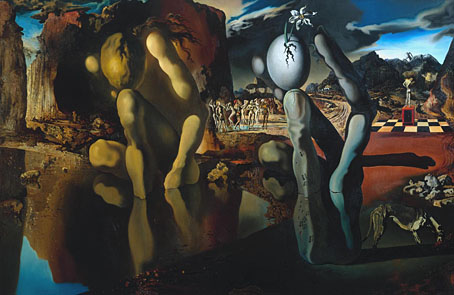
1: The Metamorphosis of Narcissus (1937) by Salvador Dalí.

dali1.jpg

dali2.jpg


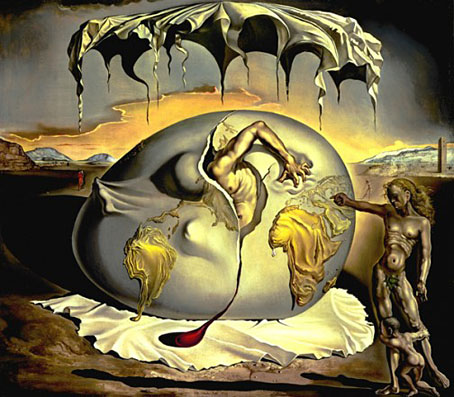
2: Geopoliticus Child Watching the Birth of the New Man (1943) by Salvador Dalí.

dali3.jpg


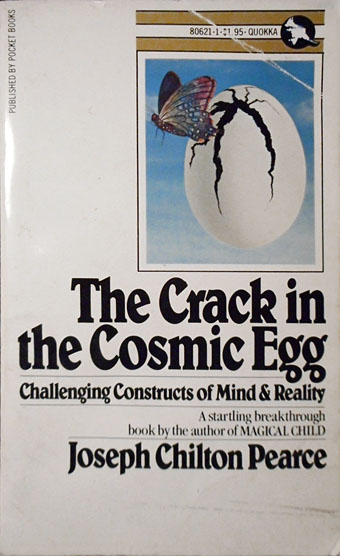
3: The Crack in the Cosmic Egg: Challenging Constructs of Mind and Reality (1971) by Joseph Chilton Pearce.

pearce.jpg


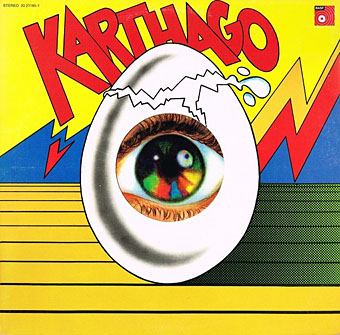
4: Karthago (1971) by Karthago.

karthago.jpg

Cover design by JH Löffler.


5: Edge Of Time (1972) by Norma Winstone.

winstone.jpg

Cover art by Terry Eden.


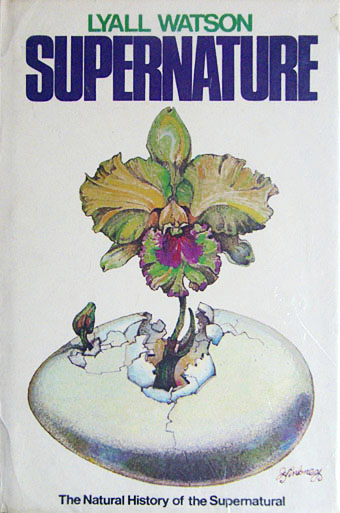
6: Supernature (1973) by Lyall Watson.

watson.jpg

Cover art by Jerry Pinkney.


7: A Cosmic Book (1988) by Itzhak Bentov.

bentov.jpg


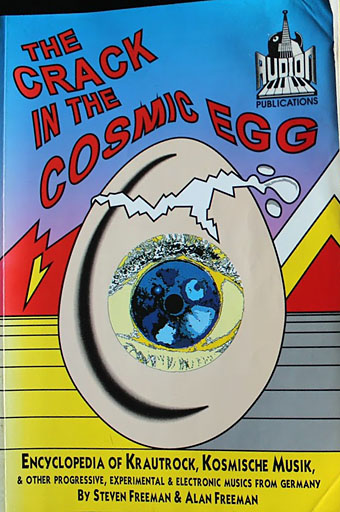
8: The Crack in the Cosmic Egg (1996) by Steven Freeman & Alan Freeman.

freeman.jpg


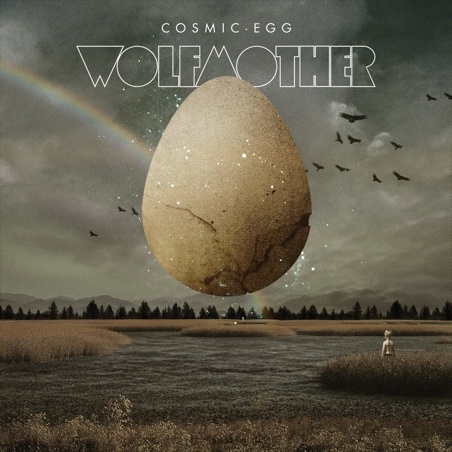
9: Cosmic Egg (2009) by Wolfmother.

wolfmother.jpg

Cover by Invisible Creature.


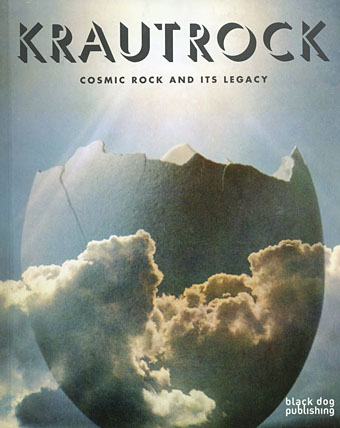
10: Krautrock: Cosmic Rock and Its Legacy (2012) edited by Nikos Kotsopoulos.

krautrock.jpg

Weekend links 290

coin

The Royal Mint celebrates 400 years of William Shakespeare with new £2 coins. The “Tragedies” design gives Britain the Gothiest coin of all time.

• “I hate successful films that travel on an easy wave of ‘good taste’: for me, that is simply anti-culture.” Cinematographer Luciano Tovoli talks to Alexandra Heller-Nicholas about photographing Dario Argento’s masterwork, Suspiria.

• Mixes of the week: Für die Liebe II, an hour of ambient drift by Matthew Dekay, and Carwyn Ellis Mixtape No. 354 by The Voice Of Cassandre.

• Americans in Europe: Frances Mayes on the enduring mystique of the Venetian lagoon, and David Farley on the trail of Kafka in Prague.

“We’d read that Brion Gysin and William Burroughs had played around with some scientific equipment from Columbia University,” [Jim] Jarmusch recalls. It was “some kind of strobe light that they claimed, by placing eidetic pulses on the outside of your eyelids, could cause states of hallucination and trance. We found out how to check out this machine and experimented with … not fantastic results! In a way though, Luc [Sante] channels ghosts: he’s able to imagine and mentally reconstruct events and places from the past and weave them into stories. He can cross influences like Blaise Cendrars and JG Ballard with James M Cain and Raymond Roussel.”

[…]

If New York celebrates amnesia, perpetual transformation, accelerated obsolescence – and offers newcomers a blank slate, a chance to be born again – then Sante offers a mordantly heretical vision of the city. For him it’s full of layers and depths, of echoes and eerie reverberations, of occult whispers. “The tech crowd thinks that we can’t afford the past to be sitting on our shoulders. It’s a burden, a dead weight. We’ve got to innovate constantly. We have to … disrupt. But the 20th century is littered with valuable stuff – writers, ideas, daily certainties – that gets discarded and that needs to be picked up and looked at again.”

Sukhdev Sandhu profiles writer Luc Sante

The Edge Question for 2016: What do you consider the most interesting recent (scientific) news? What makes it important?

Bradley L. Garrett’s foreword for Secret Tunnels of England: Folklore and Fact (2015), a book by Antony Clayton.

Caitlin R. Green on the monstrous landscape of medieval Lincolnshire.

Mistaken Memories of Mediaeval Manhattan by Brian Eno.

Arche (live, 2013) by Master Musicians of Bukkake.

A Year In The Country returns for another year.

Kafka (1982) by Masami Tsuchiya | Manhattan (1984) by Seigen Ono | Tunnel (1997) by Biosphere

Solstice sky

solstice.jpg

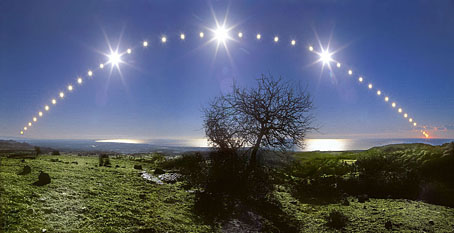
Tyrrhenian Sea and Solstice Sky by Danilo Pivato.

Danilo Pivato’s marvellous photograph of the December sun was NASA’s winter solstice photo of the day for 2014, although it actually dates from 2005. (And they’d also posted it twice before.)

ardley.jpg

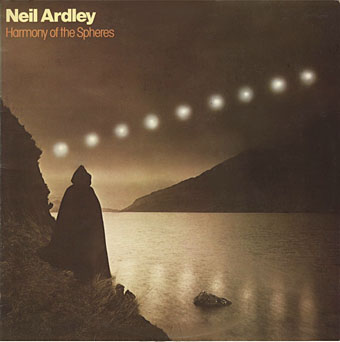
The multiplicity of heavenly bodies makes me think of the Hipgnosis cover for Harmony of the Spheres (1979), an excellent album by Neil Ardley. I think that’s the moon rather than the sun but the robed figure suits the solstice moment. This wasn’t the first time that Hipgnosis had a mysterious figure contemplating the landscape although by 1979 it was probably the last.

Weekend links 289

hermes.jpg

Fathomless Sounding (1932) by Gertrude Hermes.

• Over at Greydogtales (“weird fiction, weird art and even weirder lurchers”) I talk about art, design, the writing of this blog, and I also reveal more about my ongoing Axiom project. The latter currently stands at two novels, a couple of half-finished stories and a few pieces of artwork. I may be unveiling some of the art in the new year so watch this space.

• Howard Brookner’s Burroughs: The Movie (1983), a definitive film portrait of William Burroughs, is released at last on DVD/Blu-ray. US-only for the moment but further releases elsewhere are promised. The director’s nephew, Aaron Brookner, has a documentary about his uncle released next year.

• “…beautifully articulated bawdiness, perverse pleasures and a radical, though nondidactic, political view.” Melissa Anderson reviews Boyd McDonald’s Cruising the Movies: A Sexual Guide to Oldies.

The crisis, as Ellis and Silk tell it, is the wildly speculative nature of modern physics theories, which they say reflects a dangerous departure from the scientific method. Many of today’s theorists — chief among them the proponents of string theory and the multiverse hypothesis — appear convinced of their ideas on the grounds that they are beautiful or logically compelling, despite the impossibility of testing them. Ellis and Silk accused these theorists of “moving the goalposts” of science and blurring the line between physics and pseudoscience. “The imprimatur of science should be awarded only to a theory that is testable,” Ellis and Silk wrote, thereby disqualifying most of the leading theories of the past 40 years. “Only then can we defend science from attack.”

Natalie Wolchover on A Fight for the Soul of Science

• Mixes of the week: A mix by Front & Follow, and The Ivy-Strangled Path Vol. XIV by David Colohan.

• “Psychedelics can’t be tested using conventional clinical trials,” says Nicolas Langlitz.

• At Dangerous Minds: Ralph Steadman illustrates Ray Bradbury’s Fahrenheit 451.

• Why does Moby-Dick (sometimes) have a hyphen? Erin Blakemore investigates.

• My thanks again to Dennis Cooper for including this blog on his year-end list.

• Cian Traynor was given 20 minutes to ask Ennio Morricone some questions.

Lolita at 60: Ten writers reconsider Nabokov’s novel, page by page.

• At Ballardian: High-Rise: Wheatley vs Cronenberg.

Poison Ivy: The Queen of Psychobilly Punk

The Cinema of Hotels: a list

Solo intimacy DIY

Moby Dick (1970) by Led Zeppelin | William Burroughs Don’t Play Guitar (1996) by Islamic Diggers | Physical (2001) by Goldfrapp

Weekend links 284

molinier.jpg

Les Hanel I by Pierre Molinier. There’s more at The Forbidden Photo-Collages of Pierre Molinier.

• Western anti-hero Josiah Hedges, better known as Edge, was the creation of prolific British author Terry Harknett. The famously violent Edge novels, credited to “George G. Gilman”, were ubiquitous on bookstalls in the 1970s. They were Harknett’s most successful works, and are still collectible today; if you’re interested there are 61 of them to search for. Amazon Originals have just launched Edge as a new TV series although anything for a mass audience is unlikely to retain the exploitative qualities of novels that often sound like pulp precursors of Blood Meridian.

Related: Terry Harknett discusses the creation of the Edge series at Drifter’s Wind; Ben Bridges on Harknett’s career, including a look at the writer’s many other Western and thriller novels; Bill Crider on Edge, Harknett and the British group of Western novelists known as “The Piccadilly Cowboys”.

• Boyd McDonald’s queer-eye film guide, Cruising the Movies: A Sexual Guide to Oldies on TV (1985), has been republished by Semiotext(e) in an expanded edition. Related: True Homosexual Experiences: Boyd McDonald and Straight to Hell by William E. Jones.

• “…a film that plumbs the dark recesses of all our imaginations: dangerous, glorious, absurd, vivid and terrifying by turns.” Charlotte Higgins on her favourite film, The Red Shoes (1948).

Art Forms from the Abyss, a new collection of illustrations by Ernst Haeckel for the report of the HMS Challenger expedition (1872–76). Related: Silentplankton.com

• “The biggest kick I ever get is to find myself pursuing some group of images without knowing why,” says M. John Harrison in conversation with Tim Franklin.

• “Plots didn’t interest him much. They were just pegs on which to hang characters and language.” Barry Day on Raymond Chandler.

• “Zdeněk Liška’s music thrived in unrealities,” says David Herter in a lengthy appraisal of the great Czech film composer.

• At Dirge Magazine: S. Elizabeth delights in the dark decor of Dellamorte & Co.

• Nabokov scholar Brian Boyd selects his ten favourite Nabokov books.

• Mix of the week: The Ivy-Strangled Path Vol. XIII by David Colohan.

Take me to the cosmic vagina: inside Tibet’s secret tantric temple.

• Pour Un Pianiste (1974) by Michèle Bokanowski | 13’05” (1976) by Michèle Bokanowski | Tabou (1992) by Michèle Bokanowski