Richard Matheson, 1926–2013

matheson1.jpg

The Incredible Shrinking Man.

Of Richard Matheson’s many books I’ve only read I Am Legend so can’t say much about his fiction other than to confirm (as everyone else does) that none of the three adaptations so far have managed to do it justice. Of his work for film and television there’s too much to say, it’s so copious and indelibly memorable. Here’s a list of five favourite Matheson creations.

The Incredible Shrinking Man (1957)

JG Ballard frequently referred to this as one of his favourite science fiction films, not because of the SF element, which is never properly explained, but because of its inadvertent Surrealist qualities. For my part, every time I watched this I was always impatient to get to the later scenes where the unfortunate Scott becomes trapped in the cellar, and his own house becomes an increasingly alien and hostile environment. The ending where he accepts his condition is very Ballardian.
matheson2.jpg

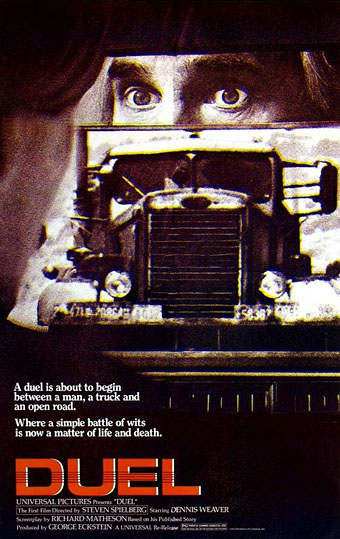
Duel (1971)

A sweating and manic Dennis Weaver is pitted against an anonymous truck driver who remains unseen but for a few shots of an arm and some boots. The lethal game of cat-and-mouse was famously directed by Steven Spielberg, his second feature, and one that’s a lot more impressive than some of his subsequent films. Watch it on YouTube.
matheson3.jpg

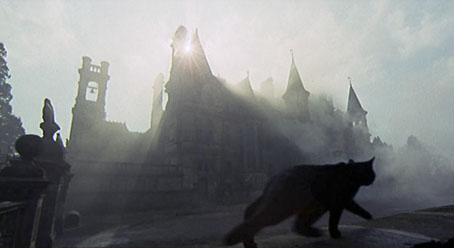
The Legend of Hell House (1973)

Matheson’s take on Shirley Jackson’s The Haunting of Hill House—four investigators in a haunted mansion—with the gain ramped up 100%. The film starts off quietly but is very soon into full-on hysteria; director John Hough finds so many eccentric camera angles you could actually calm down after this by watching a Terry Gilliam film. Meanwhile Roddy McDowell chews the scenery as though over-acting is going out of fashion. Bonuses are a grown-up Pamela Franklin (Flora in Jack Clayton’s superb The Innocents), and a great score from Radiophonic synthesists Brian Hodgson and Delia Derbyshire. Watch the trailer.
matheson4.jpg

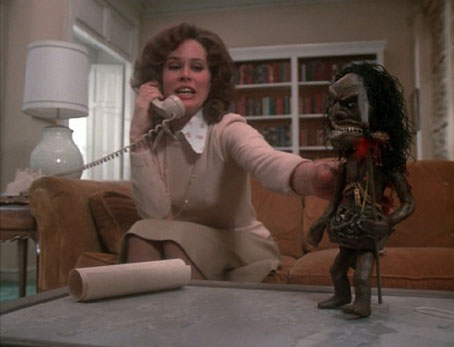
Trilogy of Terror (1975)

A three-story TV movie in which Karen Black took all the leading roles. No one remembers the first two stories but everyone who’s seen this remembers the third, Amelia (based on a Matheson short story, Prey), in which Ms Black is hunted in her apartment by a Zuni fetish doll. It’s on YouTube!
matheson5.jpg

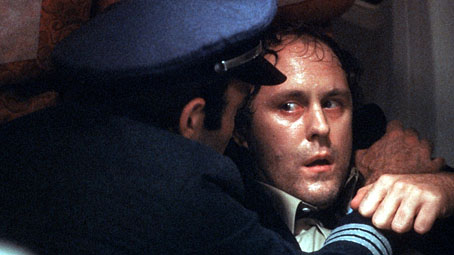
Nightmare at 20,000 Feet (1983)

Sorry, Shatnerphiles, but the superior version of this story is the one from Twilight Zone: The Movie. John Lithgow is a much better actor than William Shatner, the gremlin on the wing of the plane is a fearsome creature that’s seriously destructive (not, as Matheson lamented of the original, “a surly teddy bear”), and the whole sequence is directed by George Miller fresh from Mad Max 2. The original Twilight Zone episode wasn’t bad but it can’t compete with Miller pulling out all the stops. Watch it here.

Previously on { feuilleton }
New York City abandoned

Weekend links 162

penrose.jpg

Untitled drawing by Sophie Penrose.

• “…many arts producers – much more so than the artists themselves – were over-fearful of the prospect of prosecution, when in nearly all incidents there were no reasonable grounds for bringing charges.” Julia Farrington of Index on Censorship on self-censorship by artists and art institutions in the UK.

• “Tons of tones – some dissolved in beats, some beatless treatments – in a continuous mix of current ambient and electronic goodies, pouring more than a score of ambi-valent shapes and etheric waves into an occluded reverb-trail echo-veil mood-stream.” Ambivalentine, a mix by Albient.

• “I was followed by a bee, a golden bee. For three years, every day, the golden bee followed us.” Forty years ago Penthouse magazine talked to Alejandro Jodorowsky. This month Dazed magazine asked the polymath twenty questions.

• “…investigators were stupefied to find the spymaster’s quarters full of pink leather whips, cosmetics, and pornographic photographs, framed in snakeskin.” Erik Sass on Colonel Redl and a gay spy scandal in the Vienna of 1913.

• “With no one to sponsor him, Marino Auriti’s dream museum became the stuff of legends.” Stefany Anne Golberg on Marino Auriti’s Enciclopedico Palazzo del Mondo.

• The Crime Epics of Louis Feuillade: YouTube links and more. Related: YouTube’s Vault of Horrors.

Werner Herzog: 50 years of potent, inspiring, disturbing films.

• The doors of perception: John Gray on Arthur Machen.

• Some Sort of Alchemy: Albert Mobilio on Sun Ra.

• British Pathé’s film of ghost hunters in 1953.

• “Escape your search engine Filter Bubble

• RIP Jack Vance

Bumble Bee Bolero (1957) by Harry Breuer | The L S Bumble Bee (1967) by Peter Cook & Dudley Moore | Ant Man Bee (1969) by Captain Beefheart and His Magic Band | Be A Bee (2009) by Air

Ghosts in Gaslight, Monsters in Steam

ghosts.jpg

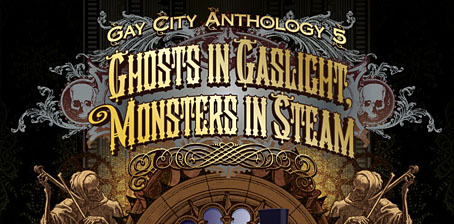
Ghosts in Gaslight, Monsters in Steam is a forthcoming anthology in the Gay City Anthology series from Seattle’s Gay City Health Project and Minor Arcana Press. The publishers describe it as “a multidisciplinary anthology of amazing queer monster and ghost fiction, poetry and art.” I’ve created a cover design for the book, and also have a work-in-progress extract from the never-ending novel I’ve been immersed in since August 2006, a self-contained piece which I call Study in Blue, Green, and Gold. As the anthology title implies, the general (although not exclusive) tenor is spooky steampunk business with a queer inclination; my piece features copious quantities of sex, hallucinogenic drugs, steam locomotives and a fractal cat. Anyone wishing to know more is encouraged to give a push to the Kickstarter donation fund which has been launched to help with promotional costs. I’m very pleased to be involved with this, not least because some of the fiction I’ve been working on for over a decade will receive an airing. I’ve resolved recently to start pushing the writing side of things a bit more so this is a start. When the final anthology contents are announced next month I’ll post an update here.

Paolo Soleri, 1919–2013

soleri1.jpg

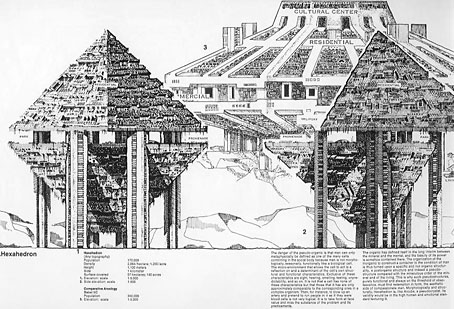
Hexahedron, The City in the Image of Man (1969).

“We must build up, not out,” said Soleri. “The problem is the present design of cities are only a few storeys high, stretching outward in unwieldy sprawl for miles…turning farms into parking lots, and waste enormous amounts of time and energy transporting people, goods and services over their expanses.”

Paolo Soleri, visionary architect, dies aged 93

For obvious reasons, Paolo Soleri’s plans for kilometre-high megastructure cities towering over green landscapes were popular in science fiction books and magazines in the 1970s. Soleri’s solution to unstoppable urban sprawl seems eminently sensible despite the difficulties of building anything on this scale; complaints about undesirability can be countered (in Britain at least) with dismal stories such as this recent report. Or maybe it’s better to live in a Hong Kong shoebox? Soleri devoted most of his life to thinking about how architecture could better serve our limited planetary resources; with Arcosanti he was leading by example.

• LA Times: Paolo Soleri, architect of innovative city Arcosanti, dies at 93
• Arch Daily: Paolo Soleri’s Arcosanti : The City in the Image of Man
Architect Paolo Soleri – a life in pictures
• Flickr: Arcosanti, An Urban Laboratory

soleri2.jpg

Babel IIB, The City in the Image of Man (1969).

Previously on { feuilleton }
The paper architecture of Brodsky and Utkin
Hugh Ferriss and The Metropolis of Tomorrow

Weekend links 150

feanne.jpg

One of A Pair of Peacocks (2012) by Feanne.

Jonathan Barnbrook reveals his package design for the new David Bowie CD. The Barnbrook studio has also designed the catalogue for the forthcoming V&A Bowie exhibition. And there’s more (don’t worry, it’ll be over soon): Jon Savage on When Bowie met Burroughs.

• “Witches have a fashion moment,” says the NYT. Nice clothes but the writing trots out too many of the usual lazy clichés. Related: A Tale of Witches, Woodland and Half-remembered Melodies…, a new mix by Melmoth the Wanderer.

Calidostópia! is a free album (FLAC & mp3) from Marcus Popp aka Oval: “an enticing 16-track collaboration…with seven wonderful singers/musicians from all over South America”.

Before meeting Moorcock in person, [Hari] Kunzru went on to say, ‘I didn’t realise the role he’d played in connecting so many different scenes and undergrounds together – the psychedelic music scene, the science fiction scene, the hip experimental literature scene around people like William Burroughs, pop art’.

Brave New Worlds: A Michael Moorcock Retrospective by Carol Huston. Moorcock’s Elric novels will be published by Glénat in new bande dessinée adaptations later this year.

• More art by Michael W. Kaluta at The Golden Age. And more fantastic comics/illustration by Philippe Caza at 50 Watts. There’s more Caza here.

• Mine and David Britton’s new book, Lord Horror: Reverbstorm, was reviewed at The Spectator.

Google Street Scene: “Moments of cinema captured by Google Street View cameras”.

Cosmic Sentinels and Spiral Jetties: JG Ballard, Robert Smithson & Tacita Dean

• Strange Flowers showcases the heads of Pavel Tchelitchew, 1949–1952.

Setting in the East: Diamanda Galás on Women and Real Horror

Little Joe: “A magazine about queers and cinema, mostly.”

Nanoparticles loaded with bee venom kill HIV.

Treatises on Dust: Antic Found Texts

The Wizard Blew His Horn (1975) by Hawkwind (with Michael Moorcock) | Brothel In Rosenstrasse (1982) by Michael Moorcock’s Deep Fix | Running Through The Back Brain (1983) by Hawkwind (with Michael Moorcock)