
Crank book covers

kolosimo2.jpg

Cover art by Tony Roberts, 1974. A book I received as a present for Christmas, 1974. Also the first place I encountered the words “Popol Vuh”, before discovering the music of Florian Fricke and co. a few years later.

Yes, “crank” is a pejorative word but it’s used with some degree of affection, as in “harmless crank”. It’s also a convenient umbrella term for the books referred to in the weekend post which embrace diverse subjects, from lost continents and “Earth energy” to ancient astronauts and flying saucers.

The prime crank decade was the 1970s, a period when publishers were falling over themselves to cash-in on the massive popularity of Erich von Däniken’s dubious investigations, while also catering to the by-products of the hippy era and the occult revival. Books by Charles Fort, Immanuel Velikovsky and James Churchward (the Mu series) all received reprints, with some appearing in paperback for the first time. The British editions of these books were published by imprints like Corgi, Panther and Sphere who were also publishing large quantities of science fiction, a situation that led to many crank titles being packaged as though they were fiction or fantasy. Sphere was in the vanguard, presenting a wide range of books with the same cover designs, cover artists and Novel Gothic typeface as their SF titles. A cynical move, no doubt, but it also makes the crank books seem more like fiction than their authors might have intended.

This post presents a selection of crank titles with cover art by SF artists but there are many more examples out there. (Watch the skies!) I’ve limited the selection to British publishers but the same syndrome was evident in American publishing, as documented at Absolute Elsewhere. And I’ve included a couple of books by sceptics John Sladek and Dr. Christopher Evans. These were intended to dismantle the claims of L. Ron Hubbard, Erich von Däniken and co. but were still packaged in paperback to resemble the books they were attacking. The major demolition of Von Däniken is Ronald Story’s The Space Gods Revealed but covers for that one have always been relatively restrained.

Missing from this list are three paintings by SF artist Peter Jones for books by Dr. Celia Green. The art may be seen in Jones’s Solar Wind collection but I couldn’t find any of the printed covers, which suggests they had a limited run if they were printed at all. These are odd for being typical fantasy imagery attached to serious studies of lucid dreaming and out-of-body experiences. Dr. Green is a philosopher and science researcher (she coined the term “out-of-body experience”) so she doesn’t belong on a crank list in any case. Also absent is the most popular British cover illustrator of the decade, Chris Foss, who would have been too busy working through his fiction commissions and creating designs for feature films.
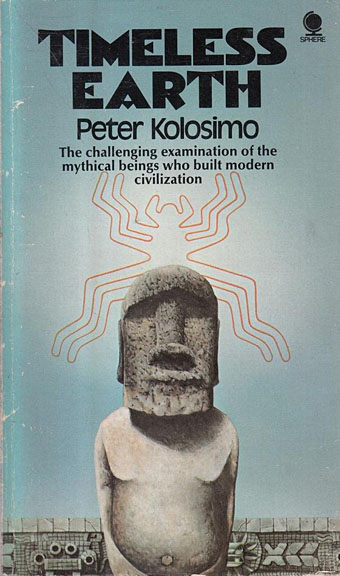
kolosimo1.jpg

Cover art by Tony Roberts (?), 1974.

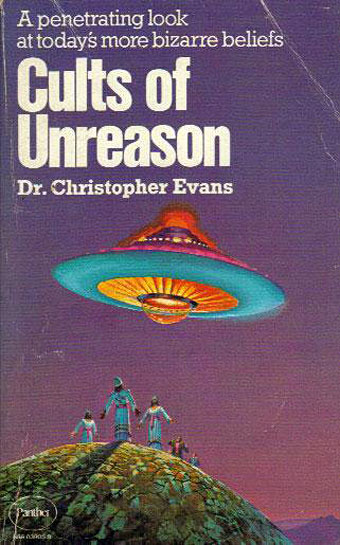
evans.jpg

Cover art by Bruce Pennington, 1974.

Evans was a computer scientist, an occasional contributor to New Worlds magazine, and also the model for the deranged Vaughan in JG Ballard’s Crash. Cults of Unreason investigates crank sects such as the flying-saucer worshippers of the Aetherius Society (hence the cover art), and the Scientologists who caused a stir in Britain in the 1960s when L. Ron Hubbard set up an outpost at East Grinstead.
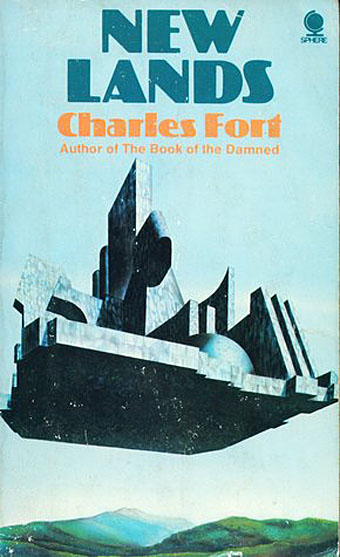
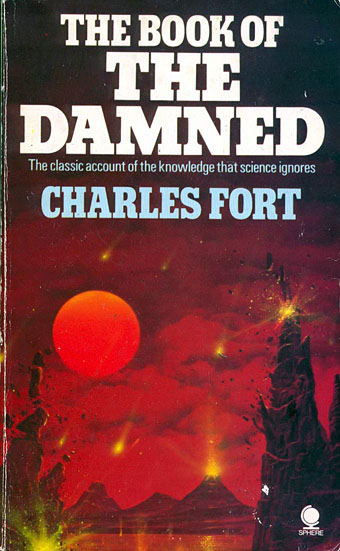
fort2.jpg

Cover art by Colin Hay, 1974.

fort1.jpg

Cover art by Angus McKie, 1979.
Continue reading “Crank book covers”

Philippe Caza record covers

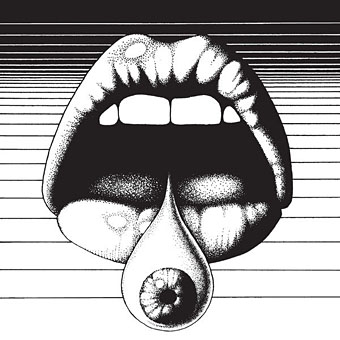
caza05.jpg

Bad Taste (2014) by The Datsuns.

Continuing an occasional series about artists or designers whose work has appeared on record sleeves. Druillet and Moebius have already featured in this series so here’s another French comic artist whose work was popularised in the Anglophone world by Heavy Metal magazine. In addition to comics, Caza has been a prolific cover artist for French fantasy, horror and SF novels, some examples of which are reused here. As with Druillet, many of his record sleeves are reprintings of comics panels, but he’s also created a few pieces specially for vinyl and CD.

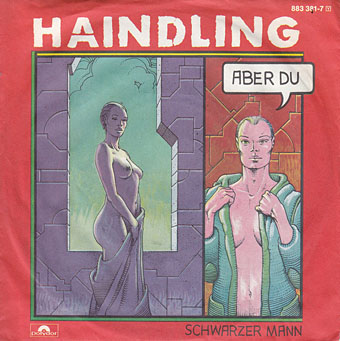
caza01.jpg

Aber Du (1985) by Haindling.

caza02.jpg

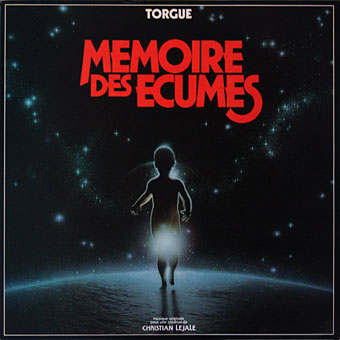
Mémoire Des Ecumes (1985) by Torgue.

A soundtrack album (?) for the comic book of the same name by Caza and writer Christian Lejalé.

caza03.jpg

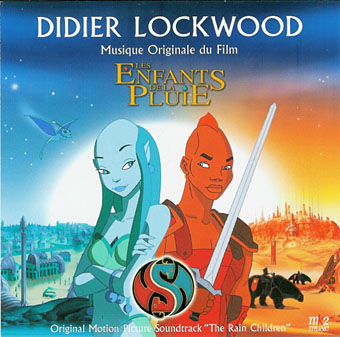
Musique Originale Du Film Les Enfants De La Pluie (2003) by Didier Lockwood.

The soundtrack album for an animated feature film co-written and designed by Caza. This follows earlier Caza-derived animations by René Laloux including the feature-length Gandahar (1988).

caza04.jpg

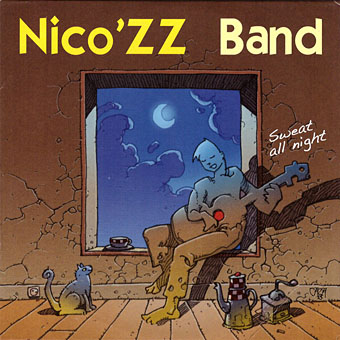
Sweat All Night (2013) by Nico’ZZ Band.

Continue reading “Philippe Caza record covers”

Weekend links 588

br.jpg

Gerry Barney’s logo for British Rail. A page from the British Rail Corporate Identity Manual (1965).

• RIP Russ Kick, writer, editor, and founder of many websites/blogs such as Rare Erotica, Books Are People Too and (notoriously) the several iterations of The Memory Hole, a space dedicated to keeping visible information that successive US governments would have preferred to remain unseen. I’d known Russ remotely for many years, initially as a reviewer of the Savoy comics in Outposts. Savoy Books later helped find him a publisher for Psychotropedia: A Guide to Publications on the Periphery, a wide-ranging overview of alternative/underground print culture in the late 1990s. In 2004 his information activism gave him a fleeting taste of world-wide attention when he forced the Bush administration to make public the photos of flag-draped coffins returning from Iraq. The scandal put his name on the front pages of newspapers that should have been finding those photos for themselves instead of cheerleading the war. A run of books for Disinformation presented his archival researches for the general reader, then in 2012 he edited The Graphic Canon, a massive three-volume collection of comics and illustrations based on classic works of literature. I was among the many contributors to the latter with an adaptation of The Picture of Dorian Gray, and would have worked on the follow-up collection of crime stories if I hadn’t been busy with other things. I had hoped that we might work together again in the future.

• “‘The new mainstream has attempted to erase the innovations of the avant-garde from jazz history,’ the film declares.” Geeta Dayal reviews Fire Music, a documentary about the jazz innovations of the 1960s.

• I don’t have the hardware to play this but Sable is a new computer game from Raw Fury whose design owes much to the desert landscapes seen in comics by Moebius.

• New/old music: Stealing Sheep and The Radiophonic Workshop reimagine the score for René Laloux’s animated science-fiction film La Planète Sauvage.

• At Spine: Savannah Cordova on how to perfect your book cover’s typography. Having recently designed an all-type cover design this is timely.

• Mixes of the week: Isolatedmix 113 by Sunju Hargun, XLR8R Podcast 714 by Soela, and Holograficzne Widmo ze Bart De Paepe by David Colohan.

• “If it ain’t broke, don’t fix it.” Gerry Barney, designer of the British Rail logo, doesn’t like the green reworking of his design.

• Scottish lord goes blood simple: a teaser for The Tragedy of Macbeth by Joel Cohen and some bloke called William Shakespeare.

• “It’s unmanageable.” Ellen Peirson-Hagger on how the vinyl industry reached breaking point.

Macbeth (1973) by John Cale | Rail (1994) by Main | Logotone (2013) by Steve Moore

The art of Alexander Cañedo, 1902–1978

canedo15.jpg

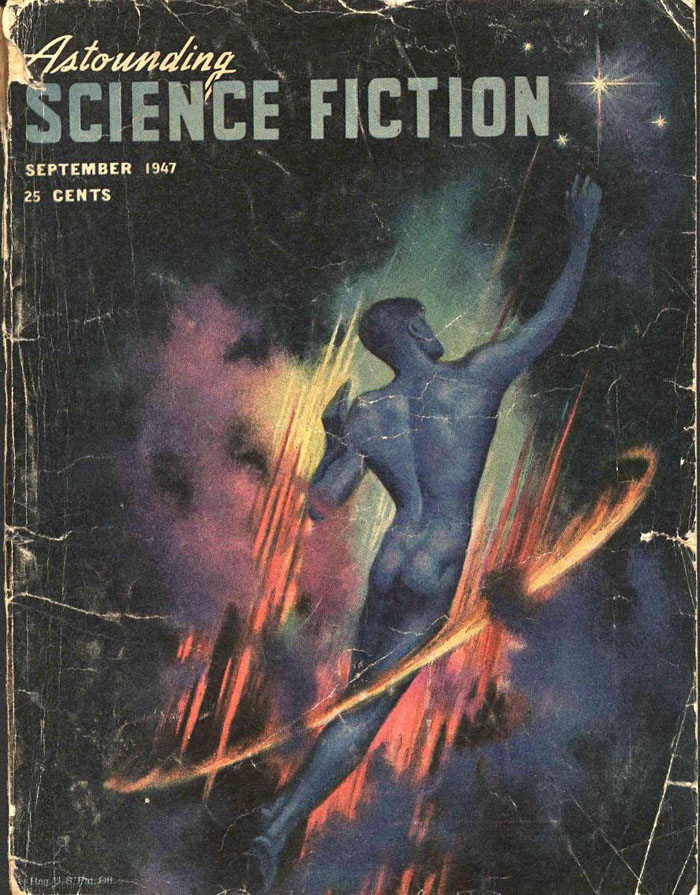
September, 1947.

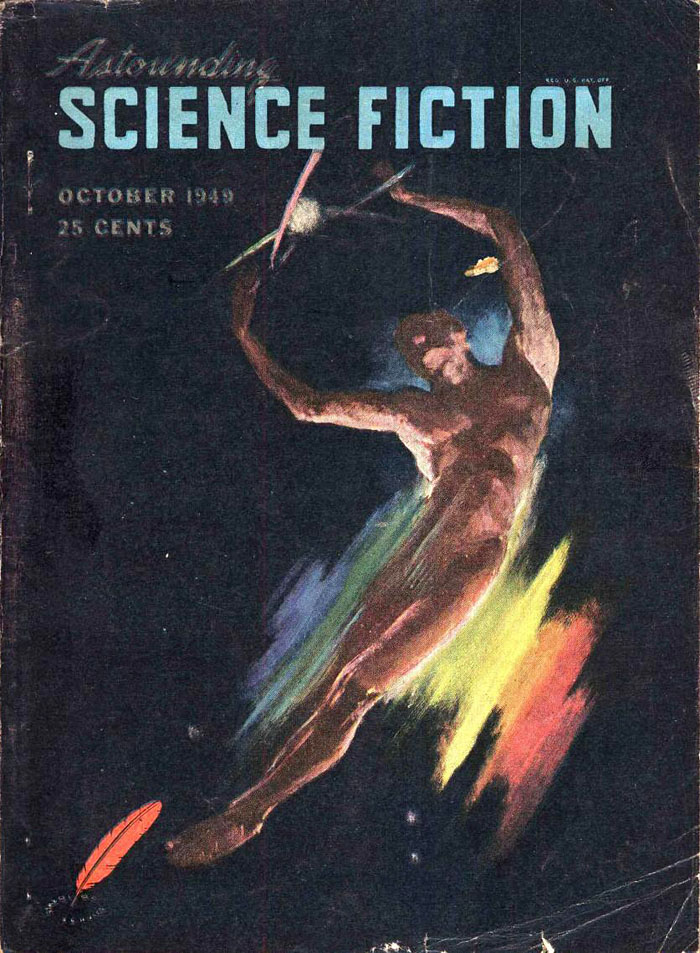
Harry Harrison used to enjoy referring to the “sexual dimorphism” of the cover art on pulp science-fiction magazines, by which he meant that male astronauts would usually be depicted wearing sturdy spacesuits or functional attire while their female counterparts would be given spray-on outfits with plunging necklines, if they were given any clothes at all. Sexism was still thriving in the future, in other words, with visible male flesh in short supply. This makes the handful of cover paintings produced by Alexander Cañedo for Astounding Science Fiction uncommon enough to be almost unique.

canedo16.jpg

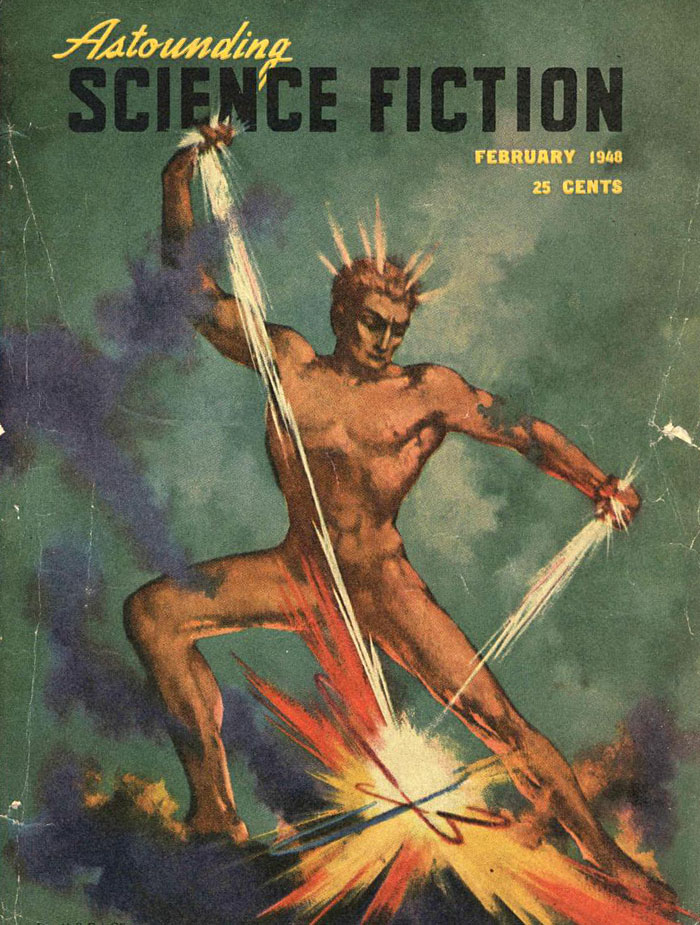
February, 1948.

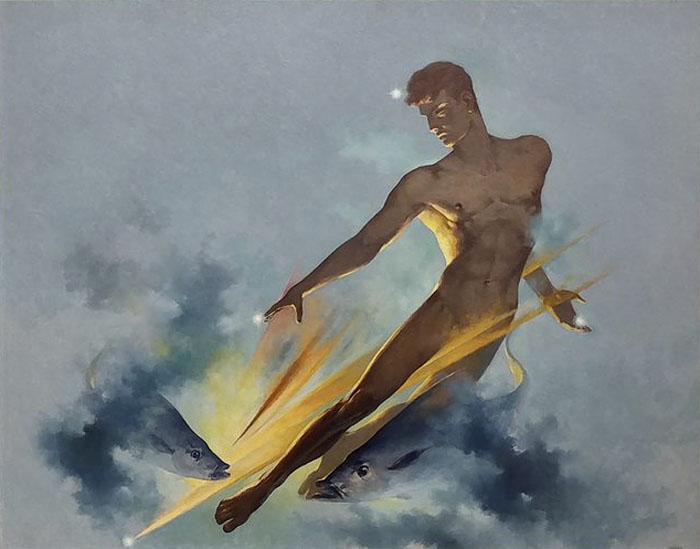
Cañedo was a Mexican-American, born Alejandro de Cañedo, whose covers for Astounding were simply credited to “Alejandro”. The editorial policy at the magazine favoured hard-headed, technology-oriented science fiction, with cover art that avoided the scantily-clad women (and, to be fair, shirtless men…) seen each month on the covers of swashbuckling rival, Planet Stories. Robots and rocket ships were still required at Astounding, however, and half the covers produced by Cañedo feature more predictable imagery. The first of the cosmic nudes appeared after editor John W. Campbell spotted an unsold painting during a visit to Cañedo’s studio. Campbell and his readership regarded the naked males as purely symbolic, which they are up to a point, and Cañedo was praised for his art in the magazine’s letters section. When seen in the context of his overtly homoerotic work the pictures evidently reflect more personal proclivities.

canedo17.jpg

October, 1949.

Cañedo is described today as a gay artist, a claim that can’t easily be verified when the available biographical details repeat the same few facts. But his art away from Astounding returned continually to the human body, a subject where his mastery was sufficient to warrant the publication in 1954 of a short guide for artists, How Cañedo Draws the Human Figure. Most of his drawings and paintings listed on auction sites are nude (or semi-nude) studies, with lovingly rendered male figures predominating. Several of his later paintings could easily have served as additional magazine covers. The manipulation of light and colour in these pictures is outstanding, unlike any treatment of male nudes that I’ve seen before, and by an artist worthy of greater attention.

(Note: Most of these pictures are untitled and undated. I’m also not an art dealer so please don’t ask for valuations.)

canedo18.jpg

July, 1954. “Inappropriate” is the title of the picture which doesn’t relate to anything inside the magazine.

canedo09.jpg

Continue reading “The art of Alexander Cañedo, 1902–1978”

Weekend links 586

ertz.jpg

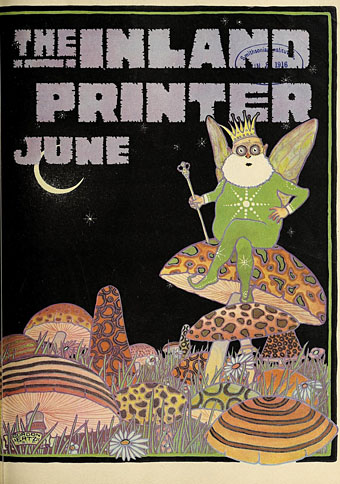
Cover by Gordon Ertz for The Inland Printer, June 1916.

• “I worry that enthusiasm is being mistaken for a moral virtue, and negative criticism for a character flaw.” Dorian Lynskey on the dying art of the hatchet job. Also a reminder (not that we require it) that the word “fan” in this context has always been an abbreviation of “fanatic”.

• Culture.pl explores the work of Stanisław Lem, the science-fiction writer “whose works, abilities and quirky sense of humor convinced Philip K. Dick that he was too brilliant to exist and must have actually been a committee of people”.

• The electronic music of Paul Schütze receives a reappraisal on Phantom Limb in November with a compilation album, The Second Law.

Aliya Whiteley on Amanita Muscaria, the hallucinogenic mushroom seen in hundreds of fairy-tale illustrations.

• Stuart Firestein talks to Roger Payne about changing the world’s attitude to whales by recording their songs.

• Jennifer Lucy Allan talks to Sam Underwood about his unique Acoustic Modular Synth.

Jóna G. Kolbrúnardóttir sings Odi Et Amo from Englabörn by Jóhann Jóhannsson.

• A forthcoming release on Dark Entries: Back Up: Mexican Tecno Pop 1980–1989.

• Luc Sante looks at Jim Jarmusch’s collages.

John Grant‘s favourite albums.

• RIP Michael Chapman.

• The Divination Of The Bowhead Whale (1978) by David Toop & Max Eastley | Keflavik: The Whale Dance (1980) by Richard Pinhas | Ballet For A Blue Whale (1983) by Adrian Belew