Gene Szafran album covers

szafran01.jpg

Sibelius: 4 Legends From “The Kalevala”, Op. 22 (1968); Buffalo Philharmonic Orchestra, Lukas Foss.

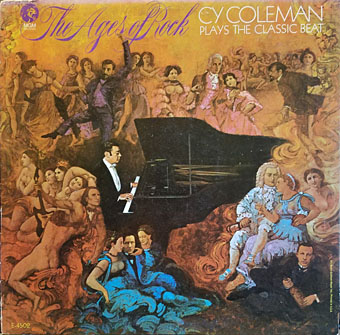
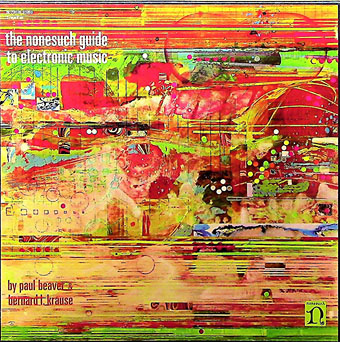
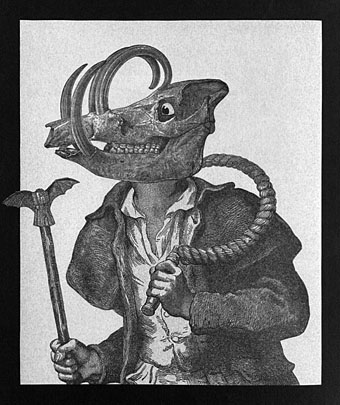
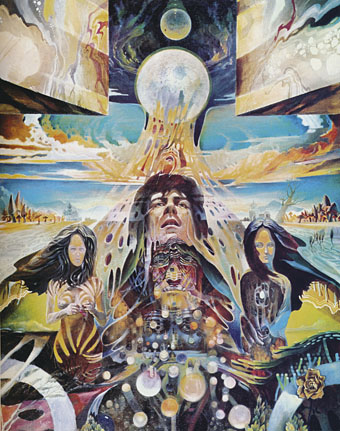
Gene Szafran (1941–2011) was an American artist who painted illustrations for magazines and provided cover art for many science-fiction paperbacks throughout the 1970s. He shared with fellow paperback artist Bob Pepper a parallel career producing album cover art for Elektra Records and Elektra’s subsidiary for classical recordings and contemporary composition, Nonesuch, the latter contributing to William S. Harvey’s policy of making classical albums look as vibrant and contemporary as their neighbours in the rock sphere. Bob Pepper’s album covers, however, tend to resemble his book covers whereas Szafran’s book covers are simpler in style than his album art which fills out the larger space in a post-psychedelic style that’s often very detailed and done in a variety of media. It took me a while to realise that I’d known Szafran’s name for a long time via his cover for Pictures At An Exhibition by Tomita, the art for which isn’t a painting but a relief sculpture of the head of Tomita-san. A similar use of three-dimensional elements occurs on other album covers, and extends to a form of collage in which painted backgrounds are overlaid with physical objects, a technique which became a common sight in the 1980s but which wasn’t common at all in the 1960s. There might have been more work like this but Szafran’s career was cut short by multiple sclerosis in the late 1970s. Glimmer Graphics has several pages dedicated to his life and art.

szafran02.jpg

The Ages Of Rock (1968) by Cy Coleman.

szafran03.jpg

John Cage: Concerto For Prepared Piano & Orchestra / Lukas Foss: Baroque Variations (1968).

szafran04.jpg

The Nonesuch Guide To Electronic Music (1968) by Paul Beaver & Bernard L. Krause.

szafran05.jpg

The Moray Eels Eat The Holy Modal Rounders (1968) by The Holy Modal Rounders.

Continue reading “Gene Szafran album covers”

Weekend links 580

kausch.jpg

The Collective Lie We All Live By, a cut-paper collage by Allan Kausch from Maintenant 15, A Journal of Contemporary Dada Writing and Art.

• “It’s unusual that an album manages to be at once so much of its moment, yet so much outside it. Time was unmistakably a response to the electronic and synth waves that rose in the wake of punk. It was also a concept album about time travel, which couldn’t have been more pre-punk had it been focus-grouped that way.” David Bennun on Time (1981), ELO’s masterwork of science-fiction pop. The first song on the album, Twilight, is a thundering piece of synth bombast that prefigures Trevor Horn’s equally bombastic productions, and was used to memorable effect in the copyright-infringing animation made in 1983 for the opening of Daicon IV.

• New music: Disciples Of The Scorpion by The Rowan Amber Mill, and Shade by Grouper.

• “Psychedelic spirituality: Inside a growing Bay Area religious movement“.

• “It’s time to farewell this project,” says Ballardian.

• At Wormwoodiana: the seven greek vowels.

• A playlist for The Wire by Douglas Benford.

Norman Blake‘s favourite albums.

Astronomia Playing Cards.

• RIP Dusty Hill.

Time (1973) by David Bowie | Time (1976) by La Düsseldorf | Time (1992) by Lull

Weekend links 579

kresek.jpg

Untitled painting by Larry Kresek.

• “A good comparison might be Broken English-era Marianne Faithfull, Appalachian folk singer Hedy West, or the early-70s home recordings of German actress Sibylle Baier; spellbound female voices possessed of an uncanny emotional honesty.” Andrew Male on the songs of Karen Black. In 1989, the first issue of Psychotronic Video profiled Black’s remarkable acting career which was cultish enough for the magazine to give her the “psychotronic” label.

• Coming soon from Strange Attractor Press, In A Sound World by Victor Segalen, “a work of fantasy concerning an inventor lost in his own immersive harmonic space”.

• At Messynessychic: Inside the Imaginarium of a Solarpunk Architect, or architectural designs by Luc Schuiten, brother of comic artist and illustrator François Schuiten.

De Strijd der Werelden, 1899. The first illustrated book version of HG Wells’ The War of the Worlds was a Dutch edition with drawings by JH Speenhoff.

• New/old music: Words Disobey Me (Dennis Bovell Dub Version) by The Pop Group, part of a forthcoming Bovell remix of the group’s debut album, Y.

• Mixes of the week: A mix for The Wire by Sunik Kim, FACT Mix 817 by Malibu, and Rhythmic Asymmetrical Wyrd by The Ephemeral Man.

• “Whatever we call them, and whatever else they might be, they are, in fact, printed paintings.” Joseph Visconi on William Blake’s monoprints.

• Curious Music announces Moebius Strips, an audio installation by Tim Story from the sounds and music of Dieter Moebius.

• At Dangerous Minds: Richard Metzger‘s confessions of an analogue vinyl snob.

Strange Flowers departs from tradition by offering a summer reading list.

Moebius 256 (1977) by Zanov | Moebius (1981) by Cyrille Verdeaux | Elena’s Sound-World (2014) by Sinoia Caves

Weekend links 576

haberfield.jpg

Cover art by Bob Haberfield, 1976.

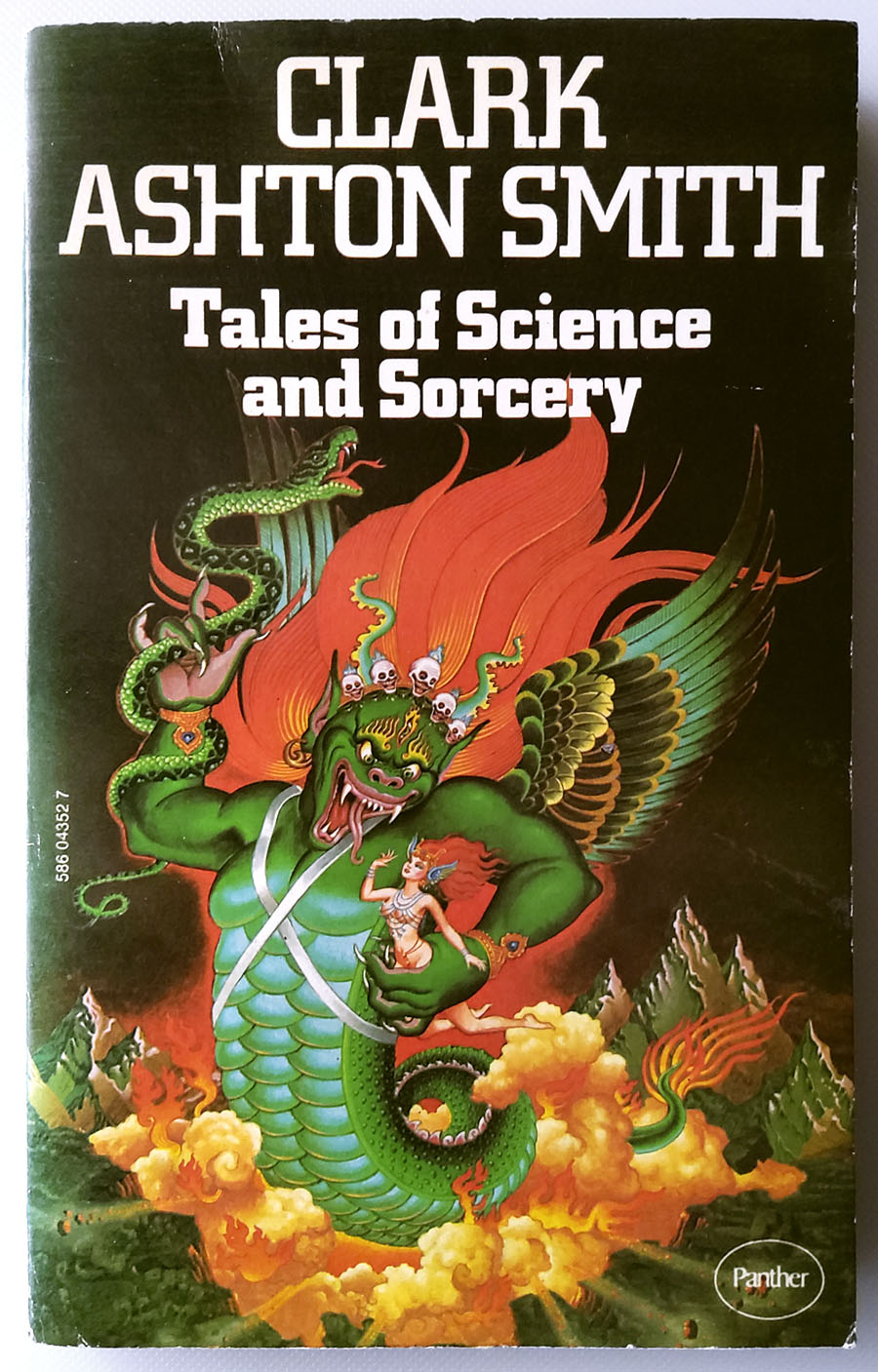
• I’ve been reliably informed that Australian artist Bob Haberfield died recently but I can’t point to an online confirmation of this so you’ll have to take my word for it. “Science” and “sorcery” might describe the two poles of Haberfield’s career while he was working as a cover artist. His paintings made a big impression on British readers of fantasy and science fiction in the 1970s, especially if you were interested in Michael Moorcock’s books when they appeared en masse as Mayflower paperbacks covered in Haberfield’s art. Haberfield also appeared alongside Bruce Pennington providing covers for Panther paperbacks by HP Lovecraft, Clark Ashton Smith and others, although his work there isn’t always credited. Dangerous Minds collected some of his covers for a feature in 2017. (The US cover for The Iron Dream isn’t a Haberfield, however.)

• “Like Alice, who can only reach the house in Through the Looking-Glass by turning her back to it, Gorey reversed the usual advice to ‘write what you know’ and wrote the apparent opposite of his own situation.” Rosemary Hill reviewing Born to Be Posthumous: The Eccentric Life and Mysterious Genius of Edward Gorey by Mark Dery.

• “Orvil…wanders the countryside, visits churches, rummages in antique shops, and encounters strange men to whom he is no doubt equally strange.” John Self reviewing a new edition of In Youth Is Pleasure by Denton Welch.

• At the Wyrd Daze blog: Q&A sessions with Stephen Buckley (aka Polypores), Gareth Hanrahan, and Kemper Norton.

• “Fellini liked to say that ‘I fall asleep, and the fête begins’.” Matt Hanson on Federico Fellini’s phenomenal films.

• A Beautiful Space: Ned Raggett talks to Mick Harris about the thirty-year history of Scorn.

• Deep in the dial: Lawrence English on the enduring appeal of shortwave radio.

Clive Hicks-Jenkins on making a picture for Annie Darwin (1841–1851).

DJ Food looks at pages from Grunt Free Press circa 1970.

• Mix of the week: Fact Mix 814 by Loraine James.

• New music: Clash (feat. Logan) by The Bug.

• At BLDGBLOG: Terrestrial Astronomy.

LoneLady‘s favourite albums.

• At Dennis Cooper’s: Porn 2.

Tilings Encyclopedia

Betrayal (Sorcerer Theme) (1977) by Tangerine Dream | Science Fiction (1981) by Andy Burnham | Sorceress (2018) by Beautify Junkyards

Going beyond the zero

gr1.jpg

“But it is a curve each of them feels, unmistakably. It is the parabola. They must have guessed, once or twice—guessed and refused to believe—that everything, always, collectively, had been moving toward that purified shape latent in the sky, that shape of no surprise, no second chances, no return. Yet they do move forever under it, reserved for its own black-and-white bad news certainly as if it were the Rainbow, and they its children….”

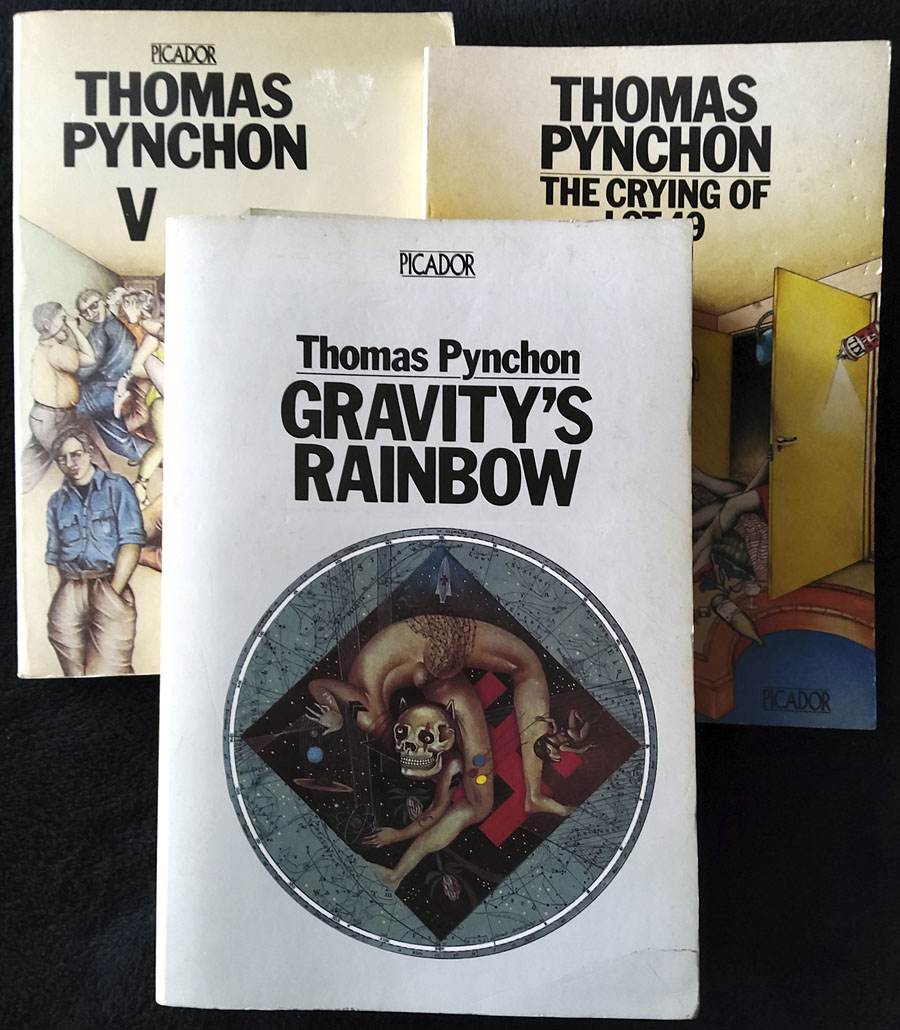
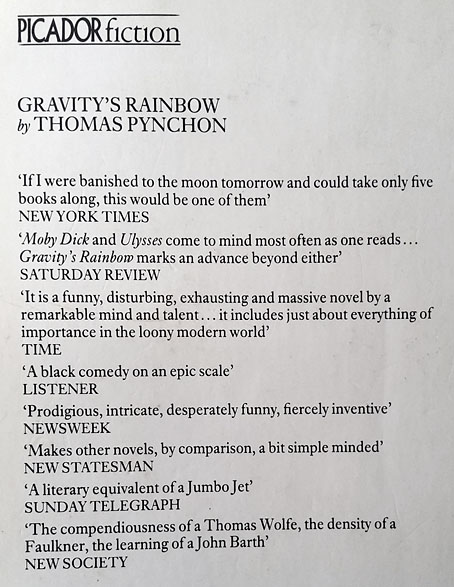
Reader, I read it. It isn’t an admission of great achievement to announce that you’ve reached the last page of a novel after a handful of stalled attempts, but when it’s taken me 36 years to reach this point it feels worthy of note; and besides which, Gravity’s Rainbow isn’t an ordinary novel. Umberto Eco is partly responsible for my return to Pynchon. I’d just finished The Name of the Rose, a book I’d avoided for years even while reading (and enjoying) a couple of Eco’s other novels, and was wondering what to read next. Maybe it was time to try the Rocket book again? The thick white spine of the Picador edition—760 pages in 10pt type—would accuse me every time I spotted it on the shelf: “Still haven’t made it to page 100, have you?” For many people this happens with novels because a book is “difficult” (which I didn’t think it was), or boring (which it isn’t at all), or simply too long (page count doesn’t put me off). Back in 1985 I was looking for more heavyweight fare after reading Ulysses, something I’ve now done several times, so I wasn’t going to be intimidated by a novel which is misleadingly compared to Ulysses on its back cover. If anything the comparison was an enticing one. Pynchon at the time exerted a gravitational pull (so to speak) for being very mysterious, although this was a decade when most living authors, especially foreign ones, were mysterious to a greater degree than they are today, when so many have their own websites and social media profiles. Pynchon’s works were also referred to in interesting places, unlike his less mysterious contemporaries. I may be misremembering but I seem to recall a mention of the W.A.S.T.E. enigma from The Crying of Lot 49 in Robert Shea & Robert Anton Wilson’s Illuminatus!; if it is there then it’s no surprise that a writer so preoccupied with conspiracy and paranoia would find favour with the authors of the ultimate conspiracy novel. (And that’s not all. I’m surprised now by the amount of coincidental correspondence between Illuminatus! and Gravity’s Rainbow. Both novels were being written at the same time, the late 1960s, yet both refer to the Illuminati, the eye in the pyramid on the dollar bill, Nazi occultism, and the death of John Dillinger. Both novels also acknowledge the precedent of Ishmael Reed’s Mumbo Jumbo, another remarkable conflation of conspiracy, secret history, and wild invention.)
gr2.jpg

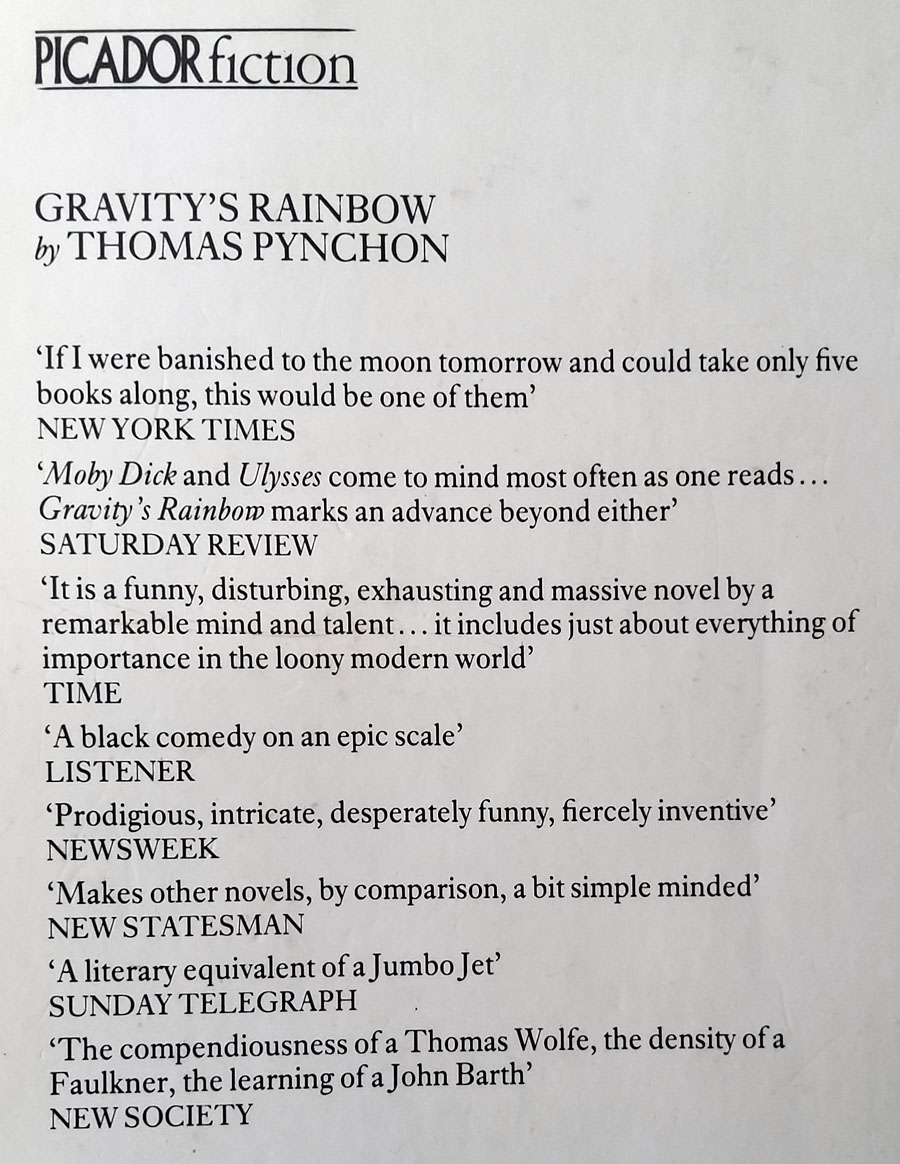
Pynchon had other connections to the kind of fiction I was already interested in. One of his early short stories, Entropy, had been published in New Worlds magazine in 1969, although editor Michael Moorcock later claimed to have avoided reading any of the novels until much later. And, Pynchon, like Shea & Wilson (and Moorcock…), made pop-culture waves. I think it was Laurie Anderson who put Gravity’s Rainbow in the centre of my radar when she released Mister Heartbreak, an album whose third song, Gravity’s Angel, refers to the novel and is dedicated to its author. As for the novel itself, in the mid-1980s this was still Pynchon’s major work, the one that fully established his reputation. Nothing new had appeared since its publication in 1973; Vineland, and the subsequent acceleration of the authorial production line, was six years away. The final lure was the refusal of the Picador edition to communicate very much of its contents: what was this thick volume actually about? The back cover is filled with praise but doesn’t tell you anything about the novel at all, while the cover illustration by Anita Kunz suggests a scenario connected with the Second World War but little else. (“This was one of the most complicated books I ever read,” says the artist, “and really hard to get the germ of the idea. Pynchon kept going off in tangents. I mixed up the art the same way the writer did and made an image that can be read in all directions.”) It’s only when you start reading the book that you find the connection between the novel’s dominant concerns—the development of the V-2 rockets used by the Nazis to bomb London, and the erotic compulsions of Tyrone Slothrop, an American lieutenant at large in war-ravaged Europe—subtly reflected in the illustration, much more subtly than the cover art on the edition that preceded this one.

Continue reading “Going beyond the zero”