Weekend links 406

tac.jpg

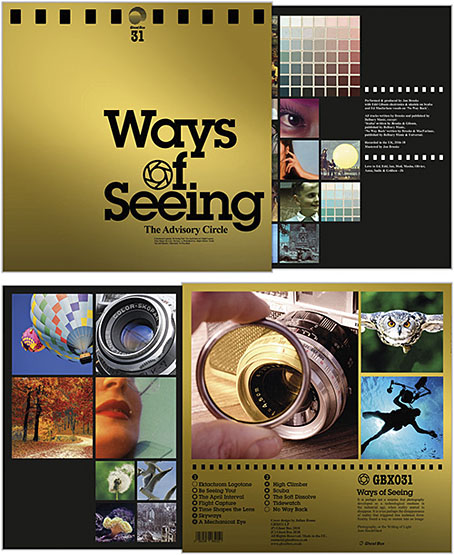
Ways Of Seeing will be the next release by The Advisory Circle on the Ghost Box label, and with metallic gold cover art by Julian House.

• “The structure came to Argento while he was tripping on some good acid, a fevered dream logic piecing everything together. […] ‘People came running out, screaming, telling people in the queue “Don’t go in! Don’t go in! It’s all witches!” It just made everyone in line want to get in even more… it was amazing.'” Ben Cobb talks to Dario Argento about the making of a horror masterpiece, Suspiria.

• Mixes of the week: The Wire Playlist by Mary Halvorson, XLR8R Podcast 535 by Sofie, and Out of the Wood Show 93 by Robin The Fog.

• Death by Balloon: Chris Mautner on the horrifying and hilarious world of comic artist Junji Ito.

Look, any honest estimation of the new translation, by Michael Hofmann, of Alfred Döblin’s Berlin Alexanderplatz from NYRB Classics is bound to begin with duteous piety, lauding it, since it is a one-and-done masterpiece that’s basically impossible to oversell, as (why not) the single biggest event in publishing in a lifetime, a crucial refurbishment of something English-language readers have been missing out on for a century, and a long-missing piece of Modernism’s ponderous jigsaw. All of which is the case of course. But when we’re talking about a dense, all-but-untranslatable Weimar-era novel, whose only point of reference for Anglophone audiences until now has been Rainer Werner Fassbinder’s meticulous fifteen-hour adaptation from 1980 (one heck of a tease) it feels important to attempt a slight rescue from its own forbidding reputation, because Alexanderplatz is less a book than a living thing, and one that joyously resists the dust heap of bourgeois literary scholarship with its every line.

JW McCormack on the new translation of Alfred Döblin’s Modernist classic

Section 28 protesters 30 years on: “We were arrested and put in a cell up by Big Ben”.

Angelique Kidjo talks reinventing Talking Heads’ Remain In Light on new LP.

• The hidden lives of gay men in the Middle East: photographs by Hoda Afshar.

Al Pacino’s journey with Wilde’s Salomé.

Tenebrous Kate

• Are You Seeing (1969) by Ora | Seeing Out The Angel (1981) by Simple Minds | Sine Seeing (2014) by The Advisory Circle

Weekend links 401

time.jpg

TIME, June 21st 1968. Cover by Roy Lichtenstein.

• “Forget the democratic processes, the judicial system and the talent for organization that have long been the distinctive marks of the US. Forget, too, the affluence (vast, if still not general enough) and the fundamental respect for law by most Americans. Remember, instead, the Gun. That is how much of the world beyond its borders feels about the US today. All too widely, the country is regarded as a blood-drenched, continent-wide shooting range where toddlers blast off with real rifles, housewives pack pearl-handled revolvers, and political assassins stalk their victims at will.” The TIME magazine feature with the famous Roy Lichtenstein cover (prompted by the assassination of Robert Kennedy) will be fifty years old in June.

• “Where do we feel at home? What do our cities look like? How do we see? In 1908, architect and theorist August Endell set out to answer these deceptively simple questions.” Endell’s The Beauty of the Metropolis is coming from Rixdorf Editions in May.

Beardsley 120: The Death of Pierrot is a series of events in Aubrey Beardsley’s birthplace, Brighton, taking place throughout the month of March.

Like the Bloomsbury Group and the Beats, the Surrealists could be incestuous, choosing lovers from inside the circle and often remaining close to their exes. When [Max] Ernst and [Leonora] Carrington reached Paris, he introduced her to Leonor Fini, his friend and former lover. Tall, dazzling, and bejeweled, Fini cultivated a baroque theatricality; every day with her was a masked ball. Recognizing Carrington as “a revolutionary,” she claimed her as an astrological twin—a feat possible only because Fini lied about her age. “This chronological charade, combined with later cosmetic surgeries, sustained the image of youth and beauty that remained vital to Leonor’s self-image, the sexuality and her sense of her place in the world,” writes Chadwick:

Imperious and mercurial, she was also generous, loving and happy to share her rich intellectual life with the younger woman she considered her double. Like Leonora, she believed that cats possessed highly developed psychic powers, that horses had mythological powers that identified them with the feminine, and that painting was an alchemical process.

Regina Marler reviewing three new books about Leonora Carrington and the women artists of the Surrealist movement

As Serious As Your Life: Black Music and the Free Jazz Revolution, 1957–1977 by Val Wilmer receives a welcome republication next month.

• At Dangerous Minds: Occultism, cinema and architecture: How a ouija board built the Bradbury Building.

• When Books Read You, a Defence of Bibliomancy by Ed Simon.

• Ä Brïëf Hïstöry Öf Mëtäl Umläüts by Mike Rampton.

Joey Zone Illustration – Art from The joey Zone.

• At Dennis Cooper’s: Brad Dourif Day.

Alva Noto‘s favourite albums.

Eddie Campbell, Dammit!

• Metropolis (1978) by Edgar Froese | Metropolis (1979) by Motörhead | Under The Gun (Metropolis Mix) (1993) by The Sisters Of Mercy

Derek Jarman: Know What I Mean…

dj1.jpg

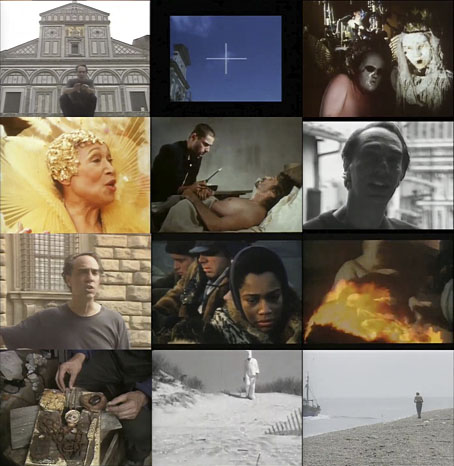
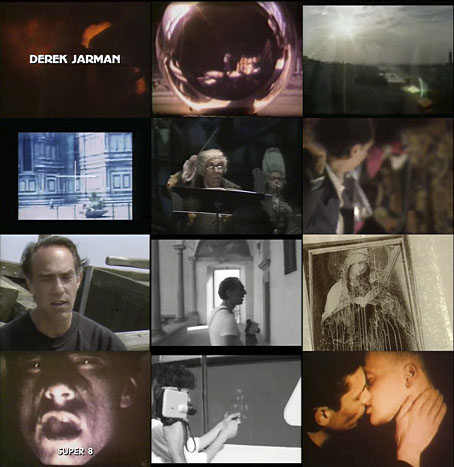
The recent news from the BFI about their forthcoming collections of Derek Jarman films sent me to YouTube once more in search of a documentary I’d been hoping to see again. Derek Jarman: Know What I Mean… is the film in question, and was posted a few months ago by director Laurens Postma on his own YouTube channel. Postma produced a number of arts features for Channel 4 (UK) in the 1980s, one of which, Six Into One: The Prisoner File, a documentary about the making of Patrick McGoohan’s The Prisoner, has been mentioned here already. The Jarman film was made in 1988, and I think was the first lengthy television examination of Jarman’s career. It’s still one of the best since the later documentaries tended to be either shortish interview sessions or posthumous works such as Derek (2008) by Isaac Julien and Bernard Rose.

dj2.jpg

Postma’s film captured Jarman shortly after he’d moved to his cottage at Dungeness, a relocation that was a kind of semi-retirement even though his films were becoming more visible as a result of funding and screening from Channel 4. This was also the period when he was becoming more vocally political thanks to what seemed at the time to be the unending reign of the iniquitous Margaret Thatcher. The Tories of the day had recently announced the now-infamous Section 28 of the 1988 Local Government Act (discussed in the film as both Clause 28 and—confusingly—Clause 29, the labels by which the amendment was first known), a ruling that forbid councils from promoting homosexuality, especially in schools. The late 80s saw the peaking of anti-gay bigotry in Britain, a reaction against the growing freedoms of the 1970s and, inevitably, the menace of AIDS which was still being regarded as “the gay plague”. Jarman had recently been diagnosed as HIV+, something he discusses here with typical good cheer although the conversation is generally more about art than his health, and about the way his own works were always related to gay sexuality. Jarman was one of many gay artists who welcomed their sexual identity as fixing them in the position of outsiders, and it’s notable how many of his films are concerned with outsider figures. When discussing The Tempest (1979) he compares Prospero’s island to gay sexuality, an uncharted enclave and a home to outcasts where different rules apply. This was still a common view among gay men and lesbians in the 1980s—Jarman’s friends in Coil used to say similar things in their interviews—and very different from today’s drive towards conformity and social assimilation. Postma’s film ends with Jarman on the beach at Dungeness, the perfect zone for a lifelong outsider, midway between the land and the sea.

(Note: the Winston Churchill referred to in the film is the grandson of the famous Prime Minister. Winston Churchill Jr. was an MP in the Thatcher government who tried to bring in a bill banning the public exhibition of “explicit homosexual acts” following Channel 4’s TV broadcast of Jarman’s Sebastiane.)

Previously on { feuilleton }
David Tibet meets Derek Jarman
Shooting the Hunter: a tribute to Derek Jarman
Derek Jarman’s landscapes
Derek Jarman album covers
Ostia, a film by Julian Cole
Derek Jarman In The Key Of Blue
The Dream Machine
Jarman (all this maddening beauty)
Sebastiane by Derek Jarman
A Journey to Avebury by Derek Jarman
Derek Jarman’s music videos
Derek Jarman’s Neutron
Mister Jarman, Mister Moore and Doctor Dee
The Tempest illustrated
In the Shadow of the Sun by Derek Jarman
Derek Jarman at the Serpentine
The Angelic Conversation
The life and work of Derek Jarman

Weekend links 392

images.jpg

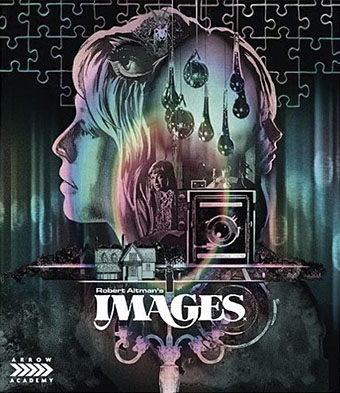
Art by Twins of Evil for the forthcoming blu-ray from Arrow Academy.

Images (1972), the film that Robert Altman made between McCabe and Mrs Miller and The Long Goodbye, is the closest the director came to outright horror. A disturbing portrait of mental breakdown, with Susannah York in the lead role, and photography by Vilmos Zsigmond, the film has for years been so difficult to see as to be almost invisible. Arrow Academy will remedy this situation in March next year with a new blu-ray restoration. Related: Geoff Andrew on where to begin with Robert Altman.

• “[Johnson] is a paltry, utterly conventional, upwardly mobile, morally squalid parvenu who yearns to be taken for what he isn’t.” Jonathan Meades‘ vitriol is in a class of its own, here being deployed in a review of Nincompoopolis: The Follies of Boris Johnson by Douglas Murphy.

• “These films, all preserved in the BFI National Archive, are known as Orphan Works. When the rights-holder for a film cannot be found, that film is classified as an Orphan Work.” 170 orphaned films have been added to the BFI’s YouTube channel.

Don’t romanticize science fiction. One of the questions I have been asked so many times I’ve forgotten what my stock answer to it is, ‘Since science fiction is a marginal form of writing, do you think it makes it easier to deal with marginal people?’ Which—no! Why should it be any easier? Dealing with the marginal is always a matter of dealing with the marginal. If anything, science fiction as a marginal genre is more rigid, far more rigid than literature. There are more examples of gay writing in literature than there are in science fiction.

Samuel Delany in a lengthy two-part interview with Adam Fitzgerald

• One of the books I was illustrating this year was The Demons of King Solomon, a horror anthology edited by Aaron French. The collection is out now; I’ll post the illustrations here in the next month or so.

• Mixes of the week: Routledge Dexter Satellite Systems by Moon Wiring Club, No Way Through The Woods: A Conjurer’s Hexmas by SeraphicManta, and FACT mix 632 by Priests.

• Also at the BFI: Adam Scovell on a film adaptation of MR James that predates Jonathan Miller’s Whistle and I’ll Come To You (1968) by 12 years.

• At Weird Fiction Review: Jon Padgett on absurd degenerations and totalitarian decrepitude in The Town Manager by Thomas Ligotti.

• At Larkfall: Electricity & Imagination: Karl von Eckartshausen and Romantic Synaesthesia.

• It’s the end of December so the London Review of Books has Alan Bennett’s diary for the past year.

Aquarium Drunkard‘s review of the year’s best music.

• At Dennis Cooper’s: Lotte Reiniger Day.

Robin Rimbaud is In Wild Air.

• Dream Sequence (Images II) (1976) by George Crumb | Images (1977) by Sun Ra | Mirror Images (1978) by Van Der Graaf

Weekend links 390

possession.jpg

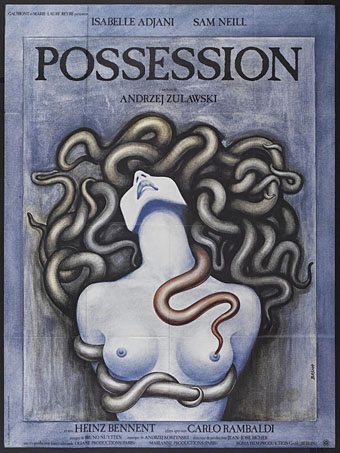
French poster by Basha (Barbara Baranowska) for Andrzej Żuławski’s extraordinary Possession (1981).

• “Alive from Off Center, renamed Alive TV in 1992, was an American arts anthology television series aired by PBS between 1984 and 1996. Each week, the series featured experimental short films by a mixture of up-and-coming and established directors. Notable episodes included As Seen on TV, starring comic actor Bill Irwin as an auditioning dancer who becomes trapped in a television, wandering among daytime dramas, MTV, and PBS’s own Sesame Street and the atmospheric puppet melodrama Street of Crocodiles, adapted by the Brothers Quay from the Bruno Schultz story. […] Arguably the series’ best-known episode was What You Mean We? a short film written by, directed by, and starring Laurie Anderson, which aired in 1986.” Alive from Off Center, 11 episodes at Ubuweb.

• “[Count] Stenbock was a homosexual convert to Roman Catholicism and owner of a serpent, a toad, and a dachshund called Trixie. It was said that toward the end of his life he was accompanied everywhere by a life-size wooden doll that he believed to be his son. His poems and stories are replete with queer, supernatural, mystical, and Satanic themes; original editions of his books are highly sought by collectors of recherché literature.” Of Kings and Things: Strange Tales and Decadent Poems by Count Eric Stanislaus Stenbock will be published by Strange Attractor in March, 2018.

• Music news of the week (in this house, anyway) is a new song, The Mysterious Vanishing of Electra, by Anna von Hausswolff. A new album, Dead Magic, is due in March, and I’m doubly-thrilled to read that Randall Dunn of Master Musicians of Bukkake (and producer/engineer for Earth, Sunn O))), etc.) is involved.

• “Why do Texas prisons ban Freakonomics but not Adolf Hitler’s Mein Kampf?” asks Lauren McGaughy. On the banned list is the three-volume The Graphic Canon, edited by Russ Kick, which includes my adaptation of The Picture of Dorian Gray.

• “To understand how other planets are made, exogeologists are synthesizing those planets in miniature in the earthbound equipment in their labs.” BLDGBLOG on speculative mineralogy.

• “What does the Bardo sound like?” Lauria Galbraith on Éliane Radigue‘s Trilogie de la Mort, three hour-long electronic compositions based on The Tibetan Book of the Dead.

• And speaking of Earth, Joseph Stannard talked to Dylan Carlson (Earth) and Kevin Martin (The Bug) about their recent collaboration.

• Mixes of the week: FACT mix 630 by Hanz, XLR8R Podcast 519 by Setaoc Mass, and Secret Thirteen Mix 239 by Blush Response.

• The League’s seven deadly sins: Reese Shearsmith on the cinematic influences behind The League of Gentlemen’s TV series.

Donnie & Laurie, a jam from the late 1970s with Laurie Spiegel on Electrocomp 101 synthesizer, and Don Christensen on drums.

• Guests and dates for the Dublin Ghost Story Festival have been announced.

David Bowie sang for Devo, and Mark Mothersbaugh might have the tapes.

• The albums of the year according to The Quietus.

• At Dennis Cooper’s: Isabelle Adjani Day.

Possessed (1979) by MX-80 Sound | Possession (1988) by Danzig | Possessed (1992) by Balanescu Quartet