Weekend links 548

aurora.jpg

The Aurora Borealis by Charles H. Whymper.

• “In 1829, when the celebrated Japanese artist Katsushika Hokusai was almost 70 years old, he created more than 100 drawings of a dazzling array of subjects: playful cats, serene landscapes, even severed heads. Hokusai’s fame continued to grow after his death in 1849, and the suite of small, elaborate drawings was last purchased a century later, at a Paris auction in 1948. Then it disappeared from the public eye.” The British Museum now has the drawings which may be seen here.

• The week in cover design: Emily Temple compares US and UK covers for the same books, while Vyki Hendy collects recent titles with objects as the main feature of the cover designs. One of my recent covers (which will appear here soon) is less minimal than these but also features an arrangement of objects.

• The compilation experts at Light In The Attic Records have put together another collection of obscure Japanese music. Somewhere Between: Mutant Pop, Electronic Minimalism & Shadow Sounds Of Japan 1980–1988 will be released in January.

“A Jamesian world is one of cursed artefacts, endlessly subsuming landscapes, forgotten manuscripts and tactile beings that punish the curious and intellectually arrogant.” Adam Scovell visits the grave of MR James.

• Dragons and Unicorns: John Boardley on the lost art of the Hieroglyphic Bible.

• I almost missed John Waters’ favourite films of the year.

• At Dennis Cooper’s: Sade’s Castle, Cardin’s House.

• Northern lights photographer of the year.

• Aurora Hominis (1970) by Beaver & Krause | Aurora (1971) by Tonto’s Expanding Head Band | Soft Aurora (1979) by Tod Dockstader
Weekend links 547

baade.jpg

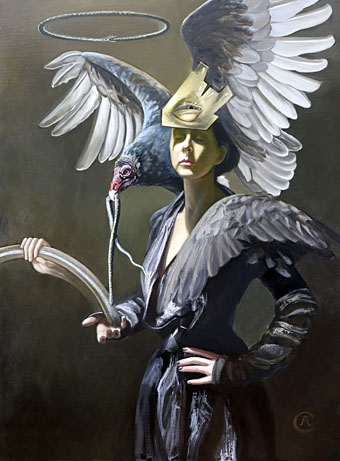
Anti-Vanitas (2018) by Carrie Ann Baade.

• RIP Richard Corben, an artist whose work I wasn’t always keen on but whose enthusiasm for pulp weirdness and cosmic horror was matched by a pulp vitality of his own. Corben’s Den was the first story in the first issue of Heavy Metal, a strip in which Den’s ever-present penis provided some rare equality of nudity in American comics. Corben was also a lifelong Lovecraftian; his 1972 adaptation of The Rats in the Walls is one of the earliest Lovecraft-derived comic strips.

• “Wit was the great man’s defence. Once, crossing Leicester Square with a friend, he looked up and saw a cinema marquee advertising a new film: Michael Redgrave and Dirk Bogarde in The Sea Shall Not Have Them. Coward turned to his friend and said: ‘I don’t see why not. Everyone else has.'” Philip Hoare on Noël Coward’s private lives: the photographs that could have landed him in jail.

• The end of the year brings the lists: Strange Flowers’ Secret Satan, 2020 is a guide to a surfeit of delectable volumes, while at 3 Quarks Daily Dave Maier selects his favourite ambient music of the year.

It’s not an easy life, but for Layne it is better than the alternative. “There is a generation of writers who think that it is a perfectly acceptable thing to accumulate a couple of hundred thousand dollars in student loan debt and go write “takes”—contrary opinion on things like ‘Why Dogs Are Actually The Worst Pet.’” None of it is new, he says, “it’s what people were doing when Rome burned.” But it has left us worse off, he says.

“I feel like we are post-language now,” he says. “Things are more symbolic. The relationship between words and facts and objectivity and their impact seems to have separated to the point where most of the writing that I see, especially on something like Twitter, is by people baffled that people don’t get what they are trying to say. It’s depressing.”

Dominic Rushe on how Ken Layne created an alternative to clickbait in the desert

• “Underworlds, otherworlds, so many passageways on this earth to elsewheres, especially during these weeks of the year.” Nina MacLaughlin on The Shadows below the Shadows.

• Dennis Cooper‘s favourite fiction, poetry, non-fiction, film, art, and internet of 2020. Thanks again for the link here!

• The week in strange worlds: The Strange World of Colossive Press, and The Strange World of Robbie Basho.

• The Images Wish To Speak: An interview with artist Carrie Ann Baade.

• Jackson Arn on why so many filmmakers have paid homage to Pieter Bruegel.

• Physicists nail down the “Magic Number” that shapes the Universe.

• Dreams, Built By Hand

• Shadow (1990) by Nusrat Fateh Ali Khan | Shadows (1994) by Pram | Shadow Of A Twisted Hand Across My House (2001) by I.E.M.

Harold Budd, 1936–2020

thepearl.jpg

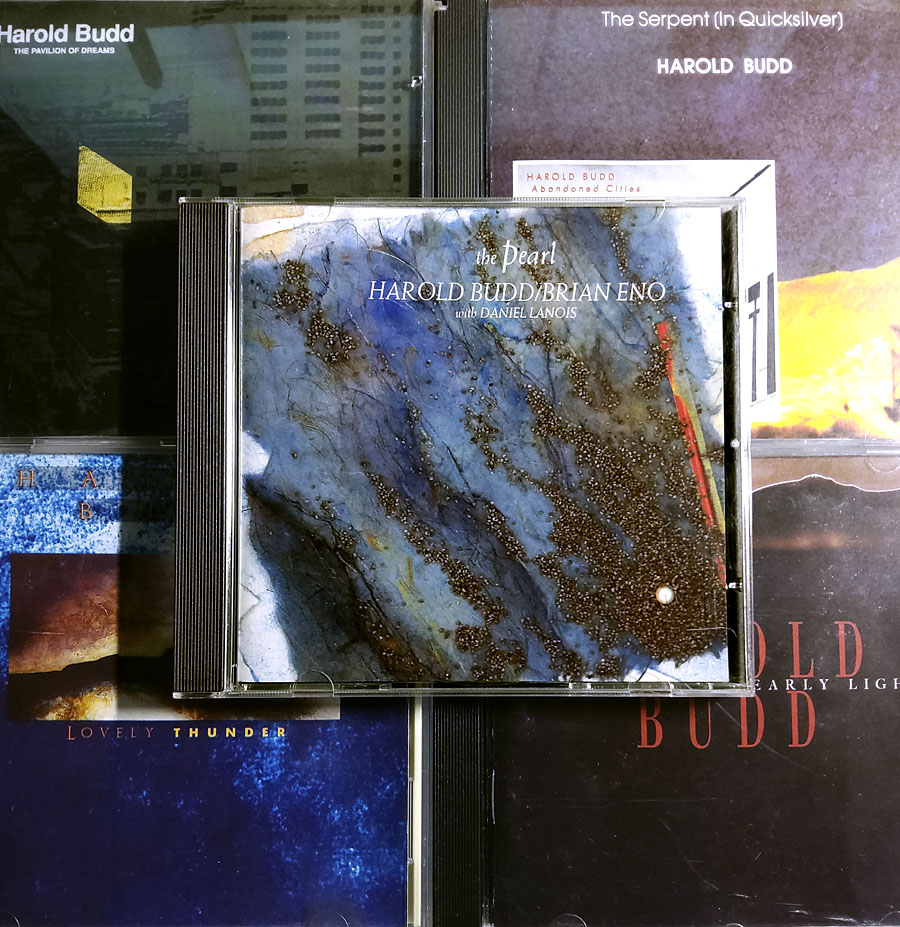
Art and design for The Pearl by Russell Mills.

I must have listened to this album hundreds of times, maybe thousands, there having been days when I’ve allowed it to loop for hours on end. I’ll never tire of it.

There’s a lot I could write about Harold Budd: about his early electronic compositions like The Oak Of The Golden Dreams; about the way that The Pavilion Of Dreams is the slowest jazz album you’ll ever hear; about the Eno/Lanois production on The Pearl which creates music that’s simultaneously earthed and extraterrestrial, the latter quality making it a (dark-eyed) sister to Apollo—Soundtracks & Atmospheres; about the time that Budd became the fourth member of the Cocteau Twins; about the William Burroughs influence in the poems that Budd reads on By The Dawn’s Early Light; about the beautiful soundtrack he composed with Robin Guthrie for Gregg Araki’s Mysterious Skin, a film whose subject matter isn’t beautiful at all… But it’s easier to simply say listen to this.

Previously on { feuilleton }
• Made To Measure
• Night Music in two parts

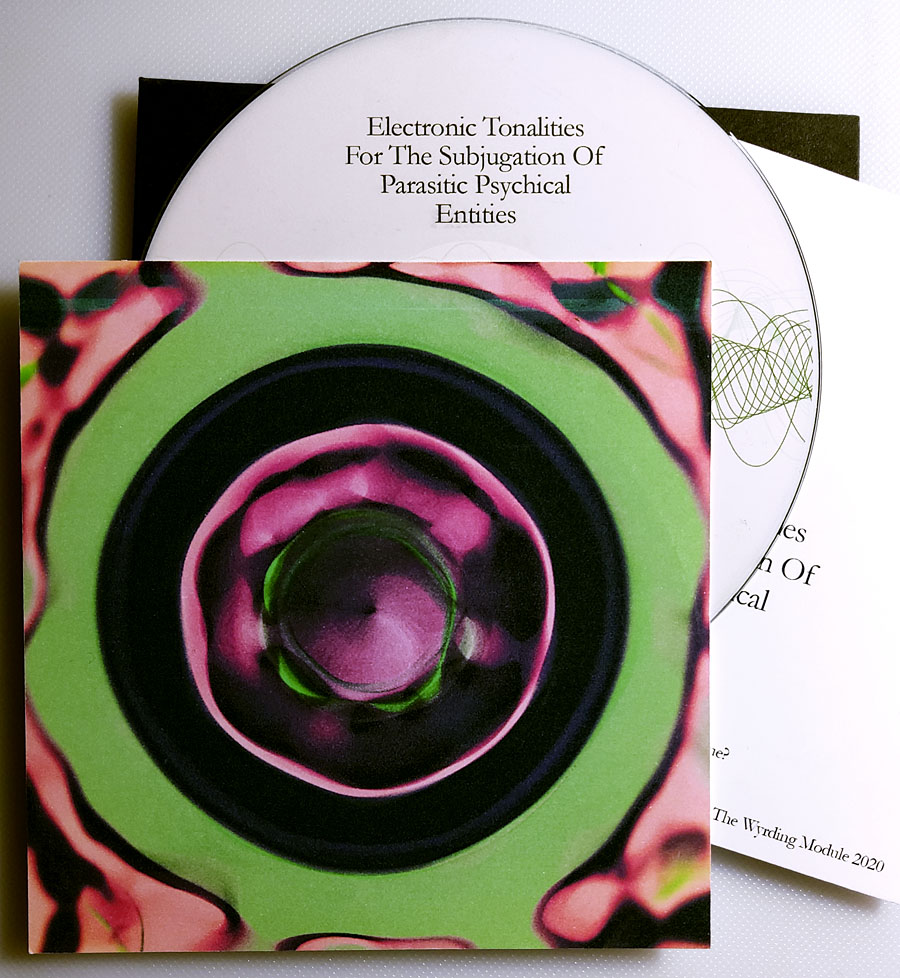
Electronic Tonalities For The Subjugation Of Parasitic Psychical Entities

tonalities.jpg

In today’s post, the latest release from The Wyrding Module. The electronic tonalities emanating from darkest Salford continue to be satisfyingly spectral, and with sufficient character to avoid being taken for the work of another artist. Wyrding Module music inhabits a haunted zone where occult rites, parapsychology, cosmic horror and kosmische music intersect; there’s a William Burroughs reference in the title of a piece from an earlier release—Infused With The Venom Of Giant Aquatic Centipedes—and even a hint of psychedelia, mostly evident in the persistently vivid cover art. Pastiche is kept to a minimum; last year’s Typhonic Neural Tantra featured the kind of groovy organ-led number you might hear playing in a horror-film nightclub but this was an uncommon departure. Previous releases (of which there may now be 13…details remain vague) are generally forward-looking, as you’d expect from an artist whose name is borrowed from a science-fiction device—a sonic weapon—invented by David Lynch.

The new album delivers familiar Wyrding Module trademarks: grinding synthetic timbres, glitch-ravaged voices that might be the product of a ritual working, and that organ tone which maintains a generic mood without ever becoming too literal. The print inside each disc is a unique work of generative art. Being someone who likes to keep the seasonal parasites at bay by sustaining the spirit of Halloween until January, this is all very welcome. Subjugate your own psychical entities here.

Previously on { feuilleton }
• The Outer Church

Weekend links 546

cosmorama.jpg

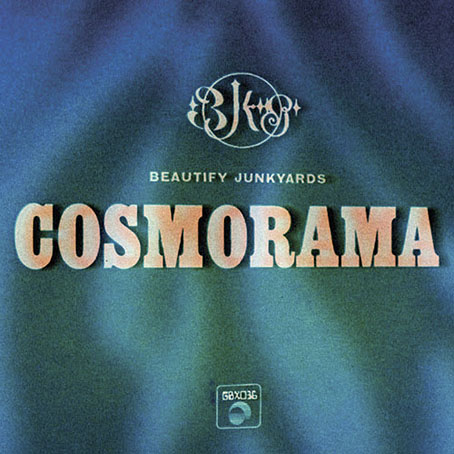
The next release on the Ghost Box label, Cosmorama is “tropicalia tinged psychedelic dream pop” by Beautify Junkyards. The album will be available in January. Design, as always, is by Julian House.

• Reading a review of John Gray’s Straw Dogs several years ago I remember thinking facetiously that Gray should write a follow-up about cats. (Straw Dogs isn’t a book about dogs.) The joke is on me with the publication of Gray’s latest, Feline Philosophy: Cats and the Meaning of Life. I should set up as a literary agent.

• All you need is doom: Plague Notes, Unnamed, Unknown, A Finger Dragged Through Dust, the debut album from My Heart, an Inverted Flame, is released on the 11th of this month. “Absolutely NO guitars were used in the casting of these drone metal voidscapes.” Excellent work.

• What a difference a week makes: “A Utah monolith enchanted millions and then it was gone, leaving mysteries behind.”

• En Pleine Mer: The underwater landscapes of Eugen von Ransonnet-Villez, 1867.

• Imaginative drawings of travel during a pandemic lockdown by Oscar Oiwa.

• The beauty of starling murmurations as photographed by Søren Solkær.

• Cosmic Dancer: Alice Finney on the strange world of Michael Clark.

• Mix of the week: Invaders by The Ephemeral Man.

• Cosmos (1972) by Bruno Menny | Gliding Thru The Cosmophonic Dome (1981) by Bernard Xolotl | Radio Cosmos (1981) by Ippu-Do