Val Denham album covers

denham01.jpg

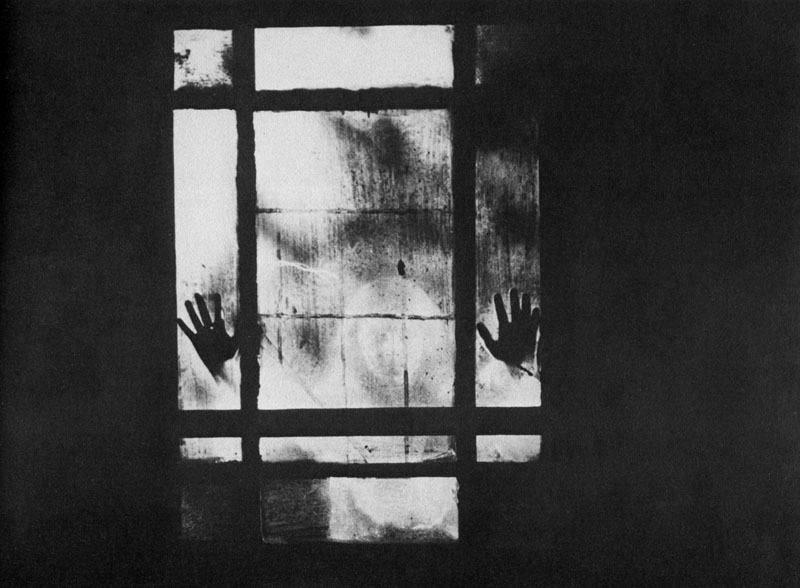
Funeral In Berlin (1981) by Throbbing Gristle.

British artist and musician Val Denham was mentioned in yesterday’s post so I thought it worthwhile following up with a selection of the painter’s record sleeves. Denham’s art stood out for me when I first saw the cover of Throbbing Gristle’s Funeral In Berlin album, and for its visceral immediacy this is still a big favourite. The early 1980s were the perfect time for Denham’s paintings to appear on record sleeves, the diminished area of CD packages providing a poor stage for work that’s this vivid and dramatic. Her associations with Throbbing Gristle extended to work with Marc Almond, a cover for the Some Bizzare compilation If You Can’t Please Yourself You Can’t, Please Your Soul which featured ex-TG members Coil and Psychic TV, and further associations with Coil via allies Black Sun Productions. Many of these connections can be explored at Denham’s detailed website which has a great gallery section showing work in a variety of media from the past thirty years. Her art is surreal, intense, often disturbing, and deeply personal in its exploration of shifting gender boundaries. Isn’t it time someone published a Val Denham book?

Some cover samples follow. More can be seen at the artist’s website.

denham02.jpg

Untitled (1982) by Marc and The Mambas. Design by Huw Feather.

denham03.jpg

Torment And Toreros (front, 1983) by Marc and The Mambas. Design by Huw Feather.

denham04.jpg

Torment And Toreros (back, 1983) by Marc and The Mambas. Design by Huw Feather.

Continue reading “Val Denham album covers”

A Moment of Inspiration, 1983

marc.jpg

Marc Almond (1983) by John Coulthart.

This, girls and boys, is how we occupied ourselves in the long nights before the advent of 24-hour television: we sat up drawing portraits of Marc Almond. A conversation on Twitter reminded me of this, a drawing that’s never before appeared in public but which is now added to the web collection. For a quick piece of art it’s actually a lot more successful than many of the more laboured things of mine that were printed far and wide at this time. The portrait was copied from a magazine photo, I forget which one, possibly Flexipop if it was still going, an increasingly wayward title that had a soft spot (so to speak) for Soft Cell. The Spanish hat identifies it as being from the Torment and Toreros period while the lettering was taken from Val Denham and Huw Feather’s cover design for the first Marc and The Mambas album, Untitled (1982). The padded-cell background refers, of course, to Marc’s former group, and was copied from the back of the Bedsitter 12″. Most of the drawing is done in black Biro pen with the hat and shirt in gouache. On the back I happened to make a note of the date, something I seldom bother with.

moment.jpg

The Twitter conversation was prompted by the appearance of Soft Cell’s notorious Sex Dwarf video at Dangerous Minds; Flexipop enjoyed the scurrilous side of Soft Cell so much they printed a still from this Bacchanal as a centre-spread in one of their issues. Meanwhile Marc himself was writing in the Guardian this week about Bowie manqué Jobriath, one of the real-life inspirations for the Brian Slade character in Todd Haynes’ Velvet Goldmine, and the subject of a feature-length documentary, Jobriath A.D., by Kieran Turner, currently showing at the BFI’s London Lesbian & Gay Film Festival.

Previously on { feuilleton }
Derek Jarman’s music videos

Weekend links 101

cabat.jpg

Kraken from Ernie Cabat’s Magical World Of Monsters (1992) at Monster Brains.

“I think for a lot of people who don’t read pulp growing up, there’s a real surprise that the particular kind of Pulp Modernism of a certain kind of lush purple prose isn’t necessarily a failure or a mistake, but is part of the fabric of the story and what makes it weird. There’s a big default notion that ‘spare,’ or ‘precise’ prose is somehow better. I keep insisting to them that while such prose is completely legitimate, it’s in no way intrinsically more accurate, more relevant, or better than lush prose.” China Miéville at Weird Fiction Review expressing an opinion that few in the literary world ever articulate, never mind agree with. Far more common is (to pick a recent example) Ursula K Le Guin dismissing Cormac McCarthy for “pretentious prose”.

• “Militant feminist scientists brainwash a research subject to assassinate the Welsh Minister of Prostitution. Meanwhile World War III is being fought and the USA has been invaded.” The IMDB précis for Taking Tiger Mountain (1983), a feature film directed by Tom Huckabee from a script by William Burroughs, and featuring a 19-year-old pre-Aliens/Near Dark Bill Paxton. The director discusses the film’s production at Screen Slate and attends a rare screening at Spectacle, Brooklyn, NYC, today (March 25th). YouTube has a three-minute clip. Surprising this has remained buried for so long. When can the rest of us get to see it?

• Prestel have published the catalogue for In Wonderland: The Surrealist Adventures of Women Artists in Mexico and the United States. AnOther previewed some of the contents. The exhibition runs at the LACMA, Los Angeles, until 6th May.

…gays only make up about 3% of the population so we spend our whole lives “translating” straight movies, books, ballets into gay terms and studying the heterosexuals around us—we know much more about them than they know about us, just as blacks know a lot about whites but whites know virtually nothing about blacks.

Edmund White (again) interviewed by Frank Pizzoli at Lambda Literary Review.

• New on Caroline True Records: Jon Savage’s “Fame”, Secret History of Post-Punk 1978–81. “Some of it doesn’t sound like anything that has happened since,” says Savage. Indeed. FACT has the track list which I was pleased to see includes Chrome among the usual suspects. Hear a 12-minute promo mix at Soundcloud.

guerin.jpg

The Colossi of Memnon by Jules Guerin. From Egypt and its Monuments (1908) by Robert Hichens at Golden Age Comic Book Stories.

Gay Life Stories, “a colourful compendium of same-sex love through the ages” by Robert Aldrich. Reviewed here. Related: Alice Dreger asks “Are straight people born that way?”

• Clive Hicks-Jenkins created a series of designs for a Washington DC performance of Stravinsky’s The Soldier’s Tale. Follow their evolution in reverse order at his blog.

• Hocus Pocus: Margaret Eby on the brief epistolary relationship between Harry Houdini and Arthur Conan Doyle.

Rick Poynor on more cover designs for JG Ballard’s Crash.

London, city of dreams and rivers, caught on Polaroid.

• Photo prints by Thom Ayres for sale at Society6.

B*tches in Bookshops

• Meet You In The Subway (1979) by Chrome | New Age (Version III) (1980) by Chrome | Danger Zone (1981) by Chrome | Firebomb (1982) by Chrome.

Creel Pone

creel1.jpg

One of the many surprises for me about Enter the Void was finding recordings by electronic composer Jean-Claude Eloy mixed into its droning soundscape, namely extracts from his 1979 album, Shànti. I’d been listening to this a week or so before watching the film after having downloaded a large quantity of obscure electronic releases on the bootleg Creel Pone label.

creel3.jpg

Flowers Of Evil (1969) by Ruth White.

The Creel Pone project by Keith Fullerton Whitman began with the intention of reissuing in a limited form 100 albums of electronic or electro-acoustic music dating from the period 1947 to 1983 (or 1952 to 1984 according to the label seal); The Analogue Age, in other words. Most of the albums were long out of print, and few had ever been available on CD when the project began although some have since had official reissues. The recordings were transferred from vinyl then burned to 50 CD-Rs per album, each release coming in a CD-sized facsimile of the original cover. Simon Reynolds wrote a piece about the label for The Wire in 2010 but I first encountered the releases a couple of years earlier via an acquaintance who was one of the collectors trying to accumulate the entire run. The run finished some time ago so the reissues themselves will soon be as difficult to find as the releases they made available, hence the recourse to mp3, and this cache of almost the entire catalogue. I haven’t listened to everything there yet (iTunes tells me this would take 2.2 days, non-stop)—and I find my patience often runs out with tape-collage electro-acoustic compositions unless I’m in the mood—but some of these albums are so good, the Thomas Köner-like Shànti among them, you have to wonder why they were overlooked for so long. A few of the uploads have tracks missing, and they’re all variable quality, but you won’t find this amount of Creel Pone material anywhere else in a hurry. (There’s also no guarantee they’ll be there for long so don’t complain to me if you’re visiting this post after they’ve all been deleted.)

creel6.jpg

Musique Pour Le Futur (1970) by Nino Nardini.

Discogs has an incomplete catalogue listing. Several of Jean-Claude Eloy’s albums are now available on CD. Gil Mellé’s excellent soundtrack for The Andromeda Strain was given a limited CD release two years ago but is out of print again. For some recordings it seems, the struggle to reach an audience is a continual one.

creel4.jpg

The Andromeda Strain: Original Electronic Soundtrack (1971) by Gil Mellé.

creel7.jpg

Pythagoron (1977) by Pythagoron™

creel5.jpg

Reflecting On The First Watch, We Uncover Treasure Buried For The Blind (1978) by Cellutron & The Invisible.

creel2.jpg

Shànti (1979) by Jean-Claude Eloy.

Previously on { feuilleton }
Enter the Void
Cristalophonics: searching for the Cocteau sound
The Avant Garde Project

Enter the Void

etv01.jpg

It’s taken me a while to see this but the long search for a genuinely psychedelic feature film is over. That’s genuinely psychedelic not in the debased sense of a handful of garish or trippy visuals, but in the full-spectrum expanded-consciousness sense for which Humphrey Osmond invented the term in 1956:

I have tried to find an appropriate name for the agents [psilocybin, mescaline, LSD, etc] under discussion: a name that will include the concepts of enriching the mind and enlarging the vision. My choice, because it is clear, euphonious, and uncontaminated by other associations, is psychedelic, mind-manifesting.

Other films have given us flashes of this kind of unfiltered experience—Chas’s mushroom trip in Performance (1970), for example—or attempted to relay LSD states through Hollywood conventions: The Trip (1967) and Altered States (1980). Then there are inadvertently psychedelic moments such as the Star Gate sequence in 2001: A Space Odyssey (1968). Some of the most successful works from a psychedelic perspective have almost always been abstract, micro-budget films such as those made by James Whitney, Jordan Belson, Ira Cohen and others. But until very recently no-one had attempted to combine the narrative-free intensity of abstract cinema with a film narrative that would warrant placing psychedelic experience at the heart of the story. I was hoping A Scanner Darkly (2006) might do it but, good as it was, it didn’t really get there. Gaspar Noé’s Enter the Void is the film that gets everything right.

etv02.jpg

Linda and Oscar.

The narrative is a simple one (Noé calls his story a “psychedelic melodrama”): Oscar, a young American drug-dealer living in Tokyo smokes DMT, trips out for a while then goes to exchange some goods with a customer in a small club called The Void. While there he’s shot and killed in a police raid. His disembodied consciousness leaves his body, and for the next two hours wanders the streets and buildings following his beloved sister, Linda, and his friends while they cope with the aftermath. Later on he starts to re-experience memorable (and traumatic) moments from his life. The Big Signifying Text in all of this is introduced in the opening scene: The Tibetan Book of the Dead. Oscar hasn’t read much of it so his friend Alex quickly relates (for the benefit of the audience) the book’s description of what happens to the soul between the time of death and rebirth into a fresh human body. A few minutes later we’re with Oscar experiencing this very process in dizzying, miraculously-filmed detail. Flicking through my own copy of The Tibetan Book of the Dead (OUP, 1960) one paragraph in the introduction had particular relevance:

The deceased human being becomes the sole spectator of a marvellous panorama of hallucinatory visions; each seed of thought in his consciousness-content karmically revives; and he, like a wonder-struck child watching moving pictures cast upon a screen, looks on, unaware, unless previously an adept in yoga, of the non-reality of what he sees dawn and set.

WY Evans-Wentz

etv07.jpg

This is your brain on drugs: the DMT trip.

Continue reading “Enter the Void”