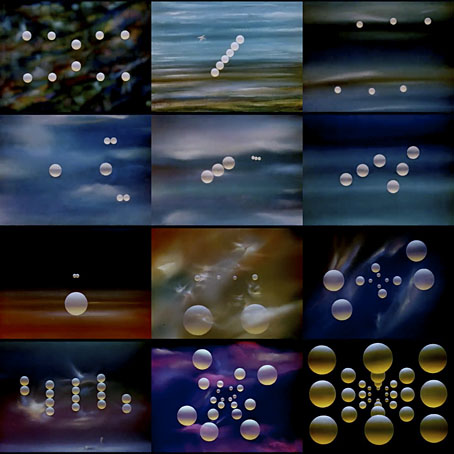
Spheres, a film by Norman McLaren and René Jodoin

spheres.jpg

Norman McLaren’s dance films were a late development, previous decades having been spent creating animated films in a variety of techniques. Many of these were abstract works with a musical accompaniment, as is Spheres (1969), one of McLaren’s last films in this style. It’s not completely abstract: a butterfly keeps interrupting the multiplying spheres which dance through space to a piano piece by Bach. This being a Canadian production, it’s fitting that Glenn Gould is at the keyboard.

Previously on { feuilleton }
Ballet Adagio, a film by Norman McLaren
Pas de Deux by Norman McLaren
Norman McLaren

Weekend links 260

burgher.jpg

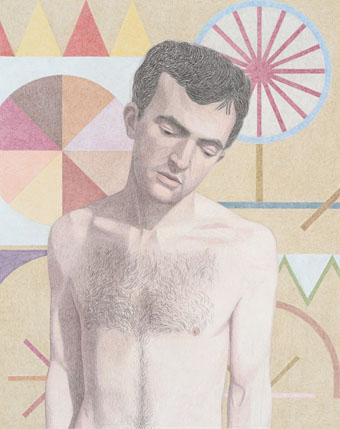
Bachelor with “demons” (Sleezy) [sic] (2015) by Elijah Burgher. One of a new series of artworks by Burgher showing at Zieher Smith & Horton, NYC.

• The week in HR Giger: Belinda Sallin on her documentary, Dark Star: HR Giger’s World; Ron Kretsch on the unseen cinema of HR Giger; Matthew Cheney thinks the Gigeresque has become too familiar. I can see his point but originality is always in short supply; asking for something new means setting yourself up for a long wait.

Pwdre ser, or Star jelly, is “a pale, foul-smelling jelly traditionally associated with meteorite falls”. The Rot of the Stars at the ICA, London, is an audio-visual art collaboration between Jo Fisher and Mark Pilkington dealing with the mysterious substance.

• Mixes of the week: A Tri Angle Records birthday DJ set by Björk; OreCast 196 mix by Ilius; Secret Thirteen Mix 153 by M!R!M.

To assume that a given group of people would be similar because of birthdate, Ryder thought, was to risk committing a fallacy. “The burden of proof is on those who insist that the cohort acquires the organised characteristics of some kind of temporal community,” he wrote. “This may be a fruitful hypothesis in the study of small groups of coevals in artistic or political movements but it scarcely applies to more than a small minority of the cohort in a mass society.”

Generational thinking is a bogus way to understand the world says Rebecca Onion

The plan for an airport above the streets of Manhattan. Related: Charles Glover‘s similar plan for London.

Errol Morris on how typography shapes our perception of truth.

Michael Moorcock enjoyed The Vorrh, a novel by Brian Catling.

Clive Barker on almost dying, hustling, and killing Pinhead.

• A new Penguin Books website for Angela Carter.

• Callum James on artist Philip Core.

A Beginner’s Guide to King Tubby

King Tubby Meets Rockers Uptown (1976) by Augustus Pablo | Star Cannibal (1982) by Hawkwind | Sleazy (1983) by Jah Wobble, The Edge, Holger Czukay

Art that transcends

ca56.jpg

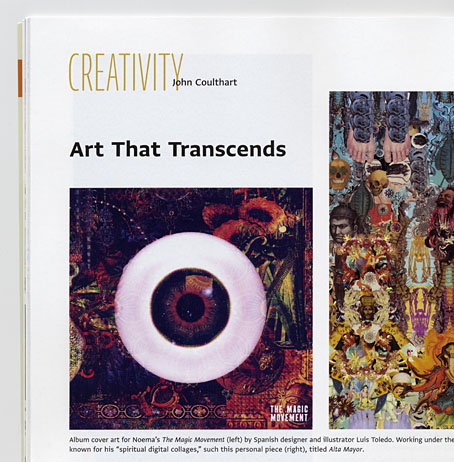
Late last year, US design magazine Communication Arts asked me to write a piece about psychedelic art, past and present. The resulting feature has been out for a couple of weeks in the May/June issue (no. 56) but I hadn’t seen it in print until a copy turned up today. Attempting to wrangle discussion of a very wide-ranging and amorphous field into 1500 words isn’t an easy task but I managed to sketch a history of psychedelic art beginning with Aldous Huxley and Humphrey Osmond’s mescaline experiments in the 1950s. Art that can be considered psychedelic goes back into prehistory but Huxley’s The Doors of Perception (1954) is the first book that considered art in general from a psychedelic viewpoint. That book, and the later Heaven and Hell (1956), are still valuable for their aesthetic meditations however much Huxley’s optimism may have been tainted by the ferment of the 1960s.

earth.jpg

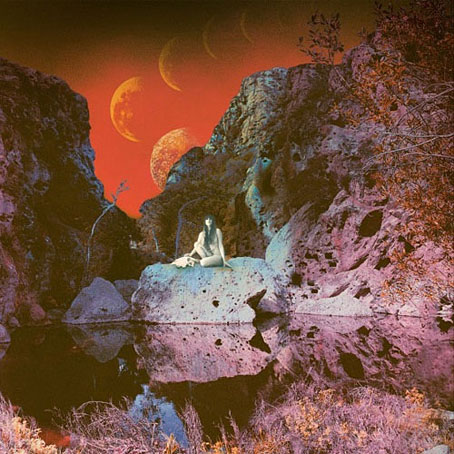
Primitive And Deadly (2014) by Earth. Art by Samantha Muljat.

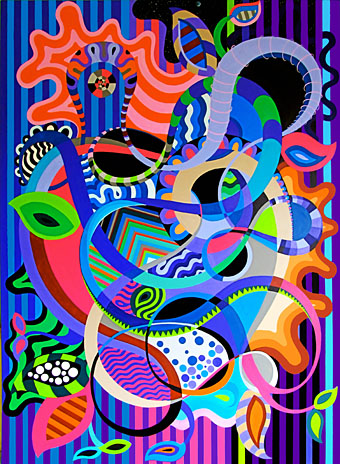
The psychedelic art of the 60s isn’t exactly overlooked so I paid more attention to tracing the influence of the psychedelic style, and also mentioning painters such as Ernst Fuchs, Alex Grey, Martina Hoffmann and Mati Klarwein. Among the more recent artists, I was pleased that Samantha Muljat‘s album cover for Earth was featured. I’ve been listening to this album a great deal over the past few months, and loved that cover as soon as I saw it. One of the other contemporary names, Brazilian artist Duda Lanna, works in a very different style: bold, vivid, and often abstract. There seems to be a lot of this kind of work around at the moment, so much so that I kept spotting new examples after the article had been delivered. It’s difficult to say whether this is a developing trend or simply a case of there being more of everything around these days. I’ll play safe and suggest it’s probably a bit of both although, as I say at the end of the article, if the movement to legalise drugs gains momentum we can expect to see a lot more psychedelic art.

lanna.jpg

Garden of Psychedelic Delights by Duda Lanna.

Eurydice…She, So Beloved, a film by the Brothers Quay

eurydice.jpg

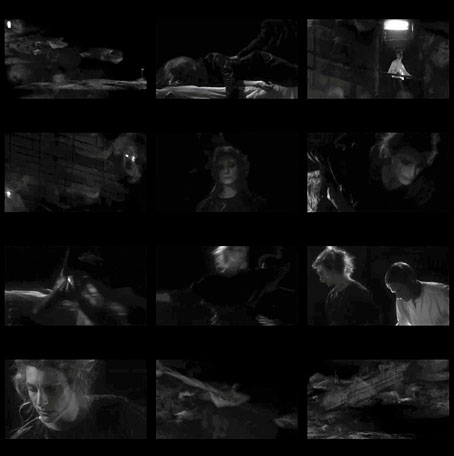
Another recent short from the Quays that’s yet to be given a wider release, Eurydice…She, So Beloved (2007) is an opera/dance piece subtitled “Film ballet in homage to the 100th anniversary of Claudio Monteverdi’s Orfeo“. Orfeo (Simon Keenlyside) sings an aria while Hermes (Kenneth Tharp) rouses Eurydice (Zenaida Yanowsky) from her sleep in a suitably Stygian and rather industrial Underworld. Watch it here.

Elsewhere on { feuilleton }
The Quay Brothers archive

Weekend links 259

bennett.jpg

The Endlessness (2012) by Emma Bennett.

• “Clearly if you’re familiar with The Arcades Project by Walter Benjamin you’ve got a leg up on what Rivette and company are up to. […] Like all Rivette works, it’s obsessed with the interrelationship between theater and life—reality and fantasy.” David Ehrenstein makes Jacques Rivette’s Out 1 sound even more intriguing. The 729-minute film is being reissued later this year.

• “It’s all your artistic friends. They frighten me…they seem evil, somehow—somehow unhealthy. And when you’re with them, dear, you change…” Steven Cordova reviews To the Dark Tower (1946), the debut novel by gay writer Francis King.

• “Sex isn’t a subtext in The Bloody Chamber, but the text itself. (Carter would explain that she was only making explicit a ‘latent content’ that is ‘violently sexual.’)” Laura Miller on Angela Carter’s re-told fairy tales.

Yet, as a citizen, and especially as an artist, [Chimamanda Ngozi] Adichie refuses to censor herself. “There is already enough silencing in public discourse,” says Adichie, and this is certainly true when the topic is race, and especially when the conversation is in America. It is our addiction to comfort that demands our silence regarding certain truths. Too often in America, Adichie claimed, “the goal of public discourse is comfort, not truth.” Comfort, Adichie said, also demands “international digestibility,” a reduction of complicated stories to a simple narrative. In the lecture, Adichie also warned of the silencing that is sometimes a product of social media outrage.

Kay Iguh on Chimamanda Ngozi Adichie’s Arthur Miller Freedom to Write Lecture at the PEN World Voices Festival

• New books: The Strangers and Other Writings by Robert Aickman, and Murderous Passions: The Delirious Cinema of Jesús Franco by Stephen Thrower & Julian Grainger.

• The world is rediscovering Mad Max and George Miller’s prowess for action cinema so Anne Billson posted a transcript of her 1985 interview with the director.

• Mixes of the week: Dmytro Fedorenko presents artists from Ukrainian record label Kvitnu, and The Ivy-Strangled Path Vol. VII by David Colohan.

Assault on Precinct 13 goes disco: The End (John Anthony’s New Scratch Mix) (1983) by “John Carpenter” (The Splash Band).

John Coltrane talked to Frank Kofsky for an hour in November 1966.

• Sleazy Cinema: A guide to Peter Christopherson‘s music videos.

Six hours of women in electronic music.

The weird world of Alfred Kubin.

Giallo Magic Orchestra

Blood (1972) by Annette Peacock | Blood On The Moon (1981) by Chrome | Blood From The Air (1986) by Coil