Weekend links 246

ngai.jpg

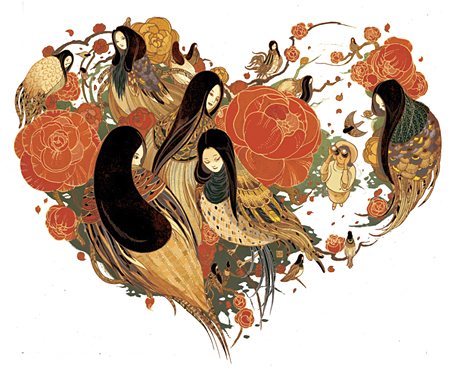
Love Hunter by Victo Ngai.

• “The strangeness of the lyric style, the misuse of words and awkward phraseology that have been criticized even by Poe’s fervent admirers, are here taken as virtues, heightening as they do, a given poem’s conscious and calculated formalism.” Marjorie Perloff reviews The Poet Edgar Allan Poe: Alien Angel by Jerome McGann.

• Mix of the week: Secret Thirteen Mix by Jeremy Kolosine. Starting with Michael Rother is apt when I’ve spent the past week in a Cluster/Harmonia/Kraftwerk/La Düsseldorf/Neu!/Rother loop.

• Court records “suggest that the supposedly prudish Victorians had a far more relaxed attitude to sex between men than their 1960s counterparts”. Historian Jeff Evans has the data.

• “Part of HP Lovecraft’s acknowledged debt to Machen also lies in hearing without seeing.” London Sound Survey on Arthur Machen’s “sounds from beyond the veil”.

• “…pity the designer who has to enact the stage direction that instructs rats to carry away a character’s feet.” Andrew Dickson on the extreme theatre of Sarah Kane.

• Psychedelic collage artist Wilfried Sätty receives a mention in Carey Dunne‘s piece about how LSD helped shape California’s ecstatic design legacy.

• More psychedelia: The Psychedelic Sex Book by Eric Gotland & Paul Krassner, edited by Dian Hanson.

• At Dangerous Minds: Robert Fripp demonstrates Frippertronics on The Midnight Special, 1979.

• Dreams from a Glass House: artist Josiah McElheny on the glass architecture of Paul Scheerbart.

• Director Peter Strickland on six films that fed into The Duke of Burgundy.

Vintage trade card designs

The Zero Of The Signified (1980) by Robert Fripp | Heptaparaparshinokh (1981) by Robert Fripp & The League of Gentlemen | 1984 (1981) by Robert Fripp
Leitkegel

autobahn12.jpg

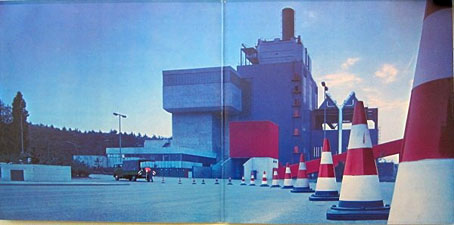
Gatefold interior for Doppelalbum (1974), a double-disc compilation album by Kraftwerk.

More Kraftwerkiana. “Leitkegel” is the German name for traffic cones, and it’s immediately obvious to anyone browsing Kraftwerk’s pre-Autobahn recordings that Ralf and Florian had a fixation with these objects. The closest thing I’ve found for a rationale is in Tim Barr’s history of the group, Kraftwerk: From Dusseldorf to the Future (1998), which features some musings about the influence of Joseph Beuys and the Düsseldorf arts scene of the late 60s. Prior to Kraftwerk, Florian Schneider was a member of a short-lived art collective/music outfit with the very un-Kraftwerkian name of Pissoff. Recordings exist of the group performing with Beuys. A more straightforward explanation might be to look towards Pop Art (something that Barr also suggests), with the traffic cone serving as a symbolic objet trouvé that’s also the first inkling of the future Kraftwerk obsessions with roads, trains and cycling. Whatever the impulse behind its adoption, between 1969 and 1973 the traffic cone was turning up everywhere that Ralf and Florian went.

tonefloat1.jpg

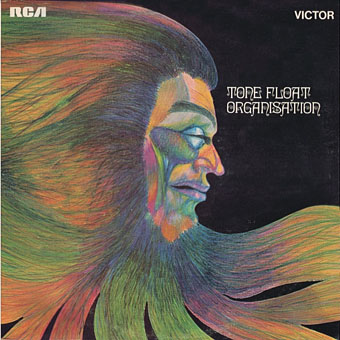
Cover design by “Comus” (Roger Wooton).

tonefloat2.jpg

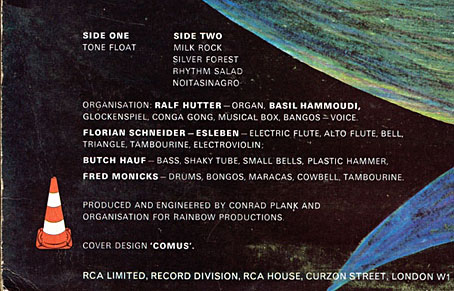
The first instance is on Tone Float (1970), the pre-Kraftwerk album by Organisation, a collection of freeform improvisations that’s very much of its time. The album wasn’t very successful, and matters weren’t helped by the poor cover artwork. That multicoloured head and Ringlet typeface are also very much of their time but if you look on the back of the sleeve you find a traffic cone beside the album credits.

organisation.jpg

Organisation live (1970).

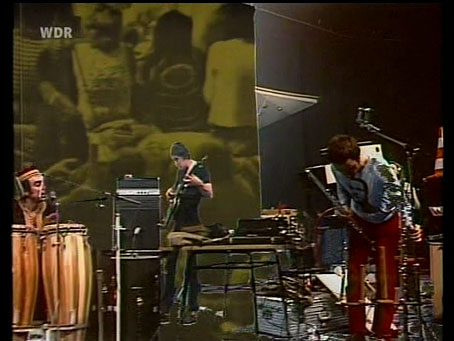
Before the group split they were recorded by German TV, a performance that gives a good idea of the Organisation sound and of how odd they all look together. Ralf Hütter isn’t visible but you do glimpse a traffic cone for a moment when Florian is moving his microphone stand. I suspect the proliferation of cones around Florian (see below) is an indicator that their adoption was his doing.

Continue reading “Leitkegel”

Weekend links 245

htbag.jpg

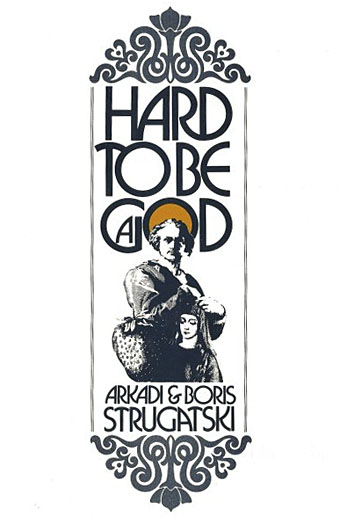
First English-language edition of Hard to Be a God, 1973. Cover design by Alan Peckolick.

A group of scientists is sent to the planet Arkanar to help the local civilization, which is in the Medieval phase of its own history, to find the right path to progress. Their task is a difficult one: they cannot interfere violently and in no case can they kill. The scientist Rumata tries to save the local intellectuals from their punishment and cannot avoid taking a position. As if the question were: what would you do in God’s place?

Hard to Be a God is a 170-minute Russian science-fiction film based on a novel by Arkady & Boris Strugatsky, the authors of Roadside Picnic. The film was the magnum opus of director Aleksey German (1938–2013) who died shortly before post-production was complete. German’s wife and son finished the film.

“…the wonder about this exhausting, astonishing film is not that it took so long to make, it’s that it got made at all,” says Gabriel Winslow-Yost; “one of the most consistently disgusting films ever made,” says Glenn Kenny, “…not only an unforgettable individual masterpiece but probably one of the capital-G Great Films.”; “There are no bones to be made about it, Hard to Be a God is a modern masterpiece,” says Matt Thrift.

This pushes all of my cinematic buttons, of course, so now I’m itching to see it. YouTube has trailers, and (if you must) you can also find the entire film without subtitles. I’d rather wait for a disc version. Meanwhile, Chicago Review Press have republished the novel with a new translation by Olena Blumberg and a foreword by Hari Kunzru.

• At the Guardian John Doran recommends new Middle Eastern and North African music; the playlist includes a song from the forthcoming album by Melechesh which features my cover art. At the Quietus this week Doran explored Manchester’s urban wastelands with local musician Julie Campbell aka Lonelady.

• “Research into psychedelics, shut down for decades, is now yielding exciting results,” says Michael Pollan. Related: Ryan Cooper on why the [US] government should be funding mass scientific studies of Ecstasy, magic mushrooms, and LSD, and “Early humans used magic mushrooms, opium“.

Dad combined porn with all manner of genre fiction. He wrote pirate porn, ghost porn, science-fiction porn, vampire porn, historical porn, time-travel porn, secret-agent porn, thriller porn, zombie porn and Atlantis porn. An unpublished Old West novel opens with sex in a barn, featuring a gunslinger called Quiet Smith, without doubt Dad’s greatest character name. By the end of the decade, Dad claimed to have single-handedly raised the quality of American pornography.

Chris Offutt on the prolific writing career of his father, Andrew Jefferson Offutt V

The Sound Repository 2 by Wizards Tell Lies, a free collection of “rare tracks, demos, early and alternative versions” at Bandcamp.

Jennifer Rothwell‘s new fashion collection uses prints based on Harry Clarke’s stained-glass windows.

• Mix of the week: My Body Full Of Stars, an Afrofuturism mix by Oyinboy.

Terry Gilliam’s title sequence for Cry of the Banshee (1970).

Endless Endless: Kraftwerk at Tumblr.

Sehr Kosmisch (1974) by Harmonia | Walky-Talky (1975) by Harmonia | Sometimes In Autumn (1976) by Harmonia 76

German gear

Ralf and Florian, 1973. Back cover photo by Barbara Niemöller.

At that time, Kling Klang Studio was far from the technological hub it would become. “The studio was a big room in an old factory building with brick walls,” recalls [Wolfgang] Flür. “There were big home-made speakers, amplifiers and so on. Florian had his side, with his flutes and one of the very first ARP Odyssey synthesizers, while Ralf’s side had Hammond and Farfisa organs and a Minimoog synthesizer.”

Andy Gill, Mojo magazine, April 1997

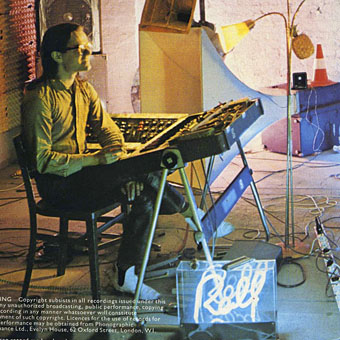
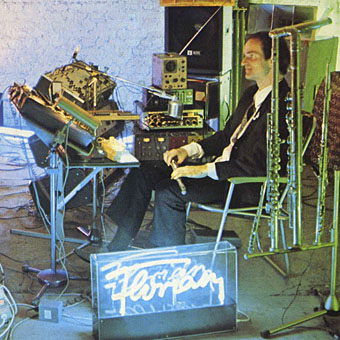
Last week’s Autobahn post prompted a week of revisiting Kraftwerk’s three pre-Autobahn albums, all of which remain unreissued. The photo that fills out the back cover of the third album, Ralf & Florian (1973), has appeared here twice before so if you want an example of an obsession look no further. I only have a bootleg CD of this one, a package that doesn’t do much for the photograph so I went searching for a larger copy.

ralf.jpg

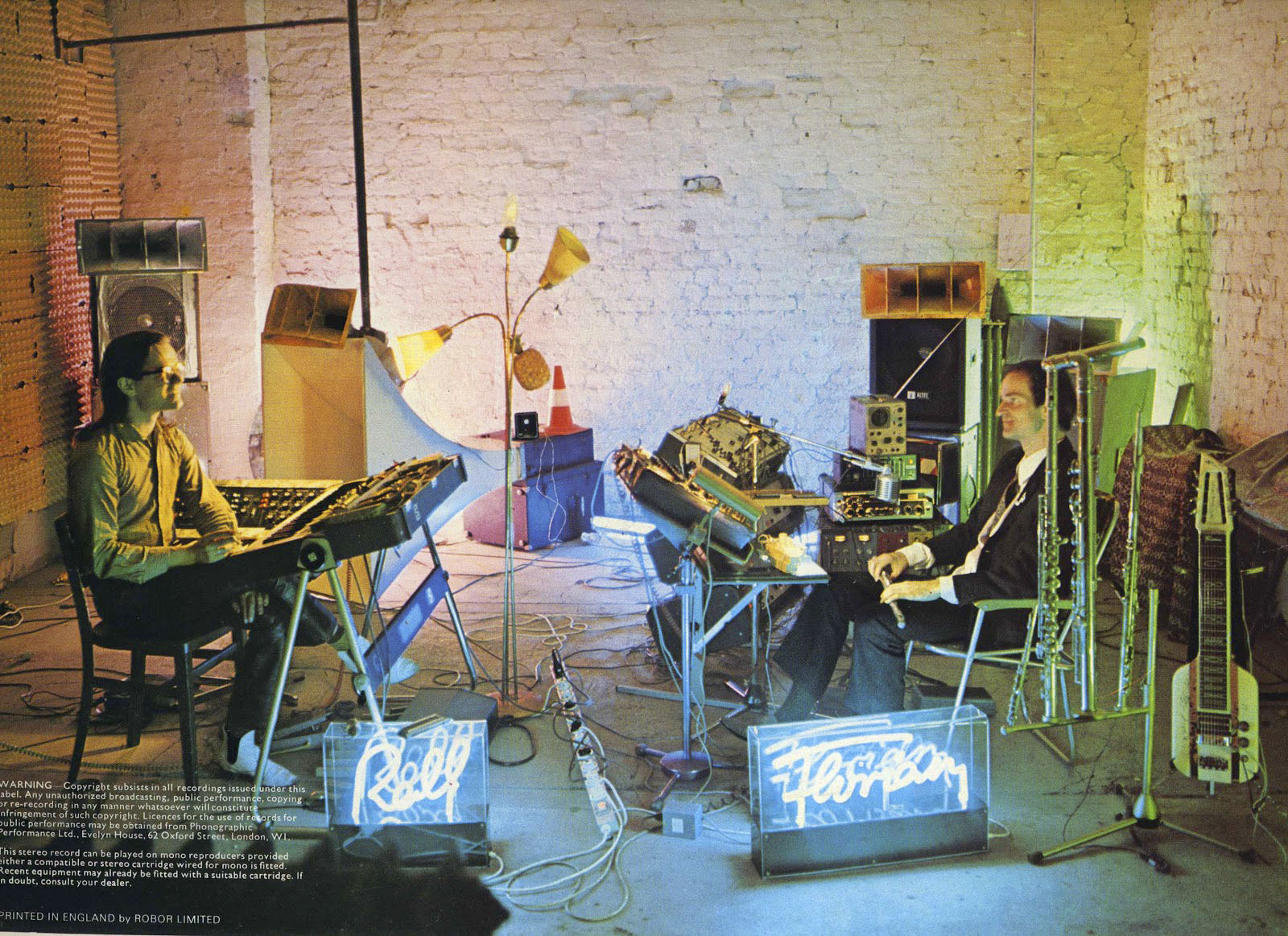
The attractions, if you have to list them, are multiple: Ralf & Florian is Kraftwerk’s most human album, and the cover photos reflect this. Trans-Europe Express originally had pictures of the group on its sleeve (now replaced by the TEE train) but they were airbrushed, idealised portraits; the showroom-dummy personas they adopt there would turn into robots on the album that followed. There’s an overt sense of camp about the Ralf & Florian cover shots that runs counter to the tenor of rock music in 1973. The charts in Britain might have been filled with glam acts but for all their flirtatious androgyny they were selling the same assertive macho sexuality as the big rock bands of the time. One of the things I enjoy about this cover photo is its refusal to follow that crowd: the neon name signs, the standard lamp from a 1950s’ living room, Florian’s semiquaver brooch; all are effete enough to give Deep Purple the vapours. (The first UK release of Ralf and Florian replaced the cover photo of the pair with a printed circuit.) The closest comparison in the same year would be the sleeve for Brian Eno’s Here Come The Warm Jets with its shelves of dead flowers and junk-shop discoveries. But this wasn’t so surprising for an ex-member of Roxy Music, and Eno’s album is still very much a rock production.

florian.jpg

Then there’s the details: the egg-box soundproofing (Can used old mattresses to soundproof their studio); the enormous white speaker; the traffic cone that nods back to the sleeves of the first two albums and forward to the automotive theme of the next; Ralf’s white shoes (and is he wearing leather trousers?); Florian’s oscilloscope, his mysterious tone generators and that peculiar stringed instrument. This diverse range of gear somehow produced the music you’re listening to.

Continue reading “German gear”

Weekend links 244

scarpulla.jpg

MMOB :: Far West (2013) by Alison Scarpulla.

• “…although same-sex love is as old as love itself, the public discourse around it, and the political movement to win rights for it, arose in Germany in the late nineteenth and early twentieth centuries. This message may surprise those who believe that gay identity came of age in London and New York, sometime between the Oscar Wilde trials and the Stonewall riots.” Alex Ross reviewing Robert Beachy’s Gay Berlin: Birthplace of a Modern Identity. Beachy talks about his book here.

• “I was in a room with tube synthesizers, where you had to tune them up to play them. It was unbelievable.” John Carpenter talking to Joseph Stannard about composing with electronics. Carpenter’s album of new music, Lost Themes, may be previewed here.

• From 2010: John Ridpath on Mervyn Peake’s illustrations for Lewis Carroll’s Alice Through the Looking Glass and Alice in Wonderland. Related: “The most twisted version of Alice in Wonderland you’ll ever see.”

I was brought up in a world where art was something owned and insured—usually inherited: but seldom if ever made by anyone one I knew.

I had an early inkling that there was fun to be had over the hill, like the feeling when faced with a sunset that someone’s throwing a mega awesome party just beyond the nearest cloud, and I set off to join the caravan. Let’s just say I was in search of company, headed towards the glow, and I found it.

Tilda Swinton‘s speech at the Rothko Chapel

• “Her art often touches on alchemy and magic; and in her memoir of insanity she writes of misreading an Imperial Chemicals sign as ‘chemistry and alchemy’.” Charlotte Higgins on Leonora Carrington.

Shadows Over Main Street, an anthology of small-town Lovecraftian terror, is out this week from Hazardous Press. 20 stories and poems plus interior illustrations including a contribution of my own.

• “With Fantastic Planet, I felt torn about using it, because it’s…the title of an animated film.” Guitarist Sarah Lipstate, aka Noveller, talks to Ned Raggett about her new album.

Jim Jupp of Belbury Poly and the Ghost Box record label answers 15 questions.

• A DeLorean driving through a Tron cityscape: Retrowave by Florian Renner.

• Powell & Pressburger’s Tales of Hoffmann (1951) has been restored.

Music from Forbidden Planet (1956) by Louis & Bebe Barron | The Four Horsemen (1972) by Aphrodite’s Child | Assault on Precinct 13 (Main Theme) (1976) by John Carpenter