Weekend links 574

vyletal09.jpg

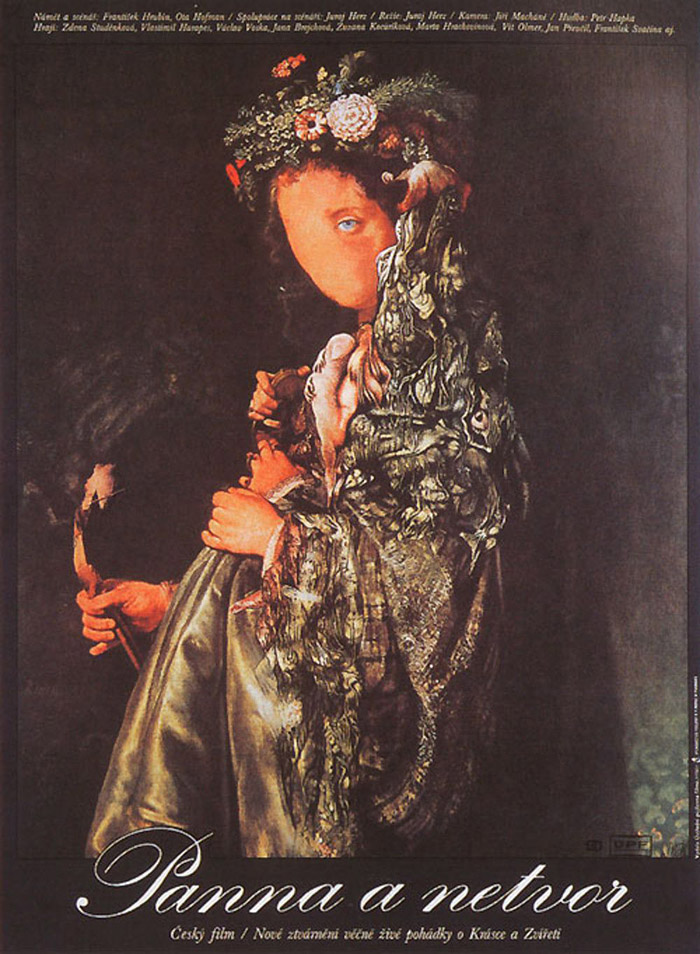
Poster for Beauty and the Beast (1978) by Josef Vyletal.

• Next month, Second Run release Juraj Herz’s 1978 adaptation of Beauty and the Beast on region-free blu-ray. I watched this last year on a Czech DVD so it’s good to hear it’s being given an upgrade. Herz’s film is a distinctly sinister take on the familiar tale, with a bird-headed Beast that’s closer to Max Ernst than anything you’ll find in illustrations for Perrault’s stories.

• “In a coincidence so unlikely it almost seems, well, magical, the girls traced illustrations from a book of folklore that also contained a short story by Sir Arthur Conan Doyle himself, a reflection of a reflection of a reflection.” Audrey Wollen on the Cottingley fairy photographs. Related: The Coming of the Fairies by Arthur Conan Doyle.

• “[Mark E. Smith], with his love of Stockhausen, HP Lovecraft, and (bizarrely) the sitcom Keeping Up Appearances, becomes a reverse coder, an apostle of avant pulp, a ‘paperback shaman’.” Sukhdev Sandhu reviews Excavate! The Wonderful and Frightening World of the Fall, edited by Tessa Norton and Bob Stanley.

• “Found photos of men in love from 1850–1950“. Maybe. As before, I’m always cautious about imposing a narrative on old photographs.

• Mixes of the week: A mix for The Wire by Pamela Z, and a dose of post-punk esoterica by Moin for XLR8R.

• DJ Food takes another dive into back issues of International Times in search of ads for London’s Middle Earth club.

• At The Smart Set: Colin Fleming watches John Bowen’s drama of pastoral horror, Robin Redbreast.

• At Dennis Cooper’s: Heavily plotted non-linear structures whose velocity lacks narrative drive.

• Ryan Gilbey attempts to rank Robert Altman’s features into a list of 20 best.

• Still Farther South: Poe and Pym’s Suggestive Symmetries by John Tresch.

• New music: At One Point by Scorn.

• Visionist‘s favourite albums.

• The Beast (1956) by Milt Buckner | Leggo Beast (1978) by Gregory Isaac’s All Stars | This Beast (1983) by Tuxedomoon

Weekend links 571

valck.jpg

Habit d’Astrologue (c. 1700) by Gerard Valck.

• “The Appointed Cloud begins with the high-pitched, keening sound of many bagpipes noisily playing at once—and then the music slowly coalesces, approaching a peaceful, tranquil hum. This gives way to fast-paced repetitive pulses, reminiscent of the minimalist works of composers such as Terry Riley and Philip Glass. Then the bagpipes join in once more, in a ferocious swarm of energy.” Geeta Dayal on the music of Yoshi Wada.

• “How can we conceive of the time of climate change, the time of planetary death? The House on the Borderland tried to conceive of exactly this a century ago. Yes, the narrator’s acts are fruitless. He gets haplessly carted about the universe to witness the end of time, which never really ends, is always at the edge, nearing an asymptote, on the borderland.” Namwali Serpell journeys through space and time with William Hope Hodgson.

• The Bureau of Lost Culture: DJ Food hosts a podcast discussion with Tony Bennett, founder and publisher of Knockabout Comics.

• Mixes of the week: Isolated Mix 111 (plus interview) by Ian Boddy, and a Wire mix (plus interview) by Teresa Winter.

• Fantastic visions and unknown worlds: Edwin Pouncey on Van Der Graaf Generator’s sleeve art.

• At Spoon & Tamago: Sculptor Kenichi Nakaya reconfigures ubiquitous Japanese rural crafts.

• My Bloody Valentine’s Kevin Shields: “We wanted to sound like a band killing their songs.”

• At Wormwoodiana: More earth mysteries are explored in Northern Earth magazine.

• New music: Black Horses Of The Sun by Dave Bessell.

• The Exotica Project: One Hundred Dreamland 45s

• At Dennis Cooper’s: Hans Richter Day.

• Mdou Moctar‘s favourite music.

• Earth Floor (1985) by Michael Brook | Earth Tribe (1993) by Transglobal Underground | Earth Lights (2012) by Belbury Poly

Ian Miller at Interzone

im05.jpg

Issue 4, 1983.

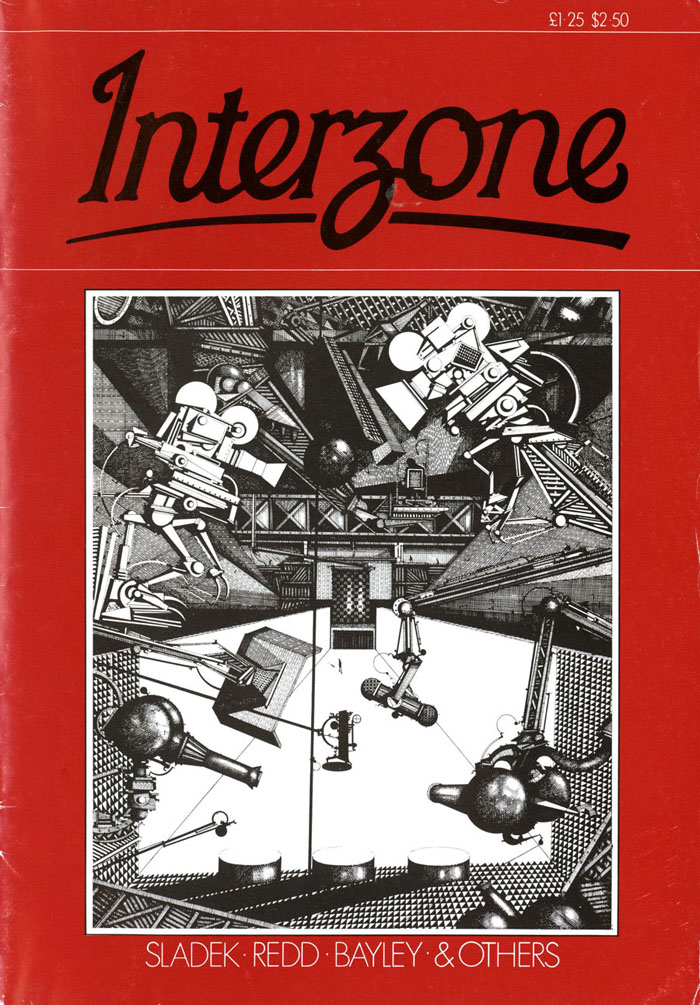
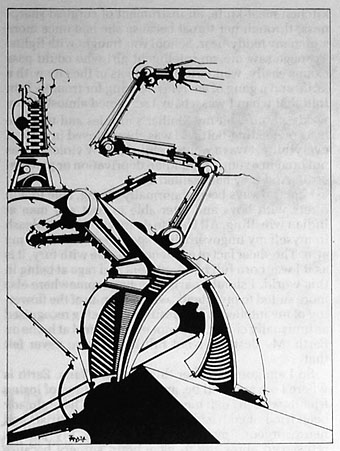
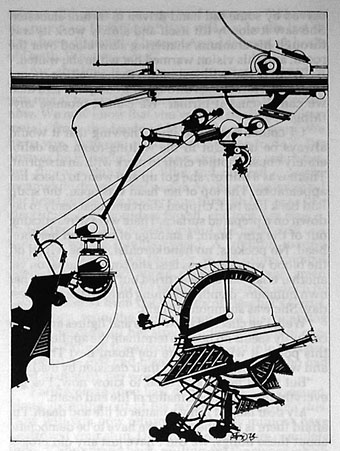
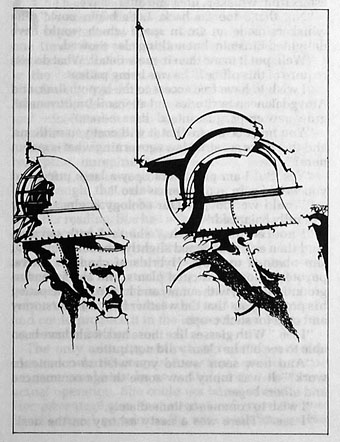
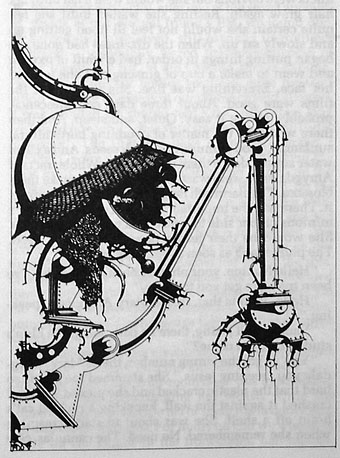
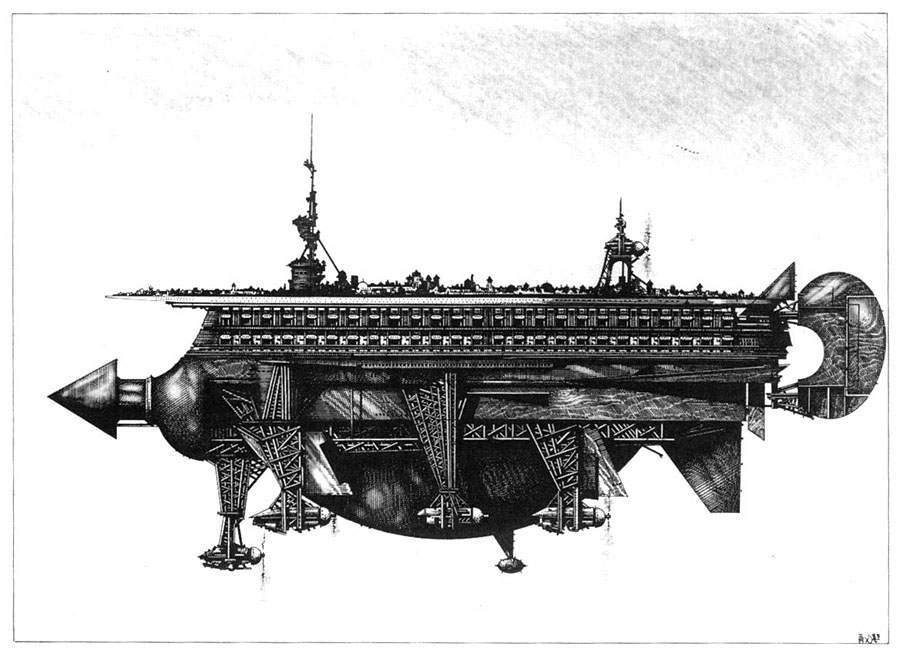
Ian Miller was the art editor for the early issues of Interzone magazine, during which time several of his own drawings and paintings appeared as illustrations. Many of these haven’t been reprinted since, including three that are credited to an “Edwin Dorff”, a name I think we can take as a pseudonym. The run of Interzone at the Internet Archive is an incomplete one, unfortunately, some of the missing issues feature more Miller. Issue 34 contains Miller drawings throughout.

im01.jpg

Issue 3, 1982.

im02.jpg

Issue 3, 1982.

im03.jpg

Issue 3, 1982.

im04.jpg

Issue 3, 1982.

im06.jpg

Issue 4, 1983.

Continue reading “Ian Miller at Interzone”

Universal Horror

universal1.jpg

A couple of Halloweens ago I worked my way through a blu-ray box of the horror films made by Universal Studios in the 1930s and 40s. It was a fun and instructive experience: fun because I’d not watched many of the films properly for a long time; instructive for reaffirming my dislike of Tod Browning’s Dracula, a film so inert and lacking in cinematic drama it may as well be a series of still pictures. Browning’s film is further diminished when you have the opportunity to watch James Whale’s Frankenstein films immediately after it. The collection also allowed me to compare the BFI release of Universal’s silent version of The Phantom of the Opera, where Lon Chaney is an unforgettable Phantom, with the 1943 remake, a film I didn’t recall having seen before. The only positive things about the remake are the always worthwhile Claude Rains, even if he is wasted in the Phantom role, and seeing the massive Paris Opera House set from the silent version being reused.
universal2.jpg

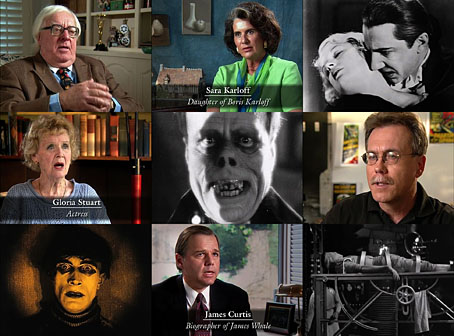
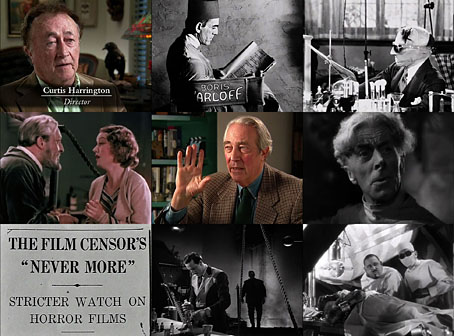
The differences between the Universal adaptations of Dracula and Frankenstein are noted in Kevin Brownlow’s 90-minute documentary which is an extra on the Frankenstein disc. Brownlow’s film, which was originally made for TV in 1998, charts the evolution of Universal’s horror films from their roots in silent cinema and German Expressionism up to the 1940s when the cycle deteriorated into sequelitis and self-mockery via Abbott and Costello. “Universal” here may be taken as referring to all of Hollywood’s early horror films. Rather than waste time on the studio’s increasingly inferior sequels, rival productions from other studios are briefly discussed: Dr Jekyll and Mr Hyde (Paramount), The Island of Lost Souls (Paramount), King Kong (RKO), and Mystery of the Wax Museum (Warner Brothers). In doing this Universal Horror follows the template that Brownlow established with fellow film historian David Gill in 1980 when they produced Hollywood for Thames TV, a 13-part series about the birth of American cinema which I rate as the best documentary series about film ever made. (Gill died in 1997 so Universal Horror is dedicated to his memory.) Hollywood interviewed as many people as possible connected with the production of the first silent films, following the format of the landmark The World at War (1973) series which related the events of the Second World War in 26 hour-long episodes. The World at War was narrated by Laurence Olivier; for Hollywood Brownlow & Gill had James Mason, not only an equivalent voice of authority but also a man with a great enthusiasm for silent cinema. Subsequent Brownlow & Gill documentaries had Lindsay Anderson as narrator, another silents enthusiast with a similar gravitas in his narrative delivery. The narrator of Universal Horror, Kenneth Branagh, isn’t bad as such but whatever his qualities as an actor, his voice alone is a poor match for these heavyweights. He does at least seem to have controlled the sporadic squeaks which mar his delivery in an earlier Brownlow & Gill series, Cinema Europe: The Other Hollywood (1995).
universal3.jpg

Universal Horror and Cinema Europe both fall short when compared to Hollywood by being made too late. By the 1990s most of the men connected with the early years of European cinema had died, and so had many of the actors who made the Universal films. It’s left to a handful of survivors, most of whom are women, to remember the days of their youth: Nina Foch (The Return of the Vampire), Gloria Stuart (The Invisible Man), Fay Wray (who must have spent most of her later years repeating stories about King Kong but here also discusses her role in Mystery of the Wax Museum), Lupita Tovar (the Spanish-language Dracula), Turhan Bey (The Mummy’s Tomb), Rose Hobart (Dr Jekyll and Mr Hyde), and Curt Siodmak (The Wolf Man). Additional commentary is provided by the daughters of significant figures: Sara Karloff, Carla Laemmle (who has a cameo in Dracula) and Arianne Ulmer whose father, Edgar G. Ulmer, directed The Black Cat for Universal, a much better film than the 1943 Phantom of the Opera, and one which should have been in the box set instead. Lastly, there’s some outsider commentary by Ray Bradbury (who also appeared in Brownlow’s next documentary, Lon Chaney: A Thousand Faces), Gavin Lambert, James Karen, Forrest J. Ackerman, Curtis Harrington, James Curtis (author of James Whale: A New World of Gods and Monsters), and David J. Skal (author of Hollywood Gothic, The Monster Show, etc). Given the breadth of the subject—two decades of film history—this should have been a series like Cinema Europe, but horror on the page or on the screen remains the most abject of the genres, continually marginalised, complained about, ignored, censored, banned. Ninety minutes of documentary time is often as good as it gets, especially with Kevin Brownlow producing.

Universal Horror at the time of writing is available for viewing at the Internet Archive, waiting for Universal’s legal goons to put a stake through its heart. Someone has also uploaded the whole of Brownlow & Gill’s Hollywood series which is gratifying to see. The latter is scattered around YouTube in varying quality so it’s good to have a range of options. It’s essential viewing wherever you see it.

Previously on { feuilleton }
• Illustrating Dracula
• Illustrating Frankenstein
• Psychotronic Video
• Dracula and I by Christopher Lee
• Nightmare: The Birth of Horror
• Rex Ingram’s The Magician
• The Mask of Fu Manchu

The Devourer Below

devourer.jpg
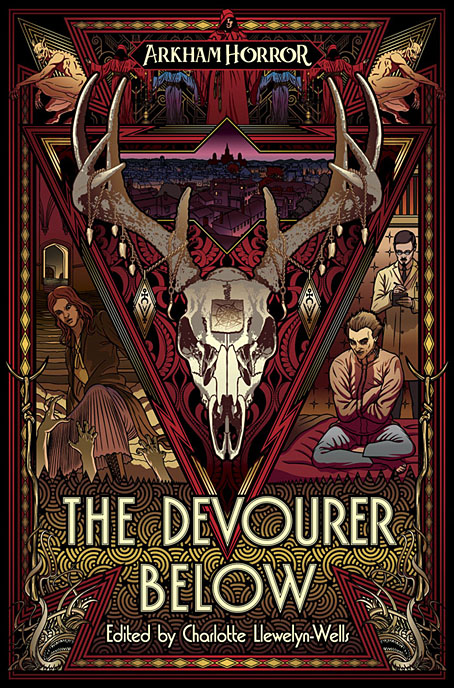
Another week, another cover design. This is the third cover of mine for the Arkham Horror line from Aconyte Books, a fiction series which complements the Lovecraftian Arkham Horror game:

Something monstrous has come to Arkham, Massachusetts. There have always been shadows here, but now a new hunger has risen from the depths and threatens those who dwell here. But there are heroes too—people who stand up and fight to stem the tide, even when it costs them everything. Explore eight shocking new tales of occult horror, captivating mystery, and existential fear—from a zealous new heroine to conniving cultists, bootleg whiskey to night terrors, and fiends that crawl from open graves. A nightmare has fallen across Arkham, and it will devour all.

As with the earlier titles I’ve worked on, The Last Ritual and Litany of Dreams, the general style is Art Deco in keeping with the period in which the game and the stories are set. The new cover worked out especially well thanks to the brief which suggested extending the triangle that appears on the previous covers so that it became a frame for a deer skull bedecked like a ritual artefact. This created a little more space for the requisite character panels, the figures here being an underworld investigator and a lycanthropic asylum inmate, both of whom feature in the game. The brief also requested that Arkham be represented somewhere, so I spent a lot of time drawing a view over the gambrel rooftops of the haunted town, only to shrink the panel down to a size which loses much of the detail. It may be a miniature view but it’s like one of those special effects shots you see in a film, something you know must have taken a lot of work to achieve but which is only visible for a few seconds; a minor presence that adds to the texture of the whole. And the view of nocturnal architecture provides a further link with the previous covers.

The Devourer Below will be available in ebook and US paperback in July, with a UK paperback following in September.

Elsewhere on { feuilleton }
• The Lovecraft archive

Previously on { feuilleton }
• Litany of Dreams
• The Last Ritual