Gervase and Patrick

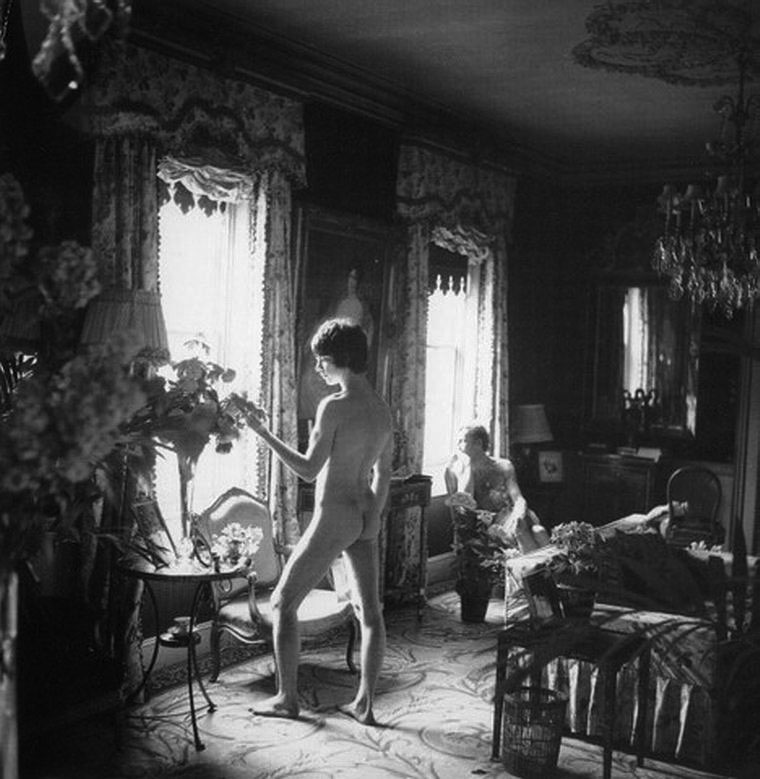
gervaise-patrick.jpg

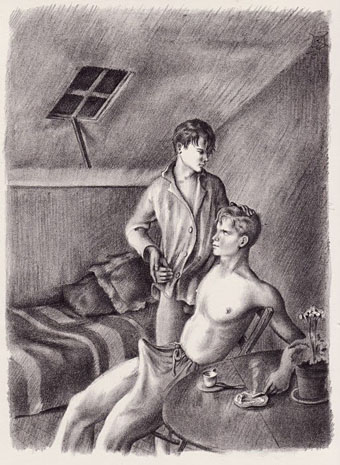
Gervase (left) & Patrick Procktor (right).

Once upon a time in the 1960s: painter Patrick Procktor and friend photographed by Cecil Beaton at Beaton’s home; no wonder David Hockney used to come and visit. Procktor made Gervase Griffiths the subject of his work on more than one occasion, see here and here. Thanks to Little Augury for the picture details.

Update: For more about Procktor, see Patrick Procktor: Art and Life (2010) by Ian Massey.

Previously on { feuilleton }
Further back and faster

Weekend links: New Year edition

olofsdotter1.jpg

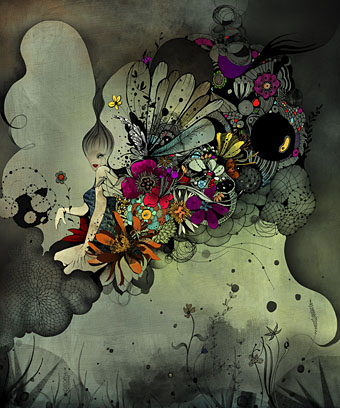
Flower Me Gently (2010) by Linn Olofsdotter.

• “Many of Moorcock’s editorials are published here, and they still make exhilarating reading. Then, as now, Moorcock set his face against a besetting English sin: a snobbish parochial weariness, an ironic superiority to the frightful oiks who have started filling up the streets. You can almost hear, behind the languorous flutter of the pages, Sir Whatsits sniggering to Lady Doo-Dah. It still goes on, and it’s usually the same flummery in different clothes. Moorcock not only would not go to the party: he threw the literary equivalent of explosive devices into the Hampstead living rooms.” Michael Moorcock’s Into the Media Web reviewed. And also here.

• “Beefheart channeled a secret history of America, the underbelly of a continent and a culture that has now all but vanished along with one of its greatest poets.” Jon Savage on the life and work of the late Captain.

Miniatures Blog, in which musician Morgan Fisher works his way through each of the fifty one-minute tracks on his extraordinary Miniatures compilation album, with details and anecdotes about the artists and the recording of each piece.

Look at Life: IN gear (1967). A Rank Organisation newsreel about Swinging London. Sardonic commentary and some great colour photography showing how the often shabby reality differs from the caricature. Many of the shots are familiar from documentaries about the era but this is the first time I’ve seen them all in one place.

olofsdotter2.jpg

Predator (Self-portrait) by Linn Olofsdotter.

Lewis Carroll’s new story: The Guardian‘s review of Through the Looking-Glass from December, 1871. Related: My Through the Psychedelic Looking-Glass 2011 calendar is now reduced in price.

The United Kingdom and Ireland as seen from the International Space Station, December, 2010. Related: Spacelog, the stories of early space exploration from the original NASA transcripts.

The “Big Basket” Fraud, 1958: “…there seems to be a limited segment with a one-track mind interested in seeing an exaggerated masculine appendage.”

• “Ancient arena of discord”: a billboard for King’s Cross by Jonathan Barnbrook. Related: Vale Royal by Aidan Andrew Dun.

• The inevitable Ghost Box link, Jim Jupp is interviewed at Cardboard Cutout Sundown.

• Amazon is still playing the random moral guardian at the Kindle store.

Antwerpian Expressionists at A Journey Round My Skull.

Salami CD and vacuum packaging by Mother Eleganza.

Paris 1900: L’Architecture Art Nouveau à Paris.

Bill Sienkiewicz speaks about Big Numbers #3.

Philippe Druillet illustrates Dracula, 1968.

Aesthetic Peacocks at the V&A.

Well Did You Evah! (1990), Deborah Harry & Iggy Pop directed by Alex Cox.

Wildeana 4

hichens.jpg

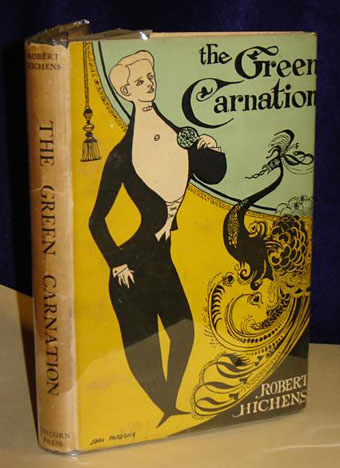
I could make these posts a lot more often since there’s seldom a week goes by when Oscar Wilde’s work or something from his life isn’t making the news somewhere. I forget now how I came across the Robert Hichens book but the Beardsley-derived cover design is the best I’ve seen for this title. The Green Carnation was first published in 1894 and is the notorious roman à clef whose lead characters, Esmé Amarinth and Lord Reginald Hastings, are based on Wilde and Lord Alfred Douglas. Hichens paints the pair as very obvious inverts with none of the “is he or isn’t he?” subtlety that Wilde managed to sustain in public. For a scandalised London the book seemed to confirm what was already suspected about Wilde and Bosie’s relationship.

The cover art is credited to one John Parsons, an illustrator whose other work, if there is any, eludes the world’s search engines. This edition was published in 1949 by Unicorn Press and it’s something I’m tempted to buy as a companion for my Unicorn Press edition of Dorian Gray.

The following links are to recent articles spotted whilst looking for other things:

Oscar Wilde, Classics Scholar. A review of The Women of Homer by Oscar Wilde, edited by Thomas Wright and Donald Mead.
• A new Broadway production of The Importance of Being Earnest has actor Brian Bedford playing Lady Bracknell.
Buyers go Wilde for Oscar as short note to his friend sells for €1,500.
Outsmarted: What Oscar Wilde could teach us about art criticism.

Elsewhere on { feuilleton }
The Oscar Wilde archive
The book covers archive

Saint Genet

genet1.jpg

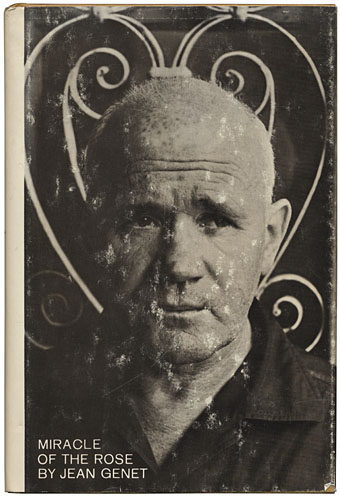
Miracle of the Rose (1965). Photo by Jerry Bauer, design by Kuhlman Associates.

[William Burroughs is] without a doubt…the greatest American writer since WWII. There are very, very few writers in his class; I think Genet is about the only one whom I’d put in the same category. All the British and American writers so heavily touted—the Styrons and the Mailers and their English equivalents—it’s just not necessary to read anybody except William Burroughs and Genet.

JG Ballard, RE/Search interview, 1984.

Jean Genet (the “Saint” was a gift from Jean-Paul Sartre) was born on December 19th, 1910 so consider this a late centenary post. Some of Ballard’s debt to William Burroughs can be found in writings such as The Atrocity Exhibition (1970) and his early text experiments. Genet’s influence, if we have to look for such a thing, I usually see in the use of metaphor to transform an uncompromising reality. Like the moment at the beginning of Crash (1973) when the crushed bodies of package tourists are compared to “a haemorrhage of the sun”. Genet’s writings effected similar transformations from squalid prison environments, turning the sexual assignations and passions of the inmates into ceremonial acts which assume the lineaments of a new religion. He used to claim in later life to have forgotten all his works but we haven’t forgotten him. A small selection of Genet links follows.

esquire.jpg

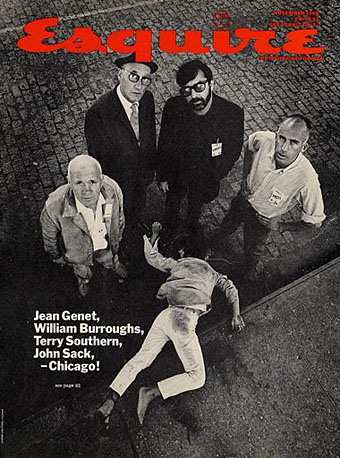
Esquire, November 1968.

RealityStudio:

Burroughs’ most famous and most widely read piece for Esquire remains his coverage of the 1968 Democratic National Convention, “The Coming of the Purple Better One,” which was included in Exterminator! Burroughs was hired to cover the convention along with Terry Southern, who was a pioneer in New Journalism with his “Twirling at Ole Miss” (which appeared in Esquire in February 1963), John Sack, who wrote on the experiences of Company M in Vietnam for Esquire (with the legendary cover “Oh my God — We hit a little girl”), and Jean Genet, an authority on oppression who turned increasingly politically active after the events in Europe in May 1968. (Continues here.)

Ubuweb:
Un Chant d’Amour (1950): Genet’s short homoerotic drama which he later disowned. The film’s masturbating prisoners and naked male flesh made it notorious and, for later generations of filmmakers, a pioneering and influential work.
Le condamné à mort (1952): A reading of Genet’s poem (in French) with electroacoustic accompaniment.
Ecce Homo (1989): A short film by Jerry Tartaglia which cuts scenes from Un Chant d’Amour with gay porn.

caillaux.jpg


Bibliothèque Gay:
Vingt lithographies pour un livre que j’ai lu, Jean Genet, Roland Caillaux, 1945. A sequence of twenty pornographic drawings.

YouTube:
The Maids (1975): Glenda Jackson and Susannah York in a film by Christopher Miles based on Genet’s play. There’s also Fassbinder’s Querelle (1982) but YouTube’s limitations don’t do it any favours.
Jean Genet (1985): an extract from the BBC interview where the writer makes a fool of interviewer Nigel Williams. This captured Genet a few months before his death and he remains the stubborn outsider to the last, questioning the conventions of the television interview which he compares to a police interrogation. A transcript of the whole fascinating event can be found here.

Previously on { feuilleton }
Emil Cadoo
Penguin Labyrinths and the Thief’s Journal
Un Chant d’Amour by Jean Genet

Le Baiser de Narcisse

brisset1.jpg

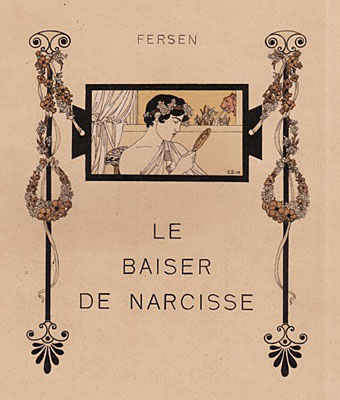
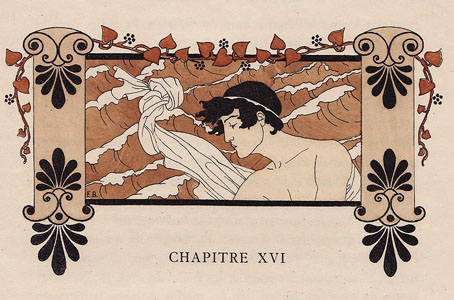
We have the French gay culture site Bibliothèque Gay to thank for posting illustrations by Ernest Brisset from Jacques d’Adelswärd-Fersen’s rare volume of homoerotic fiction, Le baiser de Narcisse (The Kiss of Narcissus). The book was originally published in 1907 but it was a new edition in 1912 which came embellished with Brisset’s Classical drawings and decorations. If these lack a degree of eros it should be noted that the text would have been condemned as outright pornography in the Britain of 1912, a paean to youthful male beauty which lingers over details of a boy’s “polished hips” and his “round and firm sex like a fruit”. As is usual with homoerotics of this period, the Classical setting and allusion to Greek myth provides the vaguest excuse for the subtext even though prudes of the time weren’t remotely fooled by this, as Oscar Wilde discovered.

brisset2.jpg

Among other works by Fersen there’s a decadent roman à clef, Lord Lyllian: Black Masses (1905), which I’ve been intent on reading since it was translated into English a couple of years ago. Here Fersen provides us with yet another fictional extrapolation of Oscar Wilde who the author gifts with some of his own scandalous history. Fersen had been driven from France following a public outrage involving the “Black Masses” of the novel’s title, and the alleged debauching of Parisian schoolboys.

hocker.jpg

Nino Cesarini by Paul Höcker (1904).

Fersen settled in Capri with his partner Nino Cesarini where they spent some years reinforcing the reputation of that island (not for nothing is Noël Coward’s camp and catty character in Boom! named “the Witch of Capri”), and proselytising for the Uranian cause with a literary journal, Akademos, modelled on Adolf Brand’s Der Eigene. Fersen’s later life is reminiscent of that of Elisar von Kupffer, a wealthy contemporary who created a secluded homoerotic paradise of his own, the Sanctuarium Artis Elisarion. Unlike Kupffer, however, Fersen ended his days prematurely in a haze of opium and cocaine. As for Ernest Brisset, if anyone finds other work of his online, please leave a comment.

Elsewhere on { feuilleton }
The gay artists archive

Previously on { feuilleton }
Reflections of Narcissus
Narcissus