Weekend links 577

preisler.jpg

Black Lake (1904) by Jan Preisler.

• Upcoming releases on the Ghost Box label will include a new album by {feuilleton} faves Pye Corner Audio, plus the surprising appearance of figures from Bruegel on a Ghost Box cover design.

Tilda Swinton and Olivier Saillard pay tribute to the films of Pier Paolo Pasolini. (Or to Pasolini’s costume designer, Danilo Donati.)

• New music: Spectral Corridor by The House In The Woods, and Re:Moving (Music for Choreographies by Yin Yue) by Machinefabriek.

• At Spoon & Tamago, Technopolis gets all the good things: “Giant kitty now greets commuters at Shinjuku Station.”

Anil Ananthaswamy on the ways in which psychedelics open a new window on the mechanisms of perception.

• Mixes of the week: Isolated Mix 112 by Suna, and GGHQ Mix #56, “An Unfortunate Kink”, by Abigail Ward.

• In this week’s impossible task, Alexis Petridis attempts to rank The Velvet Underground’s greatest songs.

• DJ Food unearths more flyers for London’s Middle Earth club, plus covers for the East Village Other.

• Global signals: Aki Onda on Holger Czukay and radio’s power to connect.

• At The Paris Review: Paintings and collages by Eileen Agar (1899–1991).

Will Sergeant’s favourite albums.

The Babel Tower Notice Board

Shaking Down The Tower Of Babel (1983) by Richard H. Kirk | Pärt: An Den Wassern Zu Babel (1991) by Estonian Philharmonic Chamber Choir conducted by Paul Hillier | The Black Meat (Deconstruction Of The Babel-Tower of Reason) (1994) by Automaton

Weekend links 576

haberfield.jpg

Cover art by Bob Haberfield, 1976.

• I’ve been reliably informed that Australian artist Bob Haberfield died recently but I can’t point to an online confirmation of this so you’ll have to take my word for it. “Science” and “sorcery” might describe the two poles of Haberfield’s career while he was working as a cover artist. His paintings made a big impression on British readers of fantasy and science fiction in the 1970s, especially if you were interested in Michael Moorcock’s books when they appeared en masse as Mayflower paperbacks covered in Haberfield’s art. Haberfield also appeared alongside Bruce Pennington providing covers for Panther paperbacks by HP Lovecraft, Clark Ashton Smith and others, although his work there isn’t always credited. Dangerous Minds collected some of his covers for a feature in 2017. (The US cover for The Iron Dream isn’t a Haberfield, however.)

• “Like Alice, who can only reach the house in Through the Looking-Glass by turning her back to it, Gorey reversed the usual advice to ‘write what you know’ and wrote the apparent opposite of his own situation.” Rosemary Hill reviewing Born to Be Posthumous: The Eccentric Life and Mysterious Genius of Edward Gorey by Mark Dery.

• “Orvil…wanders the countryside, visits churches, rummages in antique shops, and encounters strange men to whom he is no doubt equally strange.” John Self reviewing a new edition of In Youth Is Pleasure by Denton Welch.

• At the Wyrd Daze blog: Q&A sessions with Stephen Buckley (aka Polypores), Gareth Hanrahan, and Kemper Norton.

• “Fellini liked to say that ‘I fall asleep, and the fête begins’.” Matt Hanson on Federico Fellini’s phenomenal films.

• A Beautiful Space: Ned Raggett talks to Mick Harris about the thirty-year history of Scorn.

• Deep in the dial: Lawrence English on the enduring appeal of shortwave radio.

Clive Hicks-Jenkins on making a picture for Annie Darwin (1841–1851).

DJ Food looks at pages from Grunt Free Press circa 1970.

• Mix of the week: Fact Mix 814 by Loraine James.

• New music: Clash (feat. Logan) by The Bug.

• At BLDGBLOG: Terrestrial Astronomy.

LoneLady‘s favourite albums.

• At Dennis Cooper’s: Porn 2.

Tilings Encyclopedia

Betrayal (Sorcerer Theme) (1977) by Tangerine Dream | Science Fiction (1981) by Andy Burnham | Sorceress (2018) by Beautify Junkyards

Sounds off the Beaten Track

womad1.jpg

In 1987 the Glastonbury Festival opened its WOMAD stage for the first time to provide a showcase for the kind of acts you might expect to see at the separate World Of Music And Dance festival. Sounds off the Beaten Track is a 52-minute TV documentary about the acts who appeared on the WOMAD stage at Worthy Farm that year, and also about the WOMAD ethos itself, a project inaugurated in 1980 by Peter Gabriel and others to give greater prominence to musicians from all over the world. One of the WOMAD initiators, Mark Kidel, also directed the film, while co-founders Peter Gabriel and Thomas Brooman talk on camera. The film captures the Glastonbury Festival at a time when it was still a relatively small and rather ramshackle affair, closer to its hippy roots, and very different from the sprawling tent city of later years.

womad2.jpg

The main interest, however, is the music, especially the amount of time given to the Burkina Faso group, Farafina, and to Jon Hassell, whose Flash Of The Spirit collaboration with Farafina was released the following year. This was the first I saw of Hassell on TV, and also the last until he turned up much later as a guest on MTV’s Seal Unplugged session. I remembered the Farafina performance but I’d forgotten that Hassell also talks a little about his Fourth World idea. Among the other featured artists are The Bhundu Boys, Toumani Diabaté, Amadu Bansang Jobarteh, The Inspirational Choir, and Najma Akhtar who subsequently appeared on another unplugged (or partly plugged) session with Jimmy Page and Robert Plant. Jon Hassell had been under the WOMAD umbrella since 1982 via the excellent Music And Rhythm compilation album which included an exclusive live recording of Ba-Benzélé. He was often critical of the “world music” marketing label, seeing it as a convenient way for record companies and music sellers to appear to be supporting musical diversity while placing all the non-Anglophone recordings in a ghetto area away from everything else. He preferred to talk of “worldly music”, an idiom that was of the world, uncloistered, freed from the ghetto; music where the beaten and unbeaten tracks might combine to form a new highway.

Previously on { feuilleton }
Jon Hassell, 1937–2021
Jon Hassell, live 1989
Power Spot by Michael Scroggins

Hands with a mind of their own

orlac1.jpg

My weekend viewing included two films based on The Hands of Orlac (1920), a novel by Maurice Renard. This is one of those books that remains little read and seldom discussed even though its central idea—a concert pianist injured in a train wreck is given the hands of an executed murderer in a transplant operation—has prompted many film adaptations, almost enough to make the novel the origin of a sub-genre of hand-transplant horror. Robert Wiene’s The Hands of Orlac was the first screen adaptation made in 1924, and is another in the long list of silent films I’ve known about for decades but had to wait until now to see. The film is notable for reuniting the director of The Cabinet of Dr Caligari with Conrad Veidt, the actor who portrayed Caligari’s murderous somnambulist, Cesare, in a mute role that mostly required stalking around acutely-angled sets in a black body stocking.

orlac3.jpg

The Hands of Orlac: Paul Orlac (Conrad Veidt) is besieged by nightmares in his colossal hospital room.

Veidt has much more to do as the lead in The Hands of Orlac, giving a suitably tormented performance as the pianist convinced that his new hands retain the violent impulses of their former owner. The acting from Veidt and Alexandra Sorina as Orlac’s wife, Yvonne, is often wildly emotive, surprisingly so for a film made near the end of the silent era when the mannerisms of early silent pictures were being replaced by greater naturalism. Lotte Eisner in The Haunted Screen explains this in terms of the Expressionist influence which was still prevalent in German cinema, and which extends beyond lighting and set design. A scene in which Orlac is overwhelmed by his predicament is described by Eisner as “an Expressionist ballet”; when Orlac holds a dagger aloft this becomes an unmistakable mirroring of a climactic moment in Caligari.

orlac5.jpg

Continue reading “Hands with a mind of their own”

Weekend links 574

vyletal09.jpg

Poster for Beauty and the Beast (1978) by Josef Vyletal.

• Next month, Second Run release Juraj Herz’s 1978 adaptation of Beauty and the Beast on region-free blu-ray. I watched this last year on a Czech DVD so it’s good to hear it’s being given an upgrade. Herz’s film is a distinctly sinister take on the familiar tale, with a bird-headed Beast that’s closer to Max Ernst than anything you’ll find in illustrations for Perrault’s stories.

• “In a coincidence so unlikely it almost seems, well, magical, the girls traced illustrations from a book of folklore that also contained a short story by Sir Arthur Conan Doyle himself, a reflection of a reflection of a reflection.” Audrey Wollen on the Cottingley fairy photographs. Related: The Coming of the Fairies by Arthur Conan Doyle.

• “[Mark E. Smith], with his love of Stockhausen, HP Lovecraft, and (bizarrely) the sitcom Keeping Up Appearances, becomes a reverse coder, an apostle of avant pulp, a ‘paperback shaman’.” Sukhdev Sandhu reviews Excavate! The Wonderful and Frightening World of the Fall, edited by Tessa Norton and Bob Stanley.

• “Found photos of men in love from 1850–1950“. Maybe. As before, I’m always cautious about imposing a narrative on old photographs.

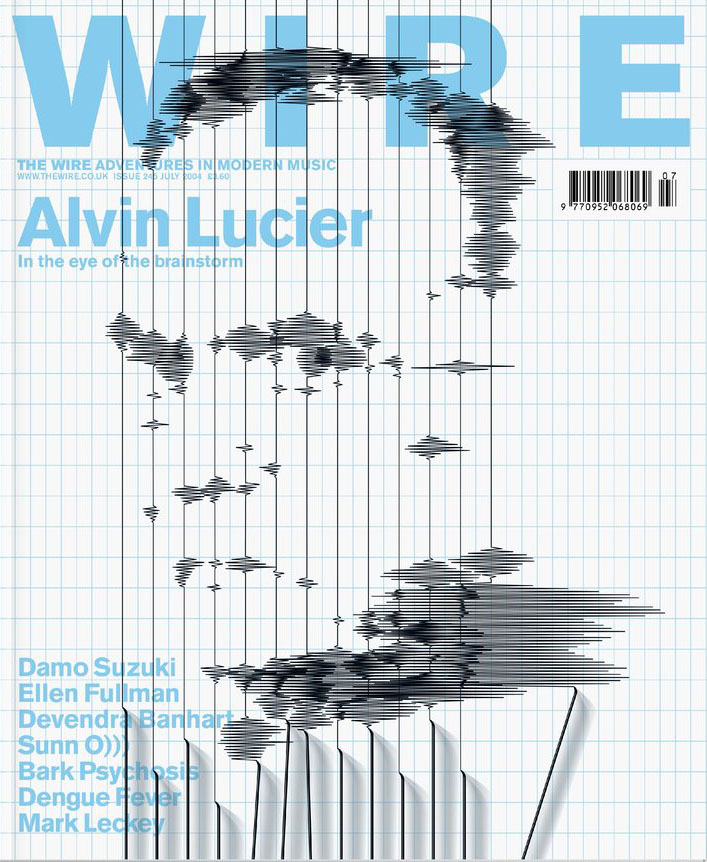
• Mixes of the week: A mix for The Wire by Pamela Z, and a dose of post-punk esoterica by Moin for XLR8R.

DJ Food takes another dive into back issues of International Times in search of ads for London’s Middle Earth club.

• At The Smart Set: Colin Fleming watches John Bowen’s drama of pastoral horror, Robin Redbreast.

• At Dennis Cooper’s: Heavily plotted non-linear structures whose velocity lacks narrative drive.

Ryan Gilbey attempts to rank Robert Altman’s features into a list of 20 best.

• Still Farther South: Poe and Pym’s Suggestive Symmetries by John Tresch.

• New music: At One Point by Scorn.

Visionist‘s favourite albums.

The Beast (1956) by Milt Buckner | Leggo Beast (1978) by Gregory Isaac’s All Stars | This Beast (1983) by Tuxedomoon