Passage 12

passage12.jpg

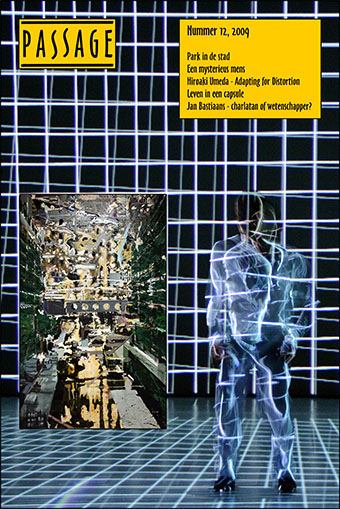
Ed Jansen writes again to notify me that the latest number of his web magazine, Passage, is now online, about which he says:

In Passage nr. 12 there are articles about a 17th century garden in The Hague, about the mysterious visit to The Hague by the Comte De Saint Germain. Was he really a enlightened man or a fraud? If you’re an occultist you’ll tend to believe the first, the historian thinks otherwise. Then there are the photos of the dancer and performer Hiroake Umeda. Strange movements underlined by light-effects. Living in a Capsule is a combination of the paintings by the Dutch artist Tjebbe Beekman and the work of J.G. Ballard. Lastly there is an article about Jan Bastiaans, the doctor who experimented with LSD to ‘free’ the victims of the concentration camps of the nightmares and repressed memories.

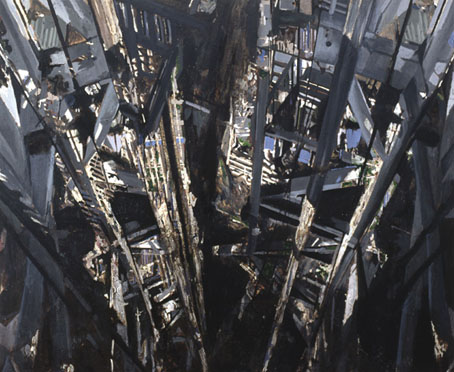
Once again the text content is in Dutch but that doesn’t exclude all visitors here. I hadn’t come across the work of Tjebbe Beekman before. His paintings of urban desolation are indeed a good match for one aspect of Ballard’s work, and they make an interesting contrast with Dick French’s earlier views of the author’s Drowned World.

beekman.jpg

Trust by Tjebbe Beekman (2005).

Previously on { feuilleton }
• Drowned Worlds
• Passage 11
• Passage 10

The Dark Ledger

ledger1.jpg

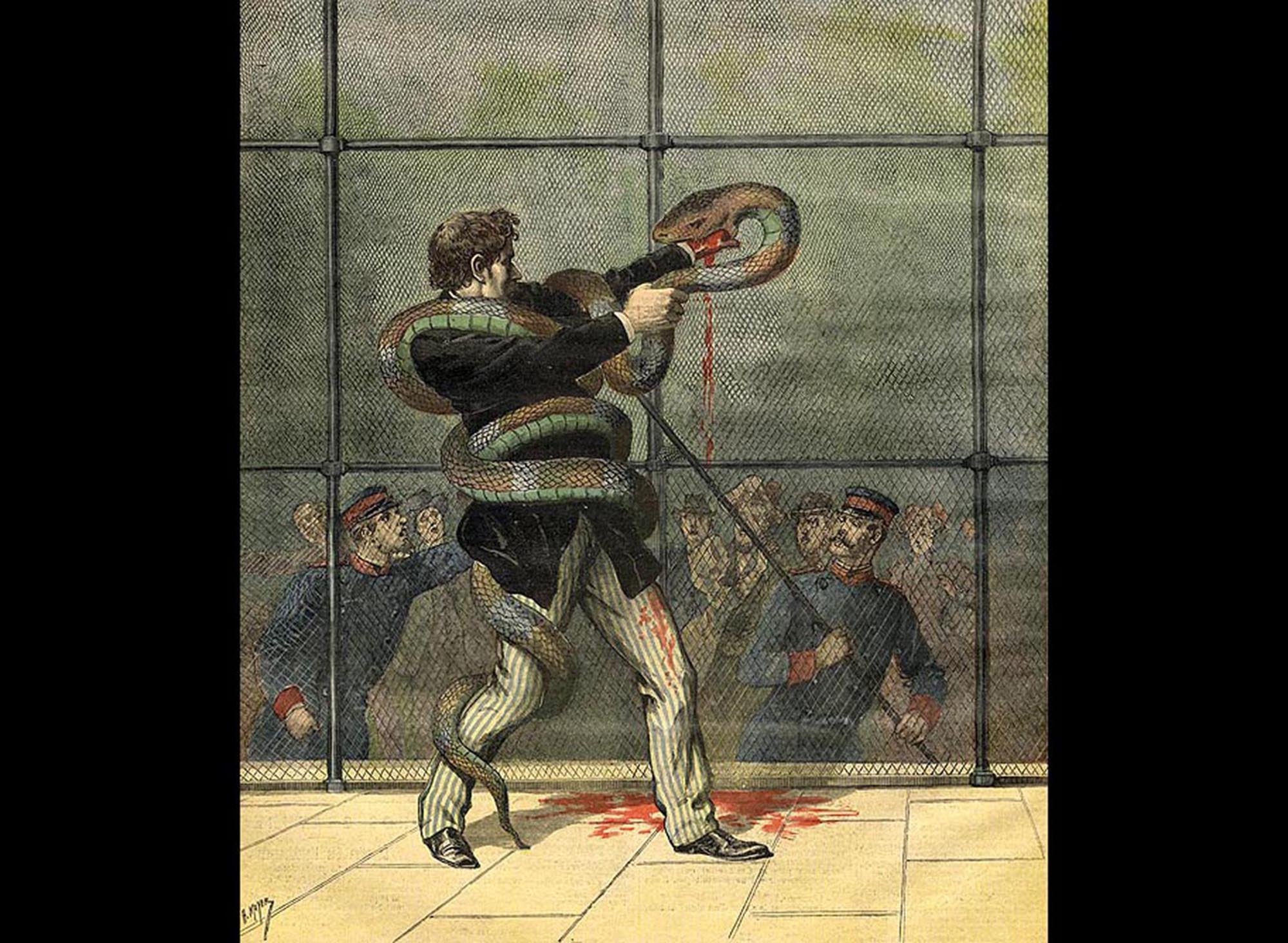
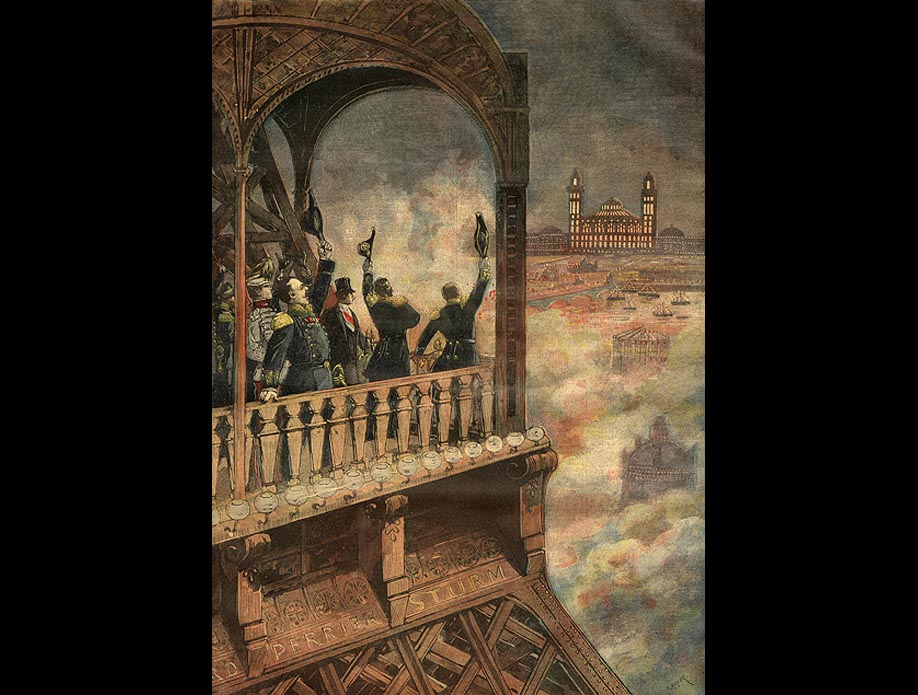
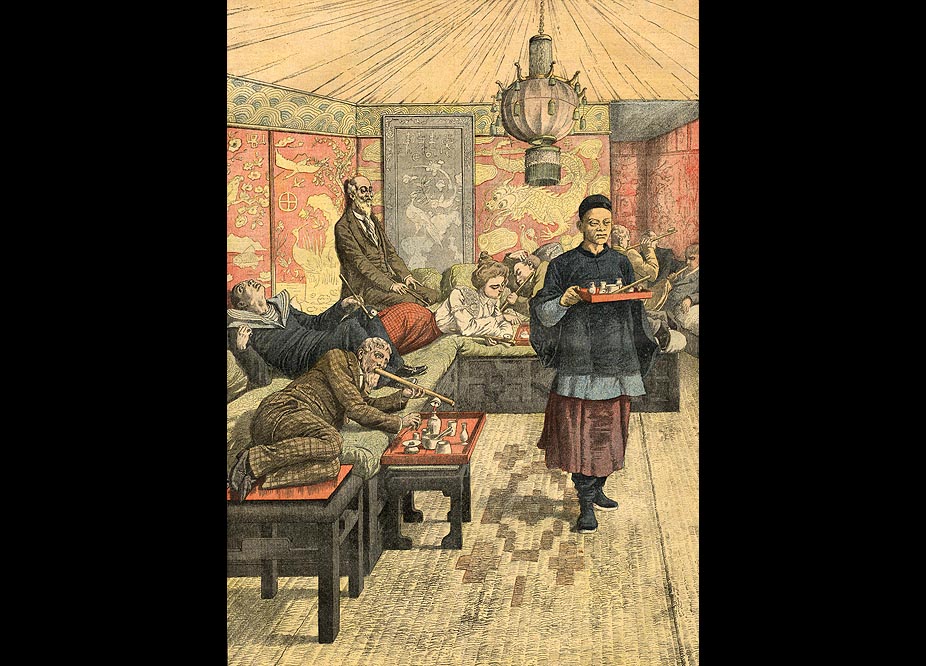
The boundless depths of Chris Mullen’s VTS site continue to yield treasures. The documentation for these pictures is somewhat vague but they seem to be illustrations for Fantômas stories which Mullen has grouped under the title The Dark Ledger, part of a larger selection of pages devoted to the Lord of Evil. The depiction of the Eiffel Tower is of interest here for its showing a view over one of the Paris expositions, possibly the Exposition Universelle of 1900. The opium den, on the other hand, seems remarkably overlit and well-appointed compared to the more customary renderings of such places.

ledger2.jpg

ledger3.jpg

Previously on { feuilleton }
• Exposition Universelle publications
• Exposition cornucopia
• Return to the Exposition Universelle
• The Palais Lumineux
• Louis Bonnier’s exposition dreams
• Exposition Universelle, 1900
• The Palais du Trocadéro
• The Evanescent City
• Judex, from Feuillade to Franju
• Fantômas

The art of Henri Privat-Livemont, 1861–1936

privat3.jpg

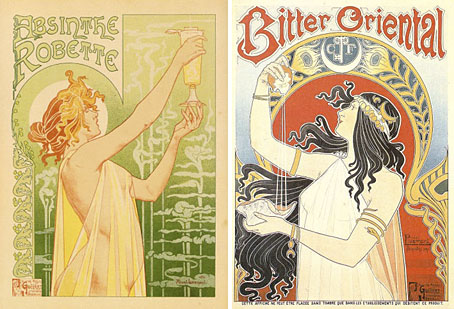
left: Absinthe Robette (1896); right: Bitter Oriental (1897).

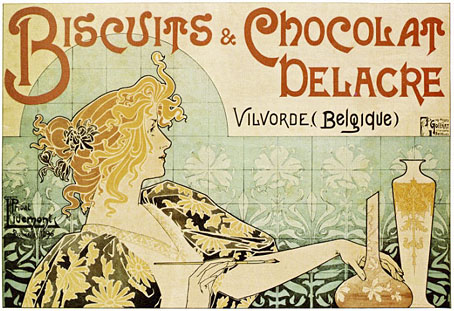
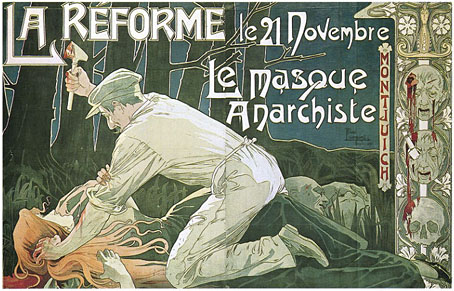
Henri Privat-Livemont, a Belgian artist and one of the best of the post-Mucha Art Nouveau stylists. I’ve featured his Absinthe Robette poster before but am including it again since it’s my favourite of the ones I’ve seen. All of these are from the Art of the Poster 1880–1918 collection at Lawrence University whose copies can be explored in extreme close-up.

privat2.jpg

Biscuits & Chocolat Delacre (1896).

privat1.jpg

Le Masque Anarchiste (1897).

Previously on { feuilleton }
• Absinthe girls

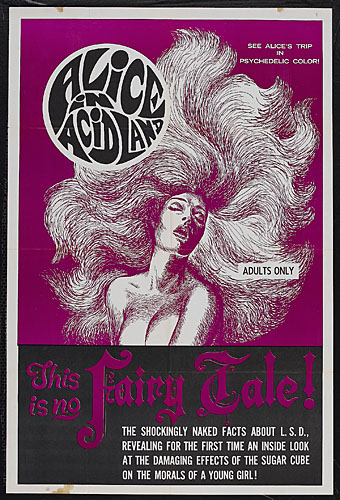
Alice in Acidland

acidland.jpg

No idea how this piece of exploitation from 1968 evaded my attention for so long but going by the IMDB reviews it’s probably safe to say that any obscurity is well-deserved:

this movie is very accurate, as every girl i have met that smokes weed instantly becomes a bisexual nymphomaniac. scientific studies have actual proved this many times over. the accuracy is phenomenal and i think i speak for every man out there when i say i leave my boxers on while having sex. the parties look like any other raging party in the 60’s where people sit together in a well lit room smoking weed and immediate have sex with everyone as soon as they walk in.

The director and writer were evidently embarrassed enough to use pseudonyms (Gertrude Steen…yeah, right) so the poster and title card (below) are probably as good as it gets unless tepid soft porn is something that really turns you on (baby).

Another fabulous Chateau Thombeau tip.
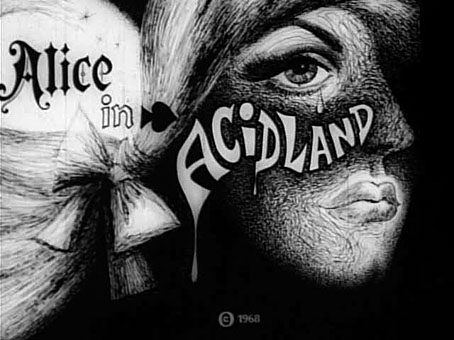
acidland2.jpg

Alice has been in the news again this week with a new trailer turning up for Tim Burton’s forthcoming film and also this lengthy article in New Scientist which looks at the Alice books through an interpretative lens of algebra and geometry. While it’s nice to play with a fresh interpretation of the stories, essays like this are invariably subject to considerable strain as they attempt to wring hidden meanings from every quirk of the text.

The trouble with the Alice books is that their origin is almost as famous as the stories themselves, and it’s well-known that Dodgson wrote down Alice’s Adventures Under Ground as a present for Alice Liddell with no intention of seeing it published. Aside from the addition of extra scenes, the published book doesn’t radically differ from the handwritten original so you have to stretch your credulity to accept that Dodgson managed to improvise an entertaining story for a child whilst simultaneously authoring a critique of developments in contemporary mathematics. As usual in cases such as these it helps to refer to an earlier logician, William of Ockham, whose famous declaration that “Entities should not be multiplied unnecessarily” is given on this mathematician’s page as “when you have two competing theories that make exactly the same predictions, the simpler one is the better.”

Previously on { feuilleton }
• Return to Wonderland
• Dalí in Wonderland
• Virtual Alice
• Psychedelic Wonderland: the 2010 calendar
• Charles Robinson’s Alice’s Adventures in Wonderland
• Humpty Dumpty variations
• Alice in Wonderland by Jonathan Miller
• The Illustrators of Alice