Echoes of de Chirico

dechirico01.jpg

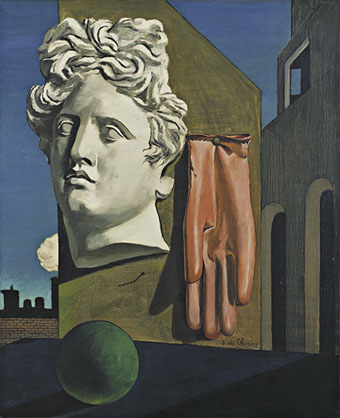
The Song of Love (1914) by Giorgio de Chirico.

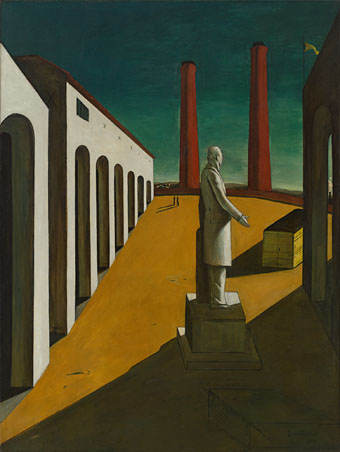
His art studies, begun in Athens, were continued in Munich where he discovered the work of Max Klinger and Arnold Böcklin, not to mention the writings of Friedrich Nietzsche and Arthur Schopenhauer, whose influence is perceptible in the paintings he went on to produce in Florence and Turin. In addition, his melancholy temperament lay behind the works that Guillaume Apollinaire labelled “metaphysical,” works in which elements from the real world (deserted squares and arcades, factory chimneys, trains, clocks, gloves, artichokes) were imbued with a sense of strangeness.

Keith Aspley, Historical Dictionary of Surrealism


dechirico02.jpg

The Enigma of a Day (1914) by Giorgio de Chirico.


ernst.jpg

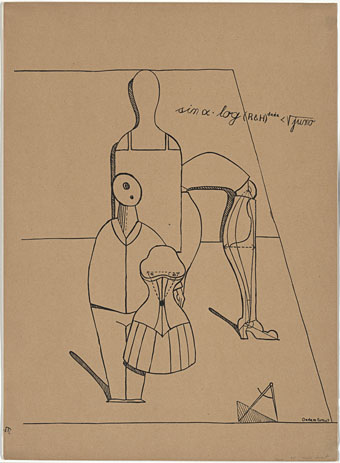
Plate II from Let There Be Fashion, Down With Art (Fiat modes pereat ars) (1920) by “Dadamax Ernst”.


magritte.jpg

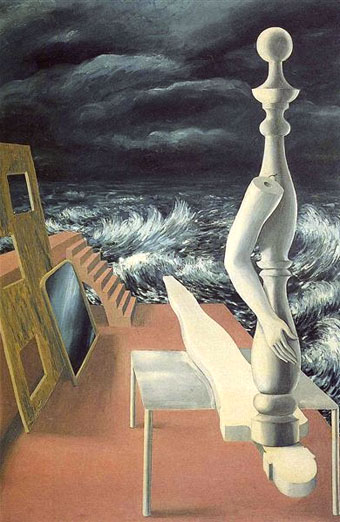
The Birth of an Idol (1926) by René Magritte.

Some time during the latter part of 1923 [Magritte] came face-to-face with his destiny, in the form of a painting by Giorgio de Chirico, who was one of the painters most admired by the Paris Surrealists: Le Chant d’amour (The Song of Love, 1914); to be more precise, a black-and-white reproduction of that painting in the review Les Feuilles libres, a very contrasty reproduction, as Sylvester has it, which only heightened the drama of the outsize objects suspended in the foreground of one of de Chirico’s “metaphysical landscapes”… He was shown it by Lecomte, or Mesens, or both. He was overwhelmed. […] Magritte always spoke of de Chirico as his one and only master. As a rule, he was exceedingly parsimonious in his assessment of other artists, past and present. In his own time, de Chirico (1888–1978) and Ernst (1891–1976) appear as the only two he admired, more or less unconditionally.

Magritte: A Life by Alex Danchev


dali4.jpg

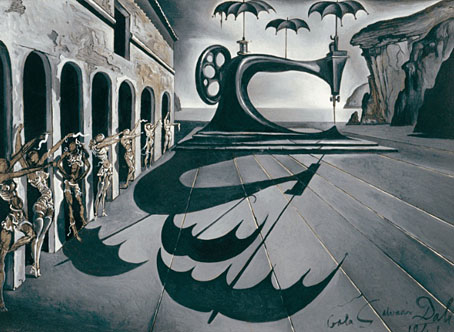
Sewing Machine with Umbrellas in a Surrealist Landscape (1941) by Salvador Dalí.

Continue reading “Echoes of de Chirico”

Weekend links 666

solar.jpg

Muy Mago (Portrait of Aleister Crowley) (1961) by Xul Solar.

• “…snails amaze with their capacity to move so far, to spread so widely, while doing so little. This, it seems to me, is one of the real marvels of snail biogeography. Individuals do not need to exert great effort because natural selection has acted for them, acted on them, acted with them, to produce these beings that are so unexpectedly but uniquely suited to a particular form of deep time travel, drifting. From such a perspective, rather than being any kind of deficiency, the highly successful passivity of snails might be seen as a remarkable evolutionary achievement.” Thom van Dooren on how snails cross vast oceans.

• “Slow art has layers. And this is why it requires time and effort. We should see this as a good and necessary thing. If this is a kind of obstacle in the way of easy assimilation then it is an obstacle that is integral to the value of the thing itself. The mind is calmed, or disturbed, or made exultant by the art that rewards us for our goodwill and our capacity to take our time.” In Praise of Slow Art by Chris Horner.

• “I have set naturalism and the supernatural in binary opposition but perhaps there is a third way. Let’s call it the supranatural stance…” Paul Broks explores the roots of coincidence.

• At Unquiet Things: The art of Hector Garrido, an illustrator who specialised in the Gothic staple of women in gowns fleeing at night from sinister mansions.

• “The writer Jorge Luis Borges once referred to his friend the artist Xul Solar as ‘one of the most singular events of our era’,” writes Miriam Basilio.

• At Spoon & Tamago: Japanese craftsmanship meets Pokemon at Kanazawa’s National Crafts Museum.

• At Public Domain Review: Martin Frobenius Ledermüller’s Microscopic Delights (1759–63).

• New music: Rest Of Life by Steve Roach.

The Four Horsemen (1972) by Aphrodite’s Child | Supper’s Ready (1972) by Genesis | Six Six Sixties (1979) by Throbbing Gristle

Shusei Nagaoka album covers

nagaoka01.jpg

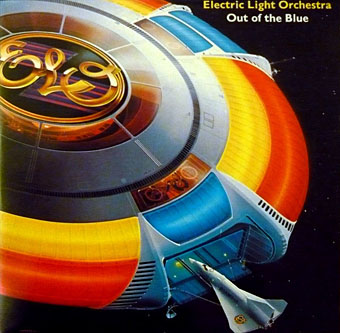
Out Of The Blue (1977) by Electric Light Orchestra.

Many different labels may be attached to the 1970s but it was definitely the science-fiction decade as much as anything else, a time when the use of SF imagery became a widespread trend, often superficially applied but there all the same. You see this in the music packaging of the period, and not only in the obvious enclaves of progressive rock. Here’s Motown Chartbusters Vol. 6 (1971) with a spaceship cover by Roger Dean; here’s Herbie Hancock on the cover of Thrust (1974) piloting his keyboard-driven craft over Machu Picchu while an alarmingly swollen Moon seems ready to crash into the Earth.

nagaoka02.jpg

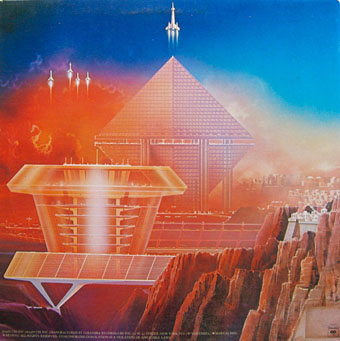
Out Of The Blue gatefold interior.

The exploitation of SF imagery on the covers of funk, soul and disco albums was much more widespread than the jazz world, and lasted long enough to join up with the emergence of synth-pop and electro in the early 1980s. The meticulous airbrush paintings of Shusei Nagaoka dominate this era and idiom, thanks in part to his covers for two of the biggest albums of 1977: Out Of The Blue by Electric Light Orchestra, and All ’n All by Earth, Wind & Fire.

nagaoka03.jpg

All ’n All (1977) by Earth, Wind & Fire.

nagaoka04.jpg

The latter doesn’t look especially science-fictional until you flip it over and its Egyptian scene morphs into a futuristic cityscape with a fleet of rockets heading for the stars. (That pyramidal building is based on one of Paolo Soleri’s hexahedron megastructures.) Many of the albums that followed this pair were jumping on the post-Star Wars/Close Encounters SF bandwagon but there were other reasons for funk and disco artists to embrace the Space Age, as Jon Savage has noted: “Disco’s stateless, relentlessly technological focus lent itself to space/alien fantasies which are a very good way for minorities to express and deflect alienation: if you’re weird, it’s because you’re from another world. And this world cannot touch you.”

nagaoka05.jpg

Munich Machine (1977) by Munich Machine. (A Giorgio Moroder production.)

Nagaoka was in demand for his cover art even before hitching a ride to the top of the album charts so what you see here is a limited selection. As usual, there’s more to be seen at Discogs although I often wish they’d allow larger image uploads. Future Life magazine ran a feature about Nagaoka in October 1978 which includes a brief interview with the artist together with some biographical details.

nagaoka06.jpg

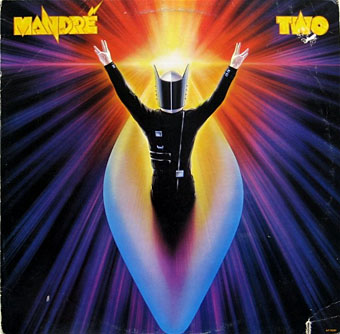
Mandré Two (1978) by Mandré.

Continue reading “Shusei Nagaoka album covers”

Weekend links 664

warburton.jpg

Caduceus: Tarot Card Study – Love by Holly Warburton.

• The week in stage magic: Ken Carbone, writing about playing cards and graphic design, points the way to an hour of Ricky Jay demonstrating his miraculous abilities with a pack of cards. Elsewhere, Erik Ofgang asks “Who was Mr. Electrico, the sideshow magician who inspired Ray Bradbury—then vanished?”

The 1980 Floor Show – Uncut / Unedited: 8 Hours of David Bowie in Ziggy Stardust guise performing for American TV cameras at The Marquee, London, in October 1973. That’s more Bowie than most people would want—there’s a lot of repetition—but it’s good to know things like this can still surface.

• “A supernova has gone out,” says David Grundy about the late Wayne Shorter. Also this: “Sci-fi fan Shorter suggested the title to [Weather Report’s] second album I Sing The Body Electric, taken from Walt Whitman via Ray Bradbury.”

• “We need to get away from thinking of ourselves as machines… That metaphor is getting in the way of understanding living, wild cognition.” A long read by Amanda Gefter about the secret life of plants, and “4E” cognitive science.

• “…why take a soft approach to safety when you can scare the sensible into the next generation with some of the most effective horror shorts of all time?” Ryan Finnegan on the notorious PIFs (public information films) of the 1970s.

• “I am increasingly of the Lynchian mindset of ‘never explain’…” Lynda E. Rucker talking to Steven Duffy about her latest story collection, Now It’s Dark.

• James Balmont presents a brief introduction to the mind-altering cinema of Sogo Ishii.

• At Spoon & Tamago: Hidari: An epic wooden puppet samurai stop-motion film.

• Old music: Musique De Notre Temps (1976) by Éliane Radigue.

• Steven Heller’s font of the month is Juma.

Body Electric (1982) by The Sisters Of Mercy | Super-Electric (1991) by Stereolab | Electric Garden (Deep Jazz In The Garden Mix) (2013) by Juan Atkins & Moritz von Oswald

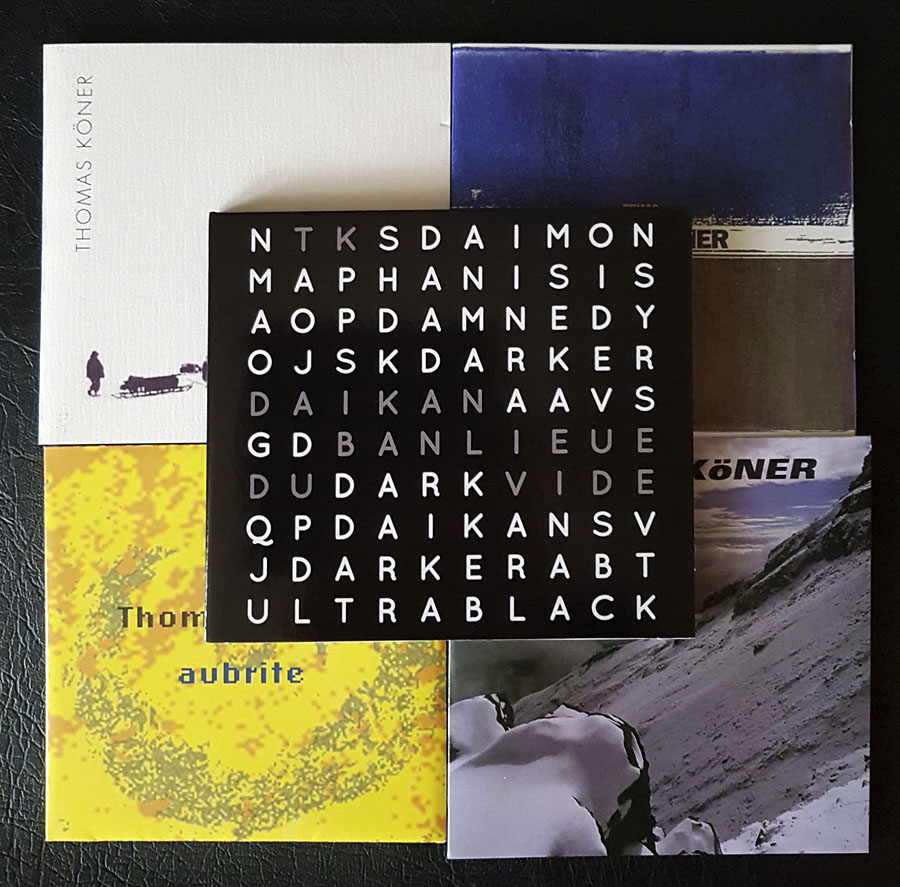
Daikan by Thomas Köner

koner.jpg

Another week, another rare album reissued. Thomas Köner has long been a favourite musical artist round here, also an artist whose albums were often perilously easy to miss, being released in small quantities on minor Continental labels. I’d managed to buy almost all of his early albums before they vanished into deletion limbo but Daikan (2002) was one that evaded my grasp. Until this week I’ve had to satisfy myself with a CD-R of a friend’s copy.

“Daikan” is a Japanese word referring to the coldest time of the year, a title that situates the album among the many Köner recordings named after Arctic regions or climatic extremes. With the temperatures having plummeted again this week the arrival of the reissue is well-timed. The music is of that rarified type that most people would dispute being classed as music at all, a variety of electronic minimalism that tends to be labelled “Dark Ambient” although this wasn’t a common descriptor 20 years ago. The label fits, however, especially for this album. Köner’s signature sound is a sustained atmosphere that he once described as “grey noise”, a tone reminiscent of the muted traffic roar common to all modern cities. Sometimes a version of the sound is the entire substance of the piece, at other times it provides a substrate for similar sounds, as it does on Daikan which augments the roar with pulsing subterranean detonations and a bass drone that rises and falls throughout the 55 minutes of the composition.

koner2.jpg

Daikan is Köner’s darkest work, from the black woodblock letters of the original cover art to the sombre ambience of the music which is the closest he gets to the unyielding doom of an artist like Lustmord. Köner’s first two albums, Nunatak Gongamur (1990) and Teimo (1992) are frequently unnerving, thanks to the shrieking timbres he was extracting from gongs submerged in water, but Daikan is the album that plumbs the abyss for its entire duration. The piece was recorded live in Osnabrück at the European Media Art Festival in 2001, although you wouldn’t know it without being told, there’s no sense of an audience or venue. The original CD contained one long track but the reissue divides the piece into three sections, to ease its transference to vinyl, no doubt. The wax fetishists must be appeased. The reissue also includes an extra track, Banlieue Du Vide, the audio component from one of Köner’s installations. This is nice to have but its busy urban soundscape doesn’t fit with the rest of the album, it seems to be there to help fill out the four sides of the double-vinyl format. Köner’s new cover design acknowledges the tenebrous nature of the music in those extraneous portions of text: “Daimon”, “Damned”, “Darker”, “Dark”, “Ultrablack”; a rare example of what you might call editorial comment. Most of his albums offer no clues to connect the music to a world outside the recordings apart from the artwork—which is often abstract—and the mysterious titles—remote locations, foreign words related to winter—which in pre-internet days remained enigmatic.

Köner’s albums since Daikan have been lighter in tone and presentation, with an emphasis on field recordings. I prefer the early works, inevitably, which brings us once again to that contradictory impulse whereby you wouldn’t want to prevent an artist from evolving yet wish they might have continued exploring a particular direction for a longer period of time. My solution to this is to give the works you value greater attention; in the case of Thomas Köner this means venturing deeper into frozen expanses that many listeners would happily avoid. Daikan isn’t a suitable destination for everyone but it offers rewarding territory for intrepid sonic explorers.

Previously on { feuilleton }
Drone month
A playlist for Halloween: Drones and atmospheres
Thomas Köner