Weekend links 638

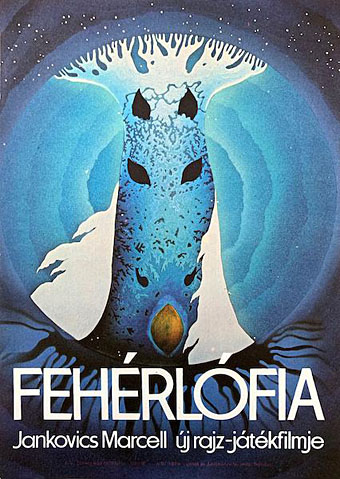
feherlofia.jpg

• After writing about Hungarian animator Marcell Jankovics back in January, I left a comment expressing the hope that Arrow or Eureka might give us a Region B blu-ray of Son of the White Mare (aka Fehérlófia), Jankovics’s “psychedelic” animated feature from 1982. Fast-forward nine months to Eureka’s announcement that they’ll be doing exactly this in November. Watch the trailer. The release will include some of the director’s short films plus his first feature, Johnny Corncob (1973), a historical tale presented in the “groovy” style (previously) popularised by Yellow Submarine. If idle wishes can be granted so easily then I’ll hope again that Eureka might do the same for René Laloux’s second and third animated features, the Moebius-designed Time Masters (1982) (made in the same studio as Son of the White Mare) and the Caza-designed Gandahar (1987). Fingers crossed.

• “I don’t think anybody copies me, but Harmony Korine, Todd Solondz, Bruno Dumont, Gaspar Noé, I like those kinds of directors. They’re sometimes not funny at all. They’re very serious and eerily melodramatic. I just like movies that surprise me.” John Waters (yet again) talking to Conor Williams about films, writing and a prayer for Pasolini.

• “There is something profoundly haunting about a master artist’s last painting left unfinished upon its easel…” Kevin Dann on The Mermaid (1910) by Howard Pyle.

• At Bandcamp: Navigating the Nurse With Wound List: A Gateway to Far-Flung Sounds.

• “Juicy With Meaning”: Alex Denney chooses five essential films by David Cronenberg.

• Mix of the week: Discovering 1970s jazz fusion with Kerri Chandler.

• Coming soon from Strange Attractor: Purgatory by Ken Hollings.

• Steven Heller’s font(s) of the month: Farandole & Lustik.

Dennis Cooper’s favourite albums.

• RIP Peter Straub.

White Horses (1968) by Jacky | Five White Horses (1968) by Sun Dragon | Ride A White Horse (2006) by Goldfrapp
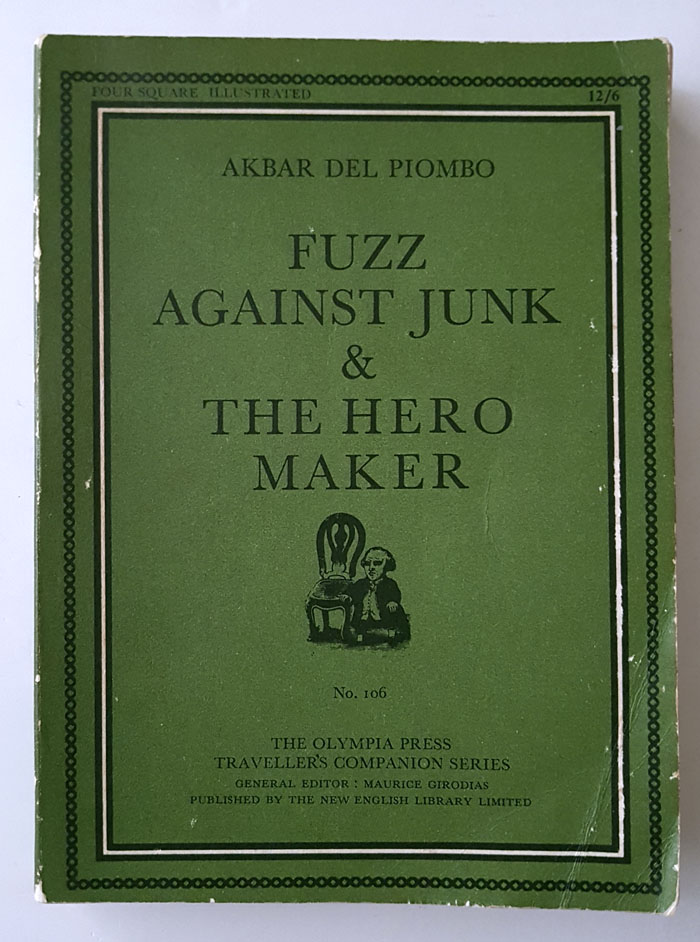
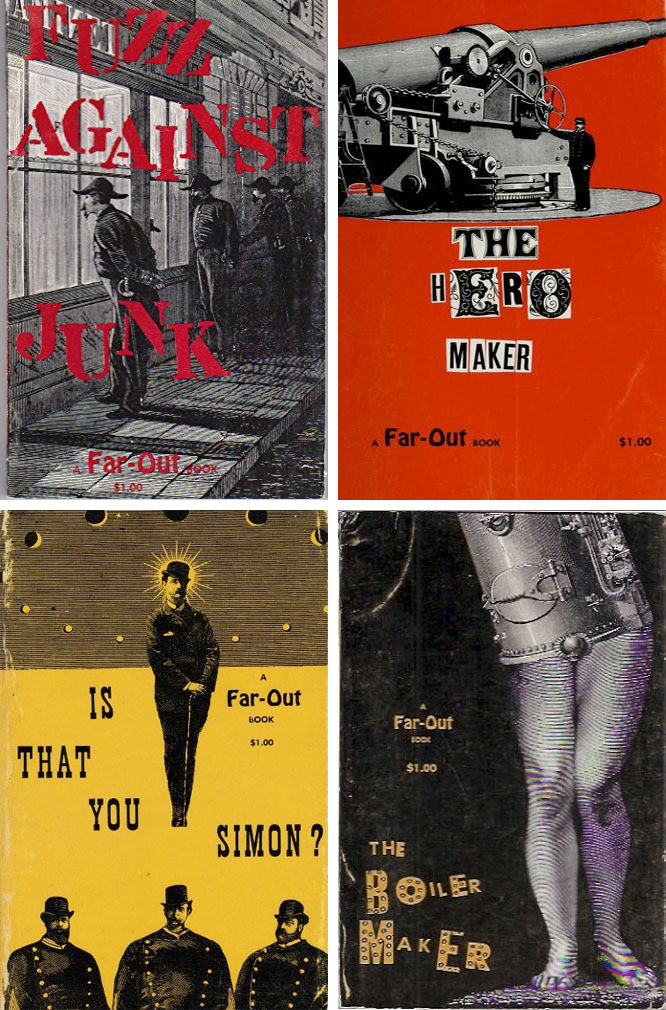
Fuzz Against Junk & The Hero Maker

rubington1.jpg

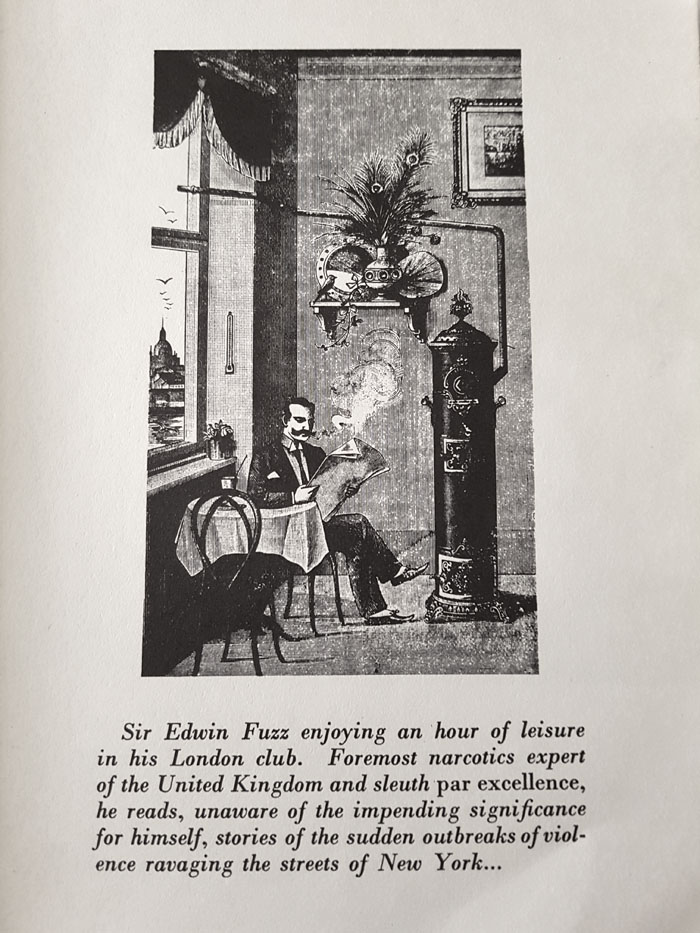
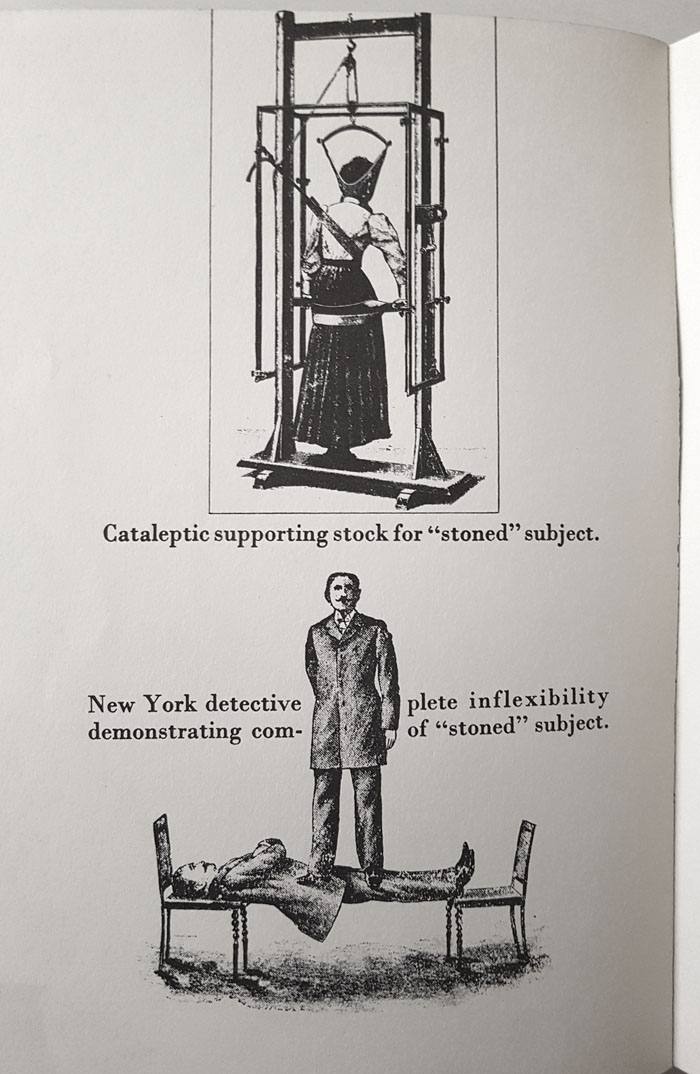
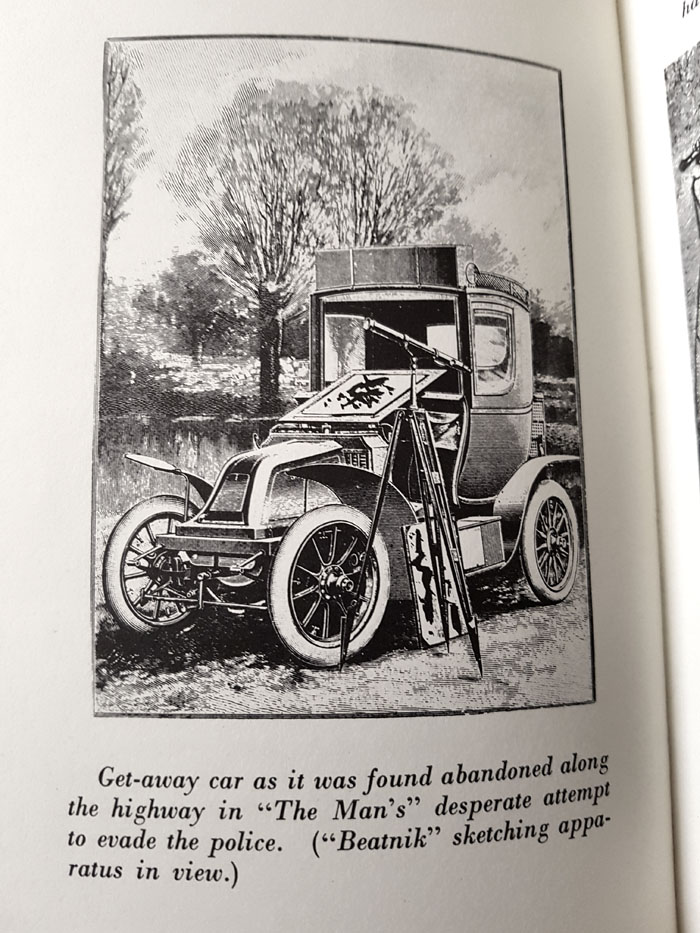
This is another of those posts in which I brag about finding an old book in a charity shop for a lot less than you’d have to pay for it online. But it does give me the opportunity to say something about American writer/artist Norman Rubington and his alter ego Akbar Del Piombo, something I was sure I’d done already. One of the weekend posts linked to an article about Rubington’s work but my discussion of his collages is in the essay I wrote about Wilfried Sätty for the Strange Attractor Journal, a piece which isn’t available here.

rubington8.jpg

The engraving collages of Norman Rubington (1921–1991) were probably the first to use the form developed by Max Ernst for explicitly humorous purposes. They’re certainly among the earliest to take the lead from Ernst while aiming themselves at an audience outside the art world. There is humour in some of Ernst’s collages, of course, but it tends to be the black variety favoured by the Surrealists (and actually defined by them; André Breton’s 1940 Anthology of Black Humour was a pioneering study). Rubington’s small books exploit the comic potential of antique illustrations by repurposing them as the primary content in a series of absurd narratives; these aren’t “graphic novels”, they’re more like heavily-illustrated comedy routines. There were four books in the original series—Fuzz Against Junk (1959), The Hero Maker (1959), Is That You Simon? (1961) and The Boiler Maker (1961)—with a fifth title, Moonglow, appearing in 1969. Olympia Press published the books in France, with US editions appearing around the same time under the Far-Out imprint used by Citadel Press. My charity purchase is the 1966 New English Library reprint of an Olympia Press collection of the first two volumes. The olive-green Olympia covers always provoke a Pavlovian grab response when I see one on a shelf although I’ve yet to find a copy that wasn’t an NEL reprint.

rubington2.jpg

rubington3.jpg

rubington4.jpg

Continue reading “Fuzz Against Junk & The Hero Maker”

Weekend links 637

wong.jpg

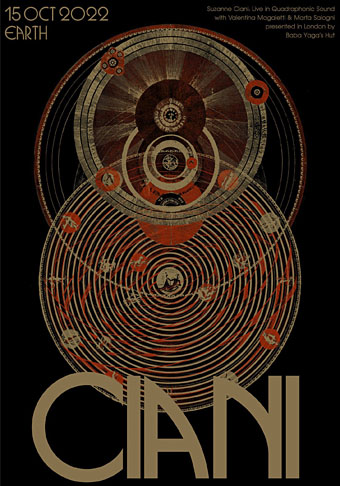
A Risograph print by Raimund Wong for a forthcoming London concert by Suzanne Ciani. Via.

• “What makes him such an exemplary film composer is the adroitness with which he used style as a catalyst, conspiring with directors to illuminate crucial elements of character, tone, and plot through the expressive resources at his disposal.” Nate Chinen on Henry Mancini, a timely piece since I’ve been watching a lot of film noir recently, including two of the features mentioned there, Touch of Evil and Experiment in Terror. The latter is an uncharacteristic thriller from Blake Edwards with a marvellous, brooding score by Mancini. Here’s the main theme.

• “Infinitesimal as they are, phytoplankton produce more oxygen than all the world’s rainforests combined and roughly half of the oxygen on the planet—in other words, roughly half of the air we humans breathe.” David Greer on the importance of plankton.

• “Someday I’ll come into a place and someone’s playing my music and I’ll leave immediately because I don’t want to go through the editorial process again!” Diamanda Galás talking to Kevin Mccaighy about her new album, Broken Gargoyles.

• At Dennis Cooper’s: 25 experimental horror films. Not sure I’d class Night of the Lepus as “experimental”—”rubbish” would be more accurate—but you may disagree.

• Coming soon from Strange Attractor: 69 Exhibition Road: Twelve True-Life Tales from the Fag End of Punk, Porn & Performance by Dorothy Max Prior.

• At Spoon & Tamago: Gunkanjima (aka Battleship Island) from above: exploring what was once the world’s most-densely populated city.

• Previews of pages from A Tiger in the Land of Dreams by Tiger Tateishi, newly reprinted by 50 Watts Books.

• Mix of the week: A mix for The Wire by Ali Safi of the Marionette label.

• New music: Verde Pino by Beautify Junkyards.

Mark Pawson & Disinfotainment

Tiger Rag (1929) by Duke Ellington And His Orchestra | Night Of The Tiger (1959) by The Markko Polo Adventurers | Tiger (1967) by Brian Auger & The Trinity

Art on film: Je t’aime, Je t’aime

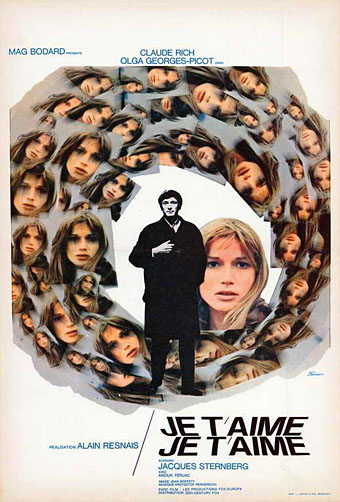
resnais1.jpg

Design by René Ferracci.

Continuing an occasional series about artworks in feature films with a return to Alain Resnais. This one is less substantial than the Providence post, but 2022 happens to be the director’s centenary year, and this particular film, like Providence, is worthy of greater attention.

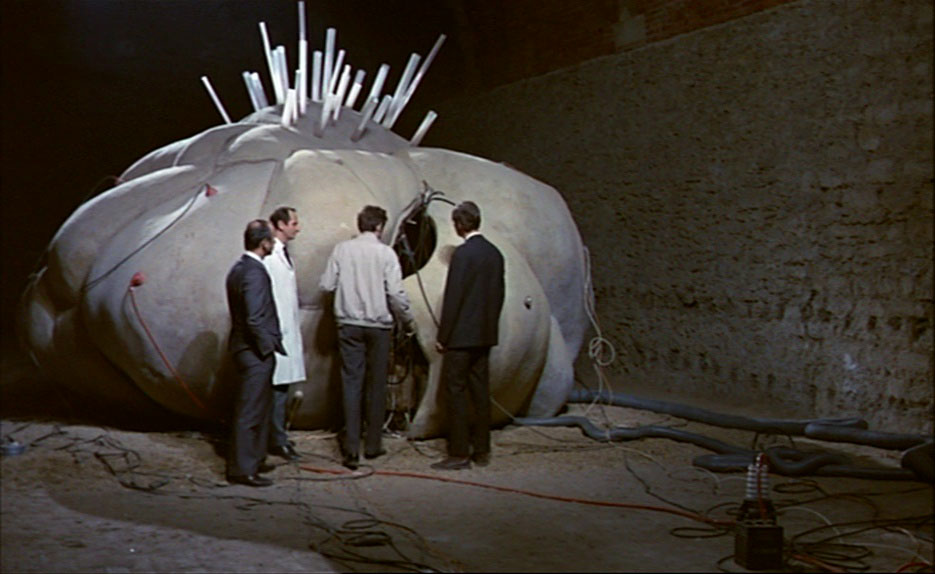
Last Year at Marienbad is occasionally proposed as science fiction of a very rarified sort (JG Ballard thought it was) but there’s no question about the SF credentials of Je t’aime, Je t’aime (1968), a drama that uses time travel to explore a troubled romantic relationship. Claude Ridder (Claude Rich), an unattached, suicidal man, is persuaded by scientists to assist with a potentially hazardous experiment. He agrees to a one-minute excursion into his past but the experiment doesn’t work as intended, causing him to be caught between the present—in which he can’t escape from a womb-like time machine—and his recent past, in which he relives brief moments without any awareness during the return period of their being a part of the experiment. The flashbacks that comprise most of the film’s running time show us a random sequence of the events leading to Claude’s suicide attempt, the end result of his relationship with his terminally ill partner, Catrine (Olga Georges-Picot).

resnais2.jpg

The time machine.

Despite the presence of a time machine and a script by Jacques Sternberg, a Belgian science-fiction writer, Resnais was adamant that Je t’aime, Je t’aime wasn’t a science-fiction film. This is the kind of comment guaranteed to annoy the more zealous SF reader but it’s true in the sense that the film isn’t about time travel or time machines per se; the temporal experiment is a device to allow the non-linear exploration of a human drama that’s the real concern of director and writer. Previous Resnais films had dealt with remembrance of one sort or another, often using flash cuts to juxtapose different moments or scenes remembered or imagined. Je t’aime, Je t’aime pushes these techniques to an extreme, showing us every facet of the Claude/Catrine relationship, from initial meeting to tragic end. The narrative fragmentation isn’t so surprising today but it was a radical step in 1968, one that proved commercially unsuccessful.

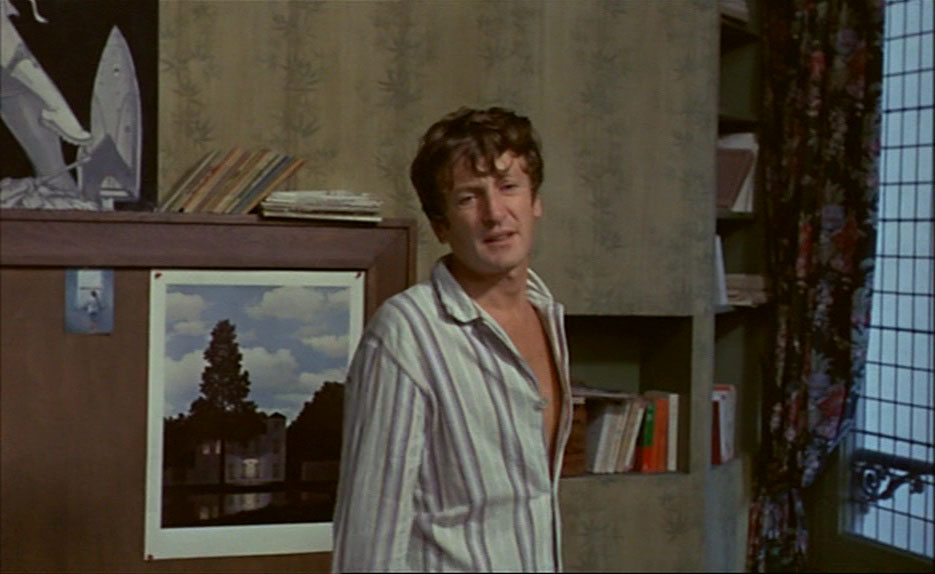
In addition to having a Belgian writer, Je t’aime, Je t’aime is mostly set in Brussels, so the art this time is a famous Belgian painting, one of the many versions of The Empire of Light by René Magritte, which appears in the scenes in Claude’s apartment.

resnais3.jpg

In other hands this might be an incidental decoration but, as Providence demonstrates, Resnais was a director who enjoyed significant details, even if the signification isn’t always obvious. The Magritte painting serves two functions: its slow migration from one side of Claude’s apartment to the other (and the appearance of other pictures around it) shows the passage of time from one flashback to the next.

Continue reading “Art on film: Je t’aime, Je t’aime”

Weekend links 636

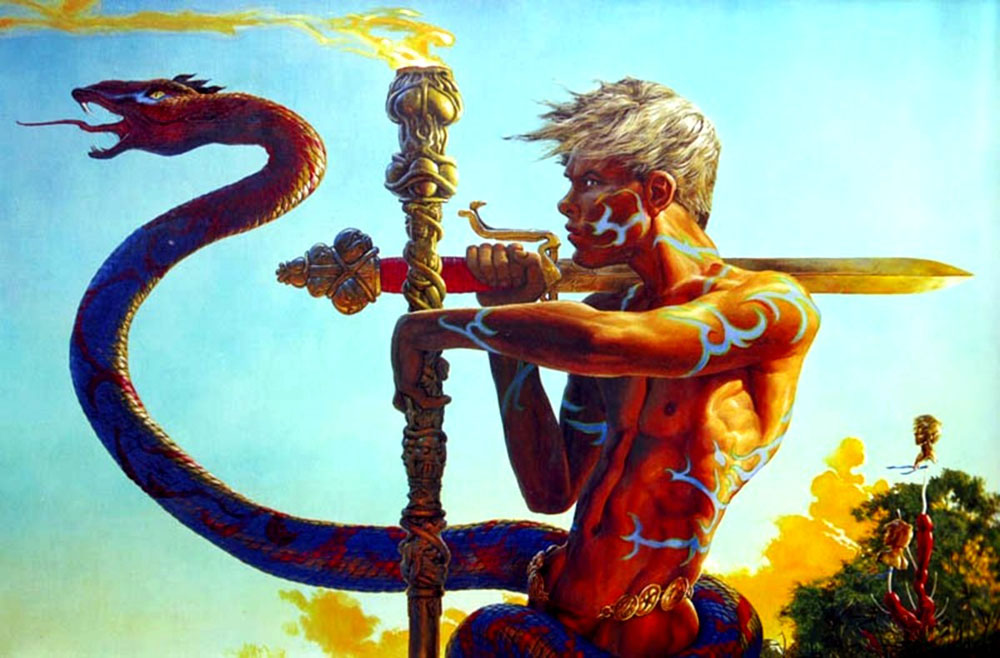
frey.jpg

Untitled painting by Oliver Frey based on The Wild Boys by William Burroughs.

• RIP Oliver Frey, a prolific illustrator and comic artist whose art for UK computer magazines in the 1980s made a lasting impression on a generation of games players, hence this obituary at Eurogamer. On this site, however, Frey is also remembered for his artistic alter-ego “Zack” (previously), an equally prolific creator of comic-strip erotica for Britain’s few gay-porn mags at a time when any such material being sold in the UK ran the risk of police seizure or even a court appearance. For a while, Zack’s Rogue and Tom of Finland’s Kake were rare examples of assertive, unashamedly lustful gay characters with strips of their own, which makes Oliver Frey something of a pioneer, and a daring one at that.

• “The title characters were a trio of boys named Jupiter Jones, Pete Crenshaw, and Bob Andrews, who live in the fictional California town of Rocky Beach, not far from Hollywood, on the coast…” Colin Fleming on the satisfyingly spooky adventures of Robert Arthur Jr’s Three Investigators. I was never as obsessive as Fleming was but I read all of the books about the trio that I could find in our local library.

• “Though its inimitable visual style has safeguarded it as a quintessential cult film most at home behind a shroud of pot smoke, the influence of Koyaanisqatsi has been sweeping.” Josef Steen on 40 years of Godfrey Reggio’s Koyaanisqatsi.

• “Putting it simply, coincidences and curiosities and chance encounters happen when people go looking for zodiacs.” Mark Valentine on Britain’s terrestrial zodiacs.

• At Literary Hub: Marguerite Duras on writing the screenplay for Alain Resnais’s Hiroshima Mon Amour.

• New/old music: a reissue of Solar Maximum by Majeure.

• New music: Kerber Remixes by Yann Tiersen.

• At Dennis Cooper’s: Ingrid Caven Day.

• Threnody To The Victims Of Hiroshima (1959-61) by Krzysztof Penderecki | Memory Of Hiroshima (1973) by Stomu Yamash’ta | Hiroshima Mon Amour (1977) by Ultravox!