Weekend links 659

harunobu.jpg

The First Day of Spring (Risshun), from the series Fashionable Poetic Immortals of the Four Seasons (c.1768) by Suzuki Harunobu. Risshun in Japan begins on the 4th of February.

• “…after centuries of imbibing alcoholic beverages as their main source of potable water, European’s new fondness for boiled drinks—coupled with the psychoactive properties of caffeine—swapped societal tipsiness with a mindstate primed for the Enlightenment’s intoxication with reason.” Hunter Dukes on A Treatise Concerning the Properties and Effects of Coffee (1792) by Benjamin Moseley.

• Steven Heller on John Wilcock, Master of the Underground: “[He] was one of the great ‘happening’ characters of midcentury America, beat myth to Hippie legend. He was founder of half a dozen underground papers, and started one of the first citizen-access cable television shows. His achievements are a dense package.”

• At Fonts In Use: Florian Hardwig explores the origin of “the Dune font” as used on the covers of Frank Herbert’s novels during the 1970s and 80s.

• At Smithsonian Magazine: “Hundreds of Frank Lloyd Wright’s designs were never built. Here’s what they might have looked like.”

• Mix of the week: Fact Mix 893 by KMRU & Aho Ssan & Sevi Iko Dømochevsky.

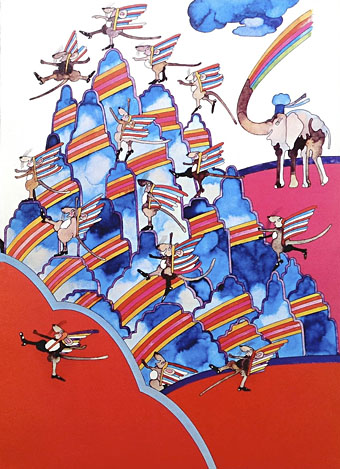
• New music: Hypnagogia by Martina Bertoni, and Cosmos Vol. II by Ran Kirlian & Jaja.

• “Forgotten ‘Stonehenge of the north’ given to nation by construction firm.”

• At Aquarium Drunkard: Soft Machine live at Jazz Bilzen, 1969.

• RIP Tom Verlaine.

Goofin’ At The Coffee House (1959) by Henri Mancini | Bring Me Coffee Or Tea (1971) by Can | Starfish And Coffee (1986) by Prince

Now It’s Dark

dark1.jpg

Now It’s Dark by Lynda E. Rucker; cover art by John Coulthart; jacket design by Meggan Kehrli; introduction by Rob Shearman; edited by Brian J. Showers and Timothy J. Jarvis; copyedited by Jim Rockhill; typeset by Steve J. Shaw; published by Swan River Press.

Hardback: Published on 27 January 2023; limited to 400 copies of which 100 were embossed and hand numbered; signed by Lynda E. Rucker, Rob Shearman, and John Coulthart; xii + 225 pages; lithographically printed on 90 gsm paper; dust jacketed; illustrated Wibalin boards; sewn binding; head- and tail-bands; ISBN: 978-1-78380-043-8.

dark2.jpg

Dust jacket.

dark3.jpg

Printed boards.

This is the last of the books I was working on last year, and being another design for Swan River Press means that once again the artwork is a wraparound cover with printed boards under the wrap. Now It’s Dark is a collection of horror stories (or possibly “strange stories” à la Robert Aickman), and a very fine collection it is. I was given carte blanche with this one so the cover is a mood piece rather than anything directly illustrational. One of the stories concerns the god Pan, which tempted me at first to do something with a satyr-like face, possibly as an architectural feature like a mascaron. But focusing on a single story in this way usually makes me worry about giving that story too much attention if it hasn’t also provided the title of the collection. Thinking about mascarons and their positioning above arched doorways led to the design you see here, a gesture towards a minor trend in horror illustration that makes use of the Arcimboldo effect, as with my battered Shirley Jackson paperback.

haunting.jpg

Corgi Books, 1977. No artist credited.

zuccari1.jpg

A Boy and His Dog on a Staircase in Rome (1886) by Niels Frederik Schiøttz-Jensen.

My cover is a variation on a real place, the “House of Monsters” entrance of the Palazzo Zuccari in Rome which today houses the Bibliotheca Hertziana. I placed the portal into an extended Baroque facade while moving the monstrous windows to the boards of the book. Given the way the grotteschi concept was a common feature of the Baroque you’d expect there to be more doorways like this but the palazzo street entrance seems to be unique. Equivalents such as the Ogre’s Head at Bomarzo are more like theme-park attractions than architectural features. I’ve never seen Umberto Eco mention the Palazzo Zuccari but I imagine he would have enjoyed seeing an infernal mouth as an entrance to a library.

zuccari2.jpg

Previously on { feuilleton }
Infernal entrances

Genet in the Arena

genet1.jpg

In the summer of 1985 he also gave a televised interview to the BBC. It was to be his last public statement. Genet demanded £10,000 in advance and in cash. In return he agreed to be filmed for two days in the house of Nigel Williams, a young novelist, television presenter and the translator of Deathwatch. At the time of the student uprising in May 1968, Genet had been very critical of the form the students’ debates took, especially during the occupation of the Théâtre de l’Odèon. As an experienced playwright he knew that the form is more communicative in a live or filmed event than what anyone manages to say. Accordingly, he constantly interrupted the formula of the television interview. He genuinely believed that he was no more interesting or important than the camera crew and insisted on asking the technicians questions. This reversal of the ordinary television format infuriated many viewers, but none forgot the show.

Edmund White, from Genet: A Biography (1993)

I didn’t forget the show. In fact this particular programme, Saint Genet, has been in the top five of those I wanted to see again ever since copies of old TV recordings started circulating on the internet. The film is another from the BBC’s Arena arts series, and one the corporation is proud of judging by their inclusion of clips in celebrations of Arena‘s history. This pride hasn’t extended to repeat screenings of the entire interview, however, apart from a single occasion a few weeks after Genet’s death in 1986. The days are long passed when the BBC would devote 50 minutes of its evening air-time to a writer who didn’t have a book to plug or some attachment to a popular film or TV drama. In 1985 you could expect as much while also being offered a programme that countered the reactionary tenor of the time: an author whose novels were filled with gay sex, and populated by all manner of social outcasts, from male prostitutes to thieves, murderers and the like.

genet2.jpg

Genet in later years refused to discuss his novels or plays so co-director/interviewer Nigel Williams oriented the discussion around the author’s life (many details of which informed his fiction) while augmenting this with readings from the novels along with extracts from films and plays. I didn’t remember the extracts at all even though this would have been my first glimpse of scenes from the only film that Genet directed (and which he typically disowned), Un Chant d’Amour. More memorable was the sight of Genet himself sitting there for the best part of an hour, rolling cigarettes and verbally jousting with a pair of nervous interviewers in a mood of mingled amusement and exasperation. In the past I’ve been uncharitable about Williams’ handling of the situation but he ought to be congratulated for having inadvertently given us a film that’s so typical of its subject. Genet spent most of his life biting the hand that fed him, and always chaffed at the attention he received from the educated middle classes, even though these were the people who were most interested in (and paid for) his novels and plays. Edmund White’s biography tells us that Genet was unimpressed with Williams’ home (which he compared to something out of a Miss Marple story), and was annoyed when he saw the technical crew eating at a separate table to the producers. This annoyance was translated to the second half of the interview which he described as being like a police interrogation.

In his introductory comments Williams says that this was the first interview Genet had given to a major TV network, but it wasn’t Genet’s first filmed interview. The 52-minute film made by Antoine Bourseiller in 1981 contrasts strikingly with the Arena programme, demonstrating that Genet could talk with ease and at length before a camera. The reason, as White once again explains, is that Genet had planned the film in advance with Bourseiller, selecting the topics for conversation and even helping to edit the footage later. So the difference in attitude was all about control, or the lack of it. Wresting control from the BBC meant directing the questions back at the interviewers while drawing attention to the power relations and the intimidating nature of the interview process.

All of this begs the question as to why Genet agreed to place himself in a situation that he found so uncomfortable when he could easily have refused. We’re left to guess but he certainly didn’t do it for the money; he continued to live frugally despite the international success of his literary works. Large sums such as the £10,000 he extracted from the BBC he regularly passed on to needy friends or to political groups who he felt could put the funds to better use. Whatever the reason behind Genet’s participation, I think Williams and co. would agree that their money was well spent.

Previously on { feuilleton }
Covering Genet
Notre Dame des Fleurs: Variations on a Genet Classic
Genet art
Flowers: A Pantomime for Jean Genet
Querelle de Brest
Jean Genet, 1981
Un Chant d’Amour (nouveau)
Jean Genet… ‘The Courtesy of Objects’
Querelle again
Saint Genet
Emil Cadoo
Exterface
Penguin Labyrinths and the Thief’s Journal
Un Chant d’Amour by Jean Genet

Things Get Ugly

tgu.jpg

Last month I said I had one more cover from 2022 to be made public, having forgotten that there was this one plus another which is currently at the printer, and which I’ll write about at a later date. Things Get Ugly follows last year’s Born For Trouble in being another Joe R. Lansdale cover for Tachyon that uses typography for the whole of the design. As with the earlier cover, this approach sidestepped having to try and summarise a collection of short stories with a single image or graphic. Adding imagery to a collection usually works best when the contents follow a specific theme, which isn’t the case here.

The stories may be described as crime but quite a few of them are dark enough to be included in horror collections. Things do, indeed, get ugly. The intersection between crime and horror fiction isn’t exactly new, the two genres have been entangled since The Murders in the Rue Morgue, and the boundaries remain permeable to this day. The most well-known piece in the new collection is Incident On and Off a Mountain Road, a story that was filmed for TV by Don Coscarelli for the Masters of Horror series, and which also opened the first season in 2005. Coscarelli’s adaptation is even nastier than its source but not everything in the collection is unrelentingly grim. Lansdale has a flair for black comedy which is to the fore in another story, Driving to Geromino’s Grave, in which two Depression-era children have to bring home the rotting body of their deceased uncle. This may not be everybody’s idea of an amusing read but the witty dialogue made me laugh. As well as the cover I’ve designed the interior of this one so I may post samples at a later date.

Things Get Ugly will be published in August. The book can be pre-ordered here.

Previously on { feuilleton }
Born for Trouble
Of Mice and Minestrone

Weekend links 657

foxx.jpg

• Cover art for a new album by John Foxx which will be released on CD in March. This catches my attention for being based on Walter Benjamin’s compendious collection of esoterica, with the music being solo piano pieces. If the latter are anything like the albums Foxx recorded 20 years ago with Harold Budd then this is all very promising. Is the cover design by Jonathan Barnbrook? The typography and formal treatment of the photo suggest as much.

• “The new game was not providing access to everything but finding out how many expensively licensed properties you could cull from your service before people started to question how much they were paying a month.” Sam Thielman on the sudden unavailability of hundreds of classic Warner Brothers cartoons. Regarding his comment about the unplayability of Internet Archive videos: you download them and put them on a USB drive.

Frost Flowers on the Windows (1899) is a book that documents “the extraordinary power of windowpane frost to take ‘ice photographs’, images capable of expressing the ‘vital qualities’ of life forms close to the glass,” according to its author, Albert Alberg.

• New music: ev THe norTH, “a sound journey through the winter of the far north” by Lorenz Weber. (The encoding of the album title won’t display properly on this page.)

• RIP Yukihiro Takahashi, singer, songwriter and drummer with the fabulous Yellow Magic Orchestra. The space-disco video for YMO’s Rydeen never gets old.

• “I want an indescribable feeling”: composer Kali Malone on her search for the sublime.

• Old music: Roundtrip by Don Cherry & Jean Schwarz, a live performance in Paris, 1977.

• At Spoon & Tamago: Glass artist Genki Sudo crafts tentacle earbuds.

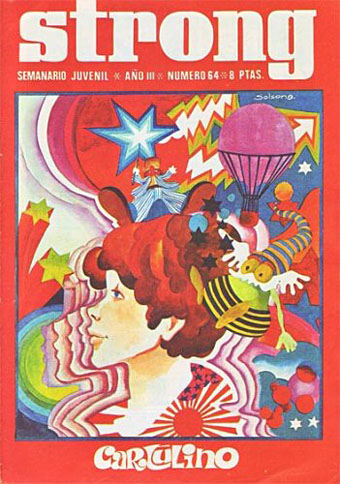
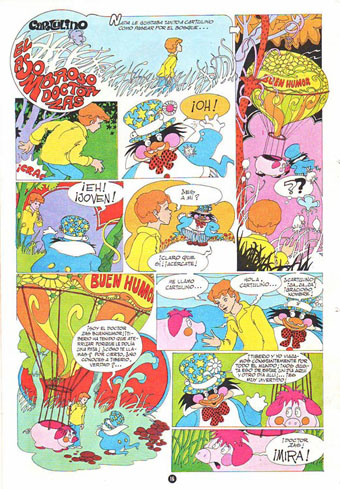
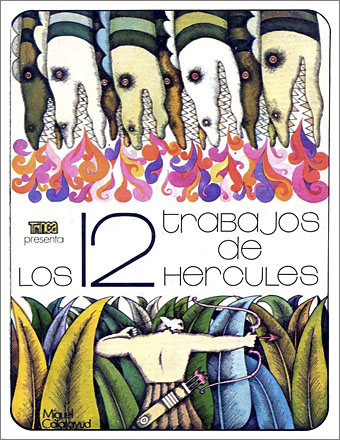
• At Unquiet Things: The Incandescent Otherworlds of Gervasio Gallardo.

• At Dennis Cooper’s: Acid Westerns Day.

Arcade (1987) by Chris & Cosey | The White Arcades (1988) by Harold Budd | Arcade (2018) by Philip Jeck