Weekend links 140

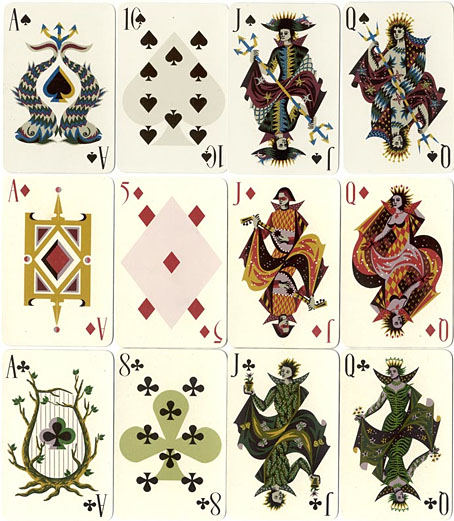
cards.jpg

Thanks to Callum for pointing the way to a beautiful set of playing cards designed by Picart le Doux.

Of cigars and pedants by Houman Barekat, in which Vladimir Nabokov has a problem with Henry James. Tangentially related: Post-Punk’s Nabokov: Howard Devoto and Magazine, live from Berlin, 1980. (Given A Song From Under The Floorboards, and lines like “I could have been Raskolnikov / But mother nature ripped me off”, I’d say it’s more accurate to describe Devoto as Post-Punk’s Dostoyevsky.)

• “I was introduced to Kneale’s work like most kids: by a fifty-foot hologram of a psychic locust and a British colonel deliquesced by five million years of bad Martian energy.” In Keep Me in the Loop, You Dead Mechanism Dave Tompkins looks back at Nigel Kneale’s TV play The Stone Tape. I reported my own impressions at the end of October.

• At The Quietus this week, Carol Huston on Lord Horror: A History Of Savoy Publishing. Michael Butterworth is interviewed, and the piece includes some quotes from earlier interviews by yours truly.

As the Massachusetts minister Increase Mather explained in 1687, Christmas was observed on Dec. 25 not because “Christ was born in that Month, but because the Heathens Saturnalia was at that time kept in Rome, and they were willing to have those Pagan Holidays metamorphosed into Christian” ones. So naturally, official suppression of Christmas was foundational to the godly colonies in New England.

Rachel N. Schnepper on the Puritan War on Christmas.

• Maxine Peake and the Eccentronic Research Council have a seasonal song for you. Take the title, Black ChristMass, as a warning. The group recently played live on The Culture Show.

• Clive Hicks-Jenkins’ Artlog is currently hosting Alphabet Soup, an online exhibition by different artists each depicting the letters of the alphabet. Start here and click forward.

Ornate Typography from the 19th Century featuring samples from the King George Tumblr. Related: Sheaff ephemera.
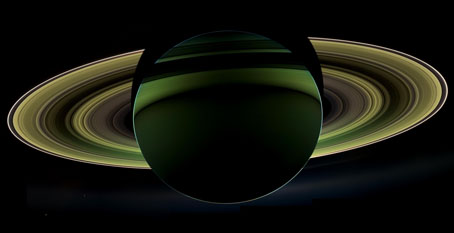
saturn.jpg

Saturn at Saturnalia. A Cassini image of the planet’s nightside.

Kenneth Anger interviewed by P. Adams Sitney. A 53-minute tape recording from 1972.

• At The Outer Church: James Ginzburg of Emptyset posts a winter music mix.

When Candy Darling met Salvador Dalí.

The psychedelic secrets of Santa Claus.

• At Pinterest: Camp as…

Saturn (1956) by Sun Ra | Permafrost (live, 1980) by Magazine | Uptown Apocalypse (1981) by B.E.F.
Walter Crane’s Household Stories

crane01.jpg

The ideal follow-up to yesterday’s post would have been David Wheatley’s 1979 film for the BBC’s Omnibus series dramatising the life and works of the Brothers Grimm. This week was the two hundredth anniversary of the publication of the Grimm’s Children’s and Household Tales; I’ve never seen Wheatley’s Grimm film which—for the moment—remains unavailable.

There are, of course, plenty of illustrated editions of the Grimm’s collections although the dark tenor of the stories means these have never been as popular as Hans Christian Andersen’s tales. The Internet Archive has editions by Arthur Rackham, Robert Anning Bell and Rie Cramer, as well as a later, more stylised edition by German illustrator Albert Weisgerber whose plates can be seen at 50 Watts. Weisgerber brings some of the darkness to the fore, as in the drawing which shows Gretel about to push the wicked old woman into the oven.

crane02.jpg

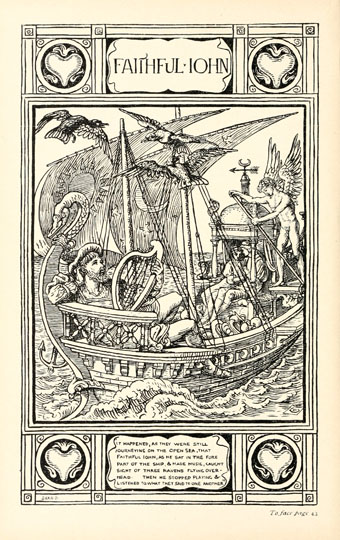
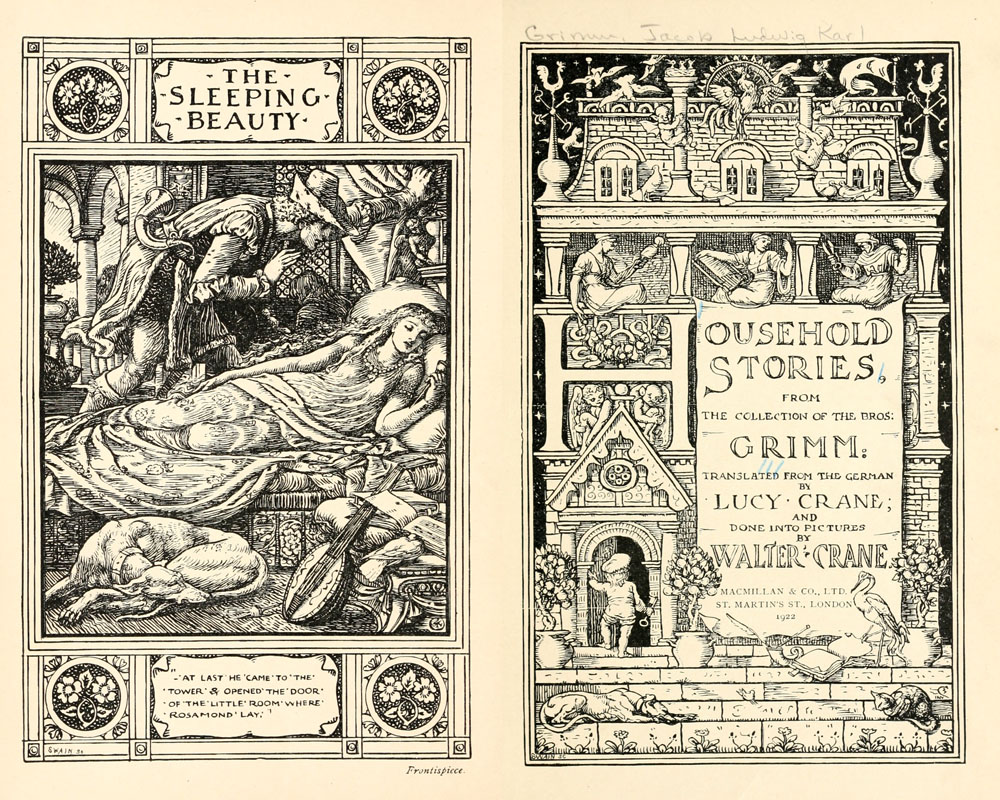
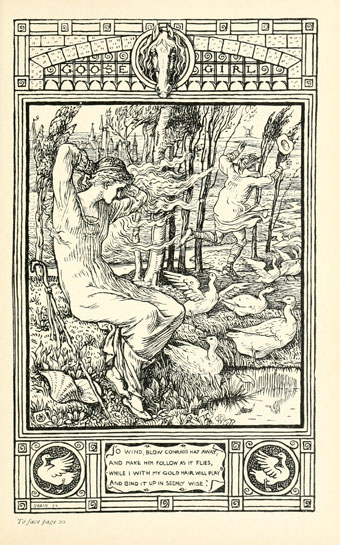
Walter Crane’s edition of Household Stories was first published in 1881. I’ve always liked the Pre-Raphaelite quality of Crane’s drawings so I favour this book over some of the other British editions. I love the house-shaped title page, and the way he embellishes the borders with details from the stories. The vignettes are as varied and inventive as you’d expect from a man who wrote a study of decorative art.

As for the stories, they can seem surprising today when the more popular Andersen fairy tales have become the versions most people know, and those mainly from anodyne film and TV adaptations. Looking at the Grimm books is like hearing older recordings of familiar folk songs (and the Perrault versions are older still): Cinderella is Aschenputtel, Little Red Riding-Hood is Little Red Cap, Snow White is Snow Drop, and so on. Walter Crane’s edition, translated by his sister, Lucy, contains 52 stories, just less than a quarter of the number in the final Grimm collection. William Morris admired Crane’s drawing of the Goose Girl enough to have it enlarged for a tapestry design. The scanned book can be browsed here or downloaded here.

crane03.jpg

Continue reading “Walter Crane’s Household Stories”

The Magic Toyshop

toyshop1.jpg

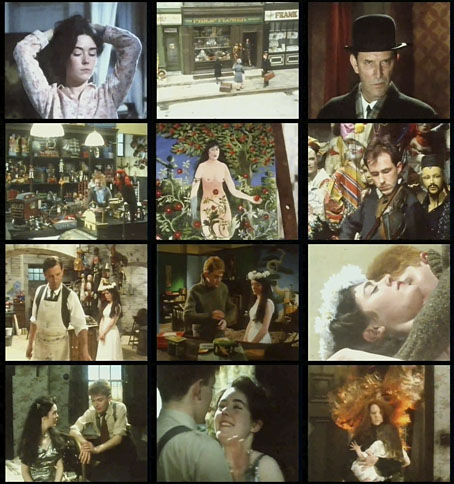
Yet more revenant TV drama. Seems like everything turns up if eventually so long as you’re prepared to wait. I’d looked for this film a couple of times after writing about TV director David Wheatley. The Magic Toyshop (1987) was a feature-length Granada Television adaptation of Angela Carter’s 1967 novel, with Wheatley directing and Carter herself supplying the screenplay. Caroline Milmoe plays Melanie, a teenage girl left in the care of her Uncle Philip after she and her younger brother and sister are orphaned. Tom Bell plays the sinister uncle who owns the toyshop of the title, a place where the toys, puppets and automata are as lively as JF Sebastian’s menagerie in Blade Runner. Melanie’s younger uncles, Finn and Francie, live in fear of the tyrannical Philip who forces them to assist with his life-size puppet shows, while Melanie’s aunt Margaret is not only cowed by her husband but also mute. The arrival of Melanie and her growing sexual awareness upsets the household’s balance of power.

toyshop2.jpg

It was good to see this film again having recently watched David Wheatley’s René Magritte film and his marvellous Borges documentary. In light of those earlier works an adaptation of Angela Carter would seem a natural progression. Aside from an overly-emphatic score, The Magic Toyshop was better than I remembered, the initial viewing no doubt suffering from an expectation that it might be a match for The Company of Wolves (1984). The Granada film had a much lower budget than Neil Jordan’s feature so it’s an unfair comparison. Wheatley and co. saved money with some careful use of the Baker Street set from Granada’s Sherlock Holmes adaptations.

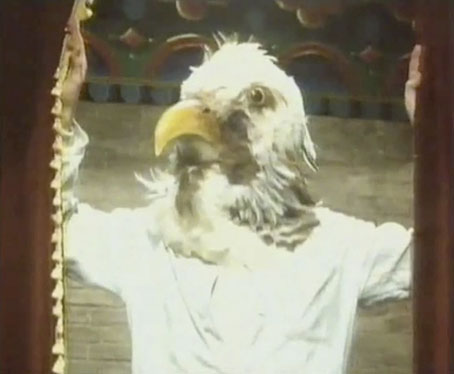
Watching The Magic Toyshop now it’s surprising it was made at all, it’s an odd piece of work stippled throughout with surreal moments, and even Surrealist references, as with Finn’s Loplop-like appearance above. What drama there is refuses the familiar shapes that a TV audience would expect, and there’s also a surprising amount of incestuous desire boiling among the major characters that goes unquestioned. I’ve not read Carter’s novel so I can’t say how it compares but the film feels like a very pure delivery of the author’s landscape of entwined sexuality, fantasy and myth. The Magic Toyshop hasn’t been reissued on DVD so the YouTube version is from a tape copy. It’s also chopped into chunks (why, oh, why, etc) but it’s highly recommended to Angela Carter readers.

The Magic Toyshop: part 1 | part 2 | part 3 | part 4 | part 5 | part 6 | part 7

Previously on { feuilleton }
Borges and I
René Magritte by David Wheatley

The Magic Shop by HG Wells

magic.jpg

The Magic Shop (1964).

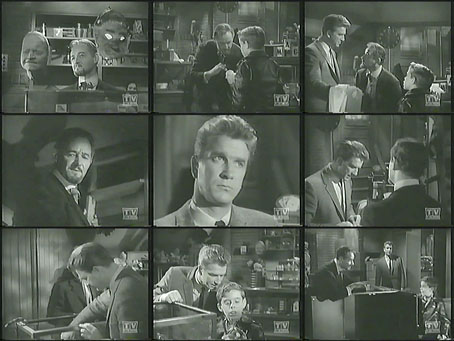
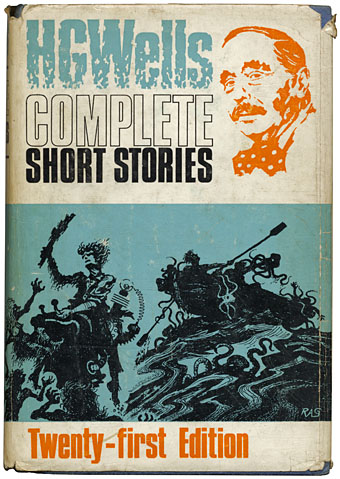
I discovered this TV adaptation by accident while looking for something else (more about the something else tomorrow). The Magic Shop is a 45-minute drama directed by Robert Stevens in 1964 for The Alfred Hitchcock Hour. Writer John Collier adapted a script by James Parish that’s loosely based on the short story by HG Wells. The story is one I know very well, having read it many times, but I hadn’t come across this TV version before. It’s a surprise finding it so close to Christmas since I first read the story in the only Christmas present that’s survived from childhood, a hefty collection of HG Wells’ short stories that I pestered my parents into buying me in 1973. I mostly wanted to read The Time Machine but the other stories seemed promising, especially the ones illustrated by Richard Gilbert on the (miraculously intact) dustjacket: The Sea Raiders (sailors attacked by octopuses), The Flowering of the Strange Orchid (man attacked by tentacular plant), The Valley of Spiders (attacking spiders falling from the sky), and so on. The book as a whole runs to over 1000 pages, and proved to be a revelation with Wells ranging through fantasy, science fiction, horror, and oddities which don’t fit any category other than Robert Aickman’s indispensable label, “strange stories”. The book made me a lifelong Wellsian, and also spoiled me a little when I moved on to more recent science fiction and found many of the alleged greats to be appalling writers. Wells’ prose can’t compete with Robert Louis Stevenson but it’s still well-crafted in that no-nonsense late Victorian manner familiar to readers of Arthur Conan Doyle.

wells.jpg

Design and illustration by Richard Gilbert (1970).

The Magic Shop is one of the strange stories, the shop in question being a mysterious establishment somewhere in Regent Street, London, one of those premises one discovers by accident then can’t find again. The narrator is informed by the proprietor that this is a Genuine Magic Shop, as distinct from the kind selling mere conjuring tricks. The meaning of this isn’t clear at first but while the narrator’s young son is being beguiled by the marvels on display we follow his father’s growing alarm when he realises there’s more to the shop than he anticipated, not all of it pleasant or fun. The story was published in Twelve Stories and A Dream in 1903, and can be read here.

The TV version takes the bare bones of the tale—curious shop, indeterminate location, friendly yet sinister proprietor—and blends it with the nasty-child-with-magic-powers theme that was dramatised so memorably by The Twilight Zone in It’s A Good Life. The Hitchcock show was made three years after the Twilight Zone episode so it’s easy to see It’s A Good Life as an influence. Leslie Nielsen is the father who takes his son, Tony (John Megna), to the fateful shop on his birthday. The proprietor informs the pair that Tony is “the right boy” since he found the shop in the first place, the subtext being that he’s also possesses the right character to be the recipient of some heavy voodoo abilities. The boy’s bad seed status has been telegraphed from the outset by a birthday gift from an uncle of a black leather jacket; throughout the scene in the shop he looks like a miniature hoodlum. More American anxiety about its troublesome youth? Maybe, although the episode ends so poorly that the whole thing comes across as a lazy piece of filler. This is, of course, a long, long way from the Wells story which is all the more effective for being elusive, understated and, yes, magical.

Previously on { feuilleton }
HG Wells in Classics Illustrated
The night that panicked America
The Door in the Wall
War of the Worlds book covers

Calendars galore

calendars.jpg

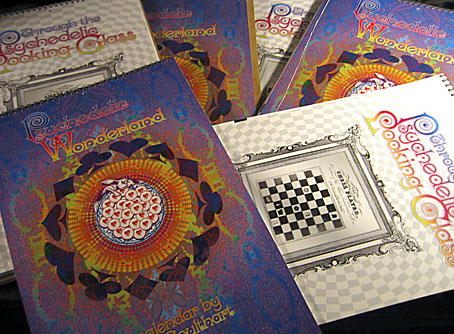
It’s those calendars again. I’ve had requests recently to put my Lewis Carroll-themed psychedelic designs back on sale but the past few months have been pretty work-heavy, and since I deleted the original product pages it was going to require some effort to make new ones. This weekend I finally found the time to tackle the CafePress upload system and make them available again. I’ve taken the year date off the covers so both calendars will remain available in the future. See below for details.

Meanwhile, this year’s Cthulhu Calendar is still on sale and proving almost as popular as the Wonderland one did in 2009. Thanks again for the support!

wonderland.jpg

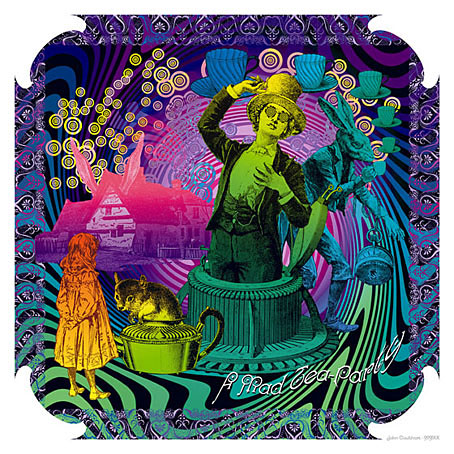
A Mad Tea-Party from Psychedelic Wonderland (2009).

• Psychedelic Wonderland at CafePress | See preview pages here.

lookingglass.jpg

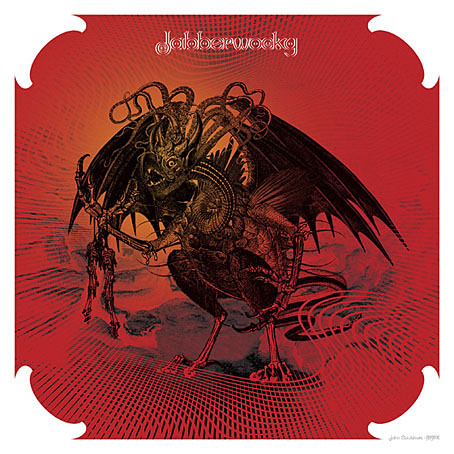
Jabberwocky from Through the Psychedelic Looking-Glass (2010).

• Through the Psychedelic Looking-Glass at CafePress | See preview pages here.

Previously on { feuilleton }
Scenes from a carriage
Through the Psychedelic Looking-Glass: the 2011 calendar
Jabberwocky
Alice in Acidland
Return to Wonderland
Dalí in Wonderland
Virtual Alice
Psychedelic Wonderland: the 2010 calendar
Charles Robinson’s Alice’s Adventures in Wonderland
Humpty Dumpty variations
Alice in Wonderland by Jonathan Miller
The Illustrators of Alice