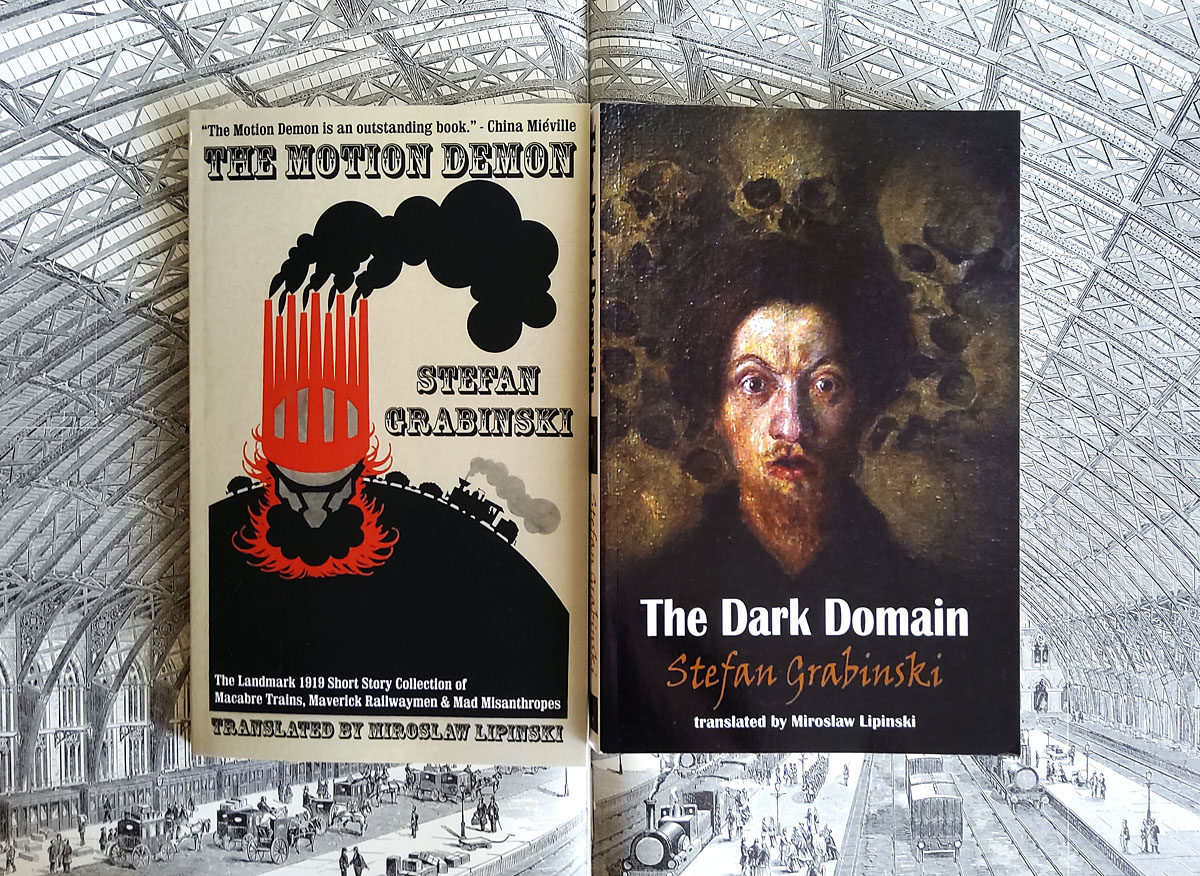
Demons by rail-light: Stefan Grabiński’s weird fiction

grabinski.jpg

Thanks to the demons of distraction it’s taken me a long time to find my way to these books by Polish author Stefan Grabiński (1887–1936) but I’m very pleased to have done so at last. Grabiński was one of several writers first drawn to my attention by Franz Rottensteiner’s The Fantasy Book: The Ghostly, the Gothic, the Magical, the Unreal (1978), a lavishly illustrated popular study that charted the history of fantasy and horror fiction. The book is inevitably dominated by Anglophone authors but Rottensteiner was looking at the genres from a global perspective, to an extent that some of the writers in the sections devoted to Continental Europe were either difficult to find or, as with Grabiński, hadn’t yet been translated into English. Robert Hadji’s Grabiński entry in the Penguin Encyclopedia of Horror and the Supernatural (1986) further stoked my curiosity. Neither Rottensteiner nor Hadji mention how they came to read these obscure tales but I’d guess it was in the two collections published in Germany under the Bibliothek des Hauses Usher imprint, Das Abstellgleis (1971) and Dunst und andere unheimliche Geschichten (1974); several covers from the imprint appear in Rottensteiner’s book. Wherever it was that they read the stories, both writers praised Grabiński as an overlooked master of weird fiction. Rottensteiner notes that he was a contemporary of HP Lovecraft, and with a similar biography—briefly married and suffering artistic neglect during his lifetime—but neither Rottensteiner nor Hadji use the common shorthand descriptions of Grabiński as “the Polish Poe” or “the Polish Lovecraft”. These labels are intriguing but misapplied.
grabinski2.jpg

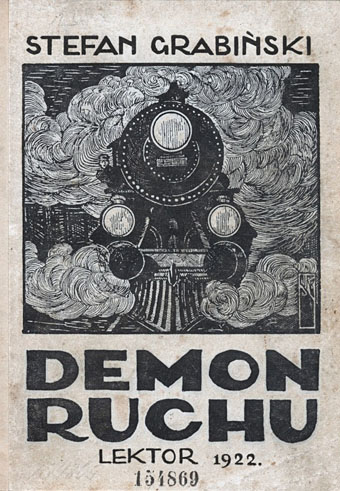
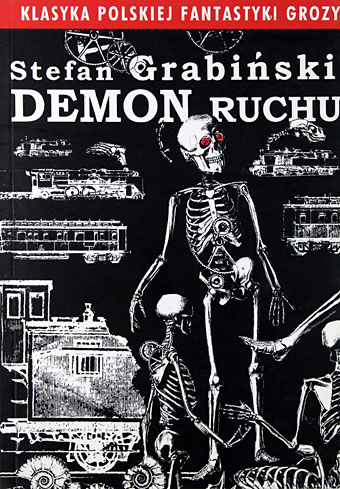
Bearing in mind that these stories are translated works, one of the surprises of finally reading them is how fresh they seem compared to so many British ghost stories from the same period. Grabiński was writing during the birth of Modernism but the stories of his Anglophone contemporaries can often read like the products of an earlier epoch. His economical prose lacks the ornamentation of Poe and Lovecraft, just as it lacks Poe’s morbid Romanticism and has nothing of Lovecraft’s cosmic scale. But there are recurrent themes, particularly that of possession, whether by the spirits of the dead, by inhuman elementals, or by idée fixe. The latter provides the subject of The Glance, a story that also demonstrates Grabiński’s knack of finding horror in the most mundane situations: a man whose wife died prematurely is troubled by the sight of an open door, the same door through which she walked out of his life, and subsequently, out of her own. The man’s obsession with the door grows into a fear of closed doors and the implicit tragedies they may conceal, an obsession that soon extends itself to anything that hides too much of the world: curtains, rugs, the sharp corners of city streets… Edgar Allan Poe was fond of cataloguing madness in this manner but Grabiński’s stories go beyond glib formulations of insanity. “Metaphysical” is a word often used in discussion of the Grabiński oeuvre; the fixations of his protagonists reveal truths about the world to which others are blind.
grabinski3.jpg

Continue reading “Demons by rail-light: Stefan Grabiński’s weird fiction”

Weekend links 529

hiroshige.jpg

Naruto Whirlpool, Awa Province, from the series Views of Famous Places in the Sixty-Odd Provinces (c. 1853) by Hiroshige.

• Eric Margolis: “Yukio Mishima may have gone out in an inglorious blaze in 1970, but three of his previously untranslated works have been released in the English-speaking world in the last two years, with another on the way.” The forthcoming novel is Mishima’s only venture into science fiction (!), A Beautiful Star. The book was filmed by Daihachi Yoshida in 2017.

• “[Ace in the Hole] did well in Europe but not here, perhaps because Americans expected a cocktail and felt I was giving them a shot of vinegar instead.” Billy Wilder discussing his career with Charles Higham in 1967.

• Mixes of the week: All these things invisible by The Ephemeral Man, and Secret Thirteen Mix 306 by Yogev Freilichman.

“So I got a phone number for Vangelis, he was living in Paris and I went there and called him up. He said (affects a gruff Greek accent) ‘Hello’, I said, ‘My name’s Jon Anderson’. He said ‘What?’ I said, ‘I’m in a band called Yes’, he said, ‘Are you a singer? Well, come over’, so I went over. There was this big guy with a long kaftan on and a bow and arrow around his shoulder. I got into his palatial apartment near the Champs-Élysées and there’s quite a long hallway down to his living room, and there’s a little old man there sitting by the TV. Vangelis takes out his bow and sends this arrow down the hallway and it goes right through the window, because the window was open. I said, ‘Vangelis, you could have killed somebody’, he said, ‘Oh, don’t worry, I’m Greek’. I said, ‘I know you’re Greek, but come on’.”

Jon Anderson talking to Duncan Seaman about his first encounters with Vangelis

• Tarot cards though the ages; examples from a new book on the subject published by Taschen.

• The Suspended Vocation again: Ryan Ruby on Pierre Klossowski, “Brilliant Brother of Balthus”.

• Secret Sound podcast #17 is devoted to The Galaxy of Turiya aka Alice Coltrane.

• At Dennis Cooper’s: Shaye Saint John Day.

• Kenneth Anger smiles!

• Make Me Smile (Come Up And See Me) (1975) by Steve Harley and Cockney Rebel | Uncertain Smile (1983) by The The | Fleeting Smile (1988) by Roger Eno

The Blake Video

blake.jpg

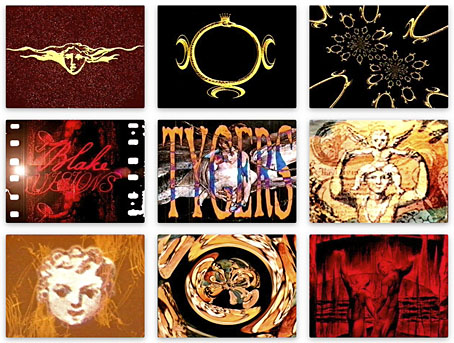
More from the website update. One of the pages buried in the site is an appendix to my design for Angel Passage, a William Blake-themed CD by Alan Moore and Tim Perkins that was released on Steven Severin’s Re: label in 2001. In addition to designing the CD I also created a video accompaniment for the sole performance of the piece at the Purcell Room in London in February of that year. The old web page showed screen shots of the video, and very small ones at that, so as well as updating the page itself I’ve replaced the thumbnails with the original shots.

The video was created in a rush five days before the performance, and only finished the night before I departed for London, so was rather lazily done in places. I’d just taken delivery of a new G4 Power Mac without which I wouldn’t have been able to do any video editing at all. Raw material was artwork scanned from books plus a stack of VHS tapes, including a TV documentary about Blake that provided a few relevant shots of contemporary London. Another essential component was a borrowed video player that could play both VHS and MiniDV cassettes, as well as connect to the computer. The assembled footage was recorded to a MiniDV master cassette which I still have somewhere although I’ve no idea whether it’s still viewable, and have no way to watch it in any case. Those MiniDV players had a tendency to mysteriously render their tapes unplayable which I think may have happened to my tape when I came to try and archive it after the performance. This is fitting in a way, Alan was always adamant that the music-based readings he was doing at this time were one-off events, and the video was only intended to augment the reading, not be watched away from the performance. Copies of the CD still circulate so the work hasn’t vanished altogether. Alan and Tim collaborated on three readings in this series, together with two earlier outings, The Birth Caul and (with David J) The Moon And Serpent Grand Egyptian Theatre Of Marvels. We’re overdue a reissue of the entire Moon and Serpent discography.

Previously on { feuilleton }
• William Blake in Manchester

Weekend links 528

durer.jpg

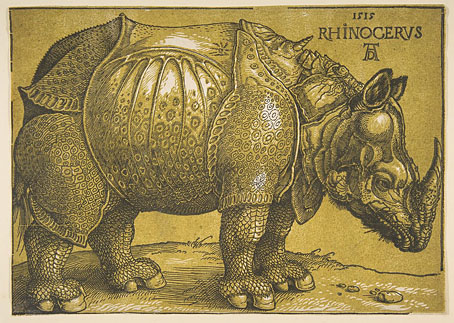
The Rhinoceros (after 1620) by Albrecht Dürer.

• “Today—Tolkien, Lovecraft, Miéville and M John Harrison!” Paul StJohn Mackintosh at Greydogtales explores HP Lovecraft’s lack of interest in fictional worldbuilding. The piece includes one of my book covers (ta!) plus a link to an earlier post I wrote about the cover designs of M. John Harrison’s Viriconium books. Since I’m connected to the thesis I’ll suggest that Lovecraft was resistant to the worldbuilding impulse in part because he was almost always writing horror stories. Having studied the genre at length he was well aware of the need to leave suggestive voids for the reader’s imagination.

• RIP Denise Johnson. All the obituaries mention the big names she worked with, notably New Order and Primal Scream, but being in the pool of Manchester session artists she also appeared on a couple of records by my colleagues at Savoy. Her voice is one of those you first hear on the PJ Proby cover of I’m On Fire, while with friend Rowetta she improvised her way through a Hi-NRG original (and a favourite of Anohni’s), the scurrilous Shoot Yer Load.

• At the BFI: Axel Madsen interviews Fritz Lang in 1967; Serena Scateni on where to begin with Nobuhiko Obayashi; and Roger Luckhurst reviews the spomenik-infested  Last and First Men by Jóhann Jóhannsson.

• “Be more aware of the rest of the world!” says Jon Hassell, talking to Alexis Petridis about a life spent making music.

• John Boardley on the Renaissance origins of the printed poster. Worth it for the selection of engraved details alone.

• “What Ever Happened To Chicken Fat?” Jackson Arn on a tendency to over-abundance in Jewish humour.

• Erik Davis has a new writing home at Substack that he calls The Burning Shore. Bookmarked.

• Mix of the week: The Ivy-Strangled Path Vol. XXII by David Colohan.

• Garry Hensey on The Strange World of John Foxx.

• At Dennis Cooper’s: Sergei Parajanov Day.

• Romantic Rhino (1981) by Ananda Shankar | The Lone Rhinoceros (1982) by Adrian Belew | Blastic Rhino (2000) by King Crimson

Unearthly tones

belbury.jpg

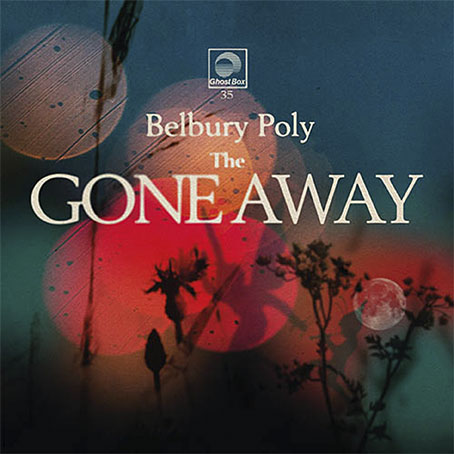
Design, as always, is by Julian House.

“…we shall only be delivered from our afflictions by sayings and doings that are altogether irrational, paradoxical, and magical: the wild songs of fairyland, sung to unearthly tones, are the only medicine for the heartache and the headache of humanity.”

Arthur Machen, A Note on Asceticism (The Academy, 27th May, 1911)

This quote from the Apostle of Wonder, which will appear on the forthcoming album from Belbury Poly, is one I hadn’t seen before; serves me right for not subscribing to Faunus where the piece was reprinted in 2017. It’s been a while since Machen’s name has appeared in association with Ghost Box even though the label originates from the same area of South Wales that was the writer’s birthplace, a detail that gave the early Ghost Box releases additional resonance. One of the attractions of the Ghost Box recordings was the intersection between quotes and titles from weird literature with electronic music derived from library albums and theme tunes from the 1960s and 70s; Witch Cults Of The Radio Age, as Broadcast & The Focus Group memorably put it. It was a beguiling mix which the label’s more recent releases have increasingly diluted: the rear-view musical themes are still in evidence but the weird quotient has been diminished, giving the listener a box without a ghost. (Pye Corner Audio, whose last album was an exploration of subterranean realms, is a notable exception.) I feel uncomfortable drawing attention to this since it’s tantamount to saying “Please don’t change!”. But it’s also the case that a label devoted solely to Basil Kirchin pastiches might never have attracted my attention in the first place.

The description of new Belbury Poly album, The Gone Away, reaffirms the label’s commitment to its weirder side:

The Gone Away’s 11 tracks are inspired by British fairy folklore, especially its recurrent themes of things that always seem on the point of leaving or vanishing. Also there’s the notion of things that can’t be seen head on but are only glimpsed from the corner of the eye. A scorned and neglected corner of folklore, beguiling and bonkers in equal measure. Of course, this being a Ghost Box record, these themes are received through the prism of old TV soundtracks, and the credulous beliefs and childhood obsessions of a pre-digital age.

Anyone who’s read Arthur Machen’s The Shining Pyramid will know that fairy folklore in his stories conceals a darker and more malevolent manifestation of the supernatural. His comment about “unearthly tones” suggests a different point of view. The Gone Away will be released on 28th August.

Previously on { feuilleton }
• The White People by Arthur Machen
• Ghost Box