Weekend links 400

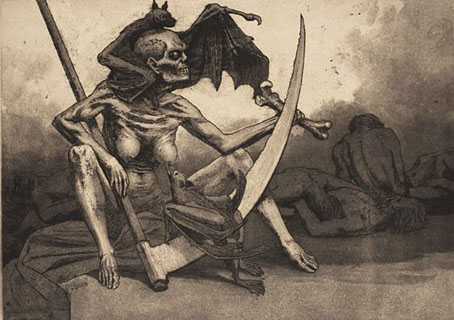
bernard.jpg

Le Répit (La Mort allaitant une chauve-souris) (1895) by Valère Bernard.

Playhouse 90 presents Heart of Darkness by Joseph Conrad. An American TV production from 1957 starring Boris Karloff, Roddy McDowall, Eartha Kitt and others; introduced by Sterling Hayden. It’s bizarre. Acidemic goes into the detail.

• Erik Davis talks to occult writer and drug geek Julian Vayne about Baphomet, the (sur)reality of spirits, evolution, ritualizing entheogens, and his new book Getting Higher: The Manual of Psychedelic Ceremony.

• “Unsurprisingly, 1. Outside was the record that the #BowieBookClub readers most readily associated with Hawksmoor.” Anna Aslanyan revisits Peter Ackroyd’s architectural mystery.

The Flowers of Dorian Gray: part one of a series of posts examining one of Oscar Wilde’s favourite symbols.

• At Haute Macabre, an interview with Michael Locascio & Heather Jean Skawold of Dellamorte & Co.

One Minute Art History, an animated film by Cao Shu.

Film posters at the Harry Ransom Center, UT-Austin.

• Mix of the week: FACT mix 639 by Black Milk.

Susanna‘s favourite albums.

• Welcome to The Spoodoir.

• Flowers Of Evil (1983) by Cortex | Baphomet (1989) by Foetus Inc. | Heart Of Darkness (1989) by Syd Straw

A fair curled creature, Hylas was his name

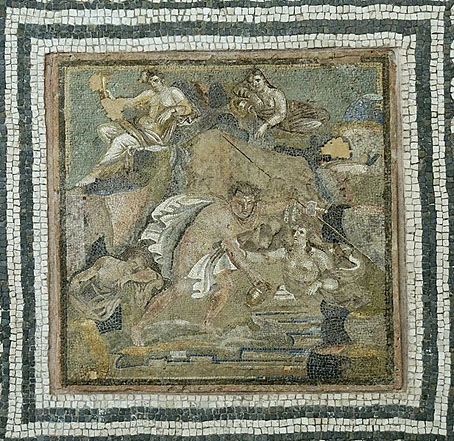
2ndcenturyBC.jpg

Mosaic with Hylas and Nymphs from Tor Bella Monaca, Rome (2nd century BC).

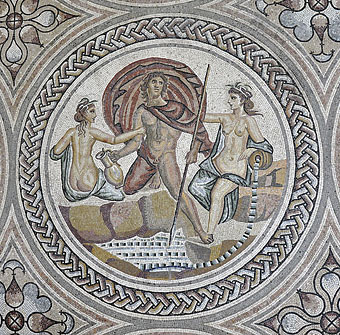
Among the myths to which Greek lovers referred with pride, besides that of Achilles, were the legends of Theseus and Peirithous, of Orestes and Pylades, of Talos and Rhadamanthus, of Damon and Pythias. Nearly all the Greek gods, except, I think, oddly enough, Ares, were famous for their love. Poseidon, according to Pindar, loved Pelops; Zeus, besides Ganymede, was said to have carried off Chrysippus. Apollo loved Ayacinth, and numbered among his favourites Branchos and Claros. Pan loved Cyparissus, and the spirit of the evening star loved Hymenæus. Hypnos, the god of slumber, loved Endymion, and sent him to sleep with open eyes, in order that he might always gaze upon their beauty. (Ath. xiii. 564). The myths of Phœbus, Pan, and Hesperus, it may be said in passing, are paiderastic parallels to the tales of Adonis and Daphne. They do not represent the specific quality of national Greek love at all in the same way as the legends of Achilles, Theseus, Pylades, and Pythias. We find in them merely a beautiful and romantic play of the mythopœic fancy, after paiderastia had taken hold on the imagination of the race. The case is different with Herakles, the patron, eponym, and ancestor of Dorian Hellas. He was a boy-lover of the true heroic type. In the innumerable amours ascribed to him we always discern the note of martial comradeship. His passion for Iolaus was so famous that lovers swore their oaths upon the Theban’s tomb; while the story of his loss of Hylas supplied Greek poets with one of their most charming subjects. From the idyll of Theocritus called Hylas we learn some details about the relation between lover and beloved, according to the heroic ideal…

A Problem in Greek Ethics; Being an Inquiry into the Phenomenon of Sexual Inversion (1883/1908) by John Addington Symonds
3rdcentury.jpg

Hylas mosaic, Saint-Romain-en-Gal-Vienne, France (3rd century).

Not for us only, Nicias, (vain the dream,)
Sprung from what god soe’er, was Eros born:
Not to us only grace doth graceful seem,
Frail things who wot not of the coming morn.
No—for Amphitryon’s iron-hearted son [Heracles],
Who braved the lion, was the slave of one:—

A fair curled creature, Hylas was his name.
He taught him, as a father might his child,
All songs whereby himself had risen to fame;
Nor ever from his side would be beguiled
When noon was high, nor when white steeds convey
Back to heaven’s gates the chariot of the day,

Nor when the hen’s shrill brood becomes aware
Of bed-time, as the mother’s flapping wings
Shadow the dust-browned beam. ‘Twas all his care
To shape unto his own imaginings
And to the harness train his favourite youth,
Till he became a man in very truth.
4thC.jpg

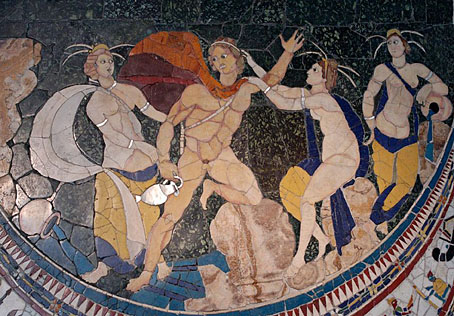
Rape of Hylas mosaic from the Basilica of Junius Bassus, Rome (first half of the 4th century).

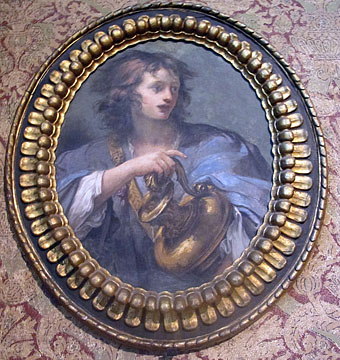
Water the fair lad wont to seek and bring
To Heracles and stalwart Telamon,
(The comrades aye partook each other’s fare,)
Bearing a brazen pitcher. And anon,
Where the ground dipt, a fountain he espied,
And rushes growing green about its side.

There rose the sea-blue swallow-wort, and there
The pale-hued maidenhair, with parsley green
And vagrant marsh-flowers; and a revel rare
In the pool’s midst the water-nymphs were seen
To hold, those maidens of unslumbrous eyes
Whom the belated peasant sees and flies.

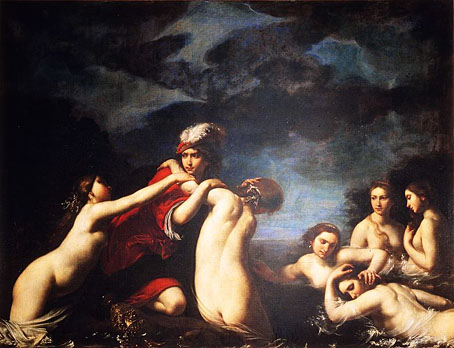
And fast did Malis and Eunica cling,
And young Nychea with her April face,
To the lad’s hand, as stooping o’er the spring
He dipt his pitcher. For the young Greek’s grace
Made their soft senses reel; and down he fell,
All of a sudden, into that black well.

Theocritus, Idyll XIII: Hylas (translated by CS Calverley)
1630-Furini.jpg

Hylas and the Nymphs (1635) by Francesco Furini.
1650-Volterrano.jpg

Hylas with the Golden Jug (c.1650) by Il Volterrano (Baldassare Franceschini).

Continue reading “A fair curled creature, Hylas was his name”
Weekend links 397

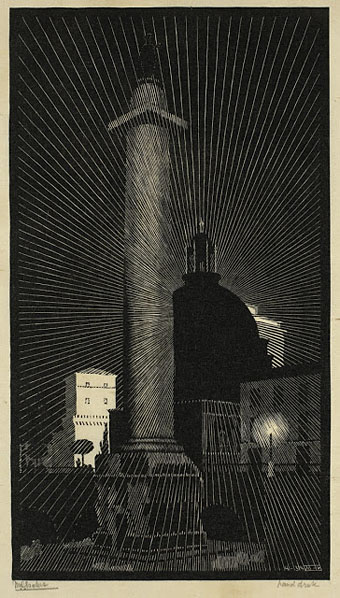
escher.jpg

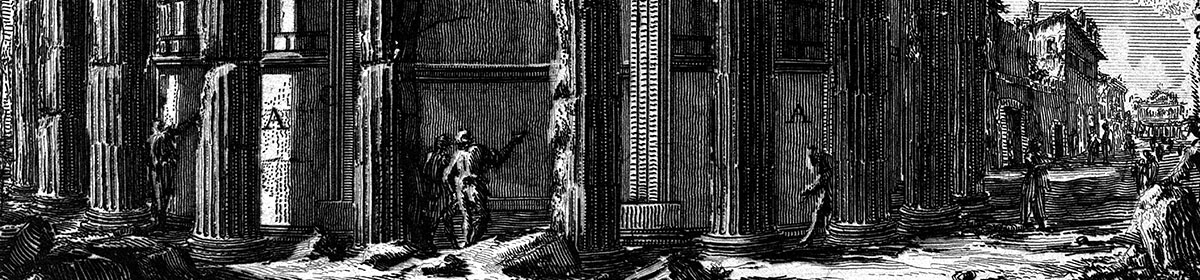
Nocturnal Rome — Trajan’s Column (1934) by MC Escher.

• Many eulogies this week for the late, great Mark E Smith. Strangers to the abrasive splendour of The Fall could do worse than begin with Geeta Dayal‘s list of ten best albums. At YouTube there’s a playlist of The Fall’s Peel Sessions, from 1978 to 2004, while The Fall Quote Generator provides fragments of lyrics and interviews. “Use it like the I Ching.”

• Books with poisoned pages are usually the stuff of fiction but Shadows from the Walls of Death: Facts and Inferences Prefacing a Book of Specimens of Arsenical Wall Papers (1874) by RC Kedzie presents a serious health hazard to would-be readers.

• Man Ray: “There was more surrealism rampant in Hollywood than all the surrealists could invent in a lifetime.” Kimberly Lindbergs looks at Albert Lewin’s 1951 fantasy, Pandora and the Flying Dutchman.

• At Towleroad: “The Most Dangerous Gay Man In America Fought Violence with Violence” Eric Markowitz on the Reverend Raymond Broshears, founder in 1973 of the Lavender Panthers.

• Coming in April from Strange Attractor: All in the Downs: Reflections on Life, Landscape and Song by Shirley Collins.

• Mixes of the week: Secret Thirteen Mix 244 by Daniel O’Sullivan, and XLR8R Podcast 526 by Jamaica Suk.

• At Dennis Cooper‘s this week, a post I might have made myself (but, er, didn’t) about mirrored works of art.

• A preview of Strange Stars: David Bowie, Pop Music and the Year Sci-Fi Exploded by Jason Heller.

• “We live in Philip K Dick’s future, not George Orwell’s or Aldous Huxley’s,” says Henry Farrell.

• Was For Your Convenience (1937) by Paul Pry the first queer city guide?

Fall (1967) by Miles Davis | Fall (2011) by The Haxan Cloak | Fall (2014) by The Bug feat. Inga Copeland

Weekend links 393

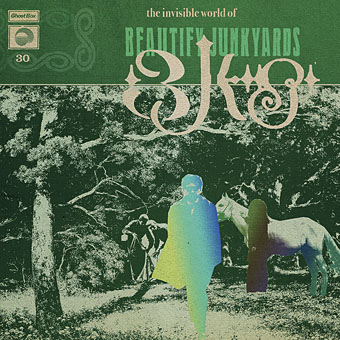
beautifyjunkyards.jpg

The Invisible World of Beautify Junkyards will be the next release on the Ghost Box label in March 2018. Design by Julian House.

• Tantalising discovery of the week was Alphons Sinniger’s Eno (1974), a 24-minute film about post-Roxy Music Brian Eno which shows (among other things) the recording of Here Come The Warm Jets. The film is a scarce item that appeared briefly on YouTube before being yanked. Copies have been reposted (see here) although they may not stay around for long.

Nosferatu the Shapeshifter: An inventory of intertitles, prints and premiéres. A page that includes some detail about Die zwölfte Stunde. Eine Nacht des Grauens (The Twelfth Hour: A Night of Horror), a seldom-seen reworking of Murnau’s film from 1930 which added sound, additional scenes (none of them by Murnau) and a happy ending.

• At Dennis Cooper‘s: Entry Level: Luchino Visconti’s “German Trilogy”: The Damned, Death in Venice, Ludwig (1969–1973).

• “3,500 occult manuscripts will be digitized and made freely available online, thanks to Da Vinci Code author Dan Brown.”

• From 2015: Watch Alejandro Jodorowsky give a tarot reading (for Nicolas Winding Refn).

Portals of London: “Towards a catalogue of London’s inter-dimensional gateways”.

• At Spoon & Tamago: Gigantic sculptures by Kenji Yanobe of cats wearing helmets.

• At the BFI: Adam Scovell on 10 great “urban wyrd” films.

• At Swan River Press: Our Haunted Year: 2017.

Portals (2001) by Bill Laswell | Portals And Parallels (2010) by Belbury Poly & Moon Wiring Club | Abysmal Cathedrals Arise!—Beyond The Quivering Portal—Minds On Fire (2012) by The Wyrding Module

The weekend artists, 2017

images.jpg

Art by Twins of Evil for the forthcoming blu-ray from Arrow Academy.

The laziest post of the year is invariably a review of the artists/designers/photographers featured on the weekend posts, so here’s another end-of-year list for you. Scroll down to see what caught my attention over the past twelve months.

mueck.jpg

Mass by Ron Mueck at the National Gallery of Victoria Triennial. Photo by Tom Ross.

possession.jpg

French poster by Basha (Barbara Baranowska) for Andrzej Żuławski’s extraordinary Possession (1981).

adam.jpg

I Had Sweet Company Because I Sought Out None. Collage by Helen Adam.

nakayama.jpg

Still of an Alive Painting by Akiko Nakayama.

Continue reading “The weekend artists, 2017”