The art of Thomas Cole, 1801–1848

cole1.jpg

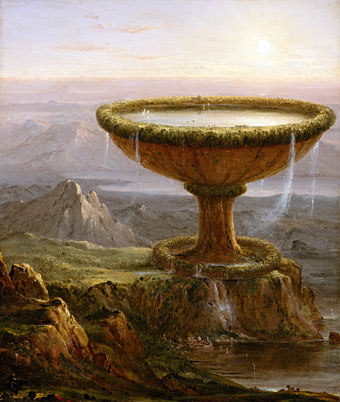
The Titan’s Goblet (1833).

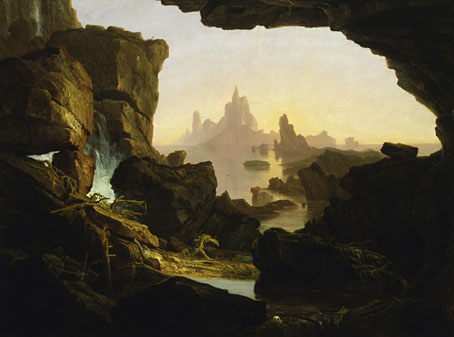
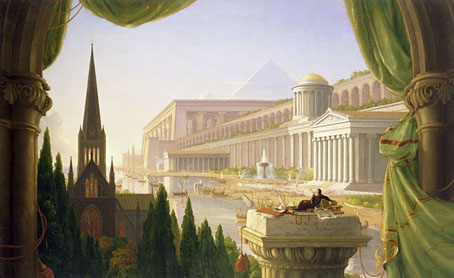
Thomas Cole’s Titan’s Goblet isn’t featured at the Google Art Project, unfortunately, but the following paintings are, and all benefit from being able to explore their details. Cole’s colossal vessel predates Surrealism by a century, and is one of many paintings which always has me mentally labelling him as the American John Martin (1789–1854). Having thought of him for years as an American artist–not least because he founded the Hudson River School–it’s a surprise to learn he was born in Bolton, a town not far from Manchester, with his parents emigrating to the US when he was 17. John Martin also grew up in the north of England so there’s another similarity, although the more important comparison concerns their use of painting to convey the spectacularly vast and unreal scenes common to the imaginative side of Romantic art. The Titan’s Goblet is unusual in not having any particular symbolic or moral significance, unlike the pictures below, it’s Magritte-like in its careful depiction of the impossible. The Subsiding of the Waters of the Deluge, on the other hand, could be exhibited beside Francis Danby’s The Deluge (1840) for a “before and after” effect. Like Martin, Cole enjoyed painting architecture of an exaggerated scale. The Architect’s Dream features an Egyptian temple of stupendous size, while the pyramid looming in the background is closer to William Hope Hodgson’s seven-mile-high Last Redoubt than any structure on the Nile plain.

Of equal interest are Cole’s two well-known series: The Course of Empire (1833–36) and The Voyage of Life (1842), both of which I’d love to see at Art Project size.
cole2.jpg

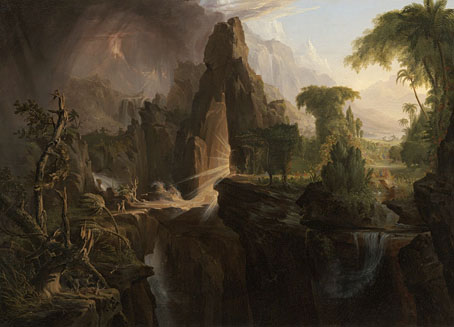
Expulsion from the Garden of Eden (1828).
cole3.jpg

The Subsiding of the Waters of the Deluge (1829).
cole4.jpg

The Architect’s Dream (1840).

Elsewhere on { feuilleton }
The fantastic art archive

Previously on { feuilleton }
John Martin’s musical afterlife
Albert Bierstadt in Yosemite
Danby’s Deluge
John Martin: Heaven & Hell
Darkness visible
Two American paintings
The apocalyptic art of Francis Danby
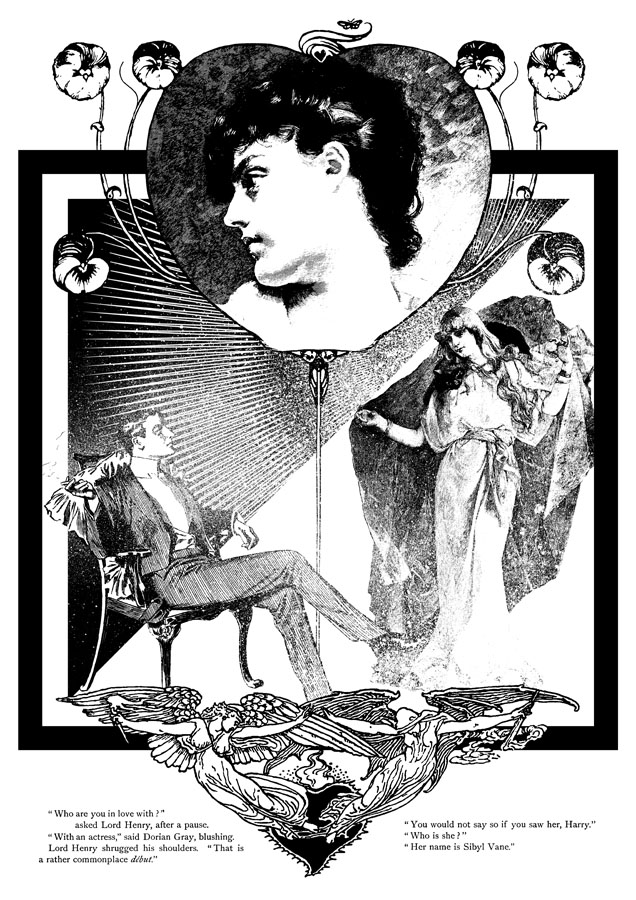
Picturing Dorian Gray

dorian1.jpg

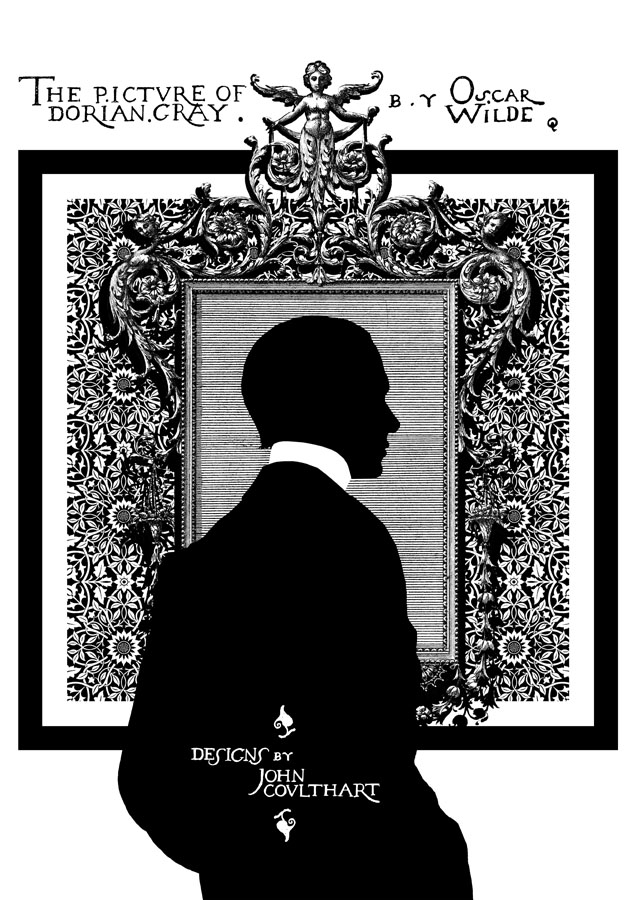
It’s taken a while but here at last are some of the pages from my series of illustrations based on The Picture of Dorian Gray, as featured in volume 2 of The Graphic Canon (“The World’s Great Literature as Comics and Visuals”) edited by Russ Kick. I agreed with Russ not to run everything so there’s some incentive to buy the book (or books…there are three volumes altogether). Now I’ve seen the printed edition the whole project seems even more remarkable: 500 large illustrated pages in a variety of media and art styles. Volume 2 runs through the 19th century and ends with my contribution; I opted to do this story in black-and-white but there’s colour used throughout the books. I especially like the Moby-Dick sequence by Matt Kish, a very different take on a very familiar tale.

As with many of the things I’ve been doing recently I opted for adapting materials of the period. Since I have a lot of Oscar Wilde-related reference material I was able to go further and incorporate details that relate directly to the book and Wilde’s life. All the text is taken from a scan of the first printing of the novel at the Internet Archive, the title lettering being drawn originally by Wilde’s friend, publisher and illustrator Charles Ricketts. A heavy black square on each page provides some continuity as well as resembling the frames of comic pages. (Or a picture frame.) The silhouette on the opening page is another of Wilde’s friends, the writer Max Beerbohm, taken from a drawing by William Rothenstein. The pair were dandyish Café Royal regulars throughout the 1890s.

dorian2.jpg

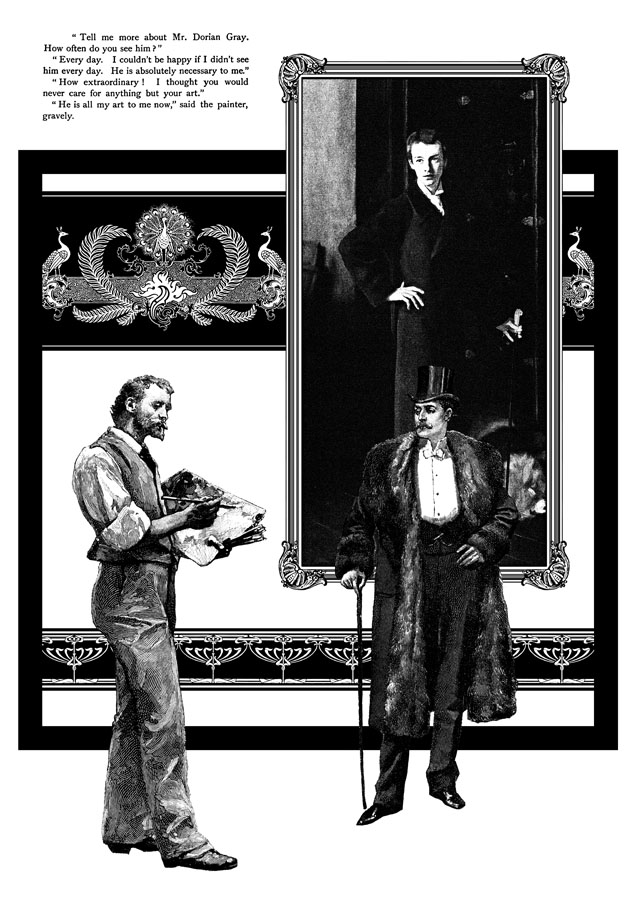
This is my favourite page. I liked the way the composition came together and also enjoyed being able to use John Singer Sargent’s portrait of W. Graham Robertson as the picture of Dorian. I’ve noted in an earlier post the similarity between this painting and the portrait seen in the BBC’s adaptation of the novel by John Osborne. Robertson was a theatre designer and illustrator who Wilde consulted when planning stage designs for what would have been the London debut of Salomé. Robertson was also (so far as we know) homosexual which adds an extra resonance.

dorian3.jpg

The Sibyl Vane page: a combination of details from The Studio, The Strand and The Magazine of Art. The motif at the foot of the page is by Walter Crane. Nothing of Wilde’s appeared in The Strand but that magazine’s most popular writer, Arthur Conan Doyle, had his second Sherlock Holmes adventure, The Sign of Four, commissioned at the same dinner that saw the commissioning of Dorian Gray, both novels being published by Lippincott’s Monthly Magazine in 1890.

dorian4.jpg

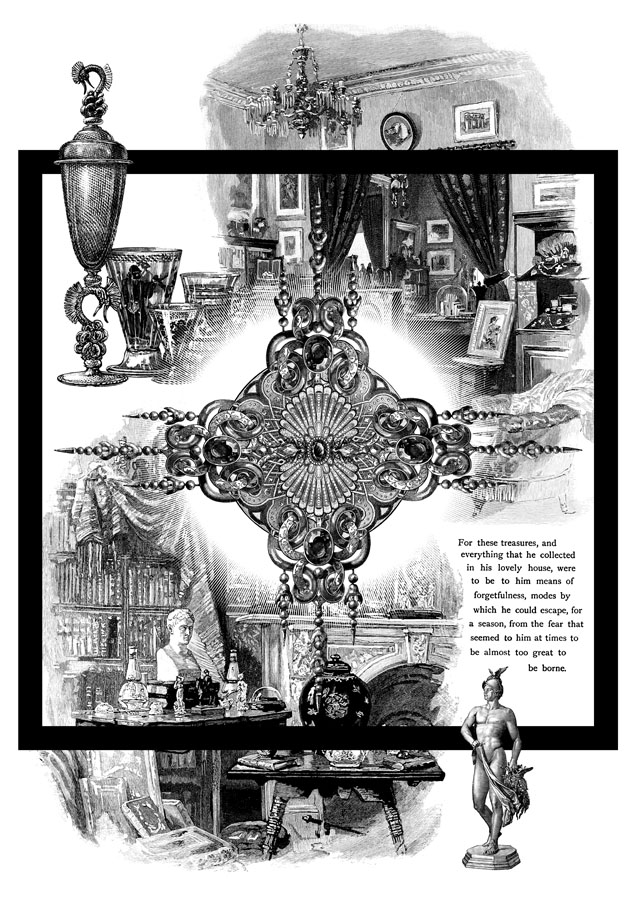
A page depicting Dorian’s distracting obsession with jewels and luxurious goods. This chapter can seem somewhat superfluous unless seen in the light of Wilde’s intention to write something like Huysmans’ À rebours (1884).

dorian5.jpg

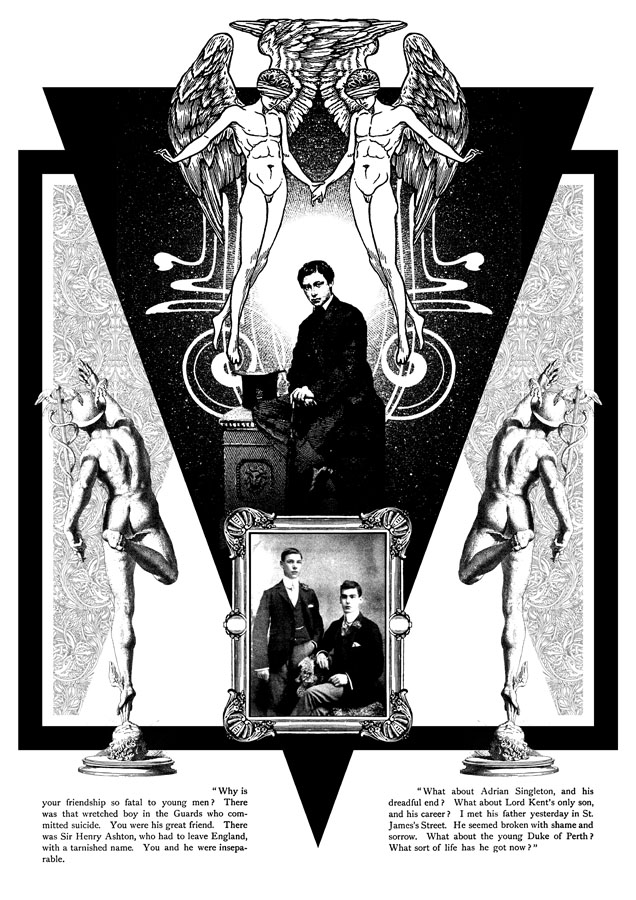
The “Love that dare not speak its name” page. This makes explicit the subtext of the book although if you read the two paragraphs I selected it’s evident enough why Dorian is causing a problem for so many young men. The blindfolded Eros was a drawing by Walter Crane which I doubled then re-drew slightly so the pair were holding hands. The boy below is a picture from The Strand of the young Edward VII, a robust heterosexual in later years but with a son, Prince Albert Victoria, who became linked to the notorious Cleveland Street Scandal which involved a male brothel catering to aristocrats. The two young men in the picture frame are described as a pair of “panthers” in Neil McKenna’s The Secret Life of Oscar Wilde (2003), by which he means that they were fin de siècle rent boys (as in Oscar’s remark about “feasting with panthers”); McKenna doesn’t give any further details about the photo but it suited the picture.

In addition to this series of illustrations, volume 2 of The Graphic Canon includes two of my Lewis Carroll illustrations in a section by different artists based on the Alice books. I’d be recommending The Graphic Canon even if I wasn’t a contributor, as I said above it’s a remarkable achievement. Watch out for it.

Elsewhere on { feuilleton }
The Oscar Wilde archive

Painting the Henge

stonehenge1.jpg

Wiltonia sive Comitatus Wiltoniensis; Anglice Wilshire (1649) by Atlas van Loon.

Avebury doth as much exceed Stonehenge in grandeur as a Cathedral doth an ordinary Parish Church.

John Aubrey

John Aubrey (1626–1697) was the pioneering antiquarian and archaeologist whose interest in the ancient sites of southern England made him the first person to subject Avebury to any serious study. As a consequence his comparison between Avebury and Stonehenge may contain some bias—Stonehenge’s site on the desolate Salisbury Plain made its presence well-known even if it was little understood—but it should be noted that in Aubrey’s time there were more stones at Avebury than there are today, and the long avenues leading to and from the outer circle were still intact. The stones of Avebury were unfortunately small enough to be broken up by the locals for building materials.

stonehenge2.jpg

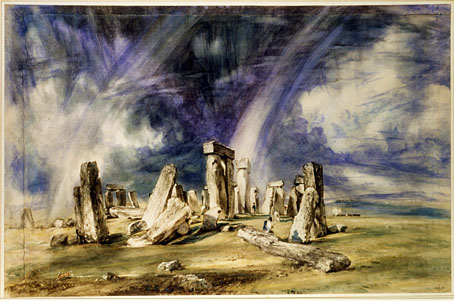
Stonehenge (1835) by John Constable.

The size of the stones, and the isolation of the site explains why Stonehenge has proved more attractive to the arts than other Neolithic monuments. William Macready in the 19th century added Stonehenge-like trilithons to his stage designs for King Lear, an addition that persisted for decades; Thomas Hardy’s Tess of the d’Urbervilles (1891) famously ends with a scene at the stones, while in the 20th century Stonehenge was shoehorned into Night of the Demon (1957), Jacques Tourneur and Charles Bennett’s film adaptation of Casting the Runes by MR James. James was an antiquarian himself so may well have approved of the inclusion, especially the way the stones are used in the opening scene.

stonehenge3.jpg

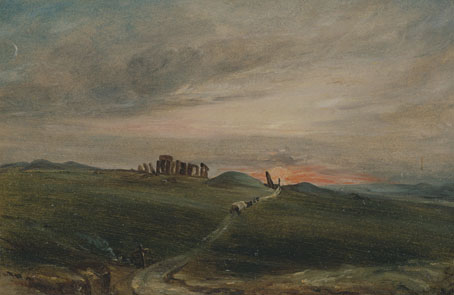
Stonehenge at Sunset (1835) by John Constable.

Painted renderings of the stones tend to be a mixture of archaeological studies and depictions like those featured here. The site had an understandable attraction to the Romantics, and drew both Constable and Turner there. (See Turner’s paintings and sketches here.) Constable’s watercolour of the stones against a turbulent sky is oft-reproduced. Some of the stones seen in 19th paintings and drawings lean more than they do today, having been restored to the vertical in the 20th century.

stonehenge4.jpg

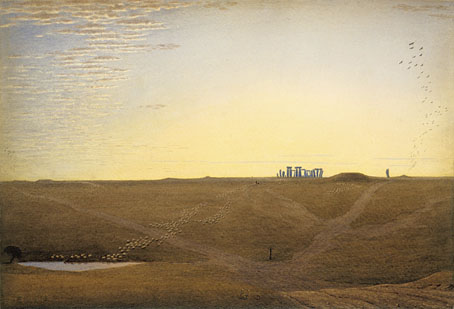
Stonehenge – Twilight (c. 1840) by William Turner of Oxford (not to be confused with his more famous namesake).

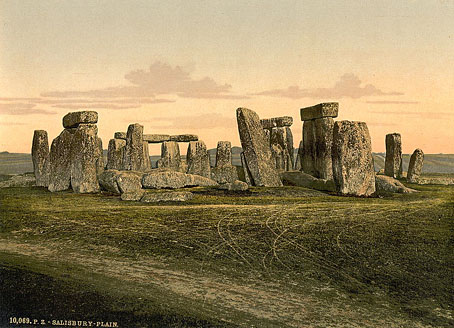
Closer to our own time there’s Henry Moore’s marvellous series of lithograph prints from 1973 which study the stones from a variety of angles. These include close views, something few other artists seem to attempt. The photo print below shows the site as it was in the 1890s with cart tracks passing nearer to the stones than visitors today are allowed to venture.

stonehenge5.jpg

Previously on { feuilleton }
Stonehenge
Stonehenge panorama

The art of Gösta Adrian-Nilsson, 1884–1965

gan19.jpg

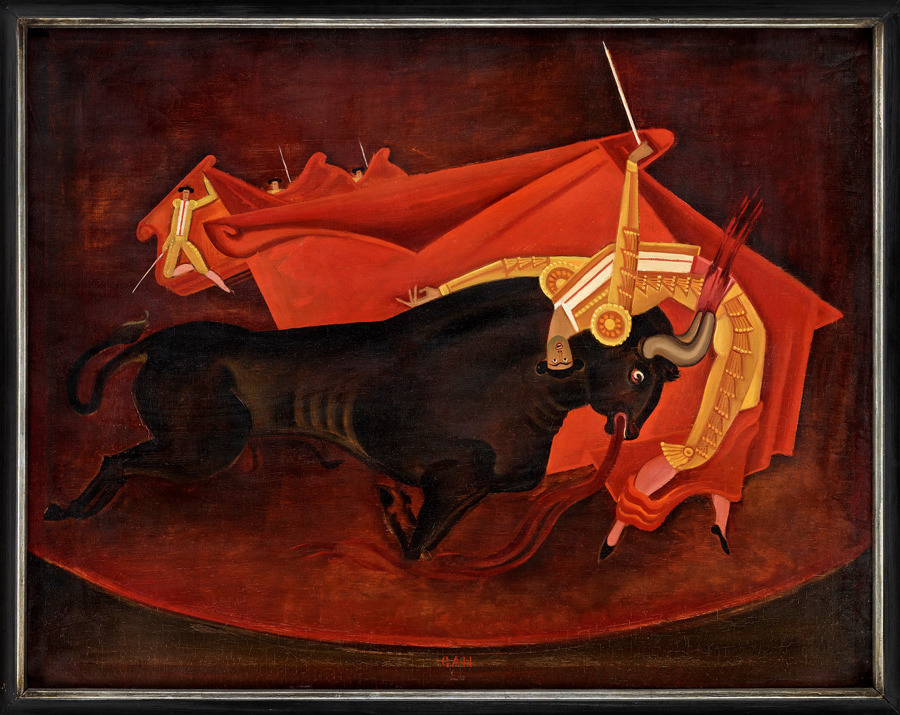
Tjur och Matador III (Bull and Matador III) (1926).

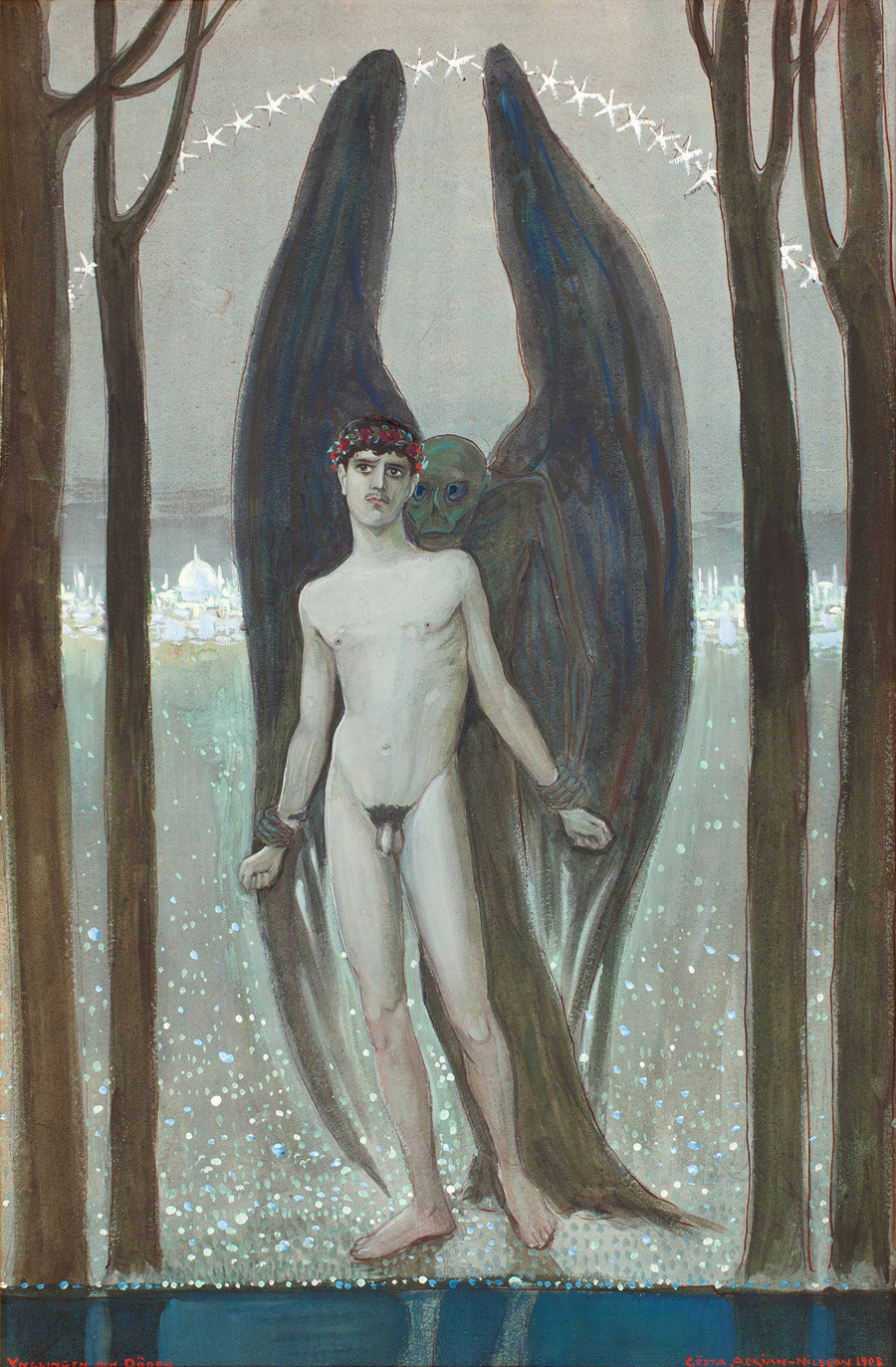
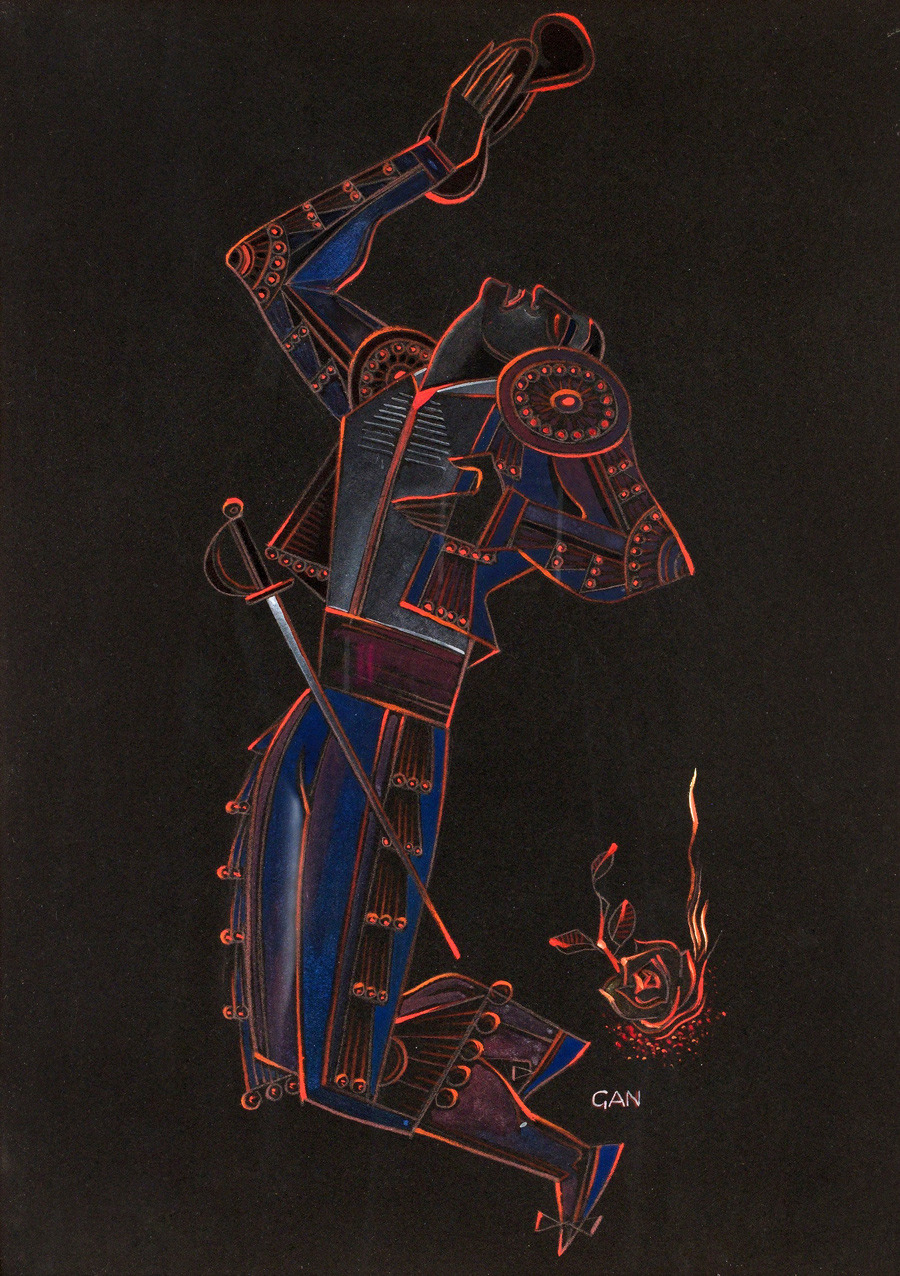
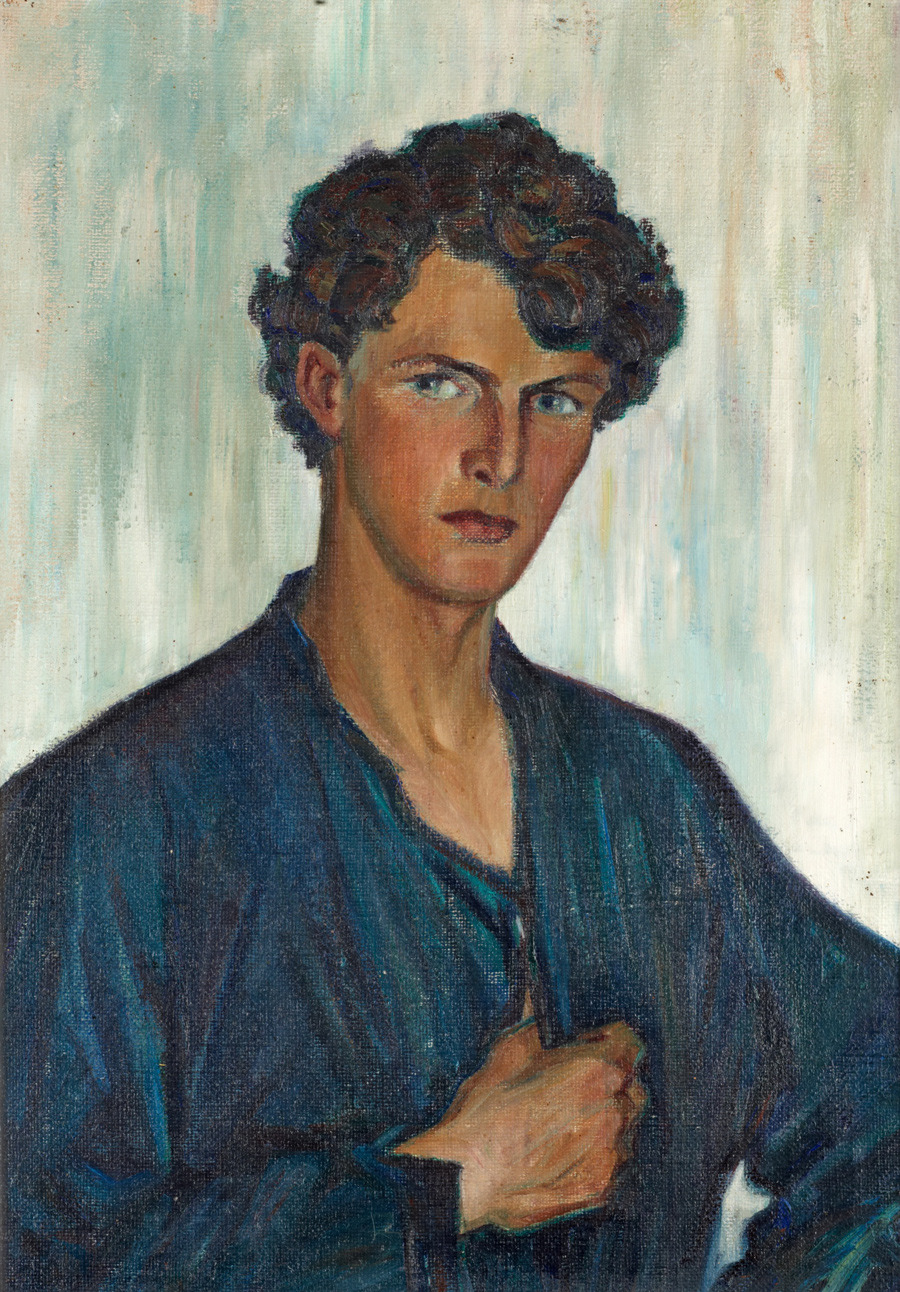
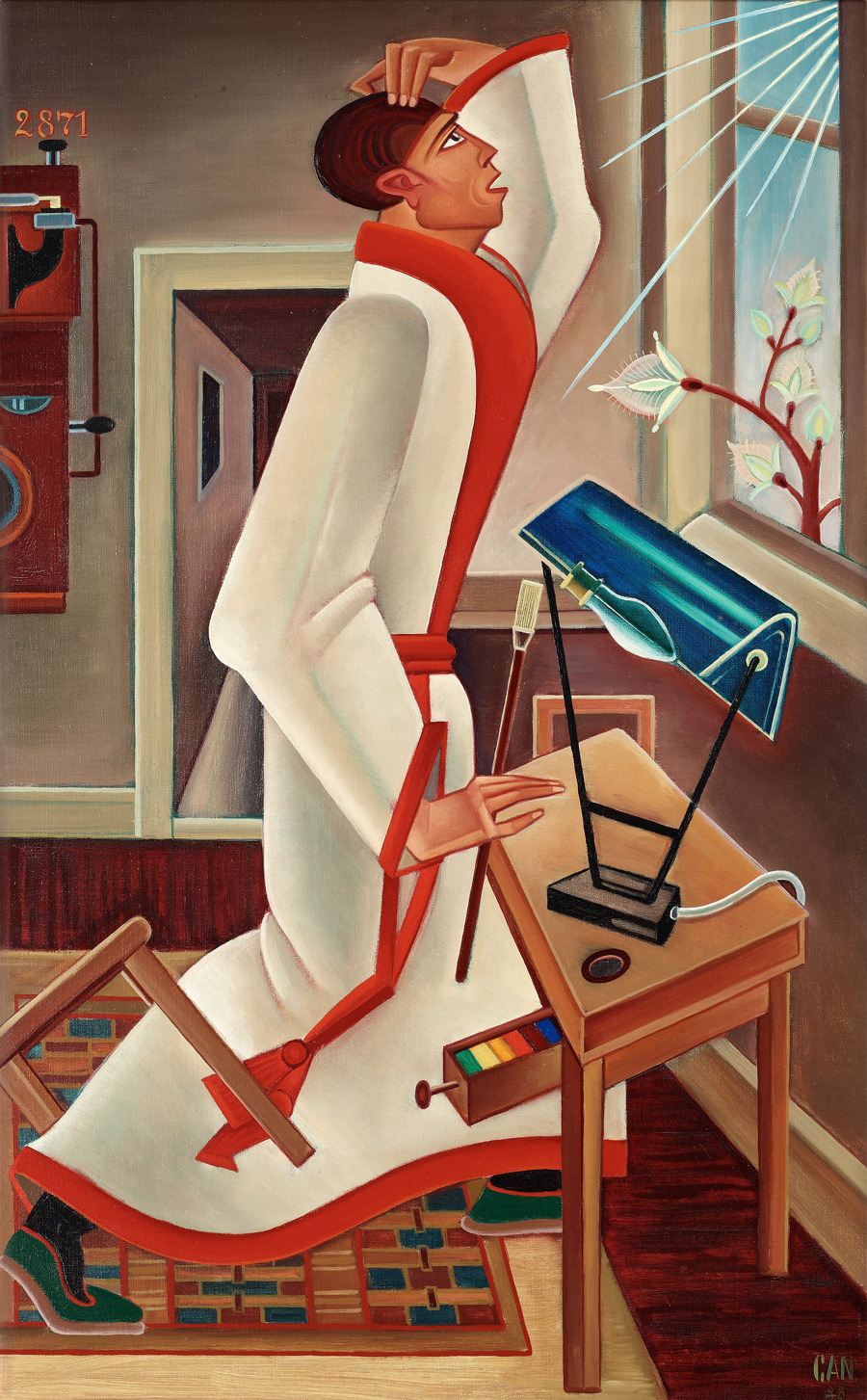
My thanks again to Will at 50 Watts for generously sending me this selection of paintings by Swedish artist Gösta Adrian-Nilsson, or GAN as he was known. These pictures alone show him to have been a very versatile artist, ranging from the late Symbolism of his Young man with death to the works below which deploy a variety of Modernist styles including nods to Cubism and Futurism. A translation of his Swedish Wikipedia page explains the preponderance of matelots and toreadors thus:

The GAN was homosexual reflected in several of his works. For example, he was at times almost manic fixed at the Mariners, and he worshiped the masculine force. Other favorite subjects were male athletes. Meanwhile, the homosexual eroticism both forbidden and taboo and GAN forced to live a double life.

It’s a shame there isn’t a good single site for his work but Google’s image search turns up a lot more paintings. There’s also this Swedish site which contains more biographical detail.

gan01.jpg

Ynglingen och döden (Young man with death) (1908).

gan02.jpg

Epilog.

gan03.jpg

Ilja (Portrait of Karl Edvard Holmström) (1911–12).

gan04.jpg

Inspiration (1928).

Continue reading “The art of Gösta Adrian-Nilsson, 1884–1965”

Weekend links 132

janini1.jpg

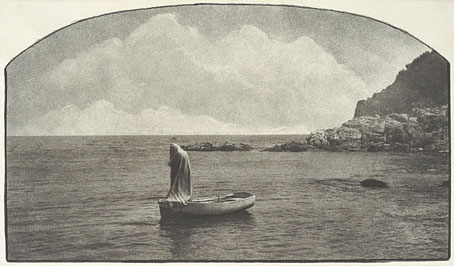
La Hora del Fantasma (no date) by Joaquim Pla Janini.

• Many of the art links featured here are tips from Thom Ayres, so it’s only right to point to his new album project which he’s funding through Kickstarter and embellishing with his own nature photography.

• Anne Billson is another writer beguiled by Philippe Jullian’s masterwork, Dreamers of Decadence. And thanks to Ms Billson for drawing attention to the insane opening of Crime Without Passion (1934).

• Does this fake ad for The Necronomicon use one of my Cthulhu pictures? Possibly. Get the picture for yourself in this year’s Cthulhu calendar. (My thanks to everyone who’s bought a copy so far.)

To break the ice, I talk about books: he is delighted to discover that I have read his beloved Denton Welch, also J. W. Dunne’s An Experiment With Time. I have found them in my old school library, and know both have been a tremendous influence on him in different ways. Knowing of his interest I also mention that I have just read Colin Wilson’s The Quest For Wilhelm Reich, published the year before. He likes Wilson, he says, jokes that “the Colonel” with his cottage in Wales in Wilson’s Return of the Lloigor and his own Colonel Sutton-Smith from The Discipline of DE are one and the same. On something of a roll, I mention Real Magic by Isaac Bonewits, and he acknowledges that it has “some good information” – but is much more enthusiastic about Magic: An Occult Primer by David Conway [years later I would discover that Burroughs & Conway had in fact exchanged letters on various subjects pertaining to magic, occultism, and psychic phenomena – but that is decidedly another story!]

Matthew Levi Stevens recalls The Final Academy and an encounter with William Burroughs thirty years ago.

Locomotif: A short survey of trains, music & experiments: Gautam Pemmaraju on Kraftwerk, Pierre Schaeffer, Luigi Russolo and others.

A flip-through of The Graphic Canon, volume 2. Wait to the end and you’ll see a couple of my Dorian Gray pages. Imprint has a review of the book.

• Julian Bell reviews two new books about Romantic painter Caspar David Friedrich.

Alan Moore talks to The Occupied Times about art, education and anarchism.

• Colin Dickey reviews Vilém Flusser’s Vampyroteuthis Infernalis: A Treatise.

janini2.jpg

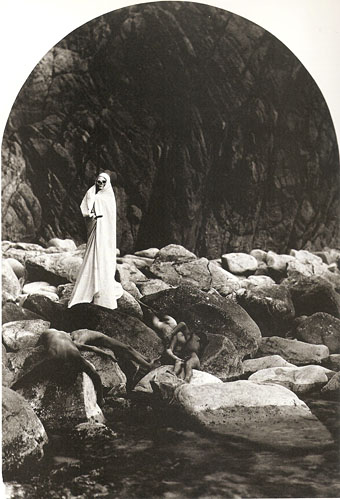
Las Parcas II (1930) by Joaquim Pla Janini.

• Michael Newton reviews A Natural History of Ghosts by Roger Clarke.

• Golden Age Comic Book Stories revisits the work of Sidney Sime.

Front Free Endpaper asks “What’s in an inscription…?”

Mormon Missionary Positions

Amateur Aesthete

Ghosts (1981) by Japan | Ghosts (2008) by Ladytron | Ghosts (2012) by Monolake.