Phantastische Edelmann

edelmann1.jpg

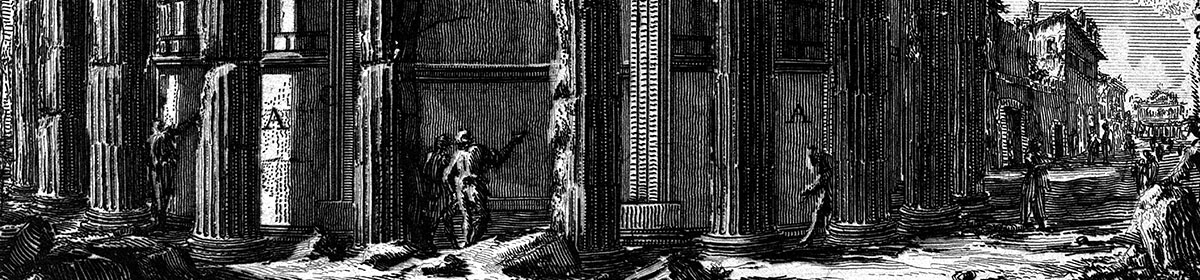
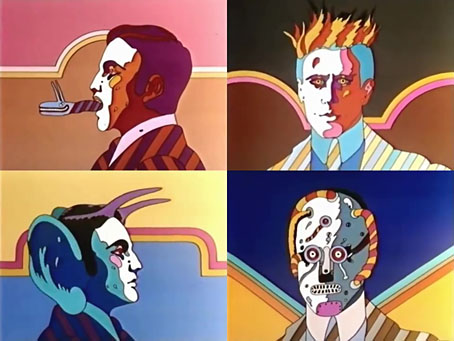
There’s more to Heinz Edelmann than the designs he created for Yellow Submarine, as Edelmann himself often used to remind people. And there’s more to his work for animated film than the Beatles’ exploits. Der Phantastische Film is a short introductory sequence for a long-running German TV series which has been doing the rounds for a number of years. Brief it may be but a couple of the monstrous details resemble those that Edelmann put into his covers for Tolkien’s books.

edelmann2.jpg

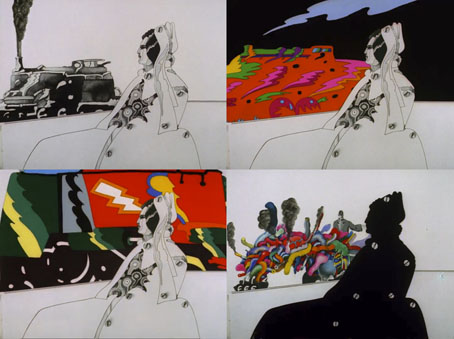
Edelmann had plans to capitalise on the success of Yellow Submarine with more films like this when he set up his own animation company, Trickfilm, but the only other example is The Transformer, a short about steam trains which he designed. (The direction was by Charlie Jenkins, with animation by Alison De Vere and Denis Rich.) Given the persistent popularity of Yellow Submarine I keep hoping someone might revive its style for something new. The first animated feature directed by Marcell Jankovics, Johnny Corncob, comes close but lacks the trippy Surrealism of the Beatles film. The Japanese can certainly do trippy Surrealism (see Mind Game or Paprika) but I’ve yet to see anything that approaches the Edelmann style. Johnny Corncob, incidentally, is now available on Region B blu-ray from Eureka. It’s worth seeing but the main film in the set, Son of the White Mare, is Jankovics’s masterpiece.

edelmann3.jpg

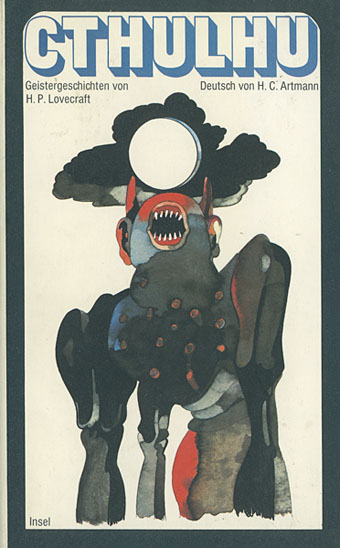
On a slightly related note, until today I hadn’t looked at ISFDB.org for Heinz Edelmann’s genre credits so I hadn’t seen this Lovecraft cover before. Hard to tell if this creature is supposed to be Cthulhu or Wilbur Whateley’s brother when The Dunwich Horror is one of the stories in the collection. Either way, it belongs in the Sea of Monsters. Insel Verlag published this one in 1968, a year before launching their special imprint devoted to fantastic literature, Bibliothek des Hauses Usher.

Previously on { feuilleton }
Return to Pepperland
The groovy look
The Sea of Monsters
Yellow Submarine comic books
Heinz Edelmann

Glaser goes POP

glaser1.jpg

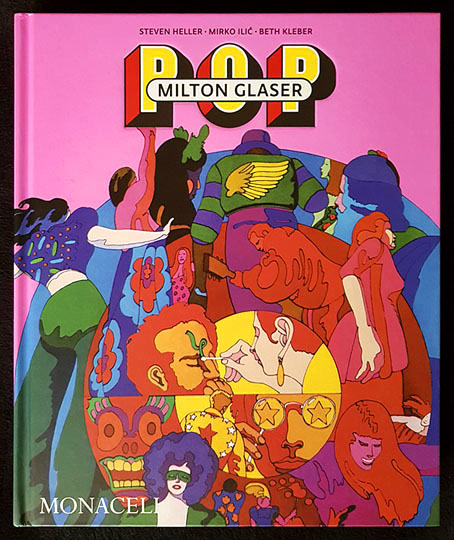
The purchase of big art and design books requires careful consideration round here, what with shelf space being stressed in multiple ways. (One of the shelves bearing the heavier volumes sags alarmingly.) But this one was recommended to me by a couple of people, and I’d also had a book token hanging around unused for over a year so here we are.
glaser2.jpg

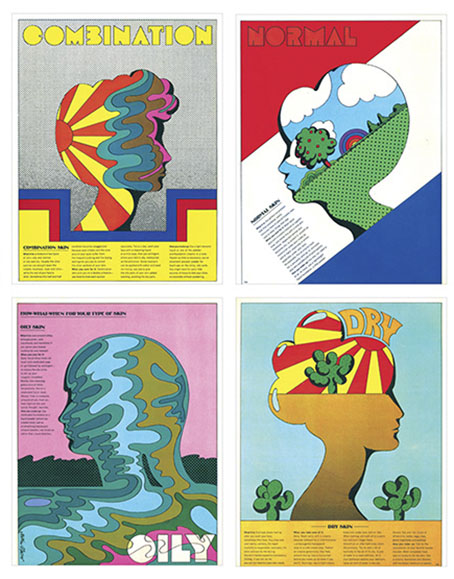
Skin types for Seventeen magazine, 1967.

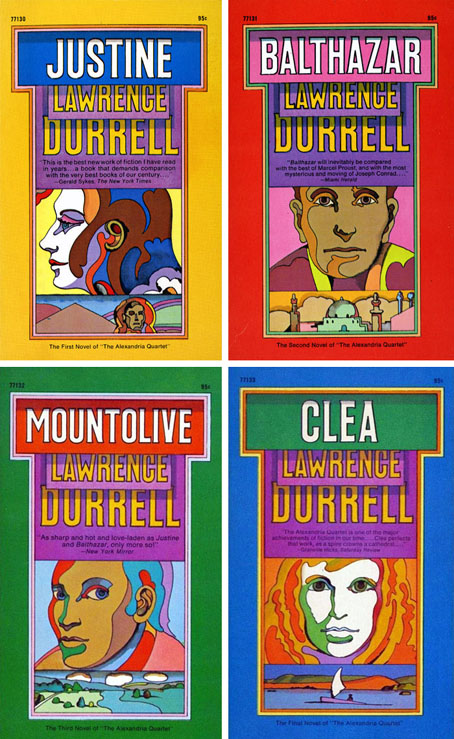
Milton Glaser: POP is a copiously-illustrated 288-page study of the work produced by Milton Glaser and his colleagues at Push Pin Studio, with an emphasis, as the title and cover art suggests, on the company’s prime decade of the 1960s. The book was compiled and edited by the redoubtable Steven Heller, together with Mirko Ilic and Beth Kleber, and presents an overview of Glaser’s remarkable career as designer and illustrator. Glaser was an exceptionally versatile artist, something which has often made appraisal of his career a difficult business. You could easily choose ten of his book or album covers from the many examples assembled by Heller and co., and all would look like the work of different people.
glaser3.jpg

The Alexandria Quartet by Lawrence Durrell; Pocket Books, 1969. I’d much rather have this set than my Faber collection which packages the four books into an unwieldy brick.

Matters are further complicated by the often collaborative nature of the work at Push Pin, and the fact that designers and illustrators aren’t always given credit for their commissions. In the past I’ve gone looking for Glaser’s work then given up when I seemed to be encountering designs that weren’t by him at all. In addition to demonstrating Glaser’s range, Heller, Ilic and Kleber have done everyone a service by showing unused illustrations and crediting work that was previously debatable. Some years ago I wrote a post about the uncredited cover art for the first budget sampler album, The Rock Machine Turns You On (1968), an entry which didn’t manage to resolve the issue of whether or not the cover art was Glaser’s work. It turns out it was by him after all, collage being one of the techniques he employed from time to time.
glaser5.jpg

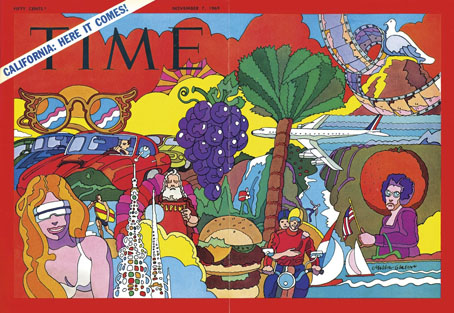
TIME magazine gets groovy. A fold-out cover from 1969.

On a more personal level, Glaser’s versatility and multi-disciplinary approach is encouraging if you find yourself being led in a similar direction. Designer-illustrators are no longer as rare as they used to be, but illustrators, like many fine artists, still tend to develop a favourable style which they then stay with year after year. Illustrators who change their style according to their mood, or the nature of the brief, or a desire to experiment, remain in the minority. Glaser’s illustration ranges more widely than any other artist I’ve seen, from realistic pen-work and watercolour sketches, through bold, stylised designs, to complete abstraction. He could also be playful and frivolous in a manner you can’t imagine from some of his more serious contemporaries, while also being adept enough at illustrating children’s stories that he might easily have spent his career doing this alone.
glaser4.jpg

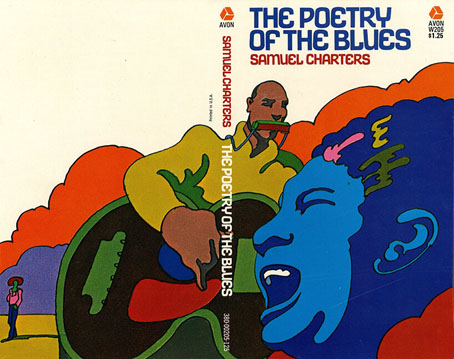
Avon Books, 1970.

But the main attraction of Milton Glaser: POP for this reader is the focus on all those bold graphics, especially the commissions that reworked the emerging psychedelic styles for the commercial sphere. The cover illustration is emblematic of many other examples. This drawing first appeared in a New York magazine supplement in 1967 to accompany an article about LSD, before being reused on the dustjacket of Tom Wolfe’s book about Ken Kesey and friends, The Electric Kool-Aid Acid Test. Glaser and his colleagues at Push Pin were prime exponents of something I’ve taken to calling “the groovy look“, a term I reserve for commercially oriented quasi-psychedelic art. This isn’t meant to be a serious label, it’s a private term that I used to attach to anything resembling the art styles seen in the Yellow Submarine feature film. Serious or not, the label persists when I continue to feel the need for a suitable descriptor for this type of art. “Psychedelic” is the most common label (and one which obviously suits Yellow Submarine) but it seems inappropriate when discussing magazine adverts for household products or illustrations in children’s books. Steven Heller prefers the term “Pop”, but this strikes me as too loose, risking confusion with the many varieties of Pop Art which seldom resemble the vivid, stylised creations of Glaser et al. Pop would also seem misapplied as a description for commercial art when Pop Art was all about the appropriation (ironic or otherwise) of commercial iconography. If you start to label a swathe of commercial art as Pop along with the gallery art that was borrowing from it then the term becomes so diffuse it loses its meaning. The “groovy style” had a long reach, and evolved beyond the decade it was born in. Plenty of examples may be found in the early 1970s by which time Pop Art (in the gallery sense) had lost its momentum.
glaser6.jpg

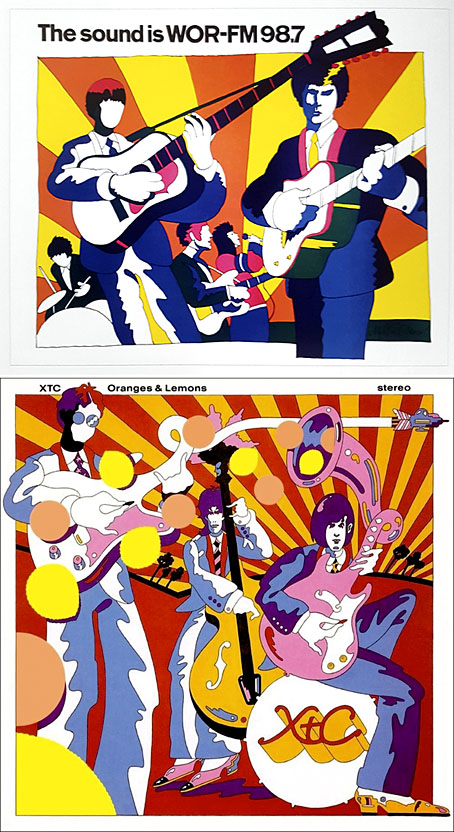
Above: Glaser ad art, 1966. Below: Dave Dragon’s cover art for XTC, 1989.

I’ll no doubt return to this question, especially when I’ve just done something in the groovy style myself. (You’ll have to wait a few months before you see the results.) In the meantime there’s a lot to enjoy in this book. I haven’t yet mentioned Glaser’s unused promotional art for the Saul Bass feature film, Phase IV, or the many typeface designs that Glaser created with his associates, and the way one of them—Baby Fat—is used on the cover of the first UK paperback of The Soft Machine. I think this was the first William Burroughs book I ever bought, and it’s been sitting on my shelves all this time without my realising it was a Glaser production. That’s how it often is with graphic designers; they shape our world almost as much as architects do yet their specific influence isn’t always recognised.
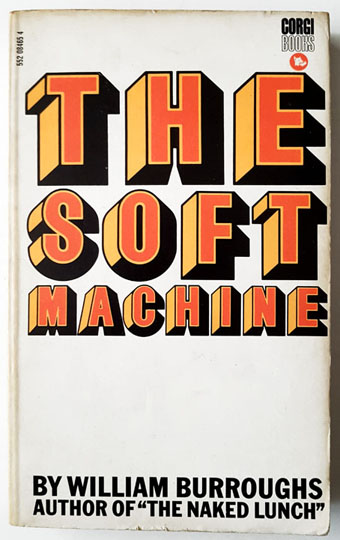
glaser7.jpg

Corgi Books, 1970.

And by coincidence, the latest post at The Daily Heller is about a Glaser exhibition tied to the publication of the book. If you’re in New York it’ll be running for the next two weeks.

Previously on { feuilleton }
The groovy look
Milton Glaser album covers

Weekend links 674

moon.jpg

The Far Side of the Moon, as photographed by NASA’s Lunar Reconnaissance Orbiter.

• “It goes against centuries of traditional belief to accept that the moon is barren, that it is indifferent, that it is innocent of any role in monthly spikes in the crime rate or in the cycles of menstrual unreason. When telescopic observation had found nothing on the near side (Roger Boscovich had established by 1753 that it lacks even an atmosphere), the far side still remained a site for the projection of fantasies of a different, neighbouring world.” Justin EH Smith working his way towards a history of the dark side of the moon.

• “It shocks me that movies still lean in so hard to all these outmoded gay narrative tropes: coming out, coming of age; very identity-oriented representations of gay characters. It’s much easier to represent a gay boy who’s repressed in high school and comes out and makes friends. It’s very mainstream, and kind of played out.” Bruce LaBruce on cinematic trends in relation to his new film, a gay-porn take on Pasolini’s Teorema.

• At Cartoon Brew: Pavel Sannikau explains how he developed his own techniques of digital animation in order to create the ever-expanding Floor796.

• There’s always more Poe: Mysterium, Incubus et Terror, Poe-inspired music by a variety of artists, plus illustrations by John D. Chadwick.

• At Smithsonian Magazine: The results of a themed contest in the Close-Up Photographer of the Year Challenge.

• Mixes of the week: In Praise of the Saddest Chord at Ambientblog, and The Funky Eno Pts 2 & 3 by DJ Food.

• Steven Heller talks to Hungarian artist István Orosz about his Escher-like drawings.

• At Unquiet Things: Caitlin McCormack’s ghostly chains of knotted memory.

• At Spoon & Tamago: Intricate and organic sculptures by ceramicist Eriko Inazaki.

• New music: Illumina by Call Super with Julia Holter.

Dark Side Of The Mushroom (1967) by The Chocolate Watchband | Dark Side Of The Star (1984) by Haruomi Hosono | On The Dark Side Of The Sun (live) (2003) by Helios Creed

Weekend links 673

ay-o.jpg

Butterfly (1988) by Ay-O.

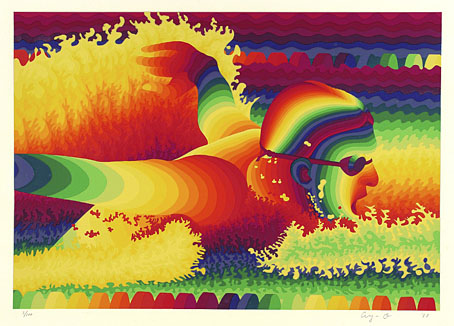
• “[Mike] Jay says there are notional lessons to be learned about what happens next from the characters who populate Psychonauts but says they would have been of greatest benefit to ‘the legislators, the bureaucrats, the statisticians and social scientists of the early 20th century who created the idea of “good drugs” and “bad drugs”.’ It is the framework of ‘drugs’ itself which needs to be dismantled.” John Doran discussing Psychonauts: Drugs and the Making of the Modern Mind with the book’s author, Mike Jay. The piece ends with an extract from the book itself. There’s another extract at Nautilus.

• “From the eerie electronics of Earth Calling through to the warp speed crescendo of Master Of The Universe, Space Ritual is like no other live record released at the time or since.” Joe Banks explores the events that led to the recording of the definitive Hawkwind album, Space Ritual, which was released 50 years ago this week.

• “You know, it’s actually all about life, and love, and death, and it’s sexy, and it’s funny and it’s not depressing.” Simon Fisher Turner talking to Emily Bick about Blue Now, a new live staging of Derek Jarman’s final film.

mm.jpg

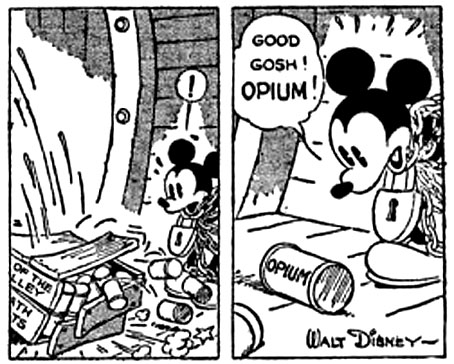
From The Castaway Captives (1934): Mickey Mouse in a deep fix.  Ignore the signature, this one was written and illustrated by Floyd Gottfredson.

• New music: Kinder Der Sonne (From Komplizen) by Alva Noto, and S.W.I.M. by Gunnar Jónsson Collider.

• Mixes of the week: Isolatedmix 120 by Lord Of The Isles, and XLR8R Podcast 799 by KMRU.

• Take a radiating, immersive trip into Ay-O’s Happy Rainbow Hell.

• At Dennis Cooper’s: New Queer Cinema 1985–1998 Day.

• Steven Heller’s font of the month is Hopeless Diamond.

Rainbow Chaser (1968) by Nirvana | Rainbows (1969) by Rainbows | Rainbow (2006) by Boris With Michio Kurihara

Dennis Leigh book covers

leigh03.jpg

Secker & Warburg, 1989.

Most people will know Dennis Leigh—if they know him at all—as John Foxx, the name that Leigh adopted in the 1970s when he was the lead singer and songwriter in Ultravox! (That exclamation mark was a fixture for the group’s first two albums.) Foxx and Leigh maintained parallel careers for a while, or alternating careers in the 1990s when he was working more as an illustrator than as a musical artist.

leigh25.jpg

Routledge/Thomson Learning.

I’ve been asked a few times to consider writing about artists or designers who create covers for literary titles. This is something I often consider myself but the research is never easy. If you’re looking for genre titles you can go to isfdb.org and immediately find entries for hundreds of artists with lists of their credits; Dennis Leigh has an entry there himself. There’s no equivalent source for literary fiction, and nothing for crime novels or non-fiction either. This post is based on a list compiled by a correspondent (thanks, Marc!) to which I added a couple of discoveries of my own. It’s not complete but it ranges through Leigh’s career as a cover artist from the 1970s to the 2000s.

leigh26.jpg

Bloomsbury.

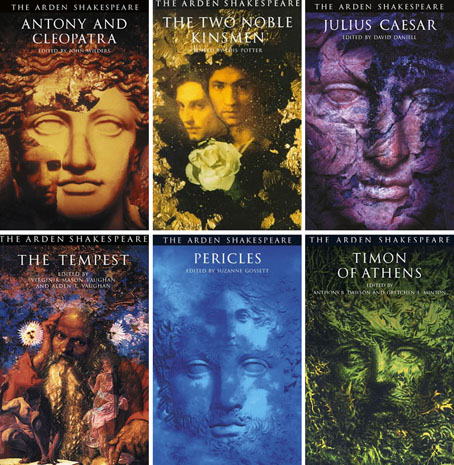
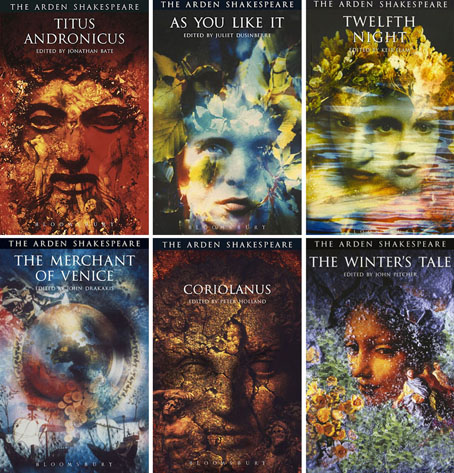
One of the useful things about Dennis Leigh having a more popular alter ego is the amount of interviews in which John Foxx discusses his work outside the music business. While researching this post I found a Smash Hits interview where Foxx mentions having attended Blackpool art college for a short time. This was the same art college that my mother attended in the 1950s, and a place I happily avoided myself. The college is so undistinguished I think Foxx/Leigh may be the only person of any note to have passed through its doors. A more recent interview for Shakespeare Magazine features some discussion of the techniques behind the book covers.

leigh01.jpg

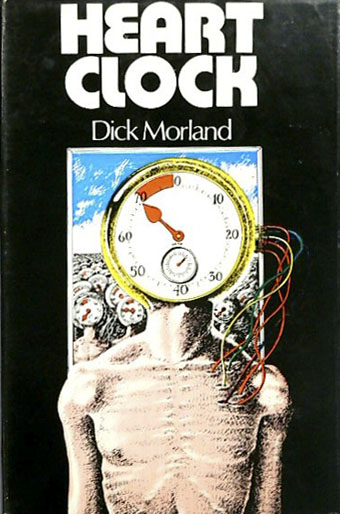
Faber, 1973. Reginald Hill wrote two science-fiction novels as “Dick Morland”, this one and Albion! Albion! (1974). The latter is also listed as having a Leigh cover but the evidence for this is unclear so I’ve not included it.

Missing from this list are covers for novels by Neil Bartlett, Michael Cunningham, Evan Eisenberg, Eva Figes, and Marina Warner, all of which are only available as very low-grade images or not available at all. Another hazard when researching these posts is that artists and designers aren’t always credited, especially on paperbacks, so there may be a few more to be found. Be aware that some covers that might look like Dennis Leigh creations may be the work of somebody else. In the late 80s/early 90s there was a trend for Photoshop montage and what I call “artschool assemblage” (collage riffs on Joseph Cornell and others). If any of the examples here are erroneous attributions let me know.

leigh02.jpg

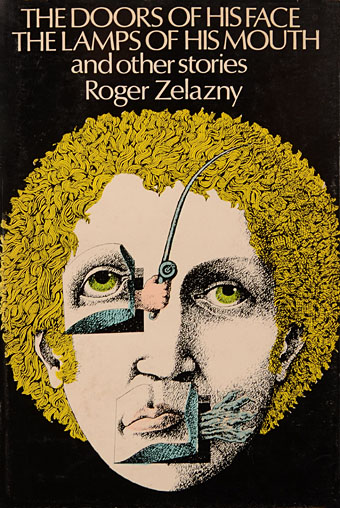
Faber, 1973.

leigh04.jpg

Vintage, 1990.

Continue reading “Dennis Leigh book covers”