Keramic Studio

keramic01.jpg

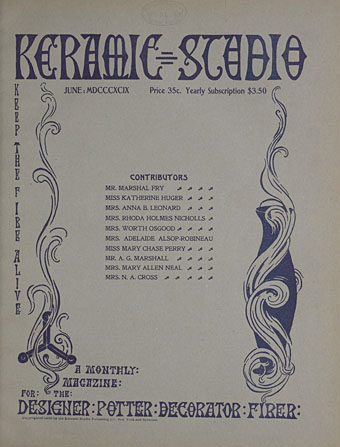
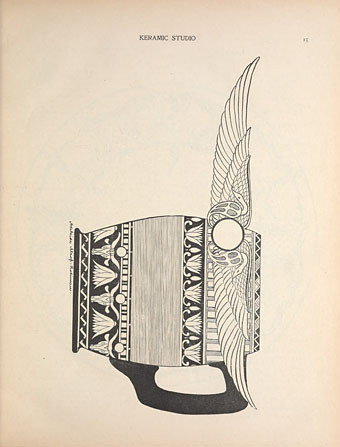
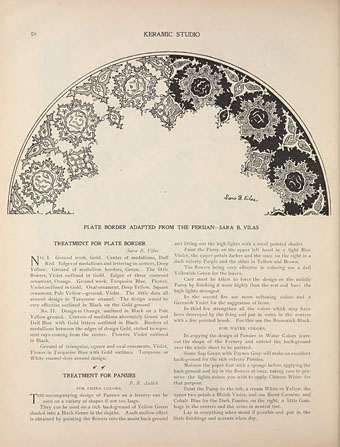
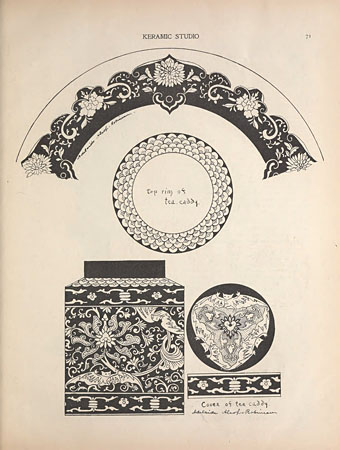
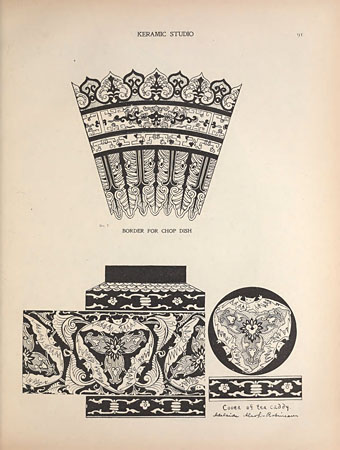
A recent addition to the Internet Archive, Keramic Studio was a monthly American ceramics magazine whose first number dates from May, 1899. If you’re like I am these days, and always looking out for new sources of period design, this is a useful title for the large number of decoration templates. The examples here from the first bound collection are designs based on older decorative styles by Adelaide Alsop-Robineau and Ann B. Leonard. Almost all the contributors to the early issues are women, ceramics (and decorative art in general) being one of the few areas in 1900 where women were allowed to indulge their creativity. Collections of the magazine up to the year 1918 may be browsed or downloaded here.

keramic02.jpg

keramic03.jpg

keramic04.jpg

keramic05.jpg

Continue reading “Keramic Studio”

Light Leaks

lightleaks1.jpg

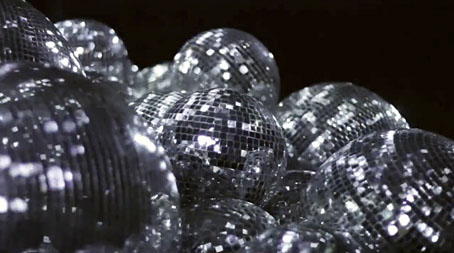
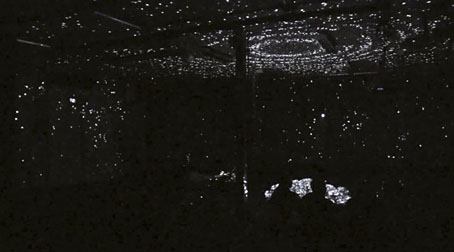
A scattered array of fifty mirror balls reflect light from three projectors, filling a room completely with small reflections, casting patterns that fill the visitor’s peripheral vision. Creating a curious space that alternates between a meditative state, and an uneasy imbalance. An experiment in combining a found object with computer vision to create a profound and unusual experience.

I’ve always liked mirror balls so Kyle McDonald’s combination of the traditional mirror-ball effect (multiplied fifty times) with three-dimensional computer mapping has an obvious appeal. The pictures here link to a small promo video. I’d love to see this in situ; I also wonder what it might look like in a mirrored room like those created by Yayoi Kusama. There’s more at Wired where McDonald discusses the technical aspects.

lightleaks2.jpg

Previously on { feuilleton }
Infinite reflections

Mati Klarwein book covers

mati1.jpg

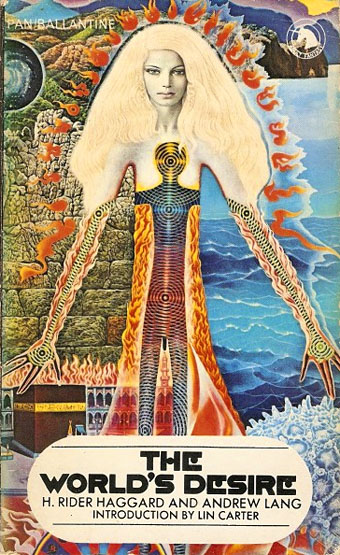
The World’s Desire (1972) by H. Rider Haggard & Andrew Lang. Painting: Astral Body Asleep (1968).

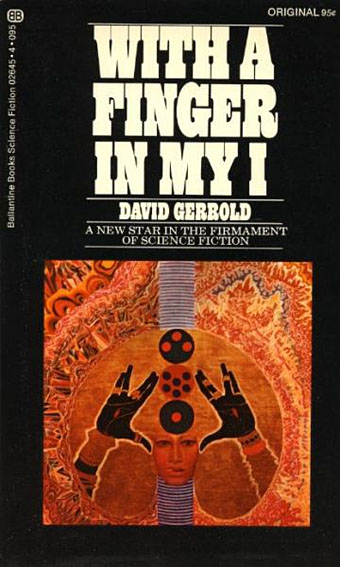
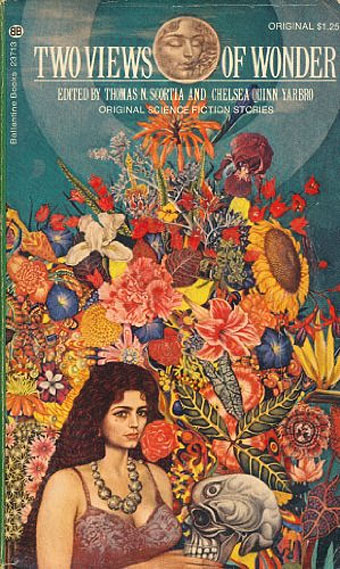
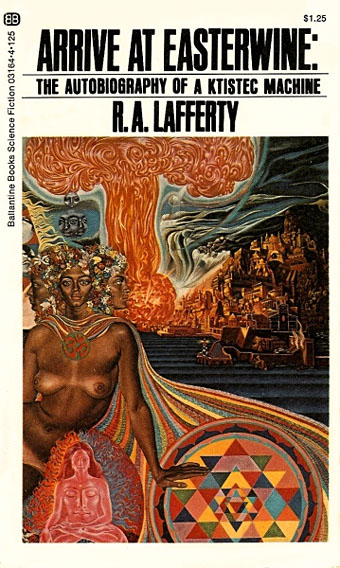
The use of Mati Klarwein’s paintings on album covers is well documented, the official Klarwein site has a small section devoted to some of the covers. Less well-known are these book covers which were evidently the product of a brief enthusiasm for Klarwein’s work in the Ballantine Books’ art department. As with many of the album covers, these are all pre-existing paintings which have been cropped for use as cover art.

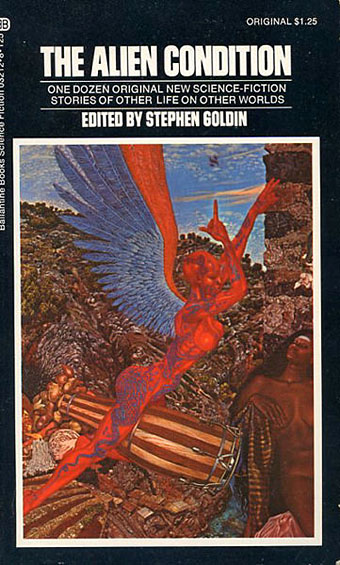
The most surprising example is the cover for The Alien Condition with its detail from Annunciation, a painting better known for its appearance on Abraxas (1970), a very successful Santana album. Given how visible that cover art would have been in 1973 you have to suspect that the painting’s use as a book cover was a deliberate bid to attract a youthful readership. All these titles are works of science fiction or fantasy; I don’t recall having seen a Klarwein cover for any non-genre titles. If anyone knows of an example then please leave a comment. (Thanks to Jay for the tip!)

mati2.jpg

With a Finger in My I (1972) by David Gerrold. Painting: Blessing (1965).

mati3.jpg

The Alien Condition (1973) edited by Stephen Goldin. Painting: Annunciation (1961).

mati4.jpg

Two Views of Wonder (1973) edited by Thomas N. Scortia & Chelsea Quinn Yarbro. Painting: Unknown.

mati5.jpg

Arrive at Easterwine: The Autobiography of a Ktistec Machine (1973) by RA Lafferty. Painting: Nativity (1961).

Elsewhere on { feuilleton }
The book covers archive

Previously on { feuilleton }
The art of Mati Klarwein, 1932–2002

Weekend links 169

anderson.jpg

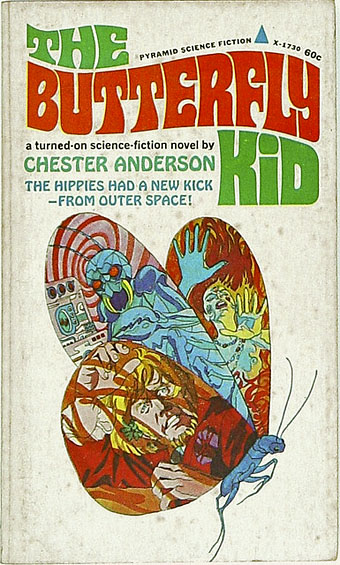
Cover illustration by Gray Morrow, 1967. One of the less exploitative examples from a collection of hippy book covers.

• Ten Photographs by Alain Resnais: Mise en scène of Memory, Aesthetics of Silence by Ehsan Khoshbakht. In the comments to that post someone shows an old Penguin book with cover photos by Chris Marker. This confirms that the “C. Marker” whose name I found on the back of another Penguin book was indeed Monsieur Chat.

• There’s more (there’s always more…): Cornelius Castoriadis interviewed by Chris Marker in 1989, the complete footage of an interview edited down for Marker’s TV series L’héritage de la chouette (The Owl’s Legacy). Watch the series itself at YouTube.

• “A generation of innovators want to change the way we have sex and consume porn, but Google, Apple, and Amazon won’t let them,” says Andrea Garcia-Vargas. Related: Sam Biddle on how Tumblr is pushing porn into an internet sex ghetto.

• Mix of the week: the Chop Quietus Mix, “a jagged journey all the way from Broadcast to the uneasy thrum of Suicide, kosmische flavours from Popol Vuh and Cluster, Alexander Robotnik and many more.”

Strange Flowers looked back at The Student of Prague: “the first art film, the first horror film and the first auteur film”, and now a century old.

Clive Hicks-Jenkins talked to animator Barry Purves about the pleasures and difficulties of creating animated films for adults.

• Mazzy Star released a song, California, from their new album which arrives in September. Can’t wait.

Suzanne Ciani, “American Delia Derbyshire of the Atari Generation” explains synthesizers, 1980.

Christer Strömholm‘s photos of Parisian transgender communities in the 1950s.

What are These Giant Concrete Arrows Across the American Landscape?

• How Kiyoshi Izumi built the psych ward of the future by dropping acid.

Alan Moore: The revolution will be crowd-funded.

Fuck Yeah Mazzy Star

• Suzanne Ciani: Lixiviation | The First Wave—Birth Of Venus (1982) | The Eighth Wave (1986)